
In Minecraft, enchanted gear transforms how you survive, explore, and dominate challenges. While direct enchanting offers power, using enchantment books gives you precision, flexibility, and long-term strategy. Unlike applying enchantments straight to tools or armor, books let you transfer magical effects exactly where they’re needed—often combining high-tier perks across multiple items. This guide breaks down where to find these rare books, how to use them effectively, and advanced techniques that separate casual players from seasoned veterans.
Where Enchantment Books Spawn Naturally
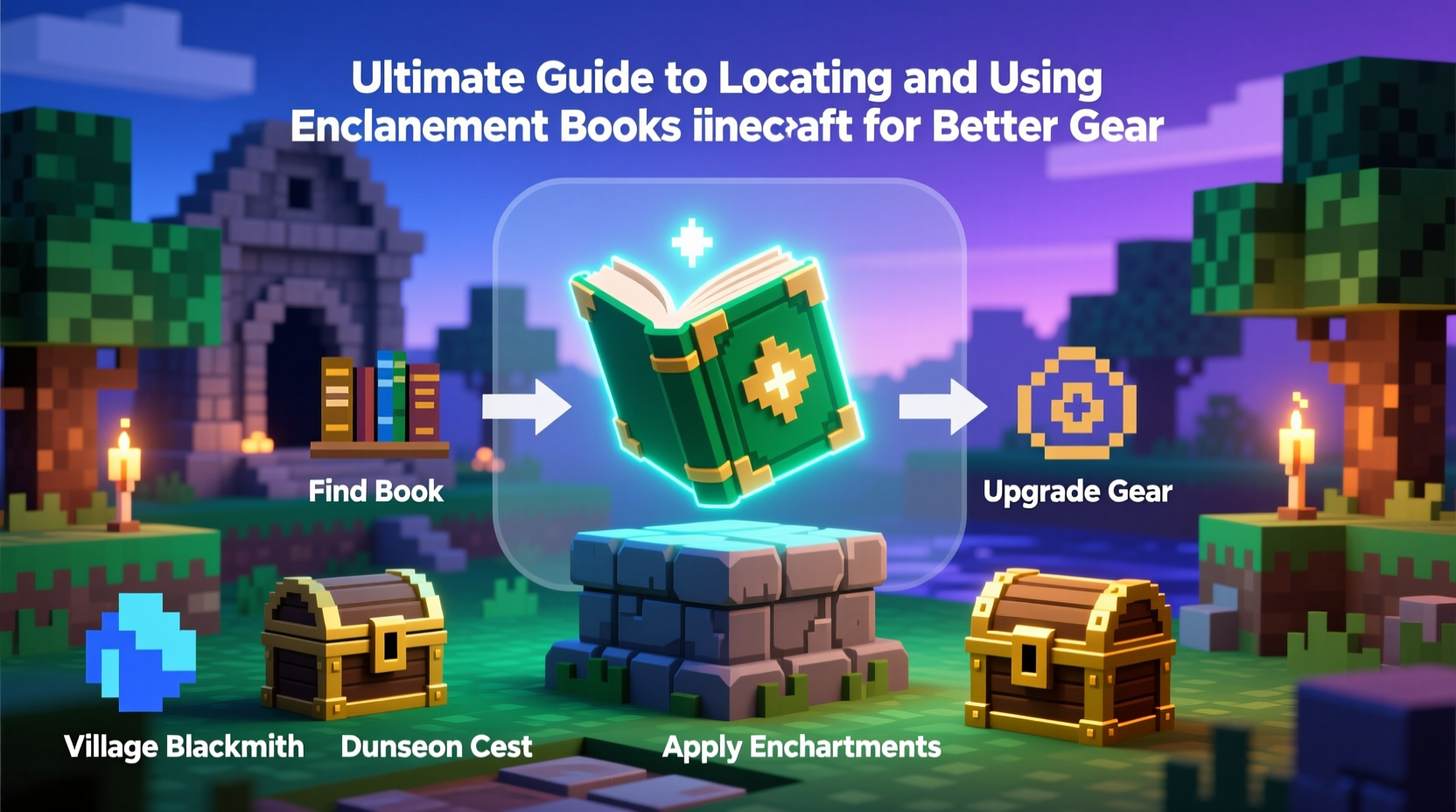
Enchantment books don’t just appear at the enchanting table—they can be found throughout the world in chests, as loot drops, or through fishing. Knowing where to look saves time and resources while increasing your chances of securing powerful enchantments early.
- Bastion Remnants: In the Nether, bastions often contain chests with Fire Protection, Blast Protection, and even Mending books.
- Shipwrecks and Buried Treasures: Ocean exploration rewards players with books like Aqua Affinity, Respiration, or Luck of the Sea.
- Village Libraries: One of the most reliable sources. Librarian villagers trade enchanted books based on their level, including rare combinations like Efficiency V or Unbreaking III.
- Jungle Temples and Desert Pyramids: These structures occasionally hold chests with low-tier books such as Sharpness or Power.
- Fishing: With a regular fishing rod, you have a small chance (0.8%) of catching treasure, which includes enchanted books like Lure or Luck of the Sea.
Using the Enchanting Table Strategically
The enchanting table is the primary way to create custom books. However, maximizing its potential requires preparation. You’ll need experience levels, lapis lazuli, and a setup that boosts available enchantment strength.
To unlock higher-tier enchantments, surround your enchanting table with bookshelves. Each bookshelf adds +2 levels to the maximum enchantable tier, up to a cap of 30 levels with 15 bookshelves arranged correctly (one block away, no obstructions). Once set up, place a book on the table to generate three random enchantment options.
Not every result will be useful. The key is patience and selective use of XP. Don’t waste high-level enchantments on weak books. Instead, aim for books with valuable effects such as:
- Sharpness, Smite, or Bane of Arthropods for weapons
- Protection variants (Projectile, Blast, Fire) for armor
- Efficiency for mining tools
- Silk Touch or Fortune for resource gathering
- Mending, which uses XP orbs to repair durability
“Books are the backbone of optimized enchanting. They allow modular upgrades without sacrificing existing gear.” — Alex Turner, Competitive Minecraft Builder & Speedrunner
Applying Books with an Anvil: The Smart Way to Upgrade Gear
Once you’ve obtained an enchanted book, it must be applied via an anvil. This method preserves existing durability and allows stacking multiple enchantments—something impossible through direct enchanting.
Place the target item (e.g., a diamond sword) in the first slot and the enchanted book in the second. The anvil will display the cost in experience levels. Higher-tier enchantments and pre-enchanted items increase this cost due to “enchantment penalty.” To minimize costs:
- Apply books in order of increasing complexity—start with common ones like Unbreaking before adding rare ones like Mending.
- Avoid repairing and enchanting simultaneously unless necessary; each action increases the penalty.
- Use cursed books (like Binding Curse) only if you want permanent gear locking—for roleplay or challenge runs.
| Enchantment | Best For | Max Level | Tier Priority |
|---|---|---|---|
| Mending | All durable gear | I | ★★★★★ |
| Unbreaking III | Tools, armor, bows | III | ★★★★☆ |
| Efficiency V | Pickaxes, axes | V | ★★★★★ |
| Fortune III | Shovels, hoes, pickaxes | III | ★★★★☆ |
| Sharpness V | Swords, axes | V | ★★★★☆ |
| Protection IV | Helmets, chestplates | IV | ★★★★★ |
Real Example: Building a High-Tier Diamond Sword
Consider a player aiming for the ultimate melee weapon. They begin with a newly crafted diamond sword. Their goal: combine Sharpness V, Knockback II, Fire Aspect II, and Mending—all without exceeding reasonable XP costs.
They first obtain a Sharpness V book from a librarian villager trading emeralds. Next, they fish until landing a Mending book. Using an anvil, they apply Sharpness first (cost: 10 levels), then Knockback (7 levels), Fire Aspect (8 levels), and finally Mending (12 levels). Due to cumulative penalties, the final cost reaches 37 levels—but because they applied Mending last, the sword can now self-repair using XP orbs collected during gameplay.
This approach ensures longevity and peak performance. Had they used direct enchanting, they’d likely miss Mending entirely or end up with redundant effects.
Checklist: Optimizing Your Enchantment Book Workflow
Follow this step-by-step checklist to maximize efficiency and avoid common pitfalls:
- ✅ Build a full ring of 15 bookshelves around your enchanting table
- ✅ Collect at least 30+ lapis lazuli and stockpile XP (mine ores, kill mobs)
- ✅ Visit village librarians frequently; restock trades by placing lecterns
- ✅ Fish with Lure III and Luck of the Sea IV rods near open water
- ✅ Prioritize Mending and Unbreaking in your enchantment queue
- ✅ Use anvils to combine books gradually, minimizing enchantment penalty
- ✅ Store unused enchanted books in a labeled chest system (e.g., “Weapons,” “Mining,” “Armor”)
Frequently Asked Questions
Can I remove an enchantment from a book?
No, once a book is enchanted, the effect cannot be removed or altered. However, you can choose not to apply it and save it for later use.
Why does the anvil say ‘Too Expensive’?
This occurs when the total XP cost exceeds 39 levels. To fix it, try applying simpler enchantments first or use a less-enchanted base item. Breaking down the process into smaller steps reduces the penalty buildup.
Do enchanted books stack in inventory?
No, each enchanted book occupies its own slot, even if identical. Organize them carefully using chests with signs for quick access.
Advanced Tip: Combining Books Before Application
You can merge two enchanted books on an anvil to create a single book with multiple effects. For example, combining a Sharpness III book with a Fire Aspect II book results in one dual-enchanted book. This reduces anvil usage on final gear and simplifies upgrades.
However, merging books also increases XP cost and contributes to enchantment penalty. Use this technique sparingly—ideally only when preparing for a major gear upgrade or creating backup combo-books for future builds.
Conclusion: Master Your Enchanting Strategy
Enchantment books are more than convenience—they’re strategic tools that empower customization, extend gear life, and enhance gameplay efficiency. Whether scavenged from ancient cities or crafted through meticulous XP investment, each book represents a step toward mastery over Minecraft’s survival mechanics. By understanding spawn locations, leveraging villager trades, optimizing anvil usage, and planning enchantment sequences, you gain control over your progression like never before.




 浙公网安备
33010002000092号
浙公网安备
33010002000092号 浙B2-20120091-4
Comments
No comments yet. Why don't you start the discussion?