
A cluttered pencil case may seem like a minor inconvenience, but it can disrupt focus, waste time, and reduce productivity—especially during exams, creative sessions, or busy workdays. Whether you're a student, artist, teacher, or office professional, an organized pencil case is a small tool with a big impact. This guide delivers actionable strategies to transform your pencil case from chaotic to streamlined, ensuring every item has its place and purpose.
Assess Your Needs Before Organizing
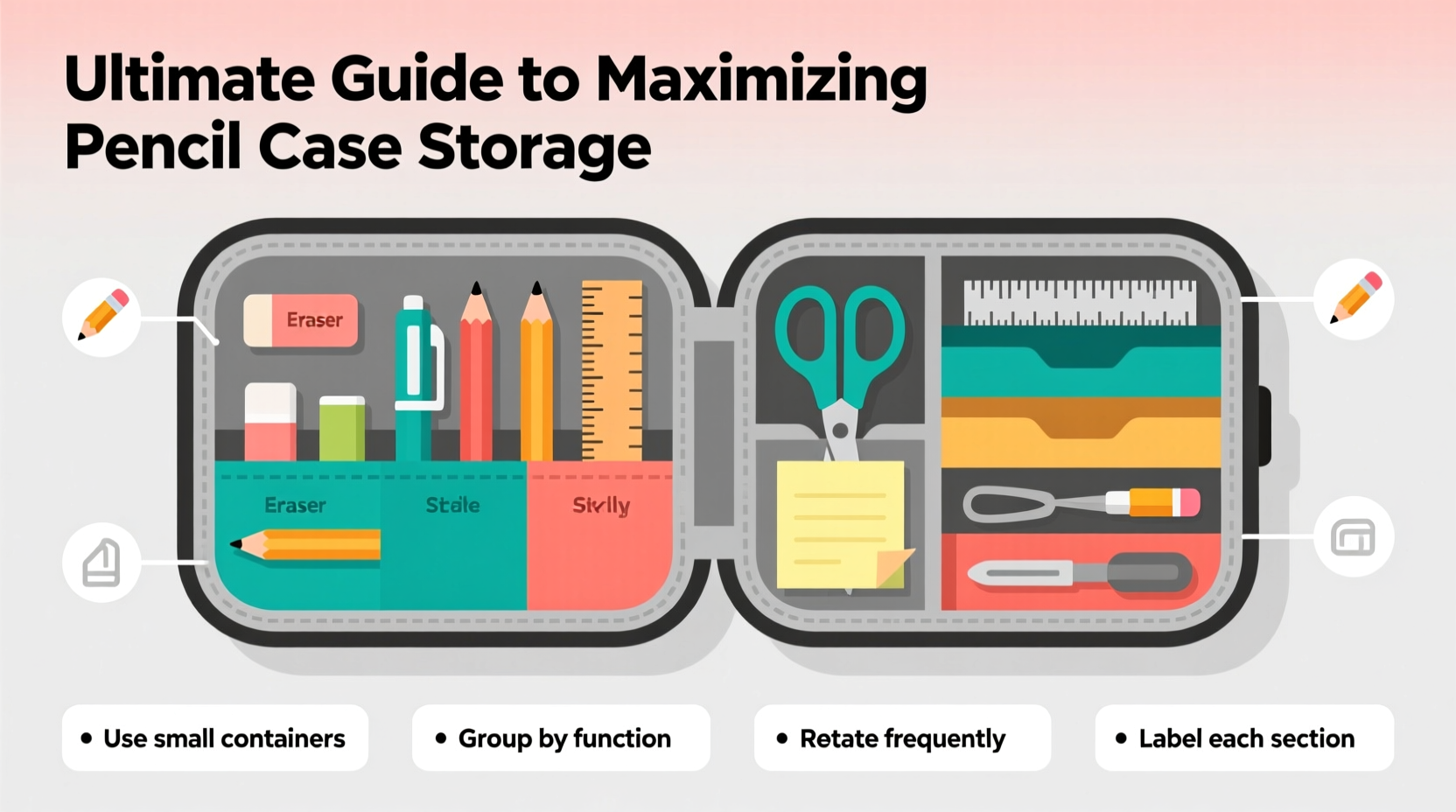
The first step in effective organization is understanding what you actually use. Many people overfill their cases with rarely used items, making retrieval difficult and increasing wear on the container. Take inventory of everything you carry: pens, pencils, highlighters, erasers, rulers, scissors, sticky notes, USB drives, or even earbuds.
Categorize these into three groups:
- Daily essentials – Used every day (e.g., favorite pen, mechanical pencil)
- Occasional tools – Needed weekly or situationally (e.g., correction tape, colored pencils)
- Rarely used – Kept “just in case” (e.g., backup batteries, extra clips)
Only daily and occasional tools belong in your primary pencil case. Rarely used items should be stored elsewhere—like a desk drawer or backpack compartment.
Choose the Right Pencil Case Design
Not all pencil cases are created equal. The right design matches your usage pattern and storage environment. Consider these common types:
| Type | Best For | Limits |
|---|---|---|
| Pouch (Zippered or Snap) | Minimalists, travelers, those needing portability | Limited visibility; contents shift when opened |
| Compartmentalized Case | Artists, students with many tools, professionals with tech accessories | Bulkier; harder to fit in tight spaces |
| Roll-up Fabric Case | People who carry brushes, long tools, or variable sets | Less protection; no rigid structure |
| Hard-shell Case with Trays | Lab environments, drafting, or anyone needing precision access | Heavy; less flexible for changing needs |
If you frequently switch between tasks—such as note-taking, sketching, and editing—it’s worth having two specialized cases instead of one overstuffed one.
Optimize Internal Layout with Zoning
Efficient organization relies on zoning: assigning specific areas within the case for different categories. Think of it like kitchen drawer organization—spoons go together, knives have their slot.
Create zones using dividers, small containers, or rolled fabric sleeves. Here’s a recommended layout:
- Writing Zone – Pens, pencils, mechanical pencils grouped by frequency of use.
- Correction Zone – Erasers, white-out, tape dispenser (if mini-sized).
- Highlight & Color Zone – Highlighters or colored pens arranged by color spectrum (ROYGBIV) for quick selection.
- Fine Tools Zone – Scissors, tweezers, mini stapler, or stylus.
- Tech & Extras Zone – USB drive, SD card, spare battery, paper clips.
Mini Case Study: From Chaos to Clarity
Sophie, a university art student, struggled with a jumbled zipper pouch that spilled contents whenever opened. She carried 17 items: 6 pens, 4 markers, 2 pencils, a brush, eraser, ruler, scissors, and a USB stick. After assessment, she realized she used only 8 regularly.
She switched to a hard-case organizer with adjustable dividers. She grouped her most-used tools at the front, placed markers in a vertical sleeve, and moved the ruler and USB to her backpack. Within a week, she saved nearly 10 minutes daily searching for tools—and her bag stayed neater overall.
Maintain Order with a Weekly Reset Routine
Even the best system degrades without maintenance. Build a quick reset into your weekly schedule—ideally Sunday evening or Monday morning.
Follow this 5-minute routine:
- Empty the pencil case completely.
- Wipe interior with a dry microfiber cloth to remove graphite dust and debris.
- Check each item: Is it functional? Needed? Replace dried-out pens or worn erasers.
- Reinsert tools into their designated zones.
- Verify balance—nothing should be crammed or loose.
“Organization isn’t a one-time fix—it’s a habit. Five minutes a week prevents hours of frustration.” — David Lin, Productivity Consultant
Advanced Tips for Specialized Users
Different professions and hobbies demand tailored approaches.
For Artists
Use foam inserts with custom-cut slots for brushes and fine liners. Store watercolor pans separately in sealed containers to avoid smudging.
For Students
Color-code subjects: red case for math, blue for literature. Include a small sticky-note pad for quick reminders.
For Professionals
Keep a minimalist executive case with just a premium pen, pencil, and business card holder. Use a secondary case for project-specific tools.
For Kids
Choose transparent cases with labeled picture zones. Velcro flaps are easier than zippers for younger children.
Do’s and Don’ts of Pencil Case Storage
| Do’s | Don’ts |
|---|---|
| Use vertical dividers for tall items like highlighters | Overstuff the case beyond closure comfort |
| Rotate seasonal tools (e.g., exam pencils, holiday cards) | Store leaking pens or damaged tools |
| Place heavier items at the bottom for stability | Keep food, gum, or liquids inside |
| Label sections if sharing with others or managing multiple kits | Ignore wear—frayed zippers or broken snaps reduce efficiency |
FAQ
How many pens should I keep in my pencil case?
Limit to 3–5 reliable writing tools. More leads to decision fatigue and clutter. Rotate backups from a main supply at home or in your desk.
Can I organize a shared pencil case?
Yes. Use color-coded zones or separate compartments labeled by user. Establish a cleanup rule: return items after use and clear out weekly.
What’s the best way to clean a fabric pencil case?
Spot-clean with mild soap and a damp cloth. For machine-washable cases, empty completely, turn inside out, and use cold water on gentle cycle. Air dry flat to preserve shape.
Final Checklist: Achieve Pencil Case Mastery
- ✅ Audit your current tools and remove unused items
- ✅ Choose a case type that fits your lifestyle
- ✅ Implement zoning with dividers or organizers
- ✅ Label or color-code sections for faster access
- ✅ Schedule a weekly 5-minute reset
- ✅ Replace worn or dried-out supplies promptly
- ✅ Adapt layout seasonally or per project
Conclusion
An optimized pencil case does more than hold stationery—it supports clarity, speed, and confidence in your daily tasks. By applying smart categorization, thoughtful design choices, and consistent upkeep, you turn a simple container into a precision tool. Organization isn’t about perfection; it’s about reducing friction so you can focus on what matters.




 浙公网安备
33010002000092号
浙公网安备
33010002000092号 浙B2-20120091-4
Comments
No comments yet. Why don't you start the discussion?