
Mini bags have become a fashion staple—sleek, stylish, and perfect for on-the-go moments. But their compact size often leads to one major frustration: limited space. The challenge isn’t just carrying what you need—it’s doing so in a way that keeps items accessible, organized, and secure. With the right approach, a mini bag can be more than a statement piece; it can be a highly functional companion. This guide reveals practical methods, expert-backed techniques, and clever hacks to help you maximize every inch of your small bag without sacrificing utility.
Why Mini Bag Organization Matters
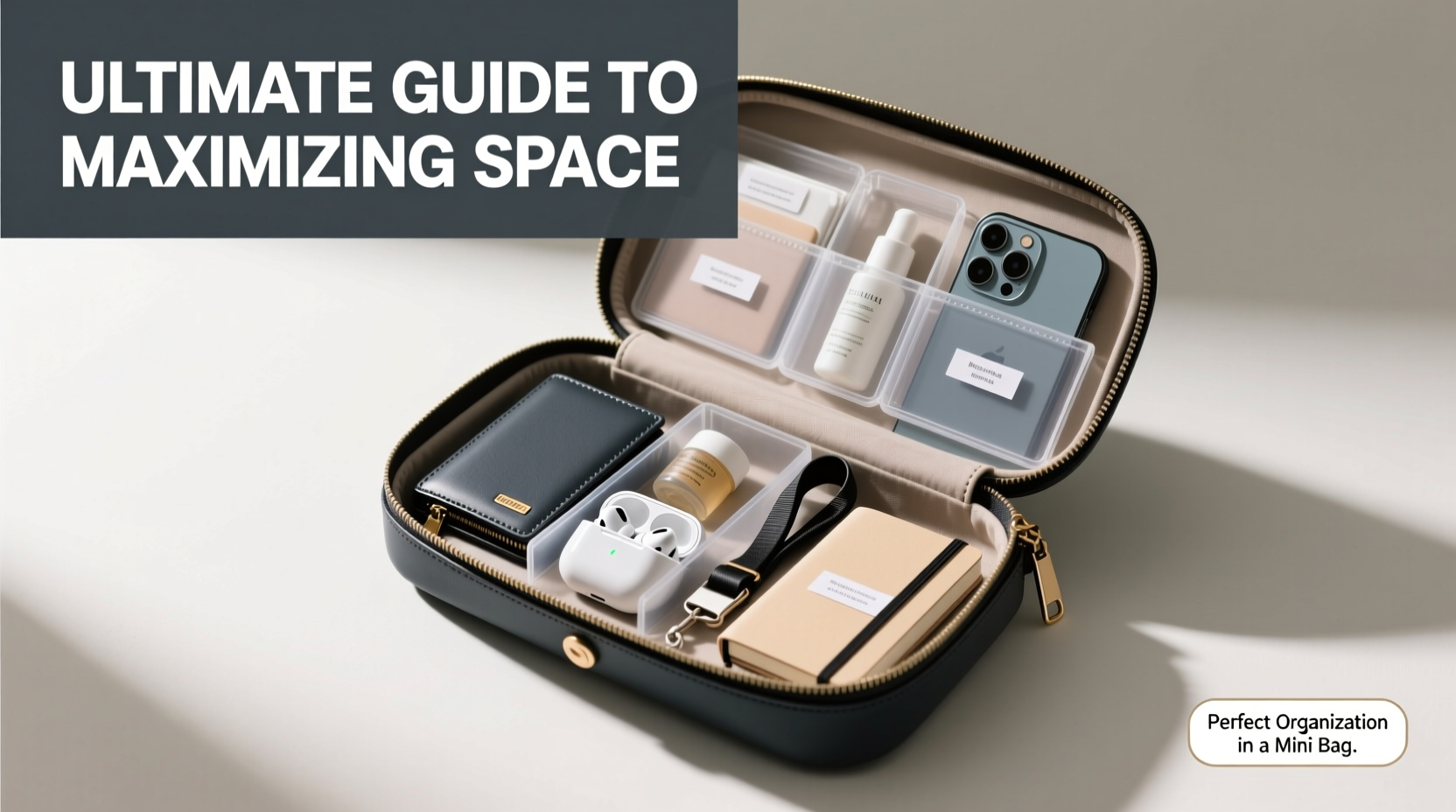
Carrying a mini bag doesn’t mean compromising on preparedness. Whether you're heading to a meeting, meeting friends for coffee, or navigating a quick errand run, having immediate access to keys, phone, lipstick, or hand sanitizer makes all the difference. Disorganization leads to time wasted rummaging, lost items, and unnecessary stress. More importantly, overstuffing can distort the bag’s shape and damage delicate materials like leather or structured fabrics.
Efficient organization transforms a cramped accessory into a streamlined toolkit. It also encourages mindful packing—carrying only what you truly need—which reduces weight and improves comfort.
“Functionality should never be sacrificed for style. A well-organized mini bag proves both can coexist.” — Lena Park, Urban Lifestyle Organizer
Step-by-Step Guide to Packing Your Mini Bag Efficiently
Follow this five-step process to optimize your mini bag setup for daily use:
- Empty and Assess: Remove everything from your bag. Lay out each item and evaluate its necessity. Ask: “Will I genuinely need this today?”
- Categorize Essentials: Group items by function—personal care (lip balm, tissues), tech (phone, earbuds), documents (ID, cards), and emergency items (pain relievers, breath mints).
- Select a Core Layout: Decide whether you’ll use compartments, pouches, or a layered stacking method based on your bag’s interior design.
- Pack by Priority: Place most frequently used items at the top or in outer pockets. Less-used items go deeper or in side slots.
- Test Accessibility: Simulate real-world use. Can you retrieve your phone or wallet quickly? Adjust positioning as needed.
Smart Storage Solutions and Accessories
Maximizing space starts with smart accessories that enhance internal structure and accessibility.
- Insert organizers: Slim silicone or fabric trays fit snugly inside most mini bags, creating dedicated zones for cards, cash, and keys.
- Mini pouches: Use zippered vinyl or neoprene cases for cosmetics or medications. Transparent ones allow quick visual identification.
- Multi-tool items: Replace bulky versions with compact alternatives—a credit card-sized portable charger, foldable water bottle, or dual-use makeup (e.g., lip-and-cheek tint).
- Magnetic closures and clips: Attach key leashes or cardholders with magnetic backs for instant retrieval.
Investing in these tools pays off in reduced clutter and faster access. They also protect fragile items like compacts or glasses from getting crushed.
Do’s and Don’ts of Mini Bag Packing
| Do’s | Don’ts |
|---|---|
| Use vertical space with stackable pouches | Overfill the bag beyond its natural capacity |
| Keep high-use items in exterior pockets | Store liquids without leak-proof sealing |
| Rotate contents based on daily needs | Leave loose coins or paper scraps inside |
| Label small pouches with tiny tags | Carry full-size toiletries unnecessarily |
| Choose flat, slim wallets with minimal cards | Ignore weight distribution—top-heavy bags tip forward |
Real-Life Example: The Commuter’s Mini Bag Makeover
Sophie, a graphic designer in downtown Toronto, relied on her mini crossbody for weekday commutes but constantly struggled with disarray. She carried her phone, wallet, AirPods, sunglasses, hand cream, and a compact mirror—often dropping items while searching frantically at transit gates.
After applying structured organization principles, she made three changes: First, she replaced her thick bi-fold wallet with a minimalist cardholder holding only two cards and folded cash. Second, she added a clear vinyl sleeve inside the main compartment to hold her phone and earbuds together. Third, she clipped a tiny carabiner to her keys and attached it to an interior D-ring.
The result? Retrieval time dropped from 30 seconds to under 5. No more dropped items. Her bag maintained its shape, and she reported feeling more composed throughout the day. “It sounds minor,” she said, “but not fumbling through my bag every time I need my transit pass has reduced my morning stress significantly.”
Checklist: Optimize Your Mini Bag in 10 Minutes
Use this quick-reference checklist to reorganize your mini bag efficiently:
- ☐ Empty all contents onto a clean surface
- ☐ Discard expired, unused, or redundant items
- ☐ Choose a slim wallet with only essential cards
- ☐ Transfer loose items into labeled micro-pouches
- ☐ Assign one pocket per category (tech, personal, docs)
- ☐ Secure keys with a clip or tether
- ☐ Test ease of access for phone and wallet
- ☐ Wipe down interior with a dry cloth
- ☐ Store in dust bag when not in use
- ☐ Reassess weekly based on lifestyle needs
Frequently Asked Questions
How many items should I carry in a mini bag?
Aim for 5–7 core essentials: phone, wallet, keys, earbuds, hand sanitizer, one cosmetic item, and a small reusable shopping fold. Prioritize based on your day’s activities—fewer items mean better functionality.
Can I carry a tablet or large phone in a mini bag?
Only if the bag is specifically designed for tech storage. Most mini bags accommodate smartphones up to 6.5 inches. For larger devices, consider a slightly bigger silhouette or use a sling-style mini with padded tech pockets.
What’s the best way to prevent my mini bag from getting messy again?
Establish a nightly reset routine. When you get home, remove unnecessary items, wipe the interior, and return essentials to their designated spots. Consistency turns organization into habit.
Final Thoughts: Small Bag, Big Impact
Mastering the art of mini bag organization isn’t about squeezing more in—it’s about designing a system that supports your lifestyle with precision and elegance. Every decision, from choosing the right pouch to positioning your phone for quick access, contributes to a smoother, more confident experience. When your essentials are thoughtfully arranged, your bag becomes an extension of your rhythm, not a source of friction.
Start tonight. Take five minutes to empty, assess, and rebuild your current loadout using the strategies above. Notice the difference tomorrow when you reach for your phone without spilling half your belongings onto the sidewalk. Small changes yield outsized results.




 浙公网安备
33010002000092号
浙公网安备
33010002000092号 浙B2-20120091-4
Comments
No comments yet. Why don't you start the discussion?