
Modern messaging isn't just about words—it's about expression. Your texting environment shapes how you communicate, and a plain white or gray chat screen can feel sterile over time. Personalizing your Android messaging background is a simple yet powerful way to refresh your digital conversations. Whether you want a calming gradient, a favorite photo, or a dark theme that saves battery, customizing your message interface enhances both aesthetics and usability.
Unlike iPhones, which offer limited customization options, Android provides flexibility across devices and apps. However, the process varies depending on your device manufacturer, default messaging app, and installed third-party alternatives. This guide walks you through every method available, from built-in settings to advanced workarounds, so you can create a messaging experience that feels uniquely yours.
Why Customize Your Messaging Background?
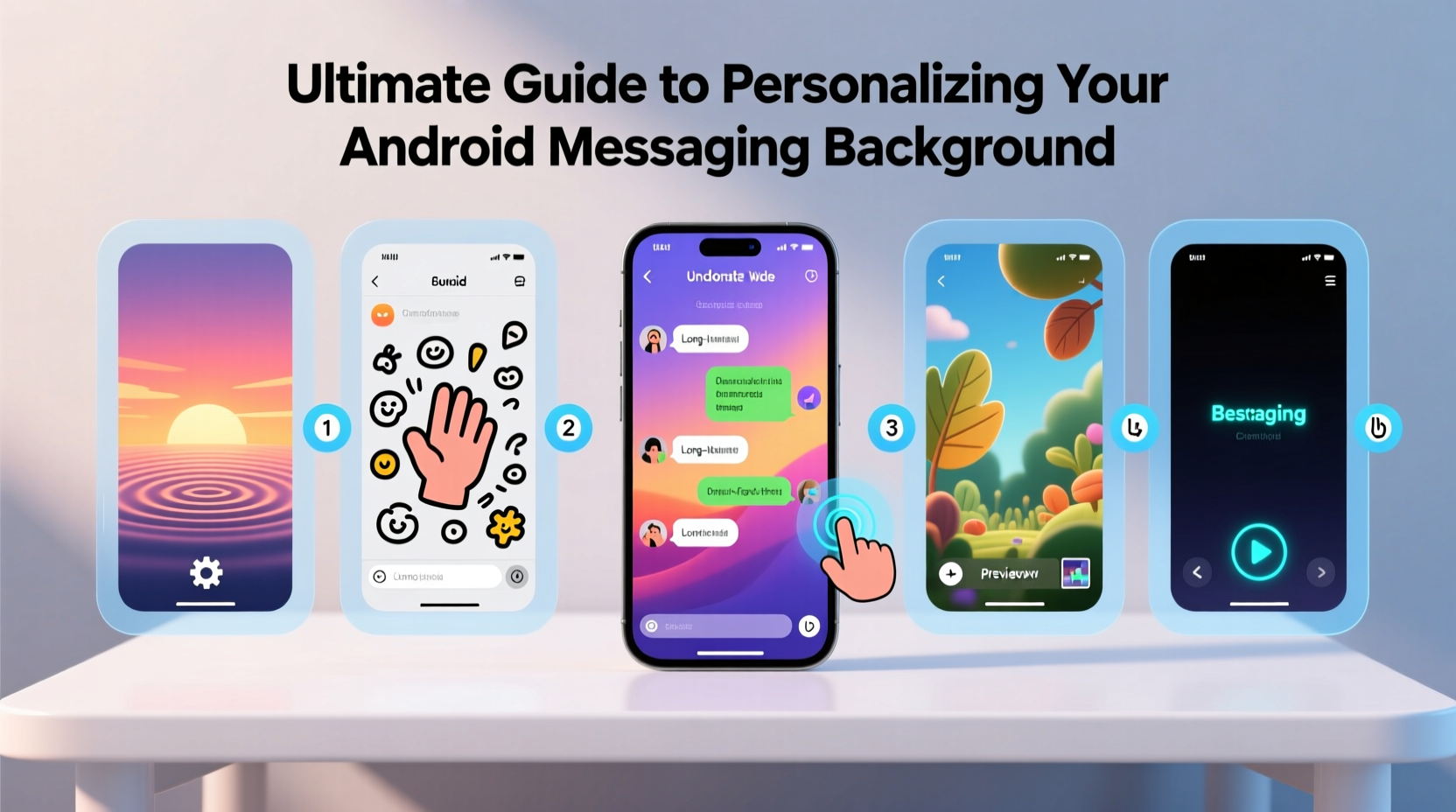
A personalized background does more than make your chats look good—it improves readability, reduces eye strain, and adds emotional resonance to everyday interactions. Think of it as interior decorating for your digital life. A soft pastel might calm your mind during stressful conversations, while a vibrant image could energize casual chats with friends.
Studies in human-computer interaction suggest that personalized interfaces increase user engagement and satisfaction. According to Dr. Lena Torres, UX researcher at Mobile Insight Labs:
“Personalization fosters a sense of ownership and comfort. When users feel their devices reflect their identity, they interact with them more intentionally and enjoyably.” — Dr. Lena Torres, UX Researcher
Beyond psychology, functional benefits exist too. Dark backgrounds reduce glare in low-light environments and conserve battery life on OLED screens. Custom textures can also help distinguish between different contacts or conversation types at a glance.
Step-by-Step: How to Change Your Messaging Background
The exact steps depend on your messaging app. Below is a comprehensive walkthrough covering the most common platforms.
1. Using Google Messages (Default on Many Devices)
Google Messages, the default app on Pixel phones and many Android One devices, supports wallpaper customization per conversation. Here’s how to apply it:
- Open the **Messages** app.
- Select an existing conversation or start a new one.
- Tap the contact’s name or profile icon at the top to open conversation settings.
- Choose **Wallpaper**.
- Select from preset options like Light, Dark, Gradient, or tap **Gallery** to use your own photo.
- Adjust brightness and blur level if desired, then confirm.
2. Samsung Messages (Galaxy Devices)
Samsung’s native messaging app allows similar customization but with added theme integration:
- Open **Messages**, go to a chat thread.
- Tap the three-dot menu > **Chat settings** > **Chat wallpaper**.
- Pick from preloaded options or choose **Select from gallery**.
- Toggle **Apply to all conversations** if you want uniformity.
- Enable **Dark mode override** to maintain legibility in low light.
Note: Some older Galaxy models restrict custom wallpapers unless system-wide dark mode is disabled.
3. Third-Party Apps: WhatsApp, Signal, and Telegram
While not SMS-based, these popular apps also support background changes:
- WhatsApp: Settings > Chats > Chat wallpaper > Choose from defaults or upload an image.
- Signal: Settings > Appearance > Chat background > Select or upload.
- Telegram: Offers dynamic themes and pattern overlays in addition to static images via Settings > Chat Background.
These apps often provide more creative freedom, including animated backgrounds (Telegram Premium) and scheduled theme switching.
Do’s and Don’ts of Messaging Background Design
To ensure your customized background enhances rather than hinders communication, follow this best-practice table:
| Do’s | Don’ts |
|---|---|
| Use subtle gradients or blurred photos for better text contrast | Don’t use overly bright or flashy images that distract from messages |
| Match background tone to your typical usage time (e.g., dark at night) | Don’t forget accessibility—ensure readability for all font sizes |
| Rotate backgrounds seasonally or by mood for variety | Don’t overload storage with large, uncompressed images |
| Test background visibility with both sent and received message bubbles | Don’t assume all recipients see the same background—it’s client-side only |
Mini Case Study: Revamping a Professional’s Messaging Workflow
Sophia, a freelance designer based in Portland, found herself checking messages less frequently due to visual fatigue. Her default white chat screen caused discomfort after long design sessions. She decided to personalize her Google Messages background using a soft charcoal gradient with minimal blur.
Within days, she noticed reduced eye strain during evening client updates. She took it further by assigning specific wallpapers to key clients—one uses a muted blue for branding agencies, another a warm beige for editorial work. The visual cues helped her mentally switch contexts faster.
“It sounds minor, but seeing that little color shift before reading a message puts me in the right headspace,” she said. “Plus, my phone just feels more *me* now.”
Advanced Tips for Power Users
If you’re comfortable exploring beyond standard settings, consider these advanced strategies:
- Create custom themes with Tasker or MacroDroid: Automate wallpaper changes based on time of day, location, or app usage.
- Use live wallpapers selectively: While most messaging apps don’t support live backgrounds directly, some launchers allow semi-transparent overlays that subtly animate behind the app.
- Sync across devices with cloud folders: Store your preferred wallpapers in Google Drive or Dropbox for easy access when switching phones.
- Optimize image size: Resize photos to screen resolution (typically 1080x2340px) to prevent lag and excessive data use.
Frequently Asked Questions
Can I set different backgrounds for different contacts?
Yes, most modern messaging apps—including Google Messages, Samsung Messages, and WhatsApp—allow per-conversation wallpaper selection. Simply open the individual chat, access its settings, and choose a unique background.
Will changing my messaging background drain my battery?
Generally, no—unless you're using very bright images on an OLED screen. In fact, dark custom backgrounds can improve battery efficiency. Avoid pure white or full-screen animations to maximize savings.
Why doesn’t my wallpaper appear on the recipient’s phone?
Custom backgrounds are local to your device. They don’t affect what others see. This is a privacy and performance feature—each user personalizes their own view independently.
Checklist: Personalizing Your Messaging Experience
Follow this actionable checklist to fully customize your Android messaging background:
- ✅ Identify your primary messaging app (e.g., Google Messages, Samsung Messages).
- ✅ Choose a purpose: aesthetic appeal, reduced eye strain, or improved focus.
- ✅ Select 2–3 candidate images or gradients (blurred nature shots work well).
- ✅ Test readability with both sent and received message bubbles.
- ✅ Apply per-contact or global wallpaper based on preference.
- ✅ Adjust brightness/blur settings for optimal contrast.
- ✅ Consider automating changes using routines or shortcuts.
- ✅ Review monthly—update backgrounds to match seasons or moods.
Final Thoughts: Make Every Message Feel Like Home
Your messaging app is one of the most visited spaces on your phone. Letting it remain generic is like living in a furnished apartment without adding your own decor. With just a few taps, you can transform it into a space that reflects your personality, supports your habits, and makes daily communication more enjoyable.
Start small—try a single dark theme tonight. Then experiment with seasonal photos, artistic gradients, or even motivational quotes as subtle backdrops. Over time, you’ll develop a system that makes each conversation feel intentional and inviting.




 浙公网安备
33010002000092号
浙公网安备
33010002000092号 浙B2-20120091-4
Comments
No comments yet. Why don't you start the discussion?