
Straw handbags are timeless accessories that blend elegance with casual charm, perfect for beach outings, summer markets, or city strolls. But unlike leather or synthetic materials, straw is a natural fiber—organic, delicate, and highly susceptible to environmental damage. Without proper care, your favorite bag can lose its structure, fade in color, or even crack over time. Preserving both its shape and lifespan requires intentional habits, the right tools, and consistent attention. This guide delivers practical, field-tested strategies to keep your straw handbag looking pristine season after season.
Understanding Straw as a Material
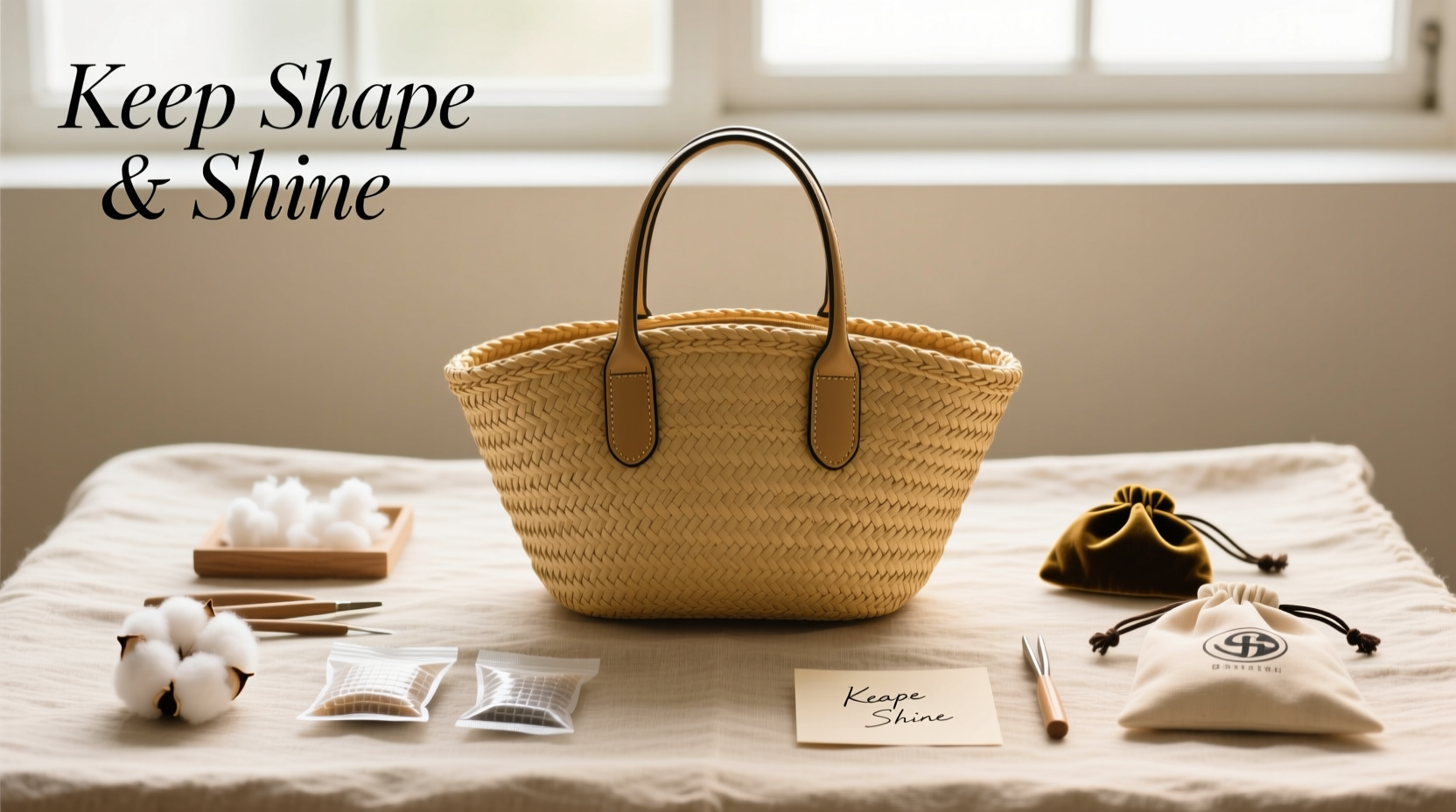
Straw handbags are typically made from woven fibers such as raffia, seagrass, sisal, or water hyacinth. These materials are lightweight and breathable but inherently fragile when exposed to moisture, heat, or pressure. Unlike structured leather bags, straw lacks internal rigidity unless reinforced with lining or framing. The weave itself provides structural integrity, which means any deformation—like crushing or bending—can become permanent if not corrected early.
The natural origin of straw also means it responds to humidity. In dry climates, it may become brittle; in humid environments, it can absorb moisture and warp. Recognizing these characteristics is the first step toward effective preservation. The goal isn’t just cleanliness—it’s maintaining the bag’s original silhouette and preventing irreversible wear.
“Straw is one of the most rewarding materials to care for because small efforts yield dramatic results in longevity.” — Lila Nguyen, Sustainable Accessory Conservator
Step-by-Step Guide to Daily and Seasonal Care
Maintaining a straw handbag doesn’t require complex routines. A few disciplined practices make all the difference. Follow this timeline to integrate care into your lifestyle:
- Daily Wipe-Down (After Use): Use a soft, dry microfiber cloth to remove dust and fingerprints. Avoid damp cloths unless necessary, as moisture weakens fibers over time.
- Weekly Inspection: Check for loose weaves, fraying edges, or stains. Early detection prevents minor issues from becoming major flaws.
- Monthly Deep Cleaning: Gently brush with a soft-bristled toothbrush to dislodge embedded dirt. For light stains, use a barely damp cloth with distilled water only—never soap or chemicals.
- Seasonal Conditioning: Apply a natural fiber protector spray (free of alcohol and silicones) once per season to repel moisture and UV rays.
- Off-Season Storage Prep: Clean thoroughly, stuff properly, and store in a breathable environment before storing long-term.
Proper Storage Techniques to Maintain Shape
How you store your straw handbag between uses is arguably more important than how you clean it. Improper storage leads to sagging handles, collapsed sides, and misshapen silhouettes.
Begin by stuffing the interior with acid-free tissue paper or clean cotton scarves. Avoid newspaper, as ink can transfer onto lighter-colored straws. The stuffing should be firm enough to support the walls but not so tight that it stretches the weave. For structured tote styles, consider using a custom insert or a soft fabric pouch filled with foam pieces to maintain corners.
Always store upright in a cool, dry closet away from direct sunlight. Never stack items on top of it. Use a breathable cotton dust bag—never plastic—as trapped moisture encourages mold and mildew.
| Storage Factor | Recommended Practice | Common Mistake |
|---|---|---|
| Environment | Cool, dry, low-humidity area | Basements or bathrooms with high moisture |
| Position | Upright with internal support | Lying flat or hanging by straps |
| Covering | Breathable cotton dust bag | Plastic bags or vacuum-sealed containers |
| Exposure | Away from windows and heaters | Near radiators or sunlit shelves |
Do’s and Don’ts: Quick Reference Checklist
To simplify daily decisions, here’s a checklist summarizing essential actions:
- DO wipe your bag after each use.
- DO store it stuffed with soft material.
- DO rotate multiple straw bags to reduce strain.
- DO condition with fiber-safe protectant seasonally.
- DON’T expose it to rain or poolside splashes.
- DON’T use chemical cleaners or wipes.
- DON’T place heavy objects inside when not in use.
- DON’T hang by the straps—this stretches them permanently.
Real-Life Example: Recovering a Misshapen Bag
Sophie, a boutique owner in Charleston, stored her oversized raffia market bag under a pile of linens during winter. When she retrieved it in spring, the sides had caved inward, and the handle had developed a permanent droop. Instead of discarding it, she followed a restoration method recommended by a local milliner:
She gently steamed the bag from a distance of 12 inches using a garment steamer—never touching the straw directly. The light moisture relaxed the fibers. Then, she restuffed the bag firmly with tissue paper and secured the shape with soft fabric ties around the middle. After 48 hours of air drying in a shaded room, the bag regained nearly its original form. While not perfect, it was wearable and structurally sound. This case underscores that even damaged bags can often be revived with patience and the right technique.
“Steam is a gentle way to reset natural fibers, but precision matters. Too much heat or contact causes irreversible damage.” — Rafael Torres, Artisan Handbag Restorer
Frequently Asked Questions
Can I repair a broken straw weave at home?
Minor frays can be stabilized using a tiny drop of clear-drying, flexible adhesive like PVA glue. Apply with a toothpick, then press the strand back into place and let dry under light weight. For larger breaks or unraveling sections, consult a professional conservator to avoid worsening the damage.
What should I do if my straw bag gets wet?
Act quickly. Blot excess moisture with a clean, absorbent towel—do not rub. Then, remove contents, stuff loosely with paper towels, and let it air dry at room temperature away from direct heat or sunlight. Rotate the bag every few hours to ensure even drying. Never use a hairdryer, as rapid drying causes cracking.
How often should I deep clean my straw handbag?
A thorough cleaning every 3–4 months is sufficient for regular use. If used weekly in dusty or sandy environments (e.g., beach towns), monthly brushing and inspection are advisable. Over-cleaning strips natural oils from the fibers and accelerates deterioration.
Final Thoughts: Make Preservation a Habit
A well-maintained straw handbag isn’t just an accessory—it’s a piece of craftsmanship worth protecting. Its longevity depends less on luck and more on routine choices: where you place it, how you pack it, and how you store it. By integrating simple habits like daily dusting, seasonal conditioning, and mindful storage, you preserve not just the shape but the soul of the bag.
Think of care as an act of appreciation. Each time you gently brush away sand or adjust the stuffing before putting it away, you’re extending the life of something handmade, sustainable, and uniquely yours. These small gestures compound into years of use, turning a seasonal trend into a lasting heirloom.




 浙公网安备
33010002000092号
浙公网安备
33010002000092号 浙B2-20120091-4
Comments
No comments yet. Why don't you start the discussion?