
Much like a finely tuned instrument, mesh heels demand attention, respect, and consistent care. These fashion-forward shoes combine delicate materials with bold design, making them a favorite for evening wear, summer events, and statement outfits. But their beauty comes at a cost: vulnerability. The mesh fabric—often made from nylon, polyester, or a blend—is lightweight and breathable, yet susceptible to snags, stretching, and environmental stress. Without proper maintenance, even high-end mesh heels can deteriorate within months.
The good news? With intentional habits and informed choices, you can dramatically extend their lifespan. This guide delivers actionable strategies—from daily wear decisions to seasonal storage—that protect structural integrity, preserve appearance, and keep your mesh heels looking fresh season after season.
Understanding Mesh Heel Construction
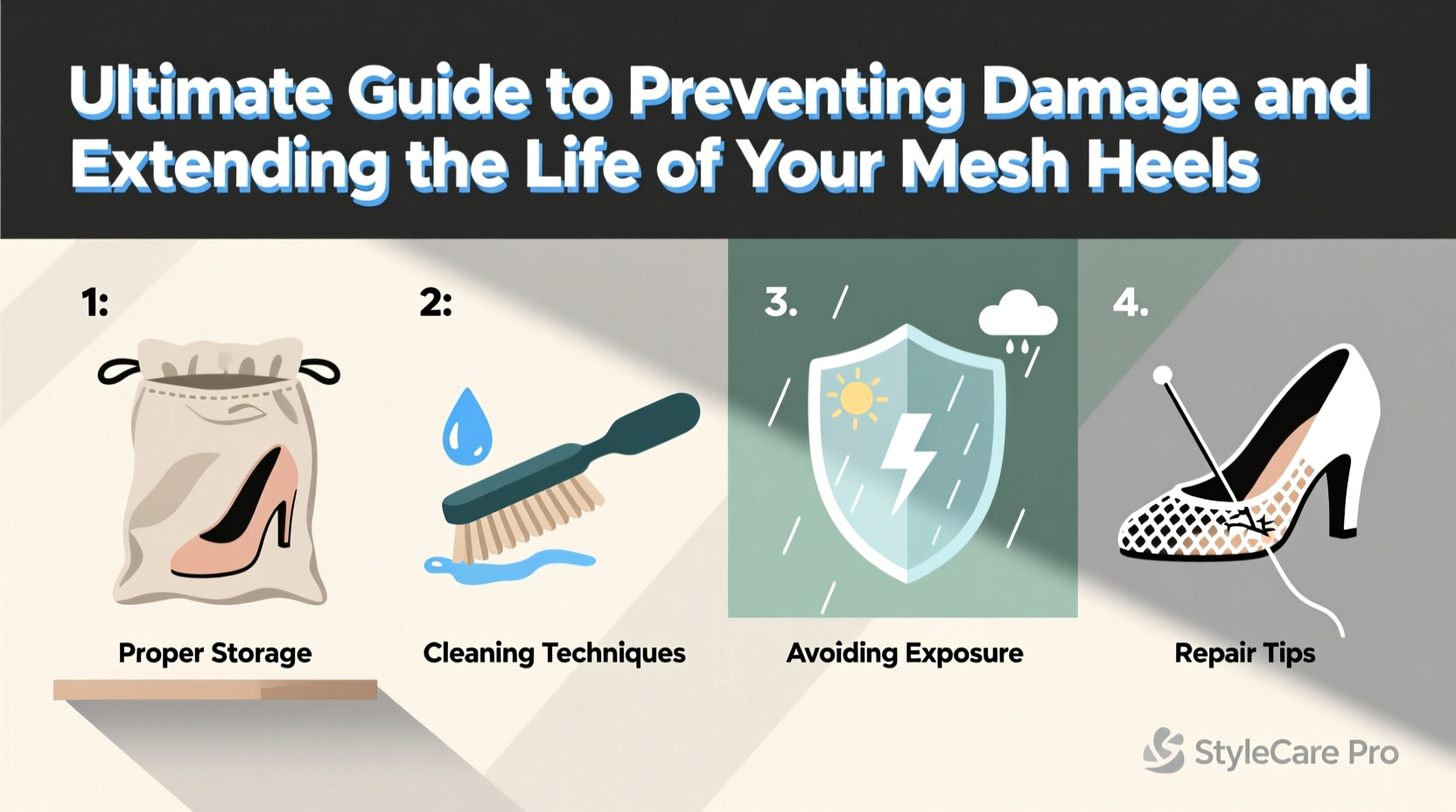
Mechanically, mesh heels are more complex than they appear. The upper is typically composed of a thin, woven synthetic fabric stretched over a supportive frame, often anchored to a T-strap, ankle wrap, or slingback. Beneath the surface, padding, lining, and adhesive layers bond the mesh to the shoe’s foundation. The heel itself may be wood, acrylic, or resin-based, contributing to overall stability.
Because mesh lacks elasticity, excessive tension during wear—such as forcing feet into tight-fitting pairs—can cause permanent distortion. Similarly, moisture weakens adhesives and promotes mold growth in hidden seams. Understanding these vulnerabilities is the first step toward prevention.
“Mesh isn’t inherently fragile, but it responds poorly to neglect. A single rainy commute without protection can initiate irreversible delamination.” — Lena Park, Footwear Conservation Specialist, Shoe Heritage Institute
Preventative Care During Wear
Damage often begins the moment you step outside. Proactive habits during use significantly reduce long-term wear and tear.
Avoid environments that compromise material integrity. Rain, humidity, and sand are primary culprits. Even light dampness can seep through microscopic pores, weakening stitching and encouraging bacterial growth. If caught in a drizzle, blot immediately with a microfiber cloth and air-dry away from direct heat.
Fit is equally critical. Shoes that pinch or slide create friction points where mesh frays fastest—especially around the ball of the foot and heel collar. Use gel pads or silicone inserts not only for comfort but as buffers between skin and fabric.
Dos and Don’ts of Daily Wear
| Do | Don't |
|---|---|
| Wear with seamless hosiery to reduce abrasion | Walk on rough pavement or gravel in mesh heels |
| Limit wear time to 3–4 hours per outing | Use for dancing or prolonged standing |
| Carry a shoe bag when transitioning to carpeted venues | Expose to chlorine or saltwater (e.g., beach clubs) |
| Rotate styles to prevent repetitive stress | Force feet into ill-fitting pairs |
Step-by-Step Cleaning Routine
Cleaning mesh heels requires precision. Unlike leather, they cannot withstand soaking or aggressive scrubbing. Follow this timeline for safe, effective maintenance:
- Immediate Post-Wear (Within 1 Hour): Remove surface dust with a soft makeup brush or dry toothbrush. Focus on crevices around straps and under the arch.
- Spot Treatment (As Needed): For stains, mix one part distilled water with one part isopropyl alcohol (70%). Dampen a cotton swab—never saturate—and dab gently. Blot with a dry microfiber cloth.
- Deep Clean (Every 4–6 Weeks): Use a mesh-specific cleaner like Jason Markk Repel or Collonil Nanopro. Spray lightly from 6 inches away, then wipe with a lint-free cloth. Allow 24 hours of air drying in a ventilated area.
- Odor Control (Monthly): Insert cedar shoe trees or silica gel packets overnight to absorb moisture and neutralize smells.
Proper Storage Techniques
How you store your mesh heels between uses determines up to 60% of their longevity. Exposure to light, temperature shifts, and pressure distort shape and fade color.
Store each pair in breathable cotton shoe bags—not plastic, which traps moisture. Keep them upright in a climate-controlled closet, away from windows or heating vents. Avoid stacking other footwear on top, as even slight compression can deform the mesh structure over time.
For long-term storage (over two months), insert custom shoe forms to maintain shape. Foam or paper stuffing works in a pinch, but avoid over-packing, which stretches side panels.
“Shoes stored flat for extended periods develop ‘memory creases’ that never fully recover. Upright support is non-negotiable.” — Marcus Tran, Archival Footwear Curator, Design Museum London
Real-World Example: Recovering From a Close Call
Sophia, a stylist based in Miami, nearly lost her favorite silver mesh stilettos after wearing them to an outdoor wedding. Overnight rain left the uppers soaked, and by morning, the lining had begun to blister. Instead of discarding them, she acted quickly: she patted them dry with a towel, stuffed them with tissue paper, and placed them near a fan (not a heater) for 36 hours. She then applied a waterproofing spray formulated for textiles. Though slightly stiff at first, the heels regained flexibility after light wear and remain in rotation two years later.
Her experience underscores a key principle: timely intervention can reverse early-stage damage. Ignoring moisture exposure, however, leads to irreversible glue failure and odor buildup.
Essential Maintenance Checklist
- ✅ Inspect for snags or loose threads weekly
- ✅ Clean surface dust after every wear
- ✅ Apply fabric protector spray every 6 weeks
- ✅ Rotate between at least three pairs to minimize strain
- ✅ Store in breathable bags, upright position
- ✅ Use shoe horns to prevent back-crease damage
- ✅ Schedule professional inspection annually for high-value pairs
Frequently Asked Questions
Can I repair a torn mesh panel myself?
Minor snags (under 5mm) can be stabilized using clear nail polish or fabric glue applied with a pin tip. Larger tears require professional reweaving or patching. Attempting DIY fixes with thread often worsens the tear due to added tension.
Is waterproofing spray safe for mesh?
Yes—but only if labeled for synthetic fabrics. Avoid oil-based sprays, which can yellow mesh over time. Test on an inconspicuous area first. Reapply after cleaning or heavy exposure.
How long should mesh heels last with proper care?
With moderate use (10–15 wears per year) and consistent maintenance, premium mesh heels can last 3–5 years. Mass-market versions may degrade faster due to thinner mesh and weaker adhesives, averaging 1–2 years even with care.
Final Thoughts
Maintaining mesh heels isn’t about perfection—it’s about consistency. The most durable pairs aren’t those worn the least, but those cared for the most intentionally. From mindful wear choices to disciplined cleaning and smart storage, each action compounds over time, preserving both form and function.
Your mesh heels were designed to turn heads. Give them the stewardship they deserve, and they’ll continue to do just that—season after season.




 浙公网安备
33010002000092号
浙公网安备
33010002000092号 浙B2-20120091-4
Comments
No comments yet. Why don't you start the discussion?