
Metallic heeled mules are a statement of elegance and modern flair—perfect for elevating any outfit from casual to sophisticated in seconds. But that high-shine finish comes at a cost: susceptibility to scratches, scuffs, and dulling over time. Unlike matte or textured materials, metallic surfaces highlight every imperfection, making maintenance crucial. With the right habits and tools, you can protect your investment and keep your mules looking fresh season after season. This guide delivers actionable strategies rooted in material science and footwear craftsmanship to help you preserve that mirror-like gleam.
Understanding Metallic Shoe Surfaces
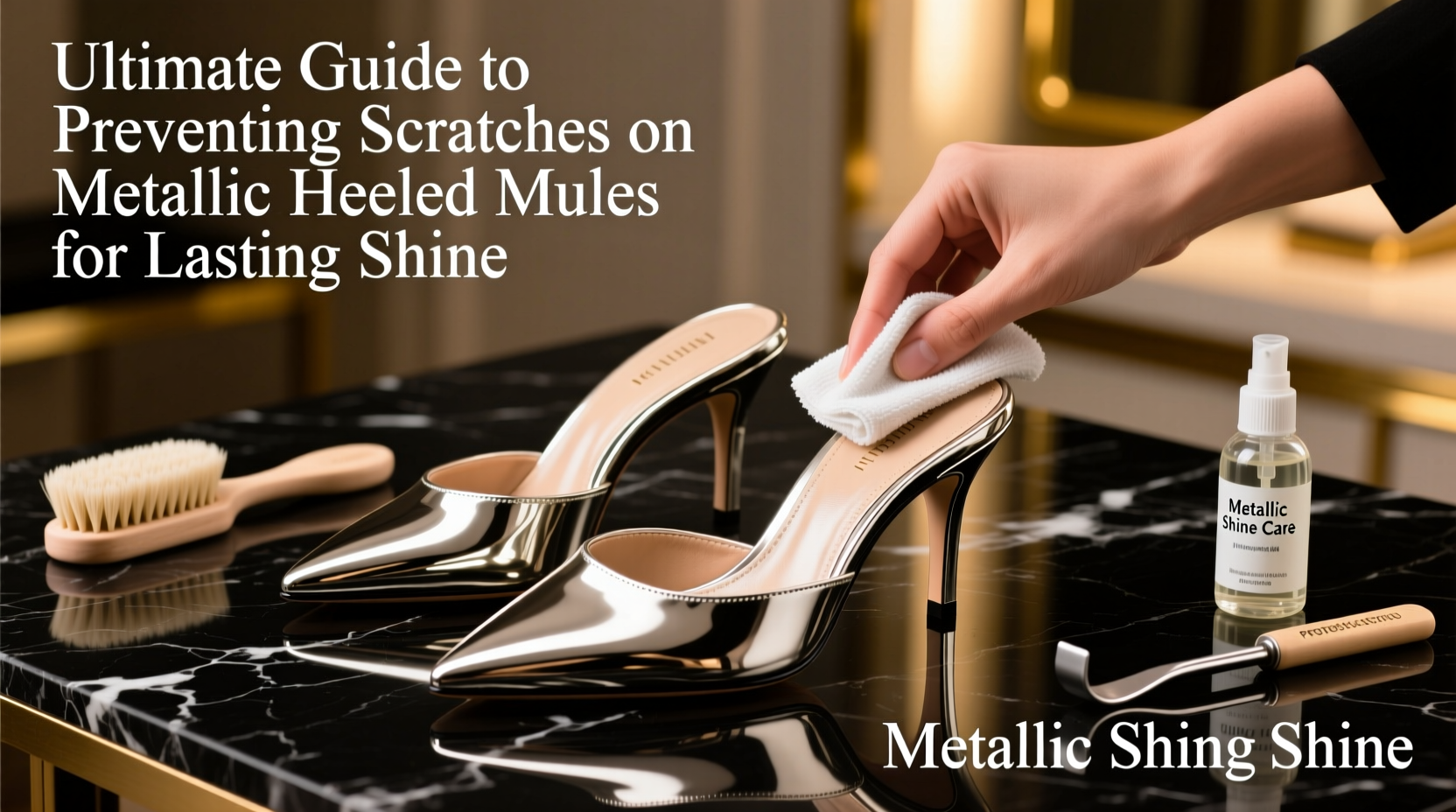
Metallic finishes on footwear are typically achieved through one of three methods: actual metal plating (rare), metallized film lamination, or pigment-based paint with reflective particles. Most commercial metallic mules use synthetic coatings over leather, suede, or synthetic uppers. These finishes reflect light beautifully but are often thinner and more delicate than the base material, making them prone to micro-scratches from friction, improper storage, or contact with rough surfaces.
The primary threat isn’t deep gouges—it’s cumulative surface abrasion. Daily wear, exposure to grit, and even stacking shoes in a closet can degrade the finish. Once scratched, the reflective layer loses its cohesion, leading to patchy areas that no polish can fully restore. Prevention, therefore, is far more effective than repair.
“Metallic finishes require proactive protection. A scratch isn’t just cosmetic—it compromises the integrity of the coating.” — Lena Torres, Footwear Conservation Specialist at The Modern Cobbler
Essential Daily Protection Habits
Preventing scratches begins the moment you put on your mules. Small behavioral adjustments significantly reduce surface damage over time.
- Avoid abrasive surfaces: Concrete, gravel, and uneven pavement increase friction. Opt for smooth sidewalks when possible.
- Walk with confidence: Dragging your feet—even slightly—causes toe box scraping. Maintain an upright posture and lift your heels cleanly.
- Check your environment: Be mindful of door frames, furniture edges, and public transit steps. A single bump can leave a permanent mark.
- Limit exposure to moisture: Water can seep under the metallic layer, causing bubbling or delamination, which weakens surface resilience.
Step-by-Step Care Routine for Long-Term Shine
Consistency trumps intensity when caring for metallic footwear. Follow this weekly-to-seasonal routine to maintain structural and visual integrity.
- Daily wipe-down: After wearing, use a dry, soft microfiber cloth to remove dust and fingerprints. Never use paper towels—they’re too abrasive.
- Weekly inspection: Examine seams, heel caps, and toe boxes for early signs of lifting or micro-scratches.
- Bi-weekly cleaning: Dampen a microfiber cloth with distilled water and gently wipe the surface. Avoid soaking. Dry immediately.
- Monthly conditioning: For leather-backed metallics, apply a pH-balanced leather conditioner to prevent base material drying and cracking.
- Quarterly resealing: Reapply a specialized metallic protector spray to reinforce the surface shield.
When to Deep Clean (and When Not To)
Deep cleaning should only occur if the shoe is visibly soiled or the finish feels rough. Over-cleaning strips protective layers. Use a solution of 1 part distilled water to 1 part isopropyl alcohol (70%) on a cotton swab for spot treatment of grime near seams. Never submerge metallic mules in liquid.
Proper Storage Techniques to Prevent Scratches
How you store your mules when not in use is as important as how you wear them. Poor storage leads to unnecessary contact with hard objects, pressure points, and environmental stressors.
| Do’s | Don’ts |
|---|---|
| Store in individual fabric dust bags | Stack mules directly on top of each other |
| Use shoe trees or soft stuffing to maintain shape | Leave them loose in a crowded closet |
| Keep in a cool, dry place away from sunlight | Store in plastic bags (traps moisture) |
| Elevate on shelves using dividers | Place near radiators or windows |
For frequent wearers, consider investing in a ventilated shoe cabinet with padded compartments. This minimizes accidental knocks and prevents long-term compression marks.
Common Mistakes That Accelerate Damage
Even well-intentioned owners unknowingly harm their mules. Avoid these common errors:
- Using household cleaners: Windex, vinegar, or generic wipes contain chemicals that erode metallic coatings.
- Ignoring heel tips: Worn heel tips expose raw material and destabilize gait, increasing toe drag and front-of-shoe scraping.
- Wearing in high-friction environments: Dance floors, construction zones, or rocky trails dramatically increase scratch risk.
- Skipping rotation: Wearing the same pair two days in a row doesn’t allow materials to rest and recover, accelerating fatigue.
Real-Life Example: How One Professional Preserved Her Signature Pair
Sophia R., a marketing executive in Chicago, wears metallic mules nearly every workday. After noticing fine scratches forming within three months of purchase, she adjusted her routine. She began using a silicone heel guard to prevent toe-box contact with subway steps, stored her mules in custom velvet pouches, and applied a nano-coating spray monthly. Two years later, her mules still appear nearly new. “I used to think shiny shoes were high-maintenance and disposable,” she says. “Now I realize it’s about smart habits, not constant effort.”
Expert-Backed Scratch Prevention Checklist
Follow this concise checklist to ensure comprehensive protection:
- ✅ Clean weekly with a dry microfiber cloth
- ✅ Inspect for loose seams or lifting finishes monthly
- ✅ Apply metallic protector spray every 4–6 weeks
- ✅ Store in breathable fabric bags, not plastic
- ✅ Replace heel tips before they wear down completely
- ✅ Avoid walking on rough or gritty surfaces
- ✅ Rotate with other formal footwear
- ✅ Keep away from direct sunlight and humidity
Frequently Asked Questions
Can scratches on metallic mules be repaired?
Minor surface scratches may be minimized with a specialized metallic touch-up pen matched to your shoe’s hue. However, deep scratches that penetrate the coating cannot be fully restored. Touch-ups work best as temporary camouflage. Prevention remains the most reliable strategy.
Are all metallic finishes equally vulnerable?
No. Laminated foil finishes (common in luxury brands) are generally more durable than painted metallics. Genuine metal-wrapped heels, though rare, offer the highest resistance to abrasion but are heavier and less flexible. Always check the product description for material details before purchase.
Is it safe to wear metallic mules in the rain?
It’s not recommended. Moisture can seep into the edges of the metallic layer, causing peeling or oxidation underneath. If caught in rain, wipe immediately with a dry cloth and let air-dry at room temperature—never use heat sources like hairdryers.
Final Thoughts: Shine Is a Habit, Not Luck
The brilliance of metallic heeled mules doesn’t have to fade after a few wears. By understanding the fragility of the finish and adopting disciplined care practices, you preserve both aesthetics and longevity. It’s not about perfection—it’s about consistency. A quick wipe, proper storage, and timely maintenance build up an invisible shield against daily wear and tear.




 浙公网安备
33010002000092号
浙公网安备
33010002000092号 浙B2-20120091-4
Comments
No comments yet. Why don't you start the discussion?