
Seasoning a wok is not just a kitchen chore—it’s the foundation of great stir-fry cooking. A well-seasoned wok develops a natural non-stick surface, resists rust, and enhances flavor over time. But for many home cooks, especially those using carbon steel or cast iron woks for the first time, the process can seem mysterious or intimidating. Done incorrectly, seasoning can result in sticky residue, uneven coating, or even smoke-filled kitchens. This guide breaks down every step, tool, and technique you need to season your wok properly—safely, effectively, and without guesswork.
Why Seasoning Matters: The Science Behind the Process
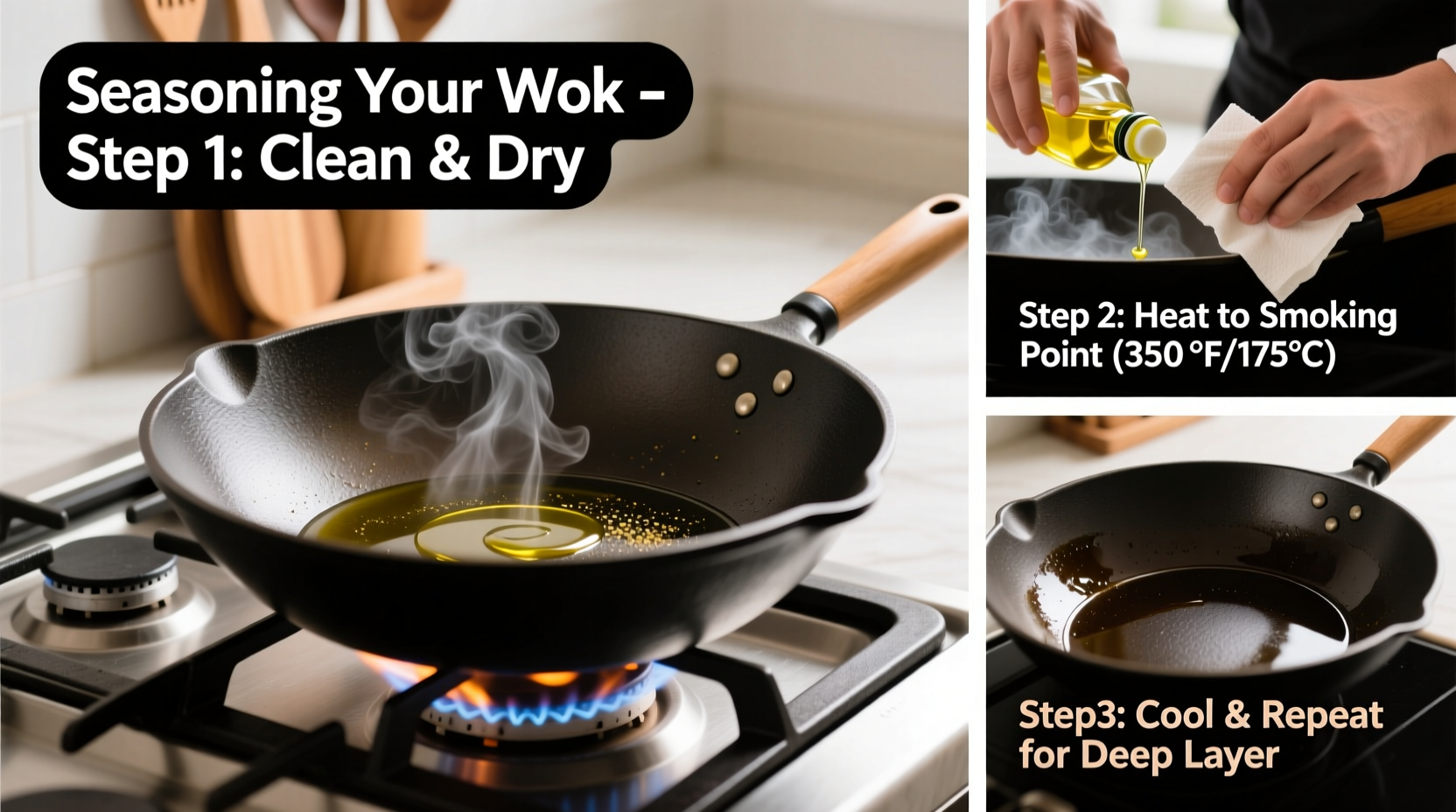
Seasoning isn’t about adding flavor with spices; it’s a chemical transformation. When oil is heated past its smoke point on reactive metal like carbon steel, it polymerizes—forming a hard, smooth layer that bonds to the surface. This layer acts as a barrier against moisture (preventing rust) and creates a slick cooking surface that improves with use.
Unlike factory-coated non-stick pans, which degrade over time, a seasoned wok gets better with age. Think of it like breaking in a pair of leather boots—the more care you give it, the more it adapts to your cooking style.
“Proper seasoning turns a raw piece of metal into a culinary partner. It’s the first—and most important—step in mastering wok cooking.” — Chef Mei Ling, Wok Technique Instructor at Shanghai Culinary Academy
What You’ll Need Before You Begin
Before applying heat, gather all necessary tools and materials. Having everything ready ensures a smooth, uninterrupted process, which is crucial when working with high temperatures.
Essential Tools & Supplies
- Carbon steel or cast iron wok – Avoid non-stick or stainless steel; they don’t season the same way.
- Dish soap and sponge – For initial cleaning only.
- Steel wool or scrubbing pad – To remove factory coating or oxidation.
- Paper towels or clean cloths – Lint-free is best.
- High-smoke-point oil – Such as flaxseed, grapeseed, peanut, or canola oil.
- Stovetop or outdoor burner – Gas works best; induction or electric may require adjustments.
- Tongs or heat-resistant gloves – For handling the hot wok.
- Ventilation – Turn on exhaust fans or open windows. Some smoke is expected.
Step-by-Step Guide to Seasoning Your Wok
The key to successful seasoning lies in repetition and attention to detail. One round of oiling and heating won’t create a lasting layer. Multiple thin layers are far more effective than one thick coat.
- Wash and Scrub the Wok
Wash the wok with hot water and dish soap. Use steel wool to scrub the entire interior and exterior thoroughly. Rinse and dry immediately with a towel, then place it over low heat on the stove for 5 minutes to ensure no moisture remains. - Heat the Wok Until Blueing Occurs (Optional but Recommended)
Place the dry wok over medium-high heat. Rotate it occasionally so heat distributes evenly. After 5–10 minutes, you may notice the metal turning blue or rainbow-hued. This indicates the formation of an oxide layer, which helps oil adhere better. Once the color stabilizes, remove from heat and let cool slightly. - Apply a Thin Layer of Oil
Using tongs and a folded paper towel, dip into your chosen oil and rub a very thin layer across the entire interior surface. Wipe in circular motions, then go back over it to remove excess. The surface should glisten but not pool with oil. - Heat Until Smoking
Return the wok to high heat. Watch as the oil begins to smoke—this is polymerization happening. Keep heating for 2–3 minutes after smoking starts, rotating the wok to ensure even coverage. - Cool and Repeat
Remove from heat and let cool completely. Repeat steps 3 and 4 at least 3–5 times. Each layer builds durability. After the final round, leave a slight oil film on the surface to protect it.
Indoor vs. Outdoor Seasoning: What’s Safer?
While indoor stovetop seasoning works, it often produces significant smoke. If you have access to an outdoor gas burner, use it. You’ll achieve higher, more consistent heat with less risk of setting off smoke alarms.
“I season all my woks outside now. The control I get from a propane burner makes a huge difference in the finish.” — Carlos Mendez, Home Chef and Cooking Educator
Choosing the Right Oil: Do’s and Don’ts
Not all oils are created equal when it comes to seasoning. The ideal oil has a high smoke point and a high concentration of polyunsaturated fats, which polymerize more effectively.
| Oil Type | Smoke Point | Seasoning Effectiveness | Notes |
|---|---|---|---|
| Flaxseed Oil | ~225°F (107°C) | ★★★★★ | Forms the hardest layer but degrades quickly if overheated. Best for initial layers. |
| Grapeseed Oil | ~420°F (216°C) | ★★★★☆ | Balances performance and stability. Great for home use. |
| Peanut Oil | ~450°F (232°C) | ★★★★☆ | Readily available and effective. Avoid if allergic. |
| Canola Oil | ~400°F (204°C) | ★★★☆☆ | Affordable and decent results. Not the best long-term choice. |
| Olive Oil (Extra Virgin) | ~325°F (163°C) | ★☆☆☆☆ | Low smoke point; prone to stickiness. Avoid for seasoning. |
| Vegetable Shortening | ~360°F (182°C) | ★★★☆☆ | Solid form requires melting. Can leave residue if not wiped well. |
Avoid These Common Seasoning Mistakes
Even experienced cooks make errors when seasoning a wok for the first time. Recognizing these pitfalls can save time, effort, and frustration.
- Using the wrong type of wok: Non-stick or stainless steel woks cannot be seasoned in the traditional way. Stick to carbon steel or cast iron.
- Rushing the process: Skipping the initial scrub or applying too few layers results in poor adhesion and premature flaking.
- Overheating delicate oils: Flaxseed oil burns easily. If it smokes excessively or turns black, it’s degraded and won’t bond properly.
- Washing with soap after seasoning: Once seasoned, avoid dish soap. It strips the protective layer. Use only hot water and a soft brush.
- Storing while damp: Any moisture left after cleaning invites rust. Always dry over heat before storing.
Real Example: From Rusty to Reliable in One Evening
Jamie, a home cook in Portland, inherited her grandmother’s old carbon steel wok. It was heavily rusted and stained. She almost discarded it until she researched seasoning. Following a thorough scrub with vinegar and steel wool, she dried it completely, heated it to blue the surface, and applied five thin layers of grapeseed oil over her gas stove.
The next day, she made her first stir-fry—scrambled eggs with scallions. To her surprise, the eggs slid effortlessly, and cleanup required only a quick rinse and re-oil. Six months later, the wok is her most-used pan, developing a deep, glossy patina with each use.
This transformation wasn’t magic—it was methodical seasoning and consistent care.
Maintenance: Keeping Your Wok in Top Condition
Seasoning isn’t a one-time task. It’s the beginning of an ongoing relationship with your cookware. Proper maintenance preserves the non-stick surface and prevents degradation.
Daily Care Routine
- Clean gently: After cooking, wipe out food residue with hot water and a soft sponge or bamboo brush. Never soak.
- Dry thoroughly: Return the wok to low heat for 3–5 minutes to evaporate any moisture.
- Re-oil lightly: Apply a whisper-thin layer of oil to the cooking surface before storing.
- Store properly: Keep in a dry place. If stacking, place a paper towel between pans to absorb moisture.
Reviving a Damaged Seasoning
If your wok becomes sticky, rusty, or loses its non-stick quality:
- Scrub with steel wool or salt to remove compromised layers.
- Wash, dry, and re-season using the multi-layer method described above.
- For severe rust, consider boiling in a vinegar-water solution (1:1 ratio) for 10 minutes before scrubbing.
Frequently Asked Questions
Can I season a wok in the oven?
Yes, but it's less effective than stovetop or outdoor methods. Oven heating doesn't distribute heat as evenly across the curved surface, leading to patchy seasoning. If you must use an oven, place the wok upside down at 450°F (230°C) with a baking sheet below to catch drips. Repeat layers as needed.
How do I know if my wok is properly seasoned?
A well-seasoned wok has a dark, semi-glossy finish. Test it by frying an egg: if it slides easily without sticking (and without added oil), the seasoning is working. Avoid scraping with metal utensils until the layer is fully developed.
Is smoking during seasoning normal?
Yes, some smoke is expected once the oil reaches its smoke point. However, thick, acrid smoke means you’re using too much oil or an oil that’s breaking down. Ensure good ventilation and wipe the wok thoroughly before heating.
Final Checklist: Did You Season Your Wok Correctly?
- ☐ Removed factory coating with soap and scrubbing
- Ensures oil bonds directly to bare metal.
- ☐ Heated the wok to remove moisture and optionally blue the surface
- Prevents steam bubbles under seasoning and improves adhesion.
- ☐ Applied 3–5 thin layers of high-smoke-point oil
- Thin, repeated layers create a stronger finish than one thick coat.
- ☐ Allowed proper cooling between layers
- Prevents cracking or peeling of the polymerized film.
- ☐ Stored with a light oil coating in a dry environment
- Protects against oxidation and rust.
Conclusion: Start Cooking with Confidence
Seasoning a wok for the first time is a rite of passage for serious home cooks. It demands patience and precision, but the reward—a durable, naturally non-stick cooking surface that evolves with every meal—is unmatched. Whether you're searing scallops, tossing vegetables, or crafting a fiery kung pao chicken, your seasoned wok will respond with reliability and flair.
Now that you understand the science, tools, and techniques behind proper seasoning, there’s no reason to hesitate. Grab your wok, choose your oil, and begin building a legacy of flavor—one layer at a time.




 浙公网安备
33010002000092号
浙公网安备
33010002000092号 浙B2-20120091-4
Comments
No comments yet. Why don't you start the discussion?