
Woven bucket bags have become a staple in modern wardrobes, blending artisanal charm with everyday functionality. Whether you're drawn to their bohemian flair or eco-conscious materials, one factor often overlooked is size. Choosing the right dimensions isn’t just about aesthetics—it impacts comfort, utility, and how well the bag complements your lifestyle. Too small, and it won’t carry essentials; too large, and it overwhelms your frame or loses its shape. This guide breaks down every consideration needed to find your perfect fit, from body proportions to daily needs.
Understand Your Body Proportions and Frame
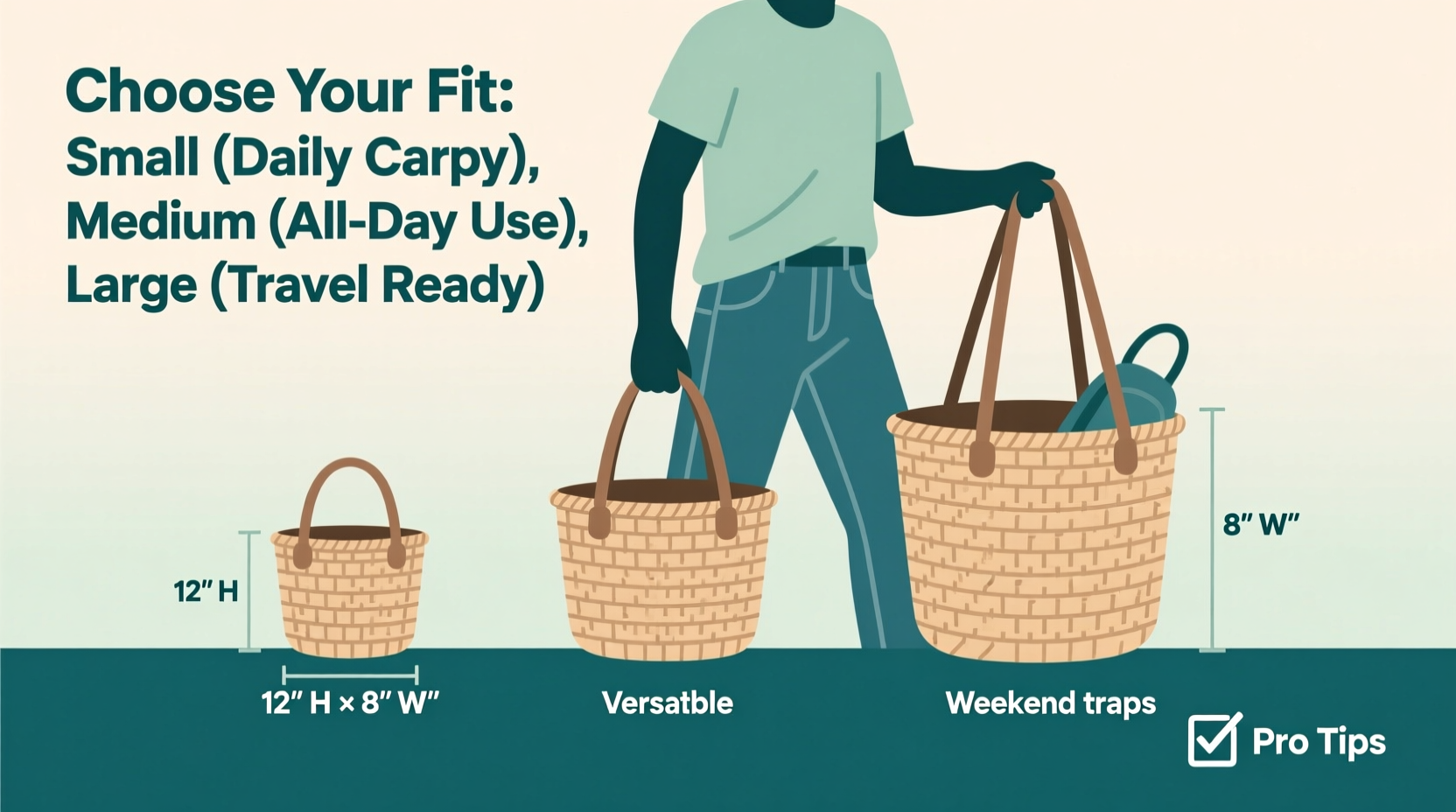
The first step in choosing the right size is aligning the bag with your physical build. A woven bucket bag should enhance your silhouette, not compete with it. Taller individuals with broader shoulders can comfortably carry larger, deeper bags without appearing unbalanced. In contrast, petite frames benefit from compact designs that sit between the hip and waistline, maintaining visual harmony.
Consider the bag’s height and diameter relative to your torso. A good rule of thumb: the top edge of the bag should fall at or slightly below your natural waist when worn on the shoulder. If it dips past the hip, it may look oversized unless intentionally styled for a slouchy, relaxed effect.
Height-to-Bag Ratio Guidelines
| Height Range | Recommended Bag Height | Strap Drop Length |
|---|---|---|
| Under 5'3\" | 7–9 inches | 18–20 inches |
| 5'4\" – 5'7\" | 9–11 inches | 20–22 inches |
| 5'8\" and above | 11–13 inches | 22–24 inches |
“Proportion is everything in accessory design. A well-sized bag balances form and function while elevating the entire outfit.” — Lila Monroe, Fashion Stylist & Accessory Consultant
Assess Your Daily Carry Needs
Functionality should drive size selection as much as style. Begin by listing what you carry daily: phone, wallet, keys, sunglasses, makeup pouch, water bottle, notebook, or even a tablet. These items vary significantly in volume, and underestimating space needs leads to overstuffing—a common cause of distorted shapes in woven bags.
Smaller bags (under 9 inches tall) suit minimalist lifestyles or evening wear. They typically hold only essentials: phone, cardholder, lipstick, and keys. Medium-sized bags (9–11 inches) accommodate most daily needs, including a standard water bottle or light sweater tied around the exterior. Large sizes (12+ inches) work best for travel, markets, or days requiring extra gear.
Step-by-Step Guide: Determine Your Ideal Capacity
- Gather all items you regularly carry in a handbag.
- Lay them flat on a table and group them by category (e.g., tech, personal care).
- Use a soft measuring tape to estimate the total volume they occupy when stacked loosely.
- Add 20% extra space to allow for easy access and prevent bulging.
- Compare this volume to manufacturer specifications or use a ruler to assess bag interior depth.
Match Bag Size to Occasion and Outfit Style
A single woven bucket bag rarely serves every occasion. Versatility comes from strategic sizing. For example, a compact 8-inch bag pairs beautifully with sundresses and brunch ensembles, adding subtle texture without dominating the look. In professional-casual settings, a medium-sized structured bucket maintains polish while offering room for a tablet or folder.
Seasonality also influences ideal size. Summer outings often require more items—sunscreen, hat, beach towel—making mid-to-large sizes practical. Winter layers reduce the need for bulky bags since coats have pockets and fewer accessories are carried.
Occasion-Based Sizing Recommendations
- Casual Day Out: Medium (9–11\") – balances utility and style.
- Evening Event: Small (7–8\") – sleek, elegant, minimal contents.
- Weekend Market or Travel: Large (11\"+) – durable, high-capacity, often with lining.
- Work or Errands: Medium with internal compartments – organized and proportional.
Real-Life Example: Sarah’s Commuter Dilemma
Sarah, a freelance graphic designer based in Portland, loved her handmade raffia bucket bag for its earthy texture and craftsmanship. At 5'2\", she chose a popular 12-inch model seen on influencers, assuming bigger meant more practical. Within weeks, she noticed discomfort—the strap dug into her shoulder, and the bag swung awkwardly when biking. Worse, it overwhelmed her petite frame, making outfits feel disproportionate.
After switching to a custom 8.5-inch version with reinforced base and adjustable strap, her experience transformed. The smaller size held her sketchbook, phone, and coffee thermos snugly, stayed balanced during commutes, and complemented her wardrobe effortlessly. Her story underscores a key truth: social media trends don’t override individual fit.
Checklist: How to Choose Your Perfect Woven Bucket Bag Size
- Measure your torso from shoulder to hip to determine max comfortable length.
- List all daily essentials to estimate required capacity.
- Try on different sizes in person if possible—note drape and balance.
- Ensure the strap drop allows the bag to rest at waist or upper hip.
- Verify interior structure: lined bags maintain shape better than unlined weaves.
- Consider multiple bags for different uses instead of one “do-it-all” piece.
Frequently Asked Questions
Can I use a large woven bucket bag if I’m short?
Yes, but with styling considerations. Opt for a slimmer profile rather than wide diameter, and wear it crossbody to shorten the drop. Avoid overloading it, as excess weight emphasizes bulk. Pair with high-waisted bottoms to maintain waist definition.
How do I know if my bag is too big?
If the bag extends below mid-hip, distorts your posture, or requires constant adjustment due to swinging, it’s likely too large. Also, if opening the top stretches the weave unnaturally, the proportions are off.
Does handle or strap style affect perceived size?
Absolutely. Double handles pulled up on the shoulder create a more compact appearance, while a single long strap elongates the look. Thicker straps add visual weight, which can make a medium bag seem larger.
Final Considerations: Quality, Shape Retention, and Longevity
Size isn’t just about initial fit—it affects durability. Overloading a small or loosely woven bag accelerates fiber fatigue, leading to sagging or broken strands. High-quality woven bags feature reinforced bases, structured linings, and tight weaves that preserve shape across sizes. When investing in a larger model, ensure it includes these structural supports to avoid premature wear.
Also, consider closure type. Drawstring tops compress the bag, allowing slight flexibility in size usage. Open-top styles rely entirely on proper dimensioning, as there’s no way to cinch excess space.
Conclusion: Make Size Work for You, Not Against You
Selecting the ideal size for your woven bucket bag is a blend of measurement, lifestyle awareness, and personal expression. It’s not about following trends, but finding harmony between what you carry, how you move, and how you want to feel. The right size enhances confidence, reduces strain, and turns a functional item into a signature part of your style.




 浙公网安备
33010002000092号
浙公网安备
33010002000092号 浙B2-20120091-4
Comments
No comments yet. Why don't you start the discussion?