
Wisdom teeth extraction is one of the most common dental procedures in the United States, with over 5 million people undergoing the surgery each year. While often necessary to prevent pain, infection, or misalignment, the cost can be a major concern—especially for those without dental insurance. Prices vary widely depending on complexity, location, and provider, making it difficult to plan financially. Understanding what drives the cost, what to expect during recovery, and how to reduce expenses can help you make informed decisions and avoid surprise bills.
Understanding Wisdom Teeth Extraction: Why It’s Often Necessary
Wisdom teeth, or third molars, typically emerge between the ages of 17 and 25. In many cases, there isn’t enough space in the jaw for them to erupt properly, leading to impaction—where the tooth remains trapped beneath the gum or bone. Impacted wisdom teeth can cause swelling, infection, cysts, damage to adjacent teeth, and chronic pain.
Even if your wisdom teeth aren’t currently causing discomfort, dentists often recommend preventive removal. Early extraction reduces complications, as younger patients tend to heal faster and with fewer issues than adults over 30.
“Removing impacted wisdom teeth before they cause problems is like fixing a small leak before it floods your basement—it saves time, pain, and money in the long run.” — Dr. Alan Nguyen, Oral Surgeon, San Diego
What Determines the Cost of Wisdom Teeth Removal?
The price of extracting wisdom teeth isn't fixed—it depends on several key factors:
- Number of teeth removed: Removing all four typically costs more than just one or two.
- Impaction level: Fully impacted teeth buried in bone require surgical intervention and are more expensive than partially erupted or fully visible teeth.
- Anesthesia type: Local anesthesia is cheaper; sedation (oral, IV) or general anesthesia increases cost significantly.
- Dentist vs. oral surgeon: General dentists may charge less, but complex cases require an oral surgeon.
- Geographic location: Urban areas like New York or Los Angeles often have higher rates than rural clinics.
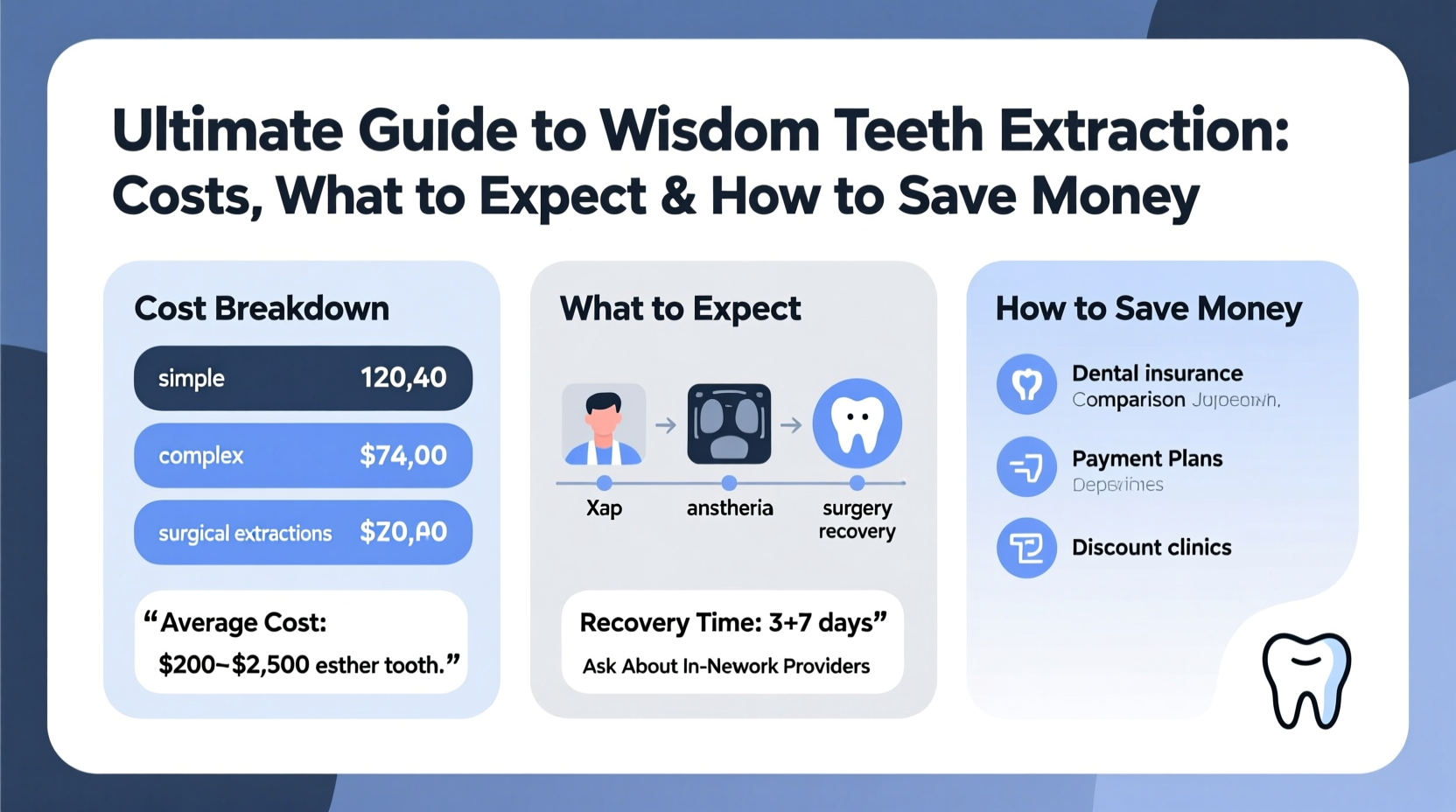
Typical Cost Breakdown (National Averages)
| Type of Procedure | Per Tooth Cost | Total (All Four Teeth) |
|---|---|---|
| Simple extraction (non-impacted) | $75 – $200 | $300 – $800 |
| Surgical extraction (impacted) | $200 – $600 | $800 – $2,400 |
| With local anesthesia | Included | Included |
| With IV sedation | + $250 – $800 | + $500 – $1,200 |
| Oral surgeon fee (additional) | + $100 – $300 per tooth | + $400 – $1,200 |
Note: These figures reflect pre-insurance costs. Out-of-pocket expenses depend heavily on your dental plan.
Step-by-Step: What to Expect During and After Surgery
Knowing what happens during the procedure reduces anxiety and helps you prepare properly.
- Consultation: Your dentist or oral surgeon takes X-rays to assess impaction and discusses anesthesia options.
- Surgery day: The area is numbed or you’re sedated. For impacted teeth, the surgeon makes a small incision, removes bone if needed, extracts the tooth, and stitches the site.
- Recovery room: You’ll be monitored briefly, especially if under sedation. Most patients go home within 30–60 minutes.
- First 24 hours: Rest, use gauze to control bleeding, avoid spitting or using straws to prevent dry socket.
- Days 2–7: Swelling peaks around day 2–3. Use ice packs early, then warm compresses. Eat soft foods and rinse gently with salt water.
- One week later: Most return to normal activities. Stitches (if non-dissolvable) are removed.
- Full healing: Gum tissue heals in 2–3 weeks; bone remodeling takes up to 6 months.
How to Save Money on Wisdom Teeth Extraction
You don’t need to pay full price. With smart planning, you can reduce costs by hundreds—or even thousands—of dollars.
1. Maximize Insurance Benefits
If you have dental insurance, check your policy’s coverage. Many plans cover 50–80% of oral surgery, especially if performed by an in-network provider. Some policies have annual maximums (often $1,000–$1,500), so schedule extractions early in the year to take full advantage.
2. Consider Dental Schools
University dental schools offer services at reduced rates. Procedures are supervised by licensed professionals, and costs can be 30–50% lower than private practices.
3. Use Flexible Spending or HSA Funds
Medical expenses like wisdom tooth removal are eligible for reimbursement through Health Savings Accounts (HSA) or Flexible Spending Accounts (FSA). Pay with pre-tax dollars to save 20–30% based on your tax bracket.
4. Get Multiple Quotes
Prices vary dramatically between providers. Call three to five clinics, ask for itemized estimates, and compare not just total cost but also included services (e.g., follow-ups, anesthesia).
5. Look Into Payment Plans
Many oral surgeons offer interest-free financing or partner with services like CareCredit. Avoid high-interest credit cards unless absolutely necessary.
6. Travel to Lower-Cost Areas
If you live near state lines, consider crossing into regions with lower average fees. Some patients travel to nearby cities or states for savings of 20–40%, factoring in travel costs.
“Patients who shop around and plan ahead often cut their out-of-pocket costs in half without compromising safety or results.” — Dr. Lena Patel, Dental Economist, University of Michigan
Mini Case Study: How Sarah Saved $1,200 on Her Surgery
Sarah, a 22-year-old college graduate, was quoted $3,200 for all four impacted wisdom teeth with IV sedation at a private oral surgery clinic in Chicago. Concerned about the cost, she researched alternatives. She found that a nearby dental school offered the same procedure for $1,600, including anesthesia and follow-up visits. Though appointments required longer wait times, Sarah scheduled her surgery during summer break. She used her FSA to cover the entire cost with pre-tax dollars, effectively saving an additional $400 based on her income tax rate. Total savings: $1,200, with no compromise on care quality.
Frequently Asked Questions
Is wisdom tooth removal covered by medical or dental insurance?
Most plans classify it as a dental procedure, so dental insurance applies. However, if medically necessary (e.g., linked to jaw pathology), some medical plans may contribute. Always verify with both insurers.
Can I delay the procedure to save money?
Only if your teeth aren’t currently causing pain or infection. Delaying increases risks of complications and may lead to higher costs later due to damage or emergency treatment.
Are cheaper options safe?
Lower cost doesn’t mean lower safety—especially at accredited dental schools or reputable clinics offering discounts. Avoid unlicensed providers or facilities that skip X-rays or consultations.
Smart Checklist Before Scheduling Surgery
- ✔️ Get X-rays and a formal diagnosis
- ✔️ Confirm if teeth are impacted or fully erupted
- ✔️ Obtain at least three itemized quotes
- ✔️ Verify in-network status with your insurance
- ✔️ Ask about anesthesia options and associated fees
- ✔️ Inquire about post-op care and emergency support
- ✔️ Check for available payment plans or discounts
- ✔️ Schedule during low-stress periods to aid recovery
Final Thoughts: Plan Ahead, Save Wisely
Wisdom teeth extraction doesn’t have to drain your bank account. By understanding the cost drivers, knowing what to expect, and using financial strategies like insurance optimization, dental schools, and HSAs, you can manage the expense responsibly. Don’t let price deter you from necessary care—timely removal prevents more serious—and costly—dental issues down the line.




 浙公网安备
33010002000092号
浙公网安备
33010002000092号 浙B2-20120091-4
Comments
No comments yet. Why don't you start the discussion?