
Sleep is the foundation of academic performance, emotional stability, and physical health—yet for college students, it’s often the first thing sacrificed. Among the most common disruptors? Noise. Dorm rooms are hubs of social activity, late-night conversations, hallway foot traffic, and shared walls that transmit every sound. While you can’t control your neighbors’ schedules, you *can* take deliberate, effective steps to reclaim your rest. The key lies not in eliminating all noise—which is unrealistic—but in managing your auditory environment and adapting your habits to promote deep, uninterrupted sleep.
Understanding Noise and Sleep Disruption
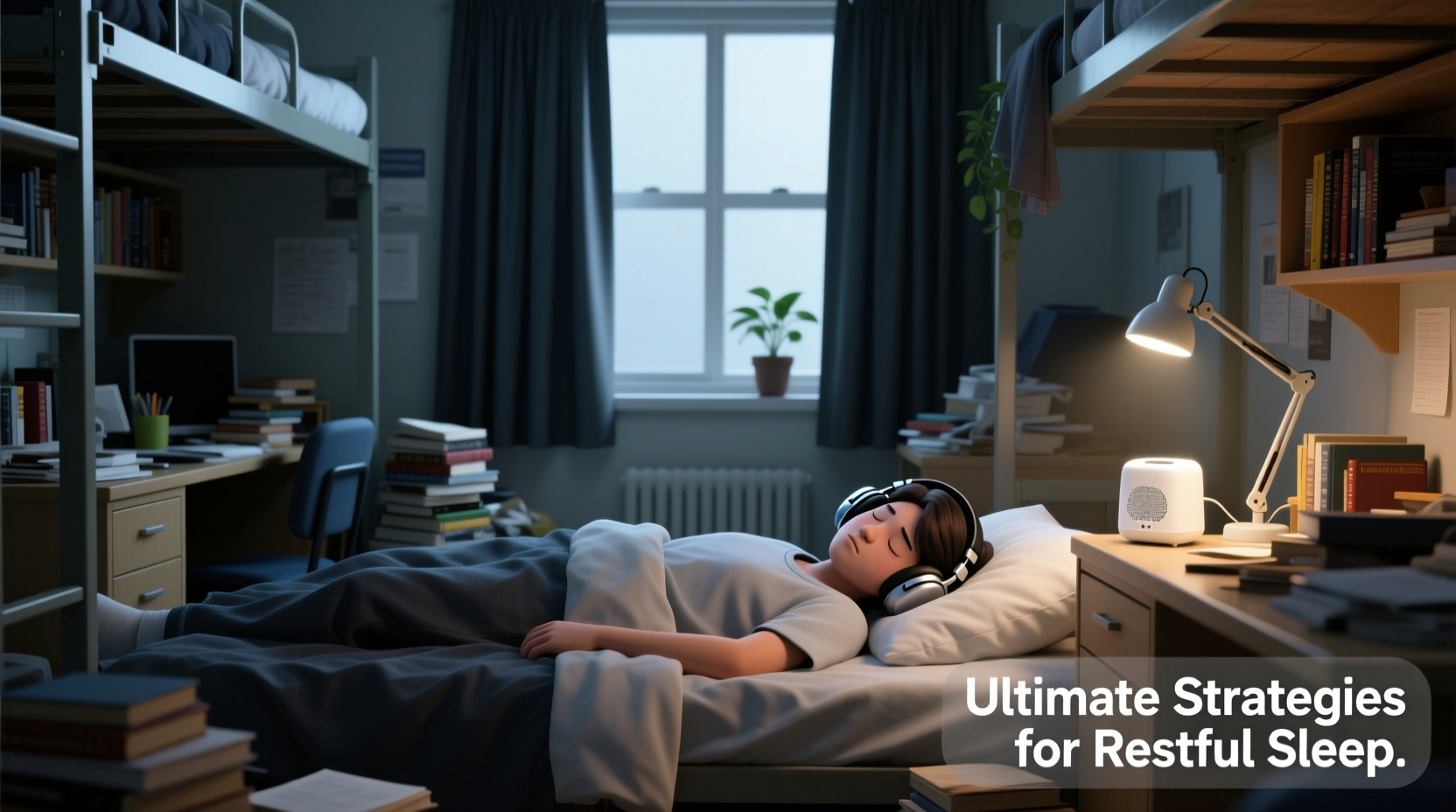
The human brain remains responsive to external stimuli during sleep, particularly sudden or irregular sounds. Research from the National Sleep Foundation shows that even low-level intermittent noises—like a door slamming, music leaking through walls, or roommate movement—can trigger micro-arousals, briefly pulling you out of deep sleep without full awakening. Over time, this fragmentation reduces sleep quality, leading to fatigue, reduced concentration, and weakened immunity.
Dorm environments amplify these issues due to thin walls, shared bathrooms, 24/7 accessibility, and unpredictable social patterns. Unlike home settings, where routines are more consistent, dorm life operates on a spectrum of chaos. The solution isn’t isolation—it’s adaptation through smart environmental control and behavioral strategies.
“Even if you don’t wake up, repeated sound exposure at night can impair memory consolidation and slow-wave sleep.” — Dr. Lena Torres, Sleep Neurologist, Johns Hopkins Center for Sleep Disorders
Effective Sound Management Techniques
Controlling what you hear starts with understanding the types of noise: continuous (like AC hum), intermittent (door slams), and rhythmic (footsteps). Each requires a different mitigation approach.
1. White Noise and Sound Masking Devices
A compact white noise machine or app can create a consistent auditory backdrop that drowns out erratic sounds. Models like the LectroFan offer customizable frequencies, allowing users to find the most effective tone—pink noise, for example, is often better than standard white noise for deeper sleep.
2. High-Fidelity Earplugs
Not all earplugs are equal. Foam varieties reduce volume but distort sound, which can be jarring. Silicone or molded musician’s earplugs (e.g., Eargasm Squish or Loop Experience) preserve natural acoustics while lowering decibel levels by 20–30 dB. For dorm use, consider corded versions to prevent loss.
3. Acoustic Modifications
You don’t need to renovate. Simple additions help:
- Hang thick curtains over doors and windows
- Place rugs on hardwood floors to reduce echo
- Use bookshelves as sound barriers near shared walls
- Add acoustic foam panels (affordable online kits) behind your bed
Behavioral Adjustments for Better Sleep Hygiene
Noise control alone won’t solve sleep problems if underlying habits work against you. Sleep hygiene—the collection of practices that support consistent, high-quality rest—is critical in high-stimulus environments.
Establish a Predictable Wind-Down Routine
Go to bed and wake up at the same time daily, even on weekends. This stabilizes your circadian rhythm, making it easier to fall asleep despite background noise. Begin a 30-minute pre-sleep ritual: dim lights, avoid screens, read a physical book, or practice light stretching.
Leverage Your Sleep Environment Strategically
Position your bed away from the door and shared walls. If possible, angle it so your head faces an interior wall rather than one adjacent to a hallway or neighbor’s room. Use furniture placement to create a buffer zone.
Communicate Boundaries Early
Talk to your roommate about sleep needs. Propose quiet hours (e.g., 11 PM to 7 AM) and agree on headphone use, guest limits, and lighting preferences. Written agreements reduce friction later.
Step-by-Step Guide to Building a Sleep-Optimized Dorm Setup
- Week 1: Assess your current sleep challenges. Keep a log of noises that wake you and their frequency.
- Week 2: Introduce a white noise app or device. Test different sounds (fan, rain, static) to find your preference.
- Week 3: Purchase high-quality earplugs and test comfort. Practice inserting them correctly.
- Week 4: Add one acoustic upgrade—e.g., a heavy curtain or rug. Notice any change in perceived noise.
- Ongoing: Maintain a fixed sleep schedule and enforce agreed-upon quiet hours with roommates.
Do’s and Don’ts: Noise Management in Dorm Rooms
| Do | Don't |
|---|---|
| Use noise-canceling headphones with calming audio before bed | Blare music to drown out others—this harms your hearing and escalates noise pollution |
| Set a “no electronics in bed” rule to strengthen mental association between bed and sleep | Watch stimulating content right before lights out |
| Keep earplugs and eye mask in a bedside pouch for easy access | Leave windows open overnight in high-noise areas unless screened |
| Discuss sleep concerns early with roommates and RAs | Wait weeks to address disruptive behavior—early intervention prevents resentment |
Real Student Case: How Maya Regained Her Sleep
Maya, a sophomore at a large urban university, struggled with chronic fatigue during her first semester. Her dorm faced a courtyard where late-night gatherings were common, and her roommate frequently had guests after midnight. Despite exhaustion, she couldn’t sleep past 5:30 AM due to morning chatter and slamming doors.
She began tracking disturbances and realized intermittent voices and sudden noises were her main triggers. She invested in Loop Quiet earplugs, downloaded the White Noise Lite app, and hung a floor-to-ceiling tapestry on the wall facing the courtyard. She also proposed a mutual agreement with her roommate: headphones after 10:30 PM and no guests after 11. Within two weeks, her average sleep increased from 5.2 to 6.8 hours, and she reported improved focus in class.
“I didn’t fix everything overnight, but each small change added up. Now I actually look forward to bedtime.” — Maya R., Psychology Major
Essential Sleep Toolkit for Dorm Living
Here’s a checklist of affordable, dorm-approved items to enhance sleep resilience:- ✅ Reusable silicone earplugs (e.g., Loop Quiet or Eargasm)
- ✅ White noise app or compact speaker (free apps: myNoise, White Noise Lite)
- ✅ Bed tent or privacy canopy (blocks light and adds mild sound buffering)
- ✅ Heavy curtain or moving blanket for door/window coverage
- ✅ Small rug or foam tiles for floor dampening
- ✅ Sleep schedule tracker (use Google Calendar or habit app)
- ✅ Eye mask (blackout type for early morning light)
Frequently Asked Questions
Can I use noise-canceling headphones while sleeping?
Over-ear models are generally uncomfortable and may cause ear pain or overheating. Instead, use them during your wind-down routine, then switch to earplugs. Some brands now offer flat, sleep-friendly headphones built into pillowcases or headbands—test for comfort first.
What if my roommate refuses to cooperate?
If discussions fail, contact your Resident Advisor (RA). Most universities have formal quiet hour policies (often 11 PM–8 AM). Document incidents and request mediation. You may qualify for a room transfer if chronic disruption affects your health.
Is it safe to sleep with earplugs every night?
Yes, as long as you clean reusable ones weekly and avoid pushing them too deep. Replace foam plugs regularly to prevent wax buildup. If you experience discomfort or earaches, consult a healthcare provider.
Take Control of Your Rest
Sleep in a noisy dorm isn’t about achieving silence—it’s about creating conditions where rest can thrive despite imperfection. By combining practical tools like earplugs and white noise with intentional habits and clear communication, you build a personal sanctuary within a chaotic environment. These strategies don’t require money or privilege; they require consistency and self-advocacy. Prioritize your sleep not as a luxury, but as non-negotiable fuel for your academic and personal success.




 浙公网安备
33010002000092号
浙公网安备
33010002000092号 浙B2-20120091-4
Comments
No comments yet. Why don't you start the discussion?