
Maintaining optimal indoor humidity—between 30% and 50%—is essential for respiratory comfort, skin health, and even preserving wooden furniture. Humidifiers play a crucial role in achieving this balance, especially during dry winter months or in arid climates. But with two dominant technologies on the market—ultrasonic and evaporative—the question arises: does the type of mist they produce actually make a difference? The answer isn’t just about visible fog; it affects air quality, maintenance needs, energy use, and even health outcomes.
Understanding how each system works, their strengths and limitations, and how they interact with your environment can guide a smarter purchase decision. Let’s break down the key differences and real-world implications of ultrasonic versus evaporative humidifiers.
How Ultrasonic and Evaporative Humidifiers Work
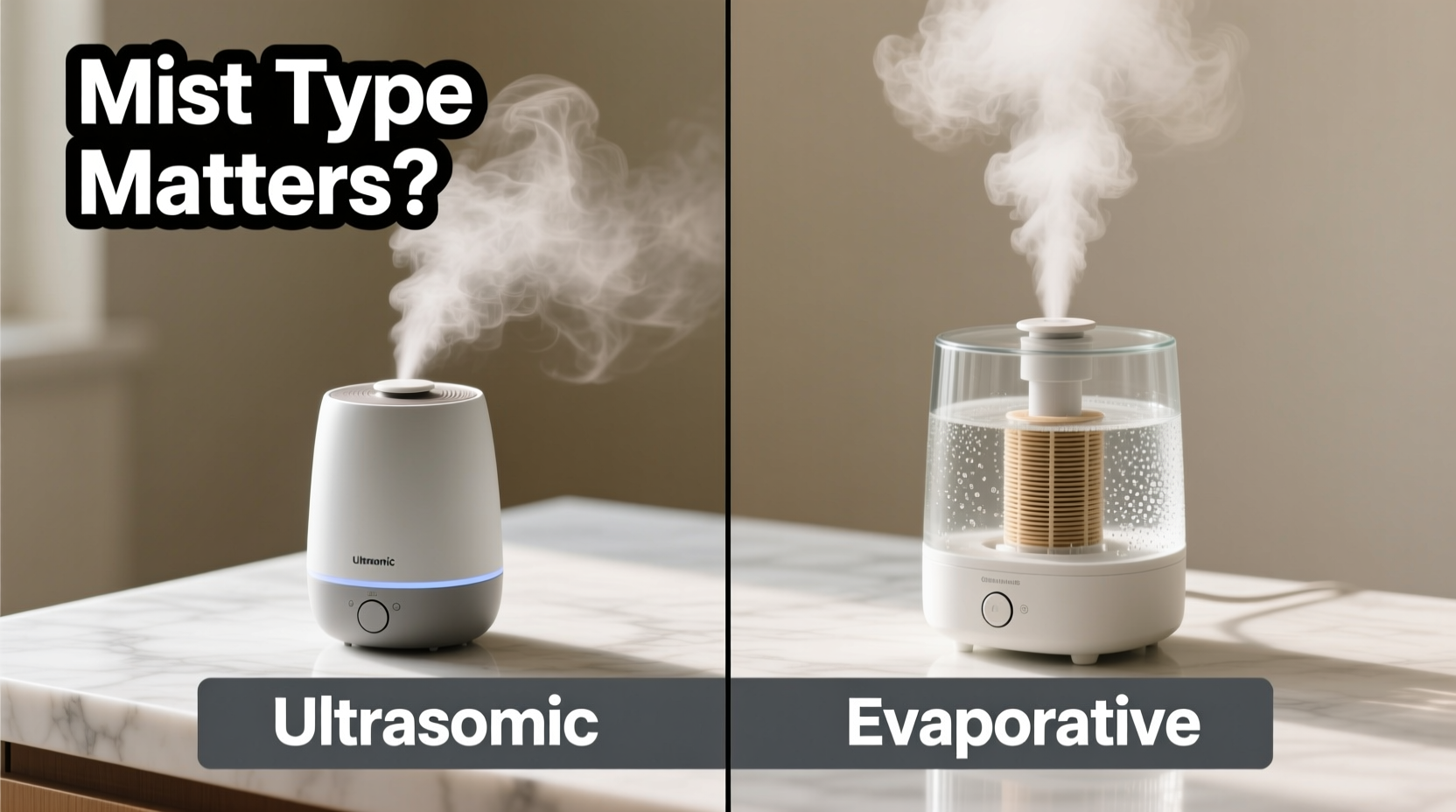
The fundamental distinction lies in their method of moisture dispersion.
Ultrasonic humidifiers use high-frequency vibrations to break water into fine droplets, producing a cool or warm visible mist. This mist is expelled via a fan and disperses quickly into the air. Because the process doesn’t involve heat, it's energy-efficient and operates quietly—ideal for bedrooms or offices.
Evaporative humidifiers, on the other hand, rely on natural evaporation. A wick filter absorbs water from the tank, and a fan blows air through the moistened filter, releasing invisible, humidity-enriched air. Since evaporation is self-regulating (higher humidity slows the rate), these units are less likely to over-humidify a space.
Comparing Mist Types: Visibility, Air Quality, and Health Impact
The most noticeable difference is the mist. Ultrasonic units emit a dense, cloud-like vapor that some find soothing but others associate with airborne particles. This visibility comes from the fact that the device aerosolizes everything in the water—including minerals and potential contaminants—into breathable droplets.
This leads to a phenomenon known as “white dust,” a fine residue left on surfaces when tap water with high mineral content is used. While not inherently harmful, it can aggravate allergies or accumulate on electronics and furniture.
In contrast, evaporative humidifiers release only water vapor. The wick filter acts as a physical barrier, trapping minerals and impurities. As a result, no white dust is produced, making them a better choice for homes using hard water without requiring distilled water.
“Evaporative humidifiers naturally filter out minerals and reduce the risk of dispersing contaminants into the air.” — Dr. Lena Patel, Environmental Health Specialist
Performance and Efficiency: Which Works Better?
Each technology has trade-offs in terms of output, coverage, and control.
| Feature | Ultrasonic Humidifier | Evaporative Humidifier |
|---|---|---|
| Mist Type | Visible cool/warm mist | Invisible vapor |
| Noise Level | Very quiet | Moderate (fan noise) |
| White Dust Risk | Yes (with tap water) | No |
| Water Type Recommended | Distilled or demineralized | Tap water acceptable |
| Filter Needs | No filter required | Wick filter replacement needed |
| Over-Humidification Risk | Higher (no auto-regulation) | Lower (self-regulating) |
| Energy Use | Low | Moderate (fan-dependent) |
Ultrasonic models often boast higher output rates and faster room saturation, making them suitable for larger rooms. However, without built-in hygrometers, they may exceed ideal humidity levels if left unattended. Evaporative units, while slightly slower, adapt to ambient conditions, reducing the risk of mold-promoting over-humidification.
Real-World Example: Choosing for a Family Home
Sarah, a mother of two in Denver, purchased an ultrasonic humidifier for her children’s shared bedroom. She loved the quiet operation and the calming visual effect of the mist. However, within weeks, she noticed a chalky film on the nightstand and her youngest began coughing more at night. After consulting her pediatrician, she learned that the white dust from her tap water was likely contributing to respiratory irritation.
She switched to an evaporative model. Though slightly louder, it eliminated the dust, reduced congestion symptoms, and maintained steady humidity without constant monitoring. Her experience highlights how mist type—and what it carries—can directly affect indoor air quality and health, especially for vulnerable individuals.
Maintenance and Long-Term Costs
Long-term usability depends heavily on upkeep.
Ultrasonic humidifiers require thorough daily rinsing and weekly deep cleaning to prevent microbial growth in the water tank. Since they don’t filter water, any bacteria or mold in the reservoir can be aerosolized. Using distilled water reduces mineral buildup but increases operating cost.
Evaporative units need regular wick filter replacements—typically every 1–3 months—which adds to annual expenses. However, the filters help inhibit mold and bacteria transfer. The fan and motor also require occasional dusting to maintain airflow efficiency.
- Ultrasonic: Lower upfront cost, higher vigilance in cleaning, ongoing distilled water expense.
- Evaporative: Higher initial investment, recurring filter costs, but lower risk of contaminant dispersal.
Checklist: Choosing the Right Humidifier for Your Needs
- Assess your water hardness—use distilled water with ultrasonic models if tap water leaves scale.
- Determine noise tolerance—ultrasonic wins for silent operation.
- Consider household members—evaporative is safer for infants, allergy sufferers, or asthmatics.
- Evaluate room size—ultrasonic often covers larger areas faster.
- Factor in maintenance willingness—wick replacement vs. daily tank cleaning.
- Look for smart features—built-in hygrometers help both types maintain ideal humidity.
Frequently Asked Questions
Can ultrasonic humidifiers make you sick?
If not cleaned regularly, yes. Stagnant water in ultrasonic units can harbor bacteria and mold, which are then dispersed into the air as inhalable mist. Using clean, distilled water and adhering to a strict cleaning schedule minimizes this risk.
Do evaporative humidifiers use more electricity?
Slightly. The fan requires continuous power, whereas ultrasonic models use minimal energy. However, the difference is usually negligible—most units consume under 50 watts. Energy efficiency shouldn’t be the primary deciding factor.
Which type is better for babies?
Evaporative humidifiers are generally recommended for nurseries. They don’t produce white dust, reduce over-humidification risks, and disperse fewer airborne particles. If using an ultrasonic model, ensure it runs on distilled water and is cleaned daily.
Final Verdict: Does the Mist Type Really Matter?
Yes—it matters more than marketing might suggest. The mist isn't just aesthetic; it reflects the underlying technology and its implications for health, maintenance, and environmental compatibility. Ultrasonic humidifiers offer quiet, efficient performance with immediate visible results, but demand diligence in water quality and hygiene. Evaporative models prioritize air purity and automatic regulation, sacrificing some silence and convenience for greater safety and ease of use with tap water.
Your choice should align with your household’s specific needs: health sensitivities, water quality, noise preferences, and willingness to maintain the unit. There’s no universal best—only the best fit for your environment.




 浙公网安备
33010002000092号
浙公网安备
33010002000092号 浙B2-20120091-4
Comments
No comments yet. Why don't you start the discussion?