
Healthy relationships don’t just happen—they are built intentionally, with awareness, honesty, and mutual respect. For many women, navigating relationships with men can feel complicated, especially when past experiences, cultural expectations, or personal insecurities cloud judgment. The foundation of any strong relationship lies in clearly defined boundaries. These invisible lines aren't about pushing people away; they're about creating space for trust, safety, and emotional integrity.
Boundaries are not a sign of coldness or detachment. Instead, they reflect self-awareness and self-respect. When you understand your limits and communicate them clearly, you invite healthier dynamics into your relationships. This is especially crucial when building connections with men, where societal norms have historically encouraged emotional suppression in men and over-accommodation in women. Rebalancing that dynamic starts with boundary-setting grounded in empathy and clarity.
What Are Healthy Boundaries?
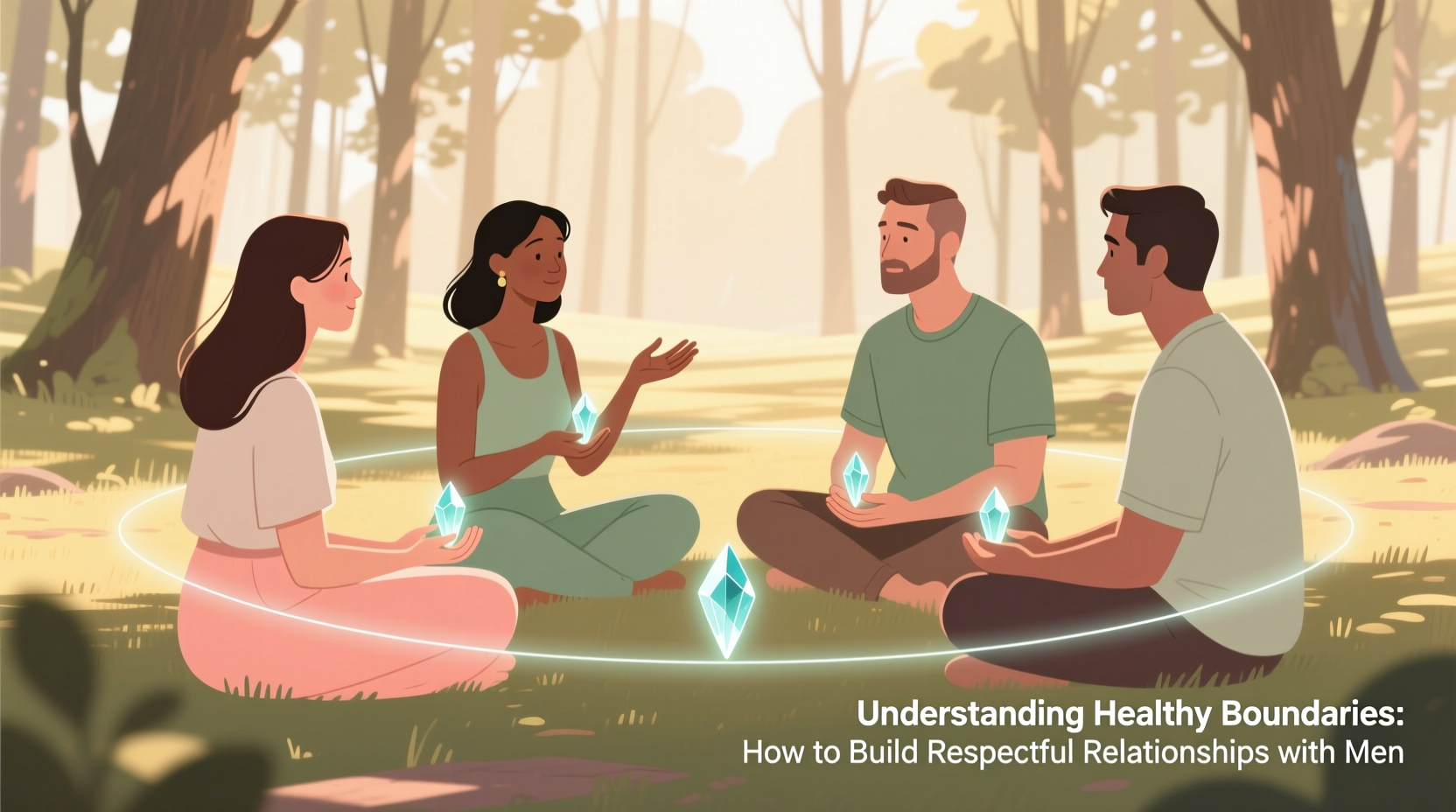
A boundary is a personal limit that defines what you are comfortable with emotionally, physically, and mentally. It’s the line between taking responsibility for yourself and trying to manage someone else’s behavior or emotions. Healthy boundaries protect your well-being while respecting the autonomy of others.
In relationships with men, boundaries might include:
- Saying no to requests that drain your energy
- Expressing discomfort when humor crosses into disrespect
- Maintaining your own time, hobbies, and friendships
- Refusing to tolerate yelling, manipulation, or guilt-tripping
- Expecting honesty and consistency in communication
Without boundaries, relationships often become imbalanced—either overly dependent or emotionally distant. One person may end up feeling used, unheard, or resentful. Establishing limits isn’t selfish; it’s essential for sustainable intimacy.
Why Men Respond Better to Clear Boundaries
Contrary to outdated myths, most men appreciate clarity. Ambiguity breeds confusion and misaligned expectations. When you set firm but kind boundaries, you provide a roadmap for how to treat you—something many men genuinely want but may not know how to ask for.
Dr. Henry Cloud, clinical psychologist and co-author of Boundaries, explains:
“Men often feel more secure and respected when women know what they stand for. A person with boundaries isn’t controlling—they’re self-possessed.”
Unclear boundaries can lead to mixed signals. For example, if you repeatedly accept last-minute cancellations without expressing disappointment, a man may assume availability equals enthusiasm. Over time, this erodes mutual respect. On the other hand, calmly stating, “I was looking forward to tonight. When plans change suddenly, I feel let down,” communicates care and expectation without accusation.
How to Set Boundaries Without Conflict
The key to effective boundary-setting is tone and timing. Delivering a boundary during an argument rarely works. Instead, choose a calm moment to express your needs using “I” statements. This reduces defensiveness and centers your experience rather than blaming the other person.
Here’s a step-by-step approach:
- Identify the issue: What behavior makes you uncomfortable? Is it frequent texting late at night? Pressure to move faster romantically?
- Clarify your limit: Decide what you need to feel respected. Example: “I need downtime after work before responding to messages.”
- Communicate clearly: Use non-confrontational language. “I’ve noticed I get overwhelmed when I’m expected to reply right away. I care about staying connected, but I need space to recharge first.”
- Enforce consistently: If the behavior continues, gently remind them. “I mentioned I prefer not to talk past 10 p.m. Let’s continue this tomorrow.”
- Respect their response: If they react poorly or disregard your boundary, reassess the relationship’s compatibility.
Common Boundary Challenges in Male-Female Relationships
| Scenario | Unhealthy Response | Healthy Boundary Approach |
|---|---|---|
| He pressures for physical intimacy too soon | Agree out of fear of losing him | “I enjoy our connection, but I need things to move at a pace that feels right for me.” |
| He jokes about your appearance | Laugh along to avoid awkwardness | “That kind of comment doesn’t feel good to me. I’d appreciate it if we kept jokes kind.” |
| He expects constant availability | Drop everything every time he calls | “I value our time together, but I also need focus time for my work and myself.” |
| He becomes silent when upset | Pursue endlessly to fix his mood | “I’m here when you’re ready to talk. In the meantime, I won’t chase silence.” |
Recognizing Respectful vs. Disrespectful Responses
Setting a boundary is only half the equation. How the other person responds reveals their capacity for healthy relating. Some men may not be accustomed to women asserting needs, so initial reactions can range from surprise to resistance. However, willingness to adjust is a positive sign.
Look for these signs of respect:
- They acknowledge your feelings even if they didn’t realize the impact
- They modify their behavior without making you feel guilty
- They ask questions to understand your perspective better
- They set their own boundaries in return, showing mutual accountability
Red flags include:
- Mocking or minimizing your request (“You’re too sensitive”)
- Withdrawing affection as punishment
- Accusing you of being “controlling” or “cold”
- Continuing the behavior while claiming to respect your boundary
Real-Life Example: Sarah’s Shift in Relationship Dynamics
Sarah, 32, found herself repeatedly frustrated in dating. She liked Mark—he was funny, intelligent, and attentive—but he often canceled plans last minute for “work emergencies” that seemed suspiciously vague. Each time, she accepted it, afraid of seeming demanding.
After weeks of feeling undervalued, she decided to speak up. During a relaxed coffee date, she said, “I really enjoy spending time with you, but when plans get canceled last minute, I feel like I’m low on your priority list. I’d like us to either commit to plans firmly or reschedule earlier.”
Mark paused, then admitted he’d been avoiding deeper conversations by keeping things casual. Sarah’s boundary prompted him to reflect. He began communicating more honestly—even when it meant saying, “I’m not ready for a weekend trip yet.” Their relationship slowed, but deepened. Within months, both felt more trust and authenticity than they had in years.
Frequently Asked Questions
Isn’t setting boundaries risky? Could I push someone away?
All meaningful relationships involve risk. But attracting someone who respects your boundaries is far more valuable than keeping someone who ignores them. Boundaries filter out incompatible partners and strengthen genuine connections.
What if he says he ‘doesn’t do boundaries’?
This statement usually means he’s uncomfortable with accountability or prefers relationships with unequal power dynamics. That’s a significant insight. You now know his values don’t align with yours—and that’s useful information.
Can you have boundaries in the early stages of dating?
Absolutely. Early boundaries prevent misunderstandings later. Examples: clarifying exclusivity, defining communication frequency, or stating your stance on public displays of affection. Doing so early shows confidence and clarity.
Building a Culture of Mutual Respect
Healthy boundaries aren’t one-time declarations—they’re part of an ongoing dialogue. As relationships evolve, so do needs. Check in regularly. Ask: “Do you feel heard? Are there things I do that make you uncomfortable?” Invite reciprocity.
When both partners feel safe expressing limits, relationships transform. They shift from performance (“Am I enough?”) to presence (“I am here, as I am”). This creates space for true intimacy—one built not on obligation, but on choice and mutual care.
Final Thoughts: Your Boundaries Are a Gift
Setting boundaries with men—or anyone—isn’t about building walls. It’s about opening doors to relationships that honor who you really are. Every time you say no to something that diminishes you, you say yes to self-worth. And every man who respects that choice proves himself worthy of your time and heart.




 浙公网安备
33010002000092号
浙公网安备
33010002000092号 浙B2-20120091-4
Comments
No comments yet. Why don't you start the discussion?