
The sensation of heat in food—often described as “spiciness” or “heat”—is one of the most powerful and polarizing elements in global cuisine. For some, a fiery kick elevates a dish; for others, excessive heat overwhelms flavor. Yet, understanding heat levels is not merely about tolerance—it’s about precision, balance, and culinary intelligence. Whether you're seasoning a stew, crafting a chili oil, or selecting peppers for salsa, knowing how heat is measured, expressed, and modulated empowers better cooking decisions. This guide breaks down the science, measurement systems, and practical applications of heat in spices and foods, equipping home cooks and culinary professionals with actionable knowledge to harness spice with confidence.
Definition & Overview
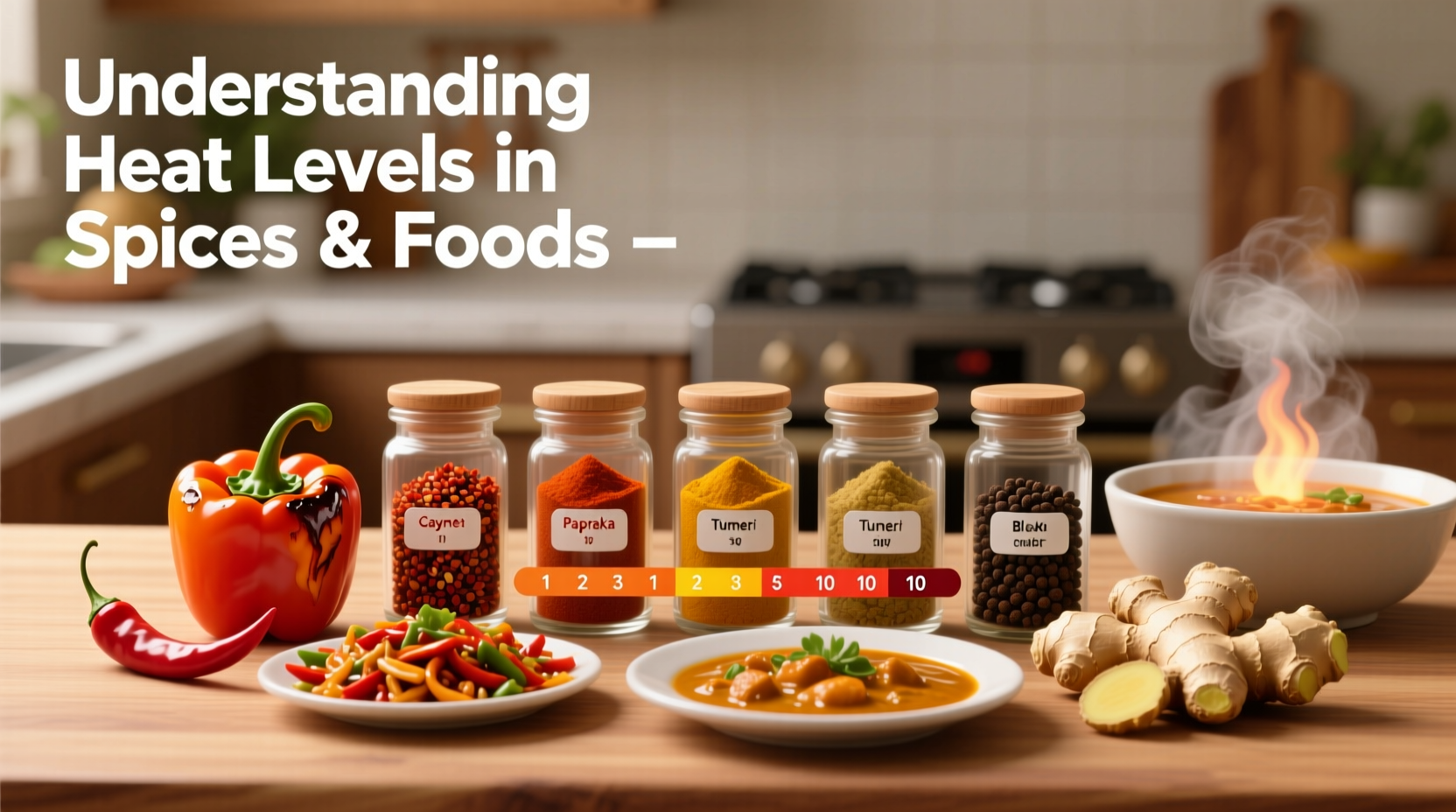
Heat in food refers to the pungent, burning sensation caused primarily by chemical compounds that stimulate nerve receptors in the mouth, throat, and skin. The most well-known of these compounds is capsaicin, found in chili peppers. Unlike taste (sweet, sour, salty, bitter, umami), heat is a tactile sensation—technically a form of pain—detected by the trigeminal nerve rather than taste buds.
Spices and ingredients that contribute heat include fresh and dried chilies, black pepper, ginger, horseradish, wasabi, and mustard seeds. While all deliver pungency, their chemical triggers and sensory profiles differ significantly. Capsaicinoids (in chilies) create a slow-building, lingering burn, while allyl isothiocyanate (in wasabi and mustard) produces a sharp, nasal-clearing heat that dissipates quickly.
Understanding heat involves more than just measuring intensity. It includes recognizing onset time, duration, location in the mouth, and how heat interacts with other flavors such as sweetness, acidity, and fat. Mastering this interplay allows cooks to layer heat strategically, enhancing complexity without overpowering a dish.
Key Characteristics of Heat-Causing Compounds
| Ingredient | Active Compound | Heat Onset | Duration | Sensation Location | Flavor Contribution |
|---|---|---|---|---|---|
| Chili Peppers | Capsaicin | 10–30 seconds | Minutes | Tongue, lips, throat | Fruity, earthy, smoky |
| Black Pepper | Piperine | Immediate | 30–60 seconds | Back of tongue, throat | Woody, floral, warm |
| Ginger | Gingerol | Immediate | Short | Mouth, palate | Sharp, citrusy, slightly sweet |
| Wasabi / Horseradish | Allyl isothiocyanate | Near-instant | Very short (seconds) | Nasal passages, sinuses | Pungent, green, vegetal |
| Mustard Seeds | Same as above (when activated) | Instant upon hydration | Short | Throat, nose | Nutty, tangy, earthy |
This variation explains why two dishes can be equally “hot” yet feel entirely different. A habanero salsa burns slowly on the tongue, while freshly grated wasabi clears the sinuses instantly but fades just as fast. Recognizing these differences is essential for thoughtful seasoning.
Measuring Heat: The Scoville Scale and Beyond
The most widely recognized system for measuring chili heat is the Scoville Heat Unit (SHU) scale, developed by pharmacist Wilbur Scoville in 1912. Originally based on human taste panels diluting chili extracts until heat was undetectable, modern methods use high-performance liquid chromatography (HPLC) to measure capsaicin concentration, then convert results into Scoville units.
For example:
- Bell pepper: 0 SHU
- Jalapeño: 2,500–8,000 SHU
- Habanero: 100,000–350,000 SHU
- Ghost pepper (Bhut Jolokia): 800,000–1,041,427 SHU
- Carolina Reaper: 1,400,000–2,200,000 SHU
While useful, the Scoville scale has limitations. It measures only capsaicinoids and applies almost exclusively to chili peppers. It doesn’t account for non-chili sources of heat, nor does it capture the qualitative aspects of heat—such as whether it builds gradually or strikes suddenly.
Other measurement tools exist:
- Pungency Units (PU): Used for black pepper, based on piperine content.
- Horseradish Units: Measure volatile isothiocyanate levels.
- ASTA Pungency Units: Industry standard for ground spices, especially paprika and cayenne.
No single scale covers all heat sources, so chefs must rely on both data and experience when working across ingredient types.
Variants & Types of Heat-Producing Ingredients
Heat manifests differently depending on the form and preparation of the ingredient. Understanding variants helps control outcomes in the kitchen.
Dried vs. Fresh Chilies
Drying chilies concentrates capsaicin and often deepens flavor complexity. A dried ancho (mild, raisin-like) differs markedly from a fresh poblano (vegetal, mild). Some dried chilies, like arbol or chile de árbol, become significantly hotter when rehydrated due to intensified capsaicin release.
Ground Spices
Ground chili powders (cayenne, paprika, chili powder blends) vary widely in heat. Sweet paprika is nearly heat-free; hot smoked paprika (pimentón picante) delivers noticeable warmth. Always check labels—“chili powder” in the U.S. may contain cumin and garlic, diluting actual heat.
Fermented & Preserved Forms
Fermentation alters heat perception. Fermented chili pastes like gochujang (Korean) or doubanjiang (Chinese) mellow capsaicin over time while adding umami depth. Pickled chilies retain heat but introduce acidity, which can make the burn feel sharper initially but less enduring.
Extracts and Oils
Capsaicin extracts and chili oils deliver concentrated heat. A few drops of ghost pepper extract can exceed 1 million SHU per teaspoon. These should be handled with gloves and measured precisely—never added freely.
Tip: When using dried chilies, toast them lightly before rehydrating to unlock deeper flavor without increasing heat. Avoid burning, which creates bitterness.
Practical Usage: How to Use Heat Effectively in Cooking
Heat should enhance, not dominate. Strategic application ensures balance and complexity.
Layering Heat
Professional kitchens often layer heat sources for multidimensional spiciness. For example:
- Add dried crushed red pepper early to infuse oil.
- Incorporate fresh jalapeño during sautéing for bright heat.
- Finish with a drizzle of chili crisp for texture and aroma.
This technique creates a dynamic heat profile rather than a flat burn.
Controlling Heat Intensity
Several factors influence perceived heat:
- Fat content: Capsaicin is fat-soluble. Creamy elements (coconut milk, yogurt, cheese) reduce perceived heat.
- Sugar: Balances heat; common in Thai curries and Korean gochujang-based sauces.
- Acidity: Vinegar or lime juice can amplify initial heat but also help cut through richness.
- Starch: Rice, potatoes, and bread absorb capsaicin and mitigate burn.
To reduce heat in an over-spiced dish:
- Add dairy (sour cream, yogurt).
- Dilute with broth or coconut milk.
- Bulk up with starchy ingredients.
- Balance with sugar or acid.
Recommended Ratios for Common Dishes
| Dish Type | Chili Form | Amount (per serving) | Heat Level Target |
|---|---|---|---|
| Taco filling | Ground cumin + pinch cayenne | 1/8 tsp cayenne | Mild warmth |
| Tomato sauce | Crushed red pepper flakes | 1/4 tsp per cup sauce | Noticeable but not dominant |
| Thai curry | Fresh bird’s eye chili | 1–2 chilies per serving | Hot, building heat |
| Chili con carne | Dried ancho + chipotle | 1–2 oz per pound meat | Medium, smoky heat |
| Sichuan mapo tofu | Chili bean paste + Sichuan peppercorns | 1 tbsp paste + 1/2 tsp peppercorns | Hot + numbing (ma la) |
Pro Tip: Add heat gradually. You can always increase, but you cannot remove excess spice. Taste after each addition, waiting 30 seconds for full sensation to develop.
Comparison with Similar Ingredients
Many ingredients are mistaken for one another due to similar heat sensations, but their chemistry and culinary roles differ.
| Ingredient Pair | Key Difference | Culinary Implication |
|---|---|---|
| Black Pepper vs. Chili Peppers | Piperine (pepper) vs. capsaicin (chili); different chemical families | Pepper adds aromatic warmth; chilies add fruity heat and color |
| Wasabi vs. Horseradish | Real wasabi is rare; most \"wasabi\" is horseradish + green dye | True wasabi is smoother, more complex; horseradish is sharper and cheaper |
| Sichuan Peppercorns vs. Black Peppercorns | Hydroxy-alpha-sanshool causes numbing (not heat); no capsaicin | Sichuan pepper provides tingling \"ma\" sensation, not burn |
| Chili Oil vs. Hot Sauce | Oil carries fat-soluble capsaicin; vinegar-based sauces have quicker bite | Chili oil integrates into dishes; hot sauce adds brightness and acidity |
| Ginger vs. Galangal | Galangal has lower gingerol content; more camphoraceous | Galangal is less spicy, more floral—essential in Thai tom kha |
\"Heat without flavor is noise. The best spicy dishes use pungency as a counterpoint to sweetness, acidity, and richness—not as the sole voice.\" — Chef Mei Lin, James Beard Award Winner
Practical Tips & FAQs
How do I build heat tolerance?
Regular exposure to capsaicin desensitizes TRPV1 receptors over time. Start with mild chilies (poblano, Anaheim) and gradually increase. Pair spicy foods with dairy to manage discomfort while training your palate.
Can heat level vary within the same pepper type?
Yes. Factors like soil, climate, water stress, and ripeness affect capsaicin production. A jalapeño can range from 2,500 to 8,000 SHU even within the same batch. Always taste-test before using.
Where is the hottest part of a chili pepper?
Contrary to myth, the seeds are not the hottest part. Capsaicin is produced in the white pith (placenta) that holds the seeds. Removing the ribs and seeds reduces heat significantly.
How should I store spicy ingredients?
- Dried chilies: Airtight container, cool, dark place (up to 1 year).
- Ground spices: Use within 6 months for peak potency.
- Fresh chilies: Refrigerate in crisper drawer (1–3 weeks).
- Chili oils: Store in glass, away from light; refrigerate if homemade.
What are safe substitutes for high-heat ingredients?
- For habanero: 1/2 tsp smoked paprika + pinch cayenne
- For fresh Thai chili: Serrano pepper (use half amount)
- For wasabi: Prepared horseradish + drop of green food coloring (texture match)
- For Sichuan peppercorns: Mix of black pepper and coriander (approximates aroma, not numbing effect)
How do I handle extremely hot peppers safely?
Wear nitrile gloves when cutting super-hot chilies (e.g., ghost, scorpion, reaper). Avoid touching face or eyes. Wash hands and surfaces thoroughly afterward. Work in a ventilated area—capsaicin vapor can irritate lungs.
Emergency Fix: If you burn your skin with chili oil, wash with milk or a mixture of baking soda and oil. Water spreads capsaicin; alcohol or dairy dissolves it.
Summary & Key Takeaways
Heat in food is a nuanced element that goes far beyond simple “spiciness.” It is influenced by chemical composition, preparation method, accompanying ingredients, and individual physiology. To use heat effectively:
- Understand the difference between capsaicin-based heat and other pungencies (pepper, wasabi, ginger).
- Use the Scoville scale as a guide, but rely on tasting and experience for accuracy.
- Layer heat sources for complexity—don’t rely on a single ingredient.
- Balance heat with fat, sugar, starch, and acid to create harmony.
- Respect variability: even within a single pepper variety, heat levels fluctuate.
- Store spices properly to preserve potency and prevent degradation.
- Handle ultra-hot ingredients with care—protect skin and respiratory pathways.
Mastering heat is not about endurance but about intentionality. The goal is not to make food as hot as possible, but to use pungency as a tool to elevate flavor, excite the palate, and create memorable dishes. With this knowledge, you’re equipped to season with precision, creativity, and respect for the power of heat.
Challenge: Cook a dish using three different heat sources (e.g., black pepper, fresh chili, chili oil). Note how each contributes uniquely to the overall sensory experience. Adjust ratios and observe the impact.




 浙公网安备
33010002000092号
浙公网安备
33010002000092号 浙B2-20120091-4
Comments
No comments yet. Why don't you start the discussion?