
To be \"colored\" in America—or in any society shaped by colonial hierarchies and racial categorization—is not merely a matter of skin tone. It is an existential condition, a lived reality layered with history, perception, resistance, and resilience. The phrase “how it feels to be colored me” originates from W.E.B. Du Bois’s seminal 1903 essay *The Souls of Black Folk*, where he articulates the duality of African American identity: the internal sense of self clashing with the external gaze of a world that reduces personhood to pigment. To understand this feeling today is to engage with both personal narrative and collective memory—a journey into the emotional, psychological, and social textures of racialized existence.
The Weight of Double Consciousness
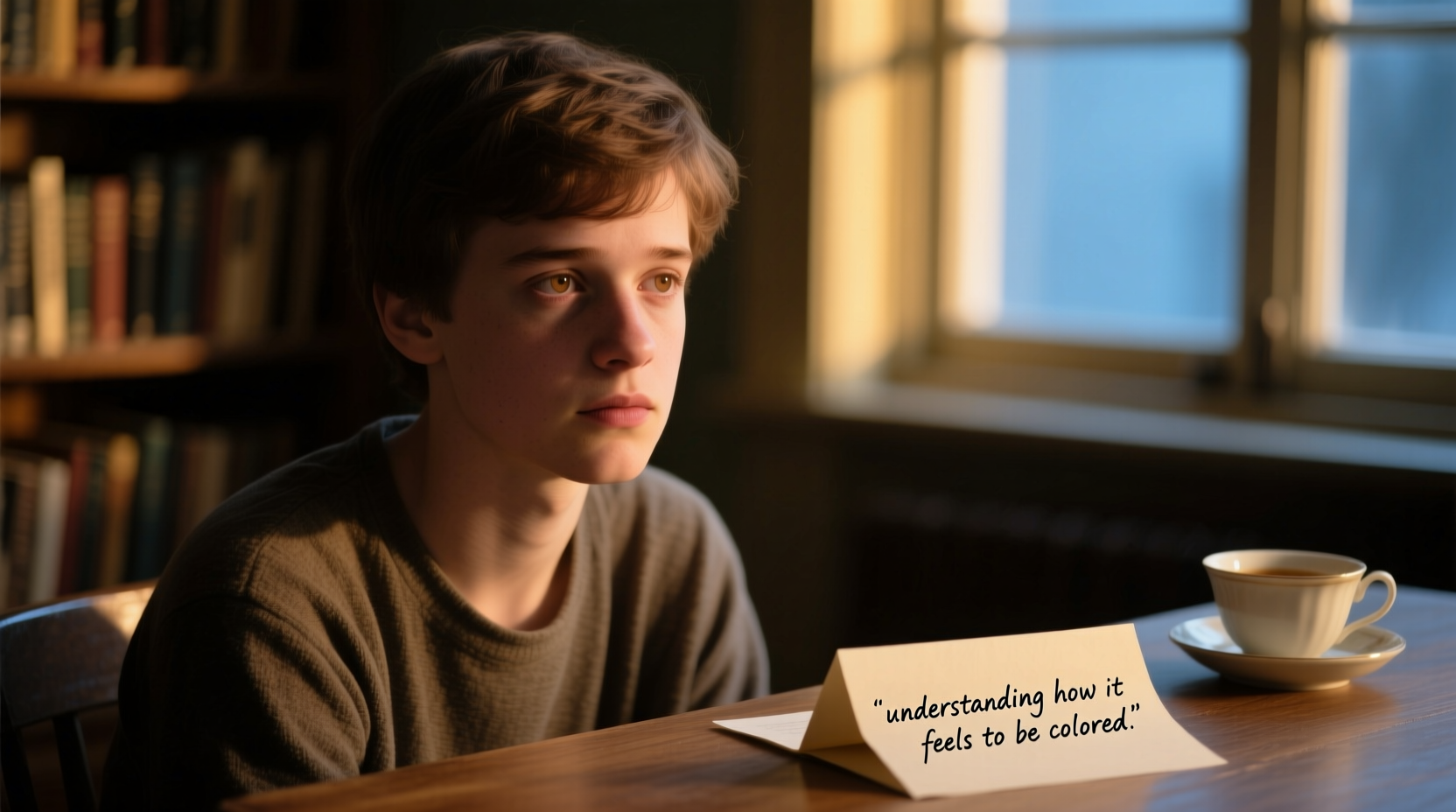
Du Bois introduced the concept of \"double consciousness\" as the internal conflict experienced by marginalized groups, particularly Black Americans, who must view themselves through their own eyes and through the distorted lens of a racist society. This duality persists. To be colored is to grow up learning how others see you before you fully know how to see yourself. It is to hear your name mispronounced at roll call, to be followed in stores, to be praised for being “articulate,” or to be told you’re “not like the others.” These microaggressions are not isolated incidents but cumulative experiences that shape one’s understanding of belonging.
This awareness often arrives early. A child may not question their identity until someone else does—when they’re asked, “What are you?” or told they don’t “act Black.” These moments fracture innocence, forcing a reckoning with race long before one is emotionally prepared. The result is a constant negotiation: balancing authenticity with adaptation, pride with survival.
“American Negroes have always been expected to smile when called ‘boy,’ and to prove their humanity daily.” — James Baldwin, *The Fire Next Time*
Cultural Identity as Resistance and Reclamation
Being colored is not only about pain; it is also about power. Across generations, people of color have transformed marginalization into meaning. From spirituals to hip-hop, from soul food to spoken word, culture becomes a vessel of resistance and reclamation. To wear an Afro, speak Creole, or cook collard greens is not just tradition—it is defiance. It says: I exist beyond your stereotypes. I define myself.
This reclamation is especially vital in spaces where assimilation is rewarded. In corporate offices, academic institutions, or predominantly white neighborhoods, code-switching becomes second nature. One modulates voice, dress, and demeanor to fit in. But beneath the surface, there’s often a quiet mourning—a sense that part of oneself must be muted to be accepted.
The Emotional Landscape of Racial Awareness
How does it feel to be colored? It feels like walking through the world with heightened sensitivity. Joy is deeper because it’s hard-won. Anger is sharper because it’s justified. Pride is louder because it’s revolutionary. Grief is heavier because it carries ancestral weight.
It feels like carrying history in your bones—the legacy of slavery, segregation, displacement, and struggle. It feels like bearing witness to injustice while being expected to remain composed, rational, grateful. It feels like loving a country that has not always loved you back.
And yet, it also feels like community. Like Sunday dinners with elders who survived Jim Crow. Like protest chants echoing across generations. Like seeing your daughter braid her hair without hesitation, proud of its texture. These moments are not escapes from pain—they are affirmations of life despite it.
A Real Moment: Maria’s Story
Maria, a first-generation Dominican-American teacher in Brooklyn, recalls the moment she realized her students saw her differently than she saw herself. After a lesson on immigration, a student asked, “Were your parents undocumented?” She paused. Though her parents had worked multiple jobs to afford visas, she had never considered labeling them that way. But the question revealed something deeper: to her students—many of whom were navigating ICE fears—her success story seemed distant, even suspect.
That night, Maria reflected. She had spent years downplaying her accent, straightening her hair, avoiding Spanish in staff meetings. She had achieved professional acceptance—but at what cost? Her realization wasn’t guilt, but clarity: being colored meant constantly negotiating visibility. Now, she starts each class with a bilingual greeting. She shares family photos during cultural heritage month. She no longer hides her roots to prove her worth.
Steps Toward Self-Affirmation: A Personal Timeline
- Age 8–12: First encounter with racial difference—being teased for skin tone, hair, or name.
- Teen Years: Internal conflict between cultural pride and social acceptance; possible rejection of heritage traits.
- Early Adulthood: Exposure to diverse perspectives—college, travel, literature—that reframes identity.
- Mid-20s to 30s: Active reconnection with roots—learning language, cooking traditional meals, engaging in activism.
- Ongoing: Daily practice of self-affirmation—speaking truth in spaces that silence, mentoring younger generations, embracing complexity.
Do’s and Don’ts in Navigating Colored Identity
| Do | Don't |
|---|---|
| Seek out stories from your ancestors and elders | Assume your experience is the only valid one |
| Engage with art and literature by people of color | Feel obligated to represent your entire race |
| Set boundaries around explaining your trauma | Internalize racism as personal failure |
| Find community with others who share your background | Reject parts of yourself to gain approval |
| Advocate for inclusive policies in workplaces and schools | Stay silent when dignity is compromised |
Frequently Asked Questions
Does feeling “colored” mean I’m defined only by race?
No. Being aware of your racial identity doesn’t erase your individuality—it deepens it. You are more than your color, but your color shapes how the world interacts with you. Acknowledging that doesn’t limit you; it empowers you to navigate reality with clarity.
Can someone who isn’t Black relate to “how it feels to be colored me”?
While Du Bois’s phrase specifically addresses Black American experience, the broader sentiment resonates across communities of color. Indigenous, Asian, Latinx, and Middle Eastern individuals also face othering, stereotyping, and systemic erasure. The specifics differ, but the emotional core—of being seen as “other”—can create shared understanding.
How can allies support this journey?
Allies listen without centering themselves. They educate rather than ask marginalized people to teach. They challenge bias in their circles. Most importantly, they respect that healing and self-definition belong to those living the experience—not to be guided or corrected from the outside.
Toward Wholeness: Reflection and Responsibility
To understand how it feels to be colored me is to recognize that identity is not static—it is forged in the fire of experience. It is to honor the sorrow without being consumed by it, to celebrate the joy without denying the struggle. It is to say: I am not a problem to be solved. I am a history to be honored, a present to be lived, and a future to be built.
This reflection is not just for people of color. It is a call to everyone: to see the human behind the label, to question the systems that sort and rank, to create spaces where all identities can breathe freely. Because when one person is diminished by prejudice, humanity itself is wounded.
“We are not makers of history. We are made by history.” — Martin Luther King Jr.




 浙公网安备
33010002000092号
浙公网安备
33010002000092号 浙B2-20120091-4
Comments
No comments yet. Why don't you start the discussion?