
Life expectancy is more than a statistical number—it's a critical factor in shaping financial plans, healthcare decisions, and personal goals. While global averages provide a broad picture, individual longevity depends on a complex mix of genetics, lifestyle, environment, and access to medical care. Understanding your likely lifespan empowers you to make smarter choices today that support a healthier, more secure tomorrow.
Advances in medicine and public health have steadily increased average life expectancy over the past century. Yet many people remain unprepared for longer lives—financially, emotionally, and physically. This article breaks down how to estimate your personal life expectancy, interpret what it means, and take actionable steps to prepare for the future with confidence.
What Life Expectancy Really Means
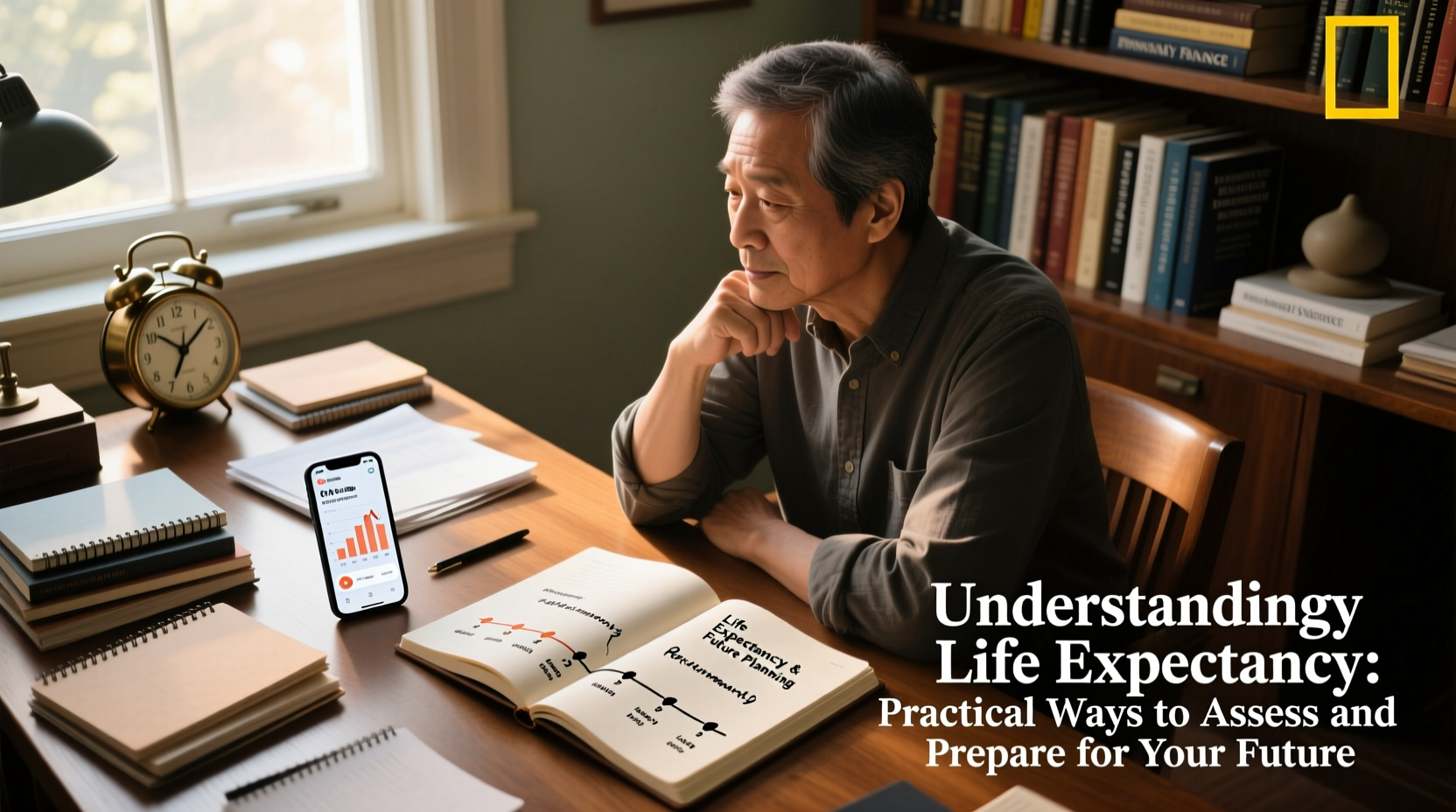
Life expectancy refers to the average number of years a person is expected to live based on statistical data. The most commonly cited figure is \"life expectancy at birth,\" but this can be misleading. A more relevant metric for adults is \"remaining life expectancy\"—how many more years you’re likely to live given your current age, sex, and health status.
For example, while the global average life expectancy at birth is around 73 years, a healthy 60-year-old might still expect to live another 25 years. These projections are not fixed predictions but informed estimates derived from large-scale population studies.
“Life expectancy isn’t destiny—it’s a starting point for planning. The choices you make after 50 can add or subtract a decade.” — Dr. Linda Chen, Preventive Medicine Specialist
Key factors influencing life expectancy include:
- Genetics: Family history of chronic diseases such as heart disease or cancer.
- Lifestyle: Smoking, alcohol use, physical activity, and diet.
- Socioeconomic status: Income, education, and access to healthcare.
- Environment: Air quality, neighborhood safety, and stress levels.
- Medical care: Preventive screenings, vaccination history, and management of chronic conditions.
How to Estimate Your Personal Life Expectancy
You don’t need a crystal ball to get a realistic sense of your potential lifespan. Several validated tools and calculators incorporate personal health data to generate personalized estimates. These typically ask about age, weight, blood pressure, cholesterol, smoking status, exercise habits, and family history.
Reputable tools include:
- The Blue Zones Vitality Compass, which aligns lifestyle choices with longevity hotspots.
- The RealAge Test by Sharecare, which calculates your biological age versus chronological age.
- The ONS Life Expectancy Calculator (UK Office for National Statistics), widely used for demographic planning.
These tools don’t predict exact death dates. Instead, they highlight areas where small changes—like walking 30 minutes daily or quitting smoking—can significantly extend your healthy years.
Practical Steps to Prepare for a Longer Life
Knowing your estimated lifespan is only valuable if it leads to action. Preparing for the future involves more than saving money—it requires holistic planning across health, finances, relationships, and purpose.
1. Financial Planning for Extended Longevity
Living into your 80s or 90s increases the risk of outliving your savings. Consider these strategies:
- Project retirement expenses beyond age 85, not just 75.
- Delay Social Security benefits if possible to maximize monthly payouts.
- Explore annuities or pension options that offer lifetime income.
- Factor in long-term care costs—70% of people over 65 will need some form of extended care.
2. Prioritize Preventive Health Measures
Regular check-ups and early interventions are among the most effective ways to extend both lifespan and healthspan (the number of years lived in good health).
- Schedule annual physicals including blood pressure, cholesterol, and glucose tests.
- Stay up to date with cancer screenings: colonoscopies, mammograms, and prostate exams.
- Vaccinate against flu, pneumonia, shingles, and other preventable illnesses.
- Maintain strong social connections—loneliness is linked to a 29% higher risk of heart disease.
3. Build Resilience Through Lifestyle
Diet and movement matter more than ever as you age. Focus on sustainable habits:
- Eat a Mediterranean-style diet rich in vegetables, whole grains, fish, and healthy fats.
- Aim for 150 minutes of moderate aerobic activity per week.
- Incorporate strength training twice weekly to preserve muscle mass and balance.
- Prioritize sleep—7–9 hours nightly supports cognitive and metabolic health.
Do’s and Don’ts for Longevity Planning
| Do’s | Don’ts |
|---|---|
| Review your health metrics annually | Ignore high blood pressure or cholesterol because you “feel fine” |
| Discuss advance directives with family | Assume someone else will make medical decisions for you |
| Update estate plans every 5 years or after major life events | Leave your will unwritten or outdated |
| Engage in mentally stimulating activities (reading, puzzles, learning) | Retire completely from meaningful engagement or purpose |
Real-Life Example: Planning Ahead at 58
Mark, a 58-year-old accountant from Portland, used a life expectancy calculator after his father passed away at 72 from heart disease. The tool estimated Mark’s remaining life expectancy at 24 years—shorter than average due to high stress, poor sleep, and a sedentary job.
Instead of dismissing the result, he took action. He started walking during lunch, switched to a plant-forward diet, began meditation, and scheduled a cardiac screening. Within a year, his blood pressure dropped to normal levels, and he reported higher energy and focus. His follow-up assessment added five years to his projected lifespan.
Mark also revised his retirement plan, increasing contributions to his IRA and researching long-term care insurance. “I realized I could either wait for problems to happen or work to prevent them,” he said. “Now I feel in control, not anxious.”
Your Action Checklist for Future Readiness
To turn insight into impact, follow this step-by-step checklist:
- Use a reputable life expectancy calculator to assess your current outlook.
- Schedule a comprehensive physical exam with your doctor.
- Review your retirement savings and project needs through age 90.
- Create or update your will, power of attorney, and healthcare directive.
- Start or increase regular exercise—even 10-minute walks count.
- Have a conversation with loved ones about end-of-life preferences.
- Eliminate one harmful habit (e.g., smoking, excessive drinking, late-night screen time).
Frequently Asked Questions
Can I really influence my life expectancy?
Yes. Studies show that up to 75% of premature deaths are linked to modifiable behaviors. Adopting four key habits—eating well, exercising regularly, not smoking, and moderate alcohol use—can add up to 10–14 years to your life compared to those who follow none.
What if I have a family history of early illness?
Genetics aren’t fate. While hereditary conditions increase risk, early detection and proactive management can delay or prevent disease onset. Regular screenings and lifestyle adjustments are especially important for those with family history.
Is it too late to start if I’m already in my 60s or 70s?
No. Research from the National Institutes of Health shows that starting exercise, improving diet, or quitting smoking even in later decades can significantly improve health outcomes and extend functional independence.
Take Charge of Your Future Today
Understanding your life expectancy is not about fearing the future—it’s about claiming agency over it. Whether you're 40, 60, or 80, the decisions you make now shape the quality and length of your years ahead. Use data wisely, act on insights, and build a life that’s not just long, but vibrant and meaningful.




 浙公网安备
33010002000092号
浙公网安备
33010002000092号 浙B2-20120091-4
Comments
No comments yet. Why don't you start the discussion?