
Across kitchens in Cuba and throughout the Cuban diaspora, few sauces carry as much cultural weight and culinary versatility as mojo. More than just a marinade or dipping sauce, mojo is a flavor cornerstone—a bright, aromatic elixir that transforms simple ingredients into deeply satisfying meals. Whether drizzled over roasted pork, used to baste yuca, or served alongside fried plantains, mojo brings acidity, heat, and pungency into perfect balance. For home cooks seeking authentic Latin flavors, understanding mojo is essential. It's not merely a recipe but a tradition passed through generations, rooted in Spanish influence and adapted with Caribbean ingenuity.
The word “mojo” may evoke images of mysticism—indeed, in some cultures, \"mojo\" refers to a charm or spiritual talisman. In Cuban cuisine, however, the term refers to something equally powerful: a sauce so potent in flavor that it can elevate even the most humble dish. Its origins trace back to the Canary Islands, where a similar garlic-and-vinegar sauce called *mojo canario* was commonly used. When Canary Islanders migrated to Cuba during the 19th century, they brought this culinary tradition with them, where it evolved with local ingredients like sour orange and tropical spices. Today, Cuban mojo stands distinct—bolder, brighter, and more complex than its ancestor.
Definition & Overview
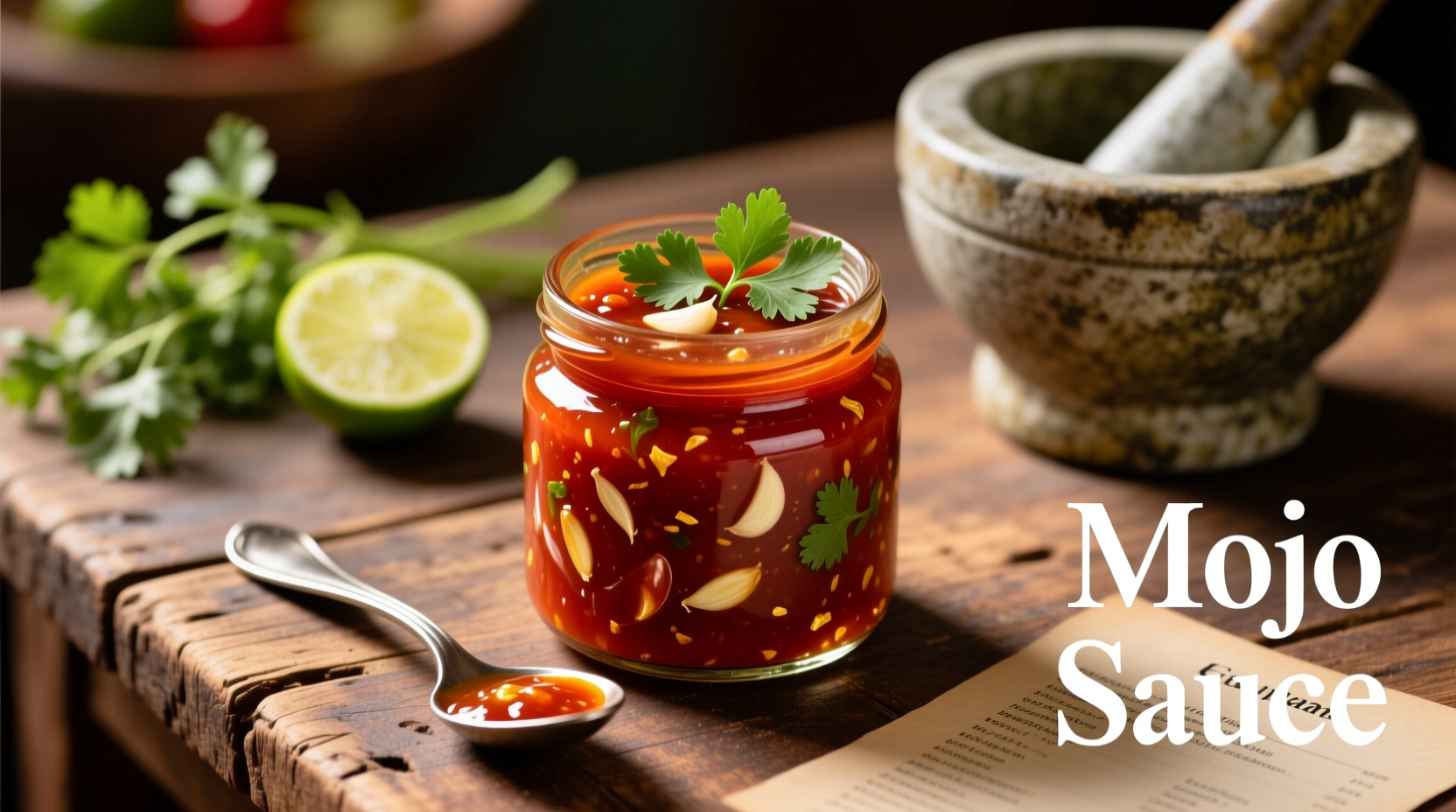
Mojo (pronounced MO-ho) is a thin, pourable sauce originating in Cuban and broader Caribbean cuisine. It functions primarily as a marinade, basting liquid, or finishing sauce, known for its sharp acidity, robust garlic presence, and subtle warmth from chili peppers. The base typically includes sour orange juice, garlic, onion or shallot, olive oil, cumin, oregano, salt, and black pepper. Some versions incorporate vinegar or lime juice when sour oranges are unavailable.
Unlike thick emulsified sauces such as aioli or mayonnaise-based crema, mojo remains fluid and penetrative, allowing it to seep into meats, tubers, and grilled vegetables. This makes it especially effective as a pre-cooking marinade for proteins like pork shoulder (used in *lechón asado*) or chicken. But its role doesn’t end there—it’s often reheated and spooned over cooked dishes for an aromatic finish.
Cuban mojo is fundamentally tied to celebration and communal eating. It appears at family gatherings, holidays like Nochebuena (Christmas Eve), and street-side roasts of whole pigs. Yet despite its festive associations, it remains accessible and quick to prepare, requiring no special equipment or rare ingredients. This duality—both ceremonial and everyday—is central to its enduring appeal.
Key Characteristics
| Characteristic | Description |
|---|---|
| Flavor Profile | Bright, tangy, garlicky, with earthy undertones from cumin and herbal notes from oregano. Balanced acidity with mild to moderate heat. |
| Aroma | Pronounced garlic and citrus zest, enhanced by warm spices when heated. |
| Color & Texture | Golden-orange hue; thin, oil-in-citrus-juice emulsion. May separate if stored—simply shake or whisk before use. |
| Heat Level | Mild to medium, depending on chili inclusion. Can be adjusted using fresh ajíes, crushed red pepper, or omitted entirely. |
| Culinary Function | Marinade, basting agent, finishing sauce, or dipping condiment. |
| Shelf Life | Freshly made: up to 1 week refrigerated. Freezes well for up to 3 months. |
| Allergens | Typically gluten-free, dairy-free, nut-free. Always verify ingredient labels if store-bought. |
Practical Usage: How to Use Mojo in Cooking
Mojo’s strength lies in its adaptability. While traditionally paired with slow-roasted pork, its applications span far beyond one dish. Here’s how to integrate it into your cooking repertoire:
As a Marinade
For maximum flavor penetration, inject or rub mojo into meat at least 4 hours before cooking—ideally overnight. This is standard practice for *lechón asado*, where pork shoulder or leg absorbs the citrus-garlic blend over many hours. The acid in the sour orange begins breaking down proteins gently, tenderizing without turning the texture mushy.
- Score the surface of the meat deeply in a crosshatch pattern.
- Rub half the mojo over all sides.
- Inject additional mojo into thicker sections using a marinade injector.
- Place in a non-reactive container, cover, and refrigerate for 8–24 hours.
- Reserve remaining mojo to baste during roasting.
Pro Tip: For large cuts like whole pork shoulder, combine injected and external marinating techniques. Rotate the meat every few hours to ensure even distribution.
As a Basting Liquid
During roasting or grilling, apply reserved mojo every 30–45 minutes. This keeps the exterior moist and builds layers of flavor as the sugars caramelize. Avoid basting too early or too frequently, which can inhibit crust formation.
As a Finishing Sauce
Warm leftover mojo gently and drizzle over finished dishes. This technique works exceptionally well with boiled root vegetables like yuca, malanga, or green plantains (*plátanos hervidos*). The hot sauce softens the fibrous texture of yuca while adding brightness that cuts through starchiness.
As a Dipping Sauce or Dressing
Serve chilled or room temperature mojo alongside fried foods such as *tostones* (twice-fried plantains), *croquetas*, or *fritas cubanas* (Cuban beef patties). Its acidity balances richness and grease effectively. Thinned further with water or broth, it can act as a salad dressing for cabbage-heavy slaws often served with Cuban sandwiches.
In Modern Fusion Applications
Chefs today use mojo creatively:
- Tossed with roasted sweet potatoes or carrots.
- Drizzled over grain bowls featuring black beans, rice, and avocado.
- Used as a base for shrimp ceviche, accelerating citrus \"cooking\" due to high acid content.
- Blended into mayonnaise for a Cuban-style sandwich spread.
Variants & Types of Mojo
While classic Cuban mojo centers on sour orange and garlic, regional and household variations abound. These reflect ingredient availability, personal taste, and cultural blending.
Mojo Rojo (Red Mojo)
This version includes roasted red bell peppers or tomatoes, giving it a deeper color and sweeter profile. Often smoother in texture, sometimes blended. Ideal for milder palates or as a sauce for seafood.
Mojo Verde (Green Mojo)
Uses fresh herbs like cilantro, parsley, or culantro (recao) as the dominant flavor. Closer in spirit to chimichurri but retains the citrus-oil foundation. Excellent with grilled fish or chicken.
Spicy Mojo (Mojo Picante)
Amplifies heat with added ingredients: sliced habanero, Scotch bonnet, or dried arbol chilies. Not intended to overpower but to complement. One small habanero per cup of sauce delivers noticeable fire without overwhelming.
Garlic-Dominant Mojo (Mojo de Ajo)
Emphasizes roasted or raw garlic—sometimes up to six cloves per quarter cup of liquid. Popular in home kitchens where garlic is revered both for flavor and perceived health benefits. Best used with strong-flavored meats like duck or lamb.
Dry Mojo Seasoning Blend
A powdered form combining dehydrated garlic, onion, citric acid, ground cumin, oregano, salt, and paprika. Used as a dry rub for meats before grilling. Convenient for storage but lacks the moisture and freshness of traditional mojo. Reconstitute with oil and citrus juice for closer approximation.
| Variant | Base Ingredients | Best Used With | Heat Level |
|---|---|---|---|
| Classic Mojo | Sour orange, garlic, olive oil, cumin, oregano | Pork, yuca, roast chicken | Mild |
| Mojo Rojo | + roasted red peppers or tomato purée | Seafood, vegetables, sandwiches | Mild |
| Mojo Verde | + cilantro, parsley, recao | Grilled fish, white meats, salads | Low-Medium |
| Mojo Picante | + fresh or dried hot chilies | Spicy roast pork, chorizo, bold dishes | Medium-Hot |
| Dry Mojo Blend | Dehydrated versions of core ingredients | Dry rubs, seasoning mixes, travel cooking | Adjustable |
Comparison with Similar Ingredients
Mojo is often mistaken for other Latin American sauces, but key distinctions set it apart.
| Sauce | Similarities to Mojo | Differences |
|---|---|---|
| Chimichurri (Argentina/Uruguay) | Herb-based, oil and vinegar foundation, used as marinade or condiment | Uses red wine vinegar and parsley/cilantro; no citrus; higher herb volume; less garlic; thicker texture |
| Adobo (Philippine/Latin) | Common marinade function; includes garlic, vinegar, soy or salt | Often includes soy sauce and black pepper; darker, saltier, less acidic; may lack citrus entirely |
| Vinaigrette | Oil-acid balance, used as dressing or marinade | Typically uses wine or distilled vinegar; lacks garlic dominance and warm spices; less aromatic complexity |
| Ajilimojo (Canary Islands) | Direct ancestor; same name root; garlic and oil base | May include bread for thickening; uses vinegar instead of citrus; sometimes smoked paprika-heavy |
\"Mojo isn't just about flavor—it's about memory. Every Cuban has a version tied to their abuela’s kitchen. The smell of garlic hitting warm oil, the splash of bitter orange—that’s home.\" — Isabel Méndez, Cuban-American chef and author of *Sazón: Flavors of Exile*
Practical Tips & FAQs
Where do I find sour oranges?
Fresh sour (or Seville) oranges are seasonal and region-specific, primarily available in Florida and specialty Latin markets during winter months. If unavailable, substitute with a blend of equal parts fresh orange juice and fresh lime or lemon juice. For authenticity, add 1 teaspoon of orange zest per cup to mimic the bitter peel oils.
Can I make mojo without raw garlic?
Raw garlic is central to traditional mojo, but those sensitive to its bite can blanch peeled cloves in boiling water for 30 seconds before mincing. Alternatively, roast whole garlic heads and mash into the sauce for a mellower, caramelized depth.
Is mojo vegan and gluten-free?
Yes, traditional mojo contains only plant-based ingredients and is naturally gluten-free. Always check labels on store-bought versions, as some commercial brands may add preservatives or thickeners containing allergens.
How long does homemade mojo last?
Stored in a sealed glass jar in the refrigerator, fresh mojo keeps for 5–7 days. The garlic flavor intensifies over time. For longer storage, freeze in ice cube trays and transfer to bags; thaw as needed. Do not leave at room temperature beyond 2 hours due to raw garlic-in-oil safety concerns.
Can I use bottled citrus juice?
Freshly squeezed juice is strongly recommended. Bottled juices often contain preservatives, added sugars, or lack volatile aromatics lost during pasteurization. However, frozen 100% sour orange juice (available online or in Cuban markets) is acceptable when thawed.
What’s the best oil for mojo?
Extra virgin olive oil provides fruitiness and stability, but some prefer neutral oils like avocado or grapeseed to let citrus and garlic shine. Avoid strongly flavored oils like sesame or walnut.
Why does my mojo separate?
Mojo is an unstable emulsion—oil and citrus juice naturally resist blending. Shake vigorously in a jar before each use. For a slightly more stable mix, slowly whisk oil into citrus while stirring constantly, or add a pinch of mustard powder as an emulsifier.
Can I cook mojo?
Traditional mojo is not cooked; it’s mixed raw and applied cold or warmed gently. Boiling will dull the bright citrus notes and cause bitterness. Warm only to serving temperature (below 160°F / 71°C).
Storage Checklist:
- Use clean, sterilized jars for storage.
- Label with date—discard after 7 days refrigerated.
- Freeze extras in portion-sized containers.
- Never reuse marinade that contacted raw meat unless boiled thoroughly.
Summary & Key Takeaways
Mojo sauce is far more than a condiment—it is a culinary philosophy rooted in balance, simplicity, and bold expression. Born from Canary Island traditions and refined in Cuban kitchens, it exemplifies how minimal ingredients can yield maximum impact. At its core, mojo combines sour citrus, pungent garlic, warm spices, and oil into a dynamic sauce that enhances rather than masks.
Its primary forms—classic, red, green, spicy, and dry—allow flexibility across proteins, vegetables, and preparations. Whether used as a deep-penetrating marinade for *lechón asado*, a zesty dip for *tostones*, or a modern twist on grain bowls, mojo adapts gracefully. Understanding its differences from chimichurri, adobo, or vinaigrette ensures proper application and respect for its cultural context.
For home cooks, mastering mojo means gaining access to a foundational element of Cuban cuisine—one that requires no advanced skills, only attention to quality ingredients and timing. With a few simple tools and readily available components, anyone can recreate this vibrant sauce and bring a taste of the Caribbean into their kitchen.
Try making your first batch of classic mojo this week. Start with roasted pork or boiled yuca, and notice how the sauce transforms the dish. Share it with others—the truest test of any Cuban recipe is whether it brings people together.




 浙公网安备
33010002000092号
浙公网安备
33010002000092号 浙B2-20120091-4
Comments
No comments yet. Why don't you start the discussion?