
Potato rust is a term commonly misused in gardening circles, often conflated with fungal diseases like early blight or late blight. True rust diseases—such as those caused by *Puccinia* species—are not typically associated with potatoes (*Solanum tuberosum*), which are more vulnerable to other foliar pathogens. However, the appearance of rust-colored spots on potato plants frequently triggers concern among home growers and commercial farmers alike. Understanding what these symptoms actually indicate, what pathogens may be responsible, and how to respond effectively is critical for protecting yield and plant health. This article clarifies the confusion around \"potato rust,\" identifies the real culprits behind rust-like discoloration, and provides science-based management strategies.
Definition & Overview: What Is “Potato Rust”?
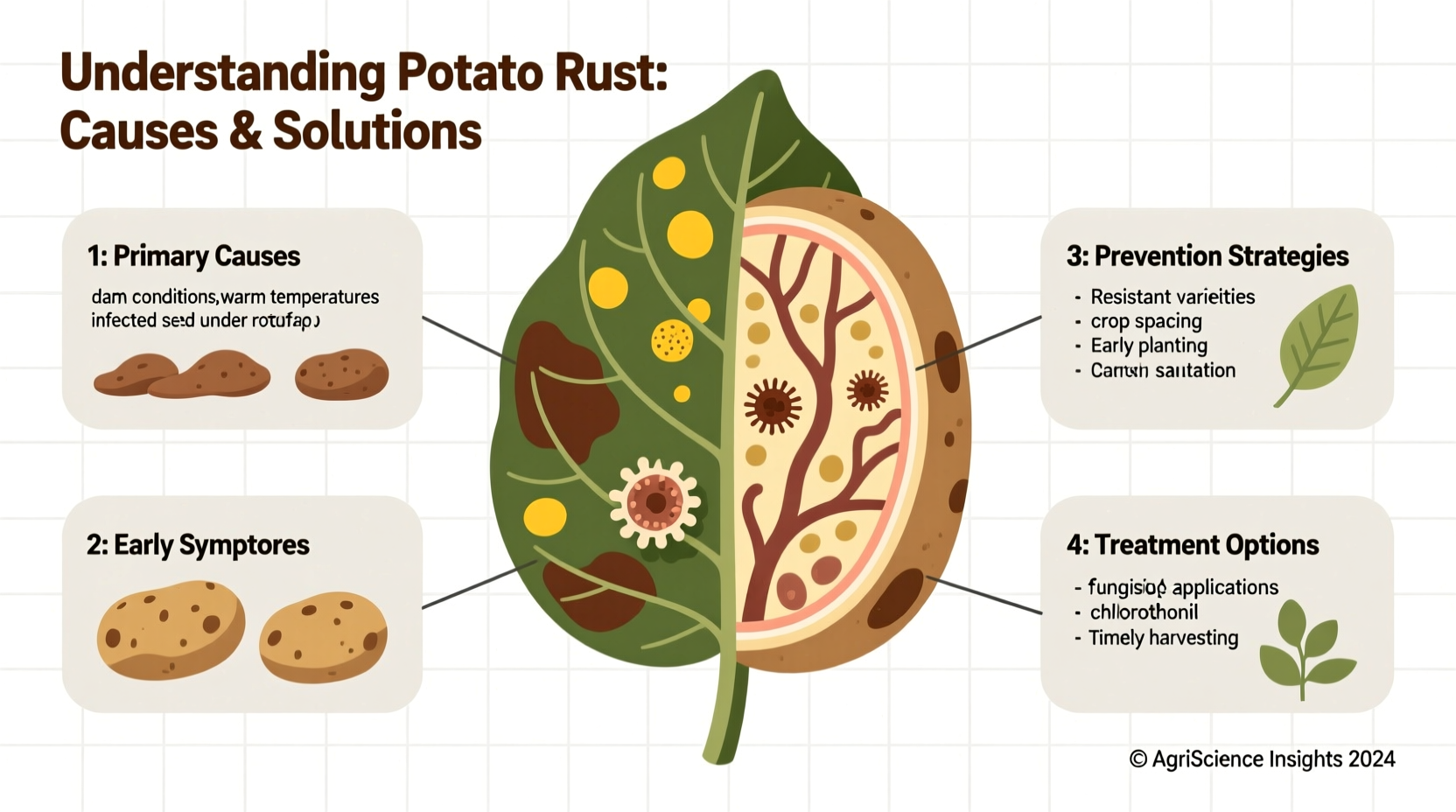
The term “potato rust” does not refer to a scientifically recognized disease in mainstream agricultural literature. Unlike cereals such as wheat or oats, which are affected by true rust fungi (e.g., stem rust, leaf rust), potatoes are members of the nightshade family and are not natural hosts for rust fungi. Instead, when gardeners observe orange, brown, or reddish pustules on potato foliage, stems, or even tubers, they are likely seeing symptoms of entirely different pathogens—most commonly fungal diseases such as Alternaria solani (early blight) or Phytophthora infestans (late blight)—or physiological disorders such as nutrient deficiencies or sunscald.
In rare cases, soil-borne organisms such as *Streptomyces* species can cause **common scab**, which produces corky, rust-toned lesions on tuber surfaces. While not a rust fungus, this condition may be colloquially described as “rusty potatoes.” Similarly, iron oxidation from mechanical harvesting tools or prolonged exposure to moist soil can leave reddish stains on skins, mimicking rust. Thus, accurate diagnosis is essential before any treatment is applied.
Key Characteristics of Rust-Like Symptoms in Potatoes
To distinguish between actual disease and cosmetic issues, consider the following characteristics:
| Symptom Type | Color/Appearance | Location | Progression | Likely Cause |
|---|---|---|---|---|
| Foliar spots with concentric rings | Brown to dark purple with target-like patterns | Lower leaves first, spreading upward | Rapid in warm, humid conditions | Early blight (Alternaria solani) |
| Water-soaked lesions turning brown | Oily green to black; white fungal growth underneath in humidity | Leaves, stems, tubers | Explosive spread in cool, wet weather | Late blight (Phytophthora infestans) |
| Corky, tan to reddish-brown patches | Dry, rough surface | Tuber skin only | Appears at harvest; doesn’t spread post-harvest | Common scab (Streptomyces scabies) |
| Reddish-orange specks or streaks | Metallic or oxidized look | Surface scratches or bruises on tubers | Does not expand after storage begins | Iron residue or mechanical injury |
| Yellowing between veins, stunted growth | Interveinal chlorosis progressing to necrosis | Young leaves initially | Gradual worsening over weeks | Iron deficiency (often in high-pH soils) |
True rust fungi produce powdery, spore-laden pustules that rupture through plant tissue and are easily rubbed off. These traits are absent in most potato ailments, further confirming that classic rust diseases do not infect potato crops under normal circumstances.
Practical Usage: How to Identify and Respond to Rust-Like Conditions
For home gardeners and small-scale producers, timely identification is the first step toward effective intervention. Begin with visual inspection and environmental assessment:
- Inspect lower leaves first: Early blight typically starts on older foliage. Look for circular lesions with concentric rings resembling a bullseye.
- Check for moisture-related patterns: Late blight thrives in damp conditions. If lesions appear after heavy rain or high humidity and have a fuzzy white mold on the underside, suspect Phytophthora infestans.
- Examine harvested tubers: Superficial russeting or scab lesions may resemble rust but are generally harmless beyond aesthetics. Deep, sunken, or expanding rot points to bacterial soft rot or fungal infection.
- Test soil pH: Common scab is more prevalent in alkaline soils (pH >5.8). Maintaining slightly acidic conditions (pH 5.0–5.5) suppresses its development.
- Review cultural practices: Did you use untreated seed potatoes? Are tools clean? Was crop rotation followed? These factors significantly influence disease pressure.
Pro Tip: When in doubt, submit leaf or tuber samples to your local cooperative extension service for laboratory diagnosis. Many state universities offer affordable pathology testing that includes PCR analysis for specific pathogens.
Managing Early Blight (Often Mistaken for Rust)
Alternaria solani is one of the most common causes of rust-colored damage in potato fields. It survives in plant debris and spreads via wind and splashing water. Management focuses on prevention:
- Start with certified seed: Never save seed from infected plants.
- Apply mulch: Straw or black plastic reduces soil splash onto leaves.
- Use fungicides preventively: Copper-based sprays or chlorothalonil can protect foliage if applied before symptom onset.
- Practice wide spacing: Improves airflow and speeds drying of foliage.
- Remove crop residue: Till under or dispose of all plant matter after harvest.
Controlling Late Blight — A Historical Threat
Phytophthora infestans was responsible for the Irish Potato Famine and remains a devastating pathogen. It spreads rapidly in cool (60–70°F), wet conditions. Once established, it can defoliate a field within days.
Immediate actions include:
- Destroy infected plants: Uproot and bag affected plants immediately; do not compost.
- Spray protectant fungicides: Mancozeb or fixed copper formulations help reduce spread.
- Avoid overhead irrigation: Use drip lines to keep foliage dry.
- Harvest carefully: Do not dig during wet soil conditions to avoid introducing pathogens into tubers.
“Late blight can travel miles on the wind. One infected plant can compromise an entire region’s crop. Vigilance and rapid response are non-negotiable.” — Dr. William Barksdale, Emeritus Plant Pathologist, Virginia Tech
Variants & Types: Forms of Rust-Like Damage in Potatoes
While no true rust variants affect potatoes, several diseases and conditions mimic rust visually. Understanding their differences ensures proper management:
1. Early Blight vs. Target Spot
Both cause circular lesions, but target spot (caused by *Corynespora cassiicola*) is less common and usually affects stressed plants in greenhouse settings. Microscopic examination distinguishes the two based on spore morphology.
2. Common Scab vs. Powdery Scab
Though both affect tuber appearance, they differ biologically:
| Feature | Common Scab | Powdery Scab |
|---|---|---|
| Pathogen | Streptomyces scabies (bacterium-like actinomycete) | Spongospora subterranea (plasmodiophorid) |
| Lesion Type | Corky, superficial pits | Slightly raised, spongy pustules that burst into powder |
| Soil Preference | Alkaline, dry, sandy soils | Cool, wet, poorly drained soils |
| Vector | None; soil-borne | Can transmit Potato Mop-top Virus (PMTV) |
| Control Method | Lower soil pH, rotate crops | Improve drainage, avoid importing infested soil |
3. Iron Staining vs. Disease
After harvesting with metal equipment, especially in moist conditions, iron particles can embed in potato skin, creating rust-colored flecks. These do not deepen or spread in storage and are purely cosmetic. Washing or peeling removes them completely.
Comparison with Similar Ingredients
Although this topic centers on plant pathology rather than culinary ingredients, it's worth noting that consumers sometimes confuse externally blemished potatoes with spoiled ones. Here’s how rust-like conditions compare to similar-looking but distinct issues:
| Condition | Appearance | Edibility | Storage Risk |
|---|---|---|---|
| Common scab | Rough, corky patches | Fully edible; peel if desired | Low; does not spread |
| Iron staining | Red-orange speckles | Completely safe | None |
| Early blight (tubers) | Firm, dark sunken areas | Cut away lesions; rest is usable | Moderate; secondary rots possible |
| Soft rot (bacterial) | Wet, mushy decay with foul odor | Discard entire potato | High; highly contagious |
| Greening (solanine) | Green skin due to light exposure | Peel deeply; avoid consumption if bitter | Chemical risk, not microbial |
Unlike true spoilage, most rust-mimicking conditions do not render potatoes inedible. Proper sorting and preparation maintain food safety and reduce waste.
Practical Tips & FAQs
Q1: Can I eat potatoes with rust-colored spots?
A1: Yes, in most cases. If the spots are dry, corky, or superficial (like scab or iron stains), peeling removes them safely. Avoid eating potatoes with soft, foul-smelling rot or extensive fungal invasion.
Q2: How do I prevent rust-like diseases in my garden?
A2: Focus on integrated pest management (IPM): rotate crops every 3–4 years, use disease-free seed, maintain proper soil pH, ensure good airflow, and apply preventive fungicides when weather favors disease.
Q3: Is there a resistant potato variety?
A3: Yes. Varieties such as ‘Elba’, ‘King Harry’, and ‘Defender’ show strong resistance to early blight. For late blight, consider ‘Mountain Magic’, ‘Plum Regal’, or ‘Olympic Red’. Always select regionally adapted cultivars.
Q4: Does watering time affect disease development?
A4: Absolutely. Watering in the morning allows foliage to dry before nightfall, reducing humidity around leaves. Evening irrigation increases the risk of fungal establishment.
Q5: Can composting infected plants spread disease?
A5: Yes. Most home compost piles do not reach temperatures high enough to kill fungal spores or bacteria. Infected material should be bagged and discarded or burned where permitted.
Q6: Are organic treatments effective against blight?
A6: Some are moderately effective. Neem oil has limited impact, but potassium bicarbonate sprays and biological controls like *Bacillus subtilis* strains (e.g., Serenade ASO) can suppress early infections. They work best as preventives, not cures.
Action Checklist for Gardeners:
- ✅ Start with certified, disease-free seed potatoes
- ✅ Test soil pH and adjust to 5.0–5.5 if scab is a recurring issue
- ✅ Space plants at least 12 inches apart for airflow
- ✅ Apply mulch to minimize soil splash
- ✅ Scout weekly for early signs of leaf spotting
- ✅ Use labeled fungicides at first sign of trouble
- ✅ Harvest only when vines are fully dead and dry
- ✅ Cure tubers at 50–60°F with high humidity for 10–14 days before long-term storage
Summary & Key Takeaways
\"Potato rust\" is a misnomer. True rust fungi do not infect potato plants. What gardeners often describe as rust is usually early blight, late blight, common scab, or physical staining. Accurate diagnosis is essential to apply the correct remedy and avoid unnecessary chemical use.
Prevention remains the most effective strategy. Healthy soil, proper spacing, crop rotation, and timely interventions dramatically reduce disease incidence. Even when symptoms appear, many affected potatoes remain edible after simple preparation.
Understanding the biology behind rust-like conditions empowers growers to make informed decisions, reduce crop loss, and maintain sustainable growing practices. Whether you're cultivating a backyard plot or managing acres of production, knowledge is your strongest defense against misinformation and disease.
Have you encountered rust-colored spots on your potato plants? Share your experience and photos with your local extension office to contribute to regional disease tracking efforts. Early reporting helps protect community agriculture.




 浙公网安备
33010002000092号
浙公网安备
33010002000092号 浙B2-20120091-4
Comments
No comments yet. Why don't you start the discussion?