
Becoming a mechanical engineer is a rewarding path that blends creativity, problem-solving, and technical expertise. From designing advanced robotics to developing sustainable energy systems, mechanical engineers play a vital role in shaping modern technology. But for students considering this career, one of the most pressing questions is: how long does it actually take? The answer depends on several factors, including academic choices, program structure, and career goals. This article breaks down the typical timeline, explores accelerated options, and offers practical guidance for navigating the educational journey efficiently.
The Standard Path: A Four-Year Bachelor’s Degree
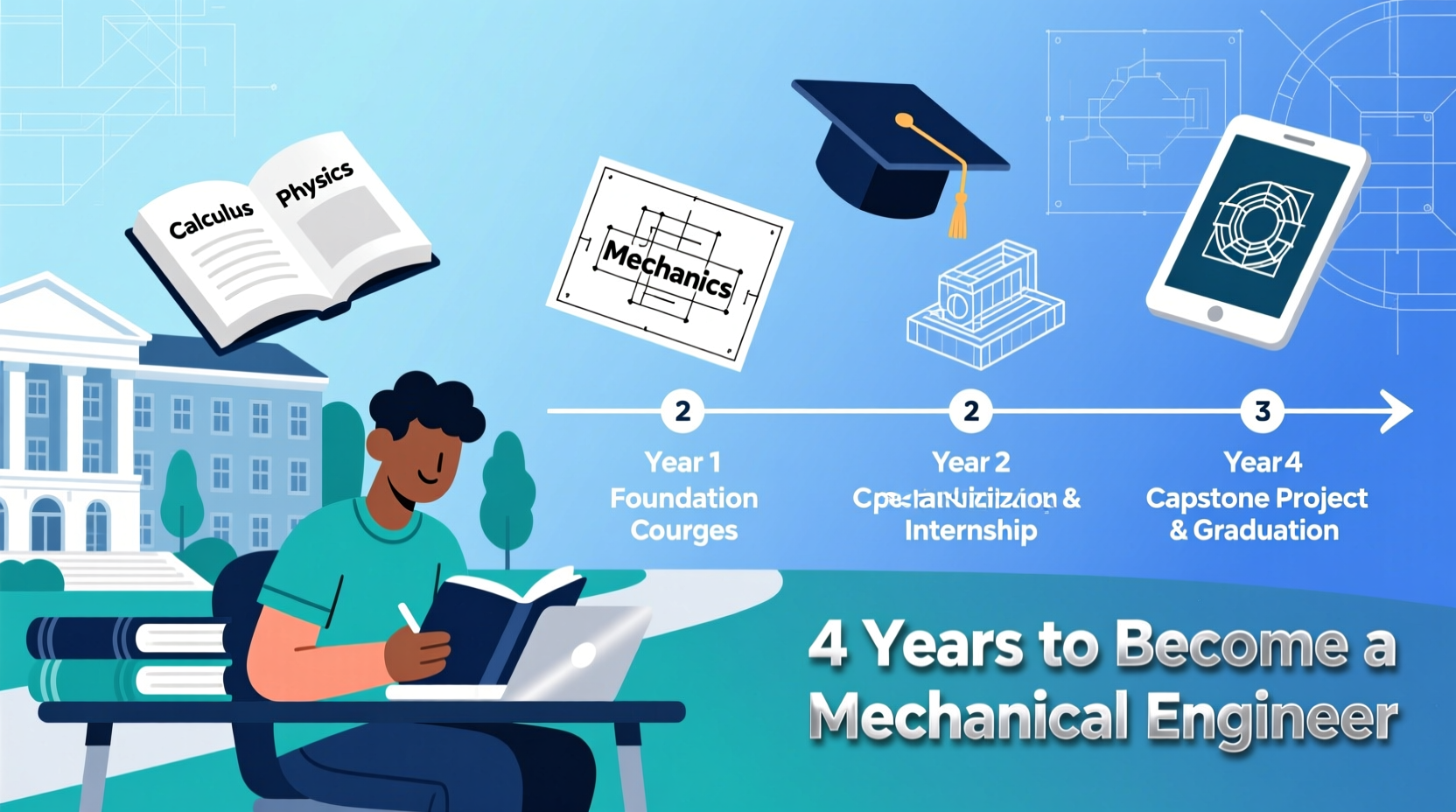
The foundation of a mechanical engineering career is a Bachelor of Science in Mechanical Engineering (BSME). In the United States and most countries following a similar higher education model, this degree typically takes four years of full-time study. The curriculum is rigorous and structured, covering core subjects such as thermodynamics, fluid mechanics, materials science, dynamics, and control systems.
Each year builds progressively:
- Year 1: Focuses on foundational math (calculus, differential equations) and basic physics, along with introductory engineering courses.
- Year 2: Introduces core engineering principles like statics, mechanics of materials, and circuit analysis.
- Year 3: Dives into specialized topics such as heat transfer, machine design, and system dynamics.
- Year 4: Emphasizes capstone design projects, senior labs, and often includes internship experiences or co-op programs.
Factors That Can Extend or Shorten the Timeline
While four years is the standard, not all students graduate on schedule. Several variables influence the actual duration:
Academic Load and Course Availability
Students who take fewer than 15 credits per semester may extend their studies into a fifth year. Similarly, limited course availability due to scheduling conflicts or high demand can delay graduation.
Co-op and Internship Programs
Many top engineering schools integrate cooperative education (co-op) programs, where students alternate semesters of study with paid work experience. While these programs often extend the total time to five years, they provide invaluable hands-on training and frequently lead to job offers post-graduation.
Transfer Students and Community College Pathways
Some students begin at community colleges, completing general education and prerequisite courses before transferring to a four-year university. When properly planned, this route maintains the four-year timeline and reduces tuition costs significantly.
“Engineering isn’t just about solving equations—it’s about solving real-world problems. The extra year spent in a co-op program often pays off tenfold in career readiness.” — Dr. Linda Park, Associate Dean of Engineering, University of Michigan
Accelerated and Combined Degree Options
For motivated students, there are pathways to complete their education faster or earn advanced credentials without adding excessive time.
Fast-Track Bachelor’s Programs
A growing number of universities offer accelerated BSME tracks that allow students to graduate in three years. These programs require intensive coursework during summers and heavier semester loads. They’re ideal for highly organized students aiming to enter the workforce early.
Combined Bachelor’s/Master’s Programs
Some institutions offer 4+1 programs, enabling students to earn both a bachelor’s and master’s degree in five years. By counting select graduate courses toward undergraduate requirements, students save time and money while gaining a competitive edge in the job market.
| Program Type | Duration | Key Benefit | Potential Drawback |
|---|---|---|---|
| Traditional BSME | 4 years | Structured, widely available | May lack practical experience |
| Co-op Integrated | 5 years | Strong industry connections | Longer time to degree |
| Accelerated BSME | 3 years | Early entry to workforce | High academic pressure |
| 4+1 BS/MS Program | 5 years | Advanced degree advantage | Requires strong GPA for admission |
Real-World Example: Maria’s Engineering Journey
Maria began her college journey at a community college in Texas, completing calculus, physics, and chemistry over two years. She transferred to a state university with junior standing and joined a mechanical engineering co-op program with an aerospace firm. Over the next two and a half years, she alternated semesters between classes and full-time work, gaining experience in propulsion system testing. Though her degree took five years instead of four, Maria graduated with no student debt from her final two years (thanks to co-op earnings) and received a full-time job offer before commencement.
Her story illustrates that while the traditional timeline is four years, strategic decisions can lead to better long-term outcomes—even if it takes longer on paper.
Step-by-Step Guide to Completing Your Mechanical Engineering Degree
Navigating the college journey successfully requires planning. Follow this timeline to stay on track:
- Year Before College: Research ABET-accredited programs, apply for scholarships, and consider dual enrollment if available.
- Sophomore Year: Join engineering societies (e.g., ASME), seek research opportunities, and start building relationships with professors.
- Junior Year: Apply for internships or co-ops, declare any specializations (e.g., robotics, energy systems), and prepare for the Fundamentals of Engineering (FE) exam.
- Senior Year: Complete your capstone project, take the FE exam, and begin applying for jobs or graduate programs.
- After Graduation: Gain work experience, pursue the Professional Engineer (PE) license after four years, and consider continuing education.
Frequently Asked Questions
Can I become a mechanical engineer in less than four years?
Yes, some universities offer accelerated three-year bachelor’s programs for highly motivated students. These require summer courses and a heavy credit load each semester. However, they are not common and may limit time for internships or extracurriculars.
Is a master’s degree necessary for mechanical engineers?
Not always. Most entry-level positions require only a bachelor’s degree. However, a master’s can be beneficial for those pursuing research, academia, or specialized fields like computational fluid dynamics or mechatronics. It also enhances promotion potential in certain industries.
What happens if I don’t finish in four years?
Taking five years is more common than many realize—especially among students in co-op programs or those balancing work and school. Employers typically care more about your skills, experience, and completed degree than the exact number of years it took.
Conclusion: Building a Foundation for Lifelong Success
The journey to becoming a mechanical engineer usually spans four to five years, but the true value lies not in speed, but in depth of learning and real-world preparation. Whether you follow a traditional path, opt for a co-op program, or accelerate your studies, the goal is to build a strong technical foundation, gain practical experience, and develop problem-solving instincts that last a lifetime. Engineering is not a race—it’s a marathon of continuous learning and innovation.




 浙公网安备
33010002000092号
浙公网安备
33010002000092号 浙B2-20120091-4
Comments
No comments yet. Why don't you start the discussion?