
It starts with a quiet moment—maybe you’ve just sat down with a book, or finally allowed yourself to watch an episode of your favorite show without multitasking. Almost instantly, a whisper creeps in: “Shouldn’t you be doing something more useful?” That familiar pang of guilt when relaxing is more common than you think. In a culture that glorifies hustle, efficiency, and constant output, rest can feel like failure. But this guilt isn’t a personal flaw—it’s a symptom of deeper psychological patterns tied to productivity anxiety. Recognizing its roots and learning to respond with intention can transform not only how you relax but how you live.
The Psychology Behind Guilt When Relaxing
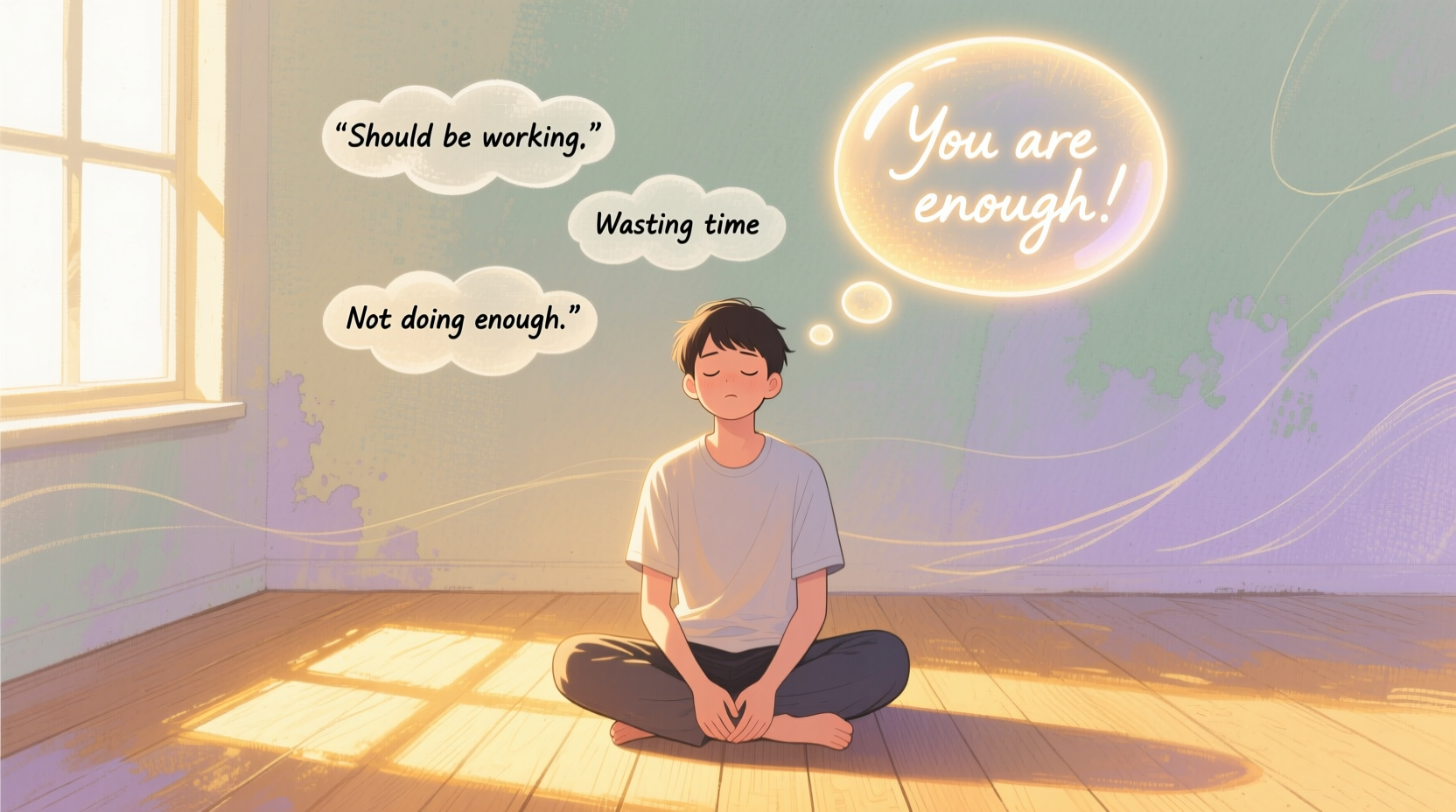
Guilt during relaxation often stems from internalized beliefs about worth being tied to output. From childhood, many of us absorb messages equating busyness with virtue. Phrases like “Don’t just sit there—do something!” or “Idle hands are the devil’s workshop” subtly condition us to view stillness as wasteful. Over time, these beliefs become automatic, triggering guilt even when we consciously know rest is necessary.
This phenomenon is closely linked to what psychologists call “productivity anxiety”—a chronic worry about not doing enough, not achieving fast enough, or falling behind. It manifests in physical symptoms like tension, insomnia, or irritability, and emotionally as shame, self-criticism, or fear of judgment. The irony? This anxiety often reduces actual productivity by impairing focus, creativity, and resilience.
Dr. Emily Anhalt, clinical psychologist and co-founder of the Emotional Fitness movement, explains:
“Productivity becomes a false measure of self-worth. When people tie their identity to output, rest feels like a threat—not just to goals, but to who they believe they are.” — Dr. Emily Anhalt, Clinical Psychologist
In a 2023 study published in the Journal of Behavioral Psychology, researchers found that individuals who associated self-worth strongly with achievement were 3.2 times more likely to report guilt during leisure activities, even when those activities improved mood and cognitive performance afterward.
Why Rest Is Not Laziness—It’s a Biological Necessity
The human brain is not designed for nonstop work. Neuroscientific research shows that downtime activates the default mode network (DMN), a brain system crucial for introspection, memory consolidation, and creative problem-solving. In fact, many breakthrough ideas emerge not during intense focus, but in moments of relaxed reflection—showering, walking, or daydreaming.
Chronic overwork leads to decision fatigue, emotional dysregulation, and burnout. A landmark study from Stanford University revealed that productivity per hour declines sharply after 50 hours of work per week. Beyond that point, additional hours yield diminishing returns, often negative ones.
Rest isn’t a reward for finishing everything—it’s a prerequisite for sustainable performance. Yet, because its benefits are often invisible or delayed, it gets undervalued in favor of immediate, visible tasks.
7 Practical Strategies to Reduce Productivity Guilt
Overcoming guilt around relaxation requires both mindset shifts and behavioral changes. Below are evidence-based approaches to help recalibrate your relationship with rest.
1. Audit Your Beliefs About Productivity
Begin by identifying the subconscious rules you follow. Ask yourself:
- Do I feel like I need to “earn” the right to relax?
- Would I judge someone else for taking the same break I’m taking?
- What would happen if I rested without guilt—even for one day?
Write down your answers. You may discover inherited beliefs (“My parents worked two jobs, so I should never complain”) or perfectionist scripts (“If I’m not giving 110%, I’m failing”). Awareness is the first step toward change.
2. Schedule Rest Like Any Other Task
When rest is planned, it feels less like avoidance and more like intentionality. Use your calendar to block time for low-stimulation activities: reading, stretching, walking without a podcast, or simply sitting quietly.
Try this weekly planning approach:
| Day | Planned Rest Block | Activity |
|---|---|---|
| Monday | 6:30–7:00 PM | Tea + journaling |
| Wednesday | 12:00–12:20 PM | Lunch walk (no phone) |
| Saturday | 10:00–11:30 AM | Reading fiction |
Treating rest as non-negotiable reduces decision fatigue and reinforces its value.
3. Practice “Guilt Surfing”
When guilt arises during relaxation, don’t suppress it—observe it. Name the feeling: “This is guilt. It’s here because my mind thinks I should be working.” Acknowledge it without acting on it, much like watching waves pass in the ocean.
This mindfulness technique, borrowed from acceptance and commitment therapy (ACT), helps you detach from unhelpful thoughts rather than obey them.
4. Redefine What “Useful” Means
Society tends to value visible output—emails sent, tasks completed, hours logged. But regeneration, emotional processing, and mental incubation are equally useful, even if unseen.
Create a personal definition of productivity that includes well-being. For example:
- “A productive day includes time where I felt calm.”
- “I consider reflection time as valuable as action time.”
- “Recharging is part of my job.”
Repeat this redefinition daily until it begins to feel natural.
5. Use the “Worry Window” Technique
If anxiety about unfinished tasks interrupts your rest, schedule a brief “worry window” earlier in the day. Set 10–15 minutes to list everything undone, assess urgency, and decide what truly needs attention. Then close the window.
During relaxation, if intrusive thoughts arise, remind yourself: “I already processed this. I don’t need to solve it now.”
6. Build a Post-Work Ritual
Transitions signal to the brain that one phase has ended and another begun. Without them, work mentally spills into personal time. Create a short ritual to mark the end of your workday:
- Shut down your computer and say aloud, “Work is done.”
- Change out of work clothes.
- Walk around the block or do three minutes of deep breathing.
Rituals create psychological closure, making it easier to shift into rest mode without guilt.
7. Challenge Cultural Narratives
Hustle culture thrives on social reinforcement. Notice how often you hear phrases like “I’m so busy” used as a status symbol. Consciously opt out. Respond to “How are you?” with honest, non-glorified answers: “Good, and actually taking time to rest today.”
Your behavior models permission for others—and reinforces new norms for yourself.
Mini Case Study: How Sarah Learned to Rest Without Guilt
Sarah, a 34-year-old project manager, prided herself on her efficiency. She routinely worked late, answered emails on weekends, and viewed vacations as “necessary evils.” After months of poor sleep and irritability, she consulted a therapist. During sessions, she realized her self-worth was entirely tied to deliverables. Even a 20-minute nap triggered guilt.
Her therapist introduced the concept of “productive rest” and had her track energy levels versus task completion. Within three weeks, Sarah noticed a pattern: on days she took a proper lunch break and avoided screens after 8 PM, she solved problems faster and made fewer errors.
She began scheduling 30-minute relaxation blocks and using the “guilt surfing” technique. At first, it felt unnatural. But over time, the guilt diminished. Six months later, she reported higher job satisfaction, improved relationships, and—for the first time in years—a sense of balance.
“I used to think rest was stealing from my potential,” she said. “Now I see it as investing in it.”
Checklist: Building a Guilt-Free Relaxation Practice
Use this checklist weekly to reinforce healthy habits:
- ✅ Schedule at least three rest blocks in your calendar
- ✅ Identify one productivity belief to challenge this week
- ✅ Perform a daily post-work ritual
- ✅ Practice “guilt surfing” when discomfort arises
- ✅ Replace one self-critical thought with a compassionate one
- ✅ Share your rest plans with someone supportive
- ✅ Reflect: Did rest improve my focus or mood today?
Frequently Asked Questions
Isn’t some guilt healthy? Doesn’t it keep me motivated?
Occasional awareness of unfinished tasks can be helpful. But chronic guilt is counterproductive. It activates the stress response, impairing concentration and decision-making. Sustainable motivation comes from purpose and values—not fear or shame.
What if I have too much to do to even consider resting?
That’s often when rest is most needed. Start small: two minutes of deep breathing, a five-minute walk, or closing your eyes between meetings. Even micro-rest periods reduce cognitive load and improve clarity. Remember: you’re not resting instead of working—you’re resting to work better.
How do I handle guilt when others are working while I rest?
Comparison fuels guilt. Remind yourself that everyone has different rhythms and responsibilities. Your rest doesn’t diminish your commitment. In fact, modeling balanced behavior can inspire healthier team dynamics over time.
Conclusion: Reclaim Rest as a Radical Act of Self-Respect
Feeling guilty when relaxing is not a sign of laziness—it’s a sign of a mind conditioned to equate worth with output. But true productivity isn’t measured by hours logged or tasks crushed. It’s measured by sustained energy, creative insight, and the ability to show up fully in both work and life.
By understanding the roots of productivity anxiety and practicing intentional rest, you’re not just reducing guilt—you’re rebuilding your relationship with yourself. You’re saying, “I am worthy of care, not because of what I do, but because I exist.”




 浙公网安备
33010002000092号
浙公网安备
33010002000092号 浙B2-20120091-4
Comments
No comments yet. Why don't you start the discussion?