
Reading is more than decoding words on a page—it’s an active process of engagement, interpretation, and synthesis. In an age of constant distraction, many people read without truly absorbing what they’ve consumed. Skimming headlines or scrolling through articles may give the illusion of learning, but real understanding comes from deliberate, focused reading. Whether you're tackling academic texts, professional reports, or personal development books, developing deeper reading habits can transform how much you retain, how well you think critically, and how effectively you apply knowledge.
Becoming an effective reader isn’t about speed; it’s about depth. It requires intentionality, strategy, and practice. The good news? These skills are not reserved for scholars or intellectuals—they can be cultivated by anyone willing to adjust their approach.
Cultivate Purpose Before You Begin
One of the most overlooked aspects of effective reading is setting a clear purpose. Ask yourself: Why am I reading this? Are you looking for specific information, trying to understand a concept, evaluating an argument, or simply enjoying a narrative? Your purpose shapes how you engage with the text.
Without a defined goal, your mind wanders. With one, you activate selective attention—a cognitive filter that helps you notice relevant details while ignoring distractions. For example, if you’re reading a research paper to critique its methodology, you’ll naturally focus on study design and data analysis rather than background context.
Adopt Active Reading Techniques
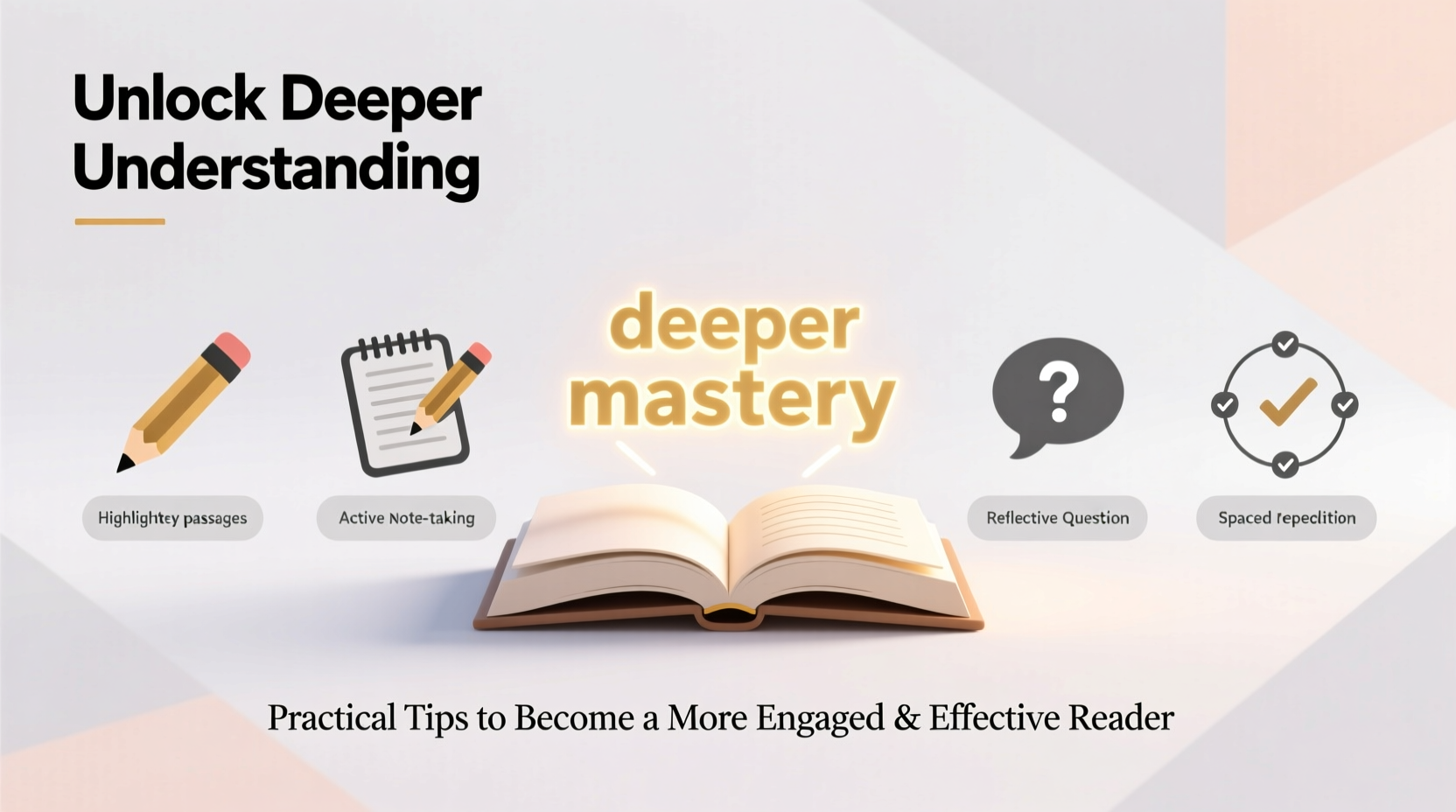
Passive reading—eyes moving across lines without meaningful interaction—is where understanding breaks down. Active reading, in contrast, treats the text as a conversation. You question, summarize, connect, and respond as you go.
Key techniques include:
- Annotating: Use marginal notes, underlining, or digital highlights to mark key ideas. Don’t highlight everything—reserve emphasis for claims, evidence, and insights that surprise or challenge you.
- Paraphrasing: Pause after each section and restate the main idea in your own words. This forces comprehension and reveals gaps in understanding.
- Asking questions: What does the author assume? Is there evidence missing? How does this relate to what I already know?
These actions shift your role from passive consumer to critical participant. Over time, this builds stronger neural pathways associated with memory and analytical thinking.
Step-by-Step Guide to Active Reading
- Preview the text: Skim headings, subheadings, introductions, and conclusions to grasp structure and intent.
- Set a reading goal: Define what you want to get out of the session (e.g., “Understand three causes of climate migration”)
- Read in focused intervals: Use 25-minute blocks with short breaks (Pomodoro technique) to maintain concentration.
- Pause and reflect: After each major section, stop and summarize aloud or in writing.
- Connect to prior knowledge: Link new information to experiences, other readings, or broader concepts.
- Review and revisit: At the end, reread your notes and formulate follow-up questions.
Enhance Comprehension Through Strategic Note-Taking
Note-taking isn’t just about recording—it’s a tool for processing. The method you choose should encourage synthesis, not transcription.
Consider using the Cornell Method : divide your page into three sections—notes, cues, and summary. During reading, jot key points in the notes column. Afterward, write keywords or questions in the cue column. Finally, summarize the entire page in your own words at the bottom. This structure reinforces recall and encourages metacognition—thinking about your thinking.
| Method | Best For | Why It Works |
|---|---|---|
| Cornell Notes | Academic or technical material | Promotes review, summarization, and self-testing |
| Mind Mapping | Visual learners, complex topics | Shows relationships between ideas spatially |
| Outline Method | Structured arguments or lectures | Clarifies hierarchy and logic flow |
| Charting | Comparative analysis (e.g., theories, case studies) | Organizes information categorically for quick reference |
Real Example: From Frustration to Mastery
Sophia, a graduate student in public policy, struggled with dense policy journals. She’d spend hours reading only to realize she couldn’t explain the core argument. Frustrated, she began applying active reading strategies: she started previewing abstracts, asking herself one guiding question per article, and using the Cornell system.
Within weeks, her comprehension improved dramatically. She could summarize papers accurately and contribute confidently in seminars. More importantly, she began noticing patterns across studies—something she hadn’t been able to do before. Her professor noted, “You’re not just reading; you’re engaging.” That shift didn’t come from reading more—it came from reading better.
“Deep reading is cognitively demanding, but it's also deeply rewarding. When readers engage actively, they don’t just absorb information—they build mental models.” — Dr. Linda Phillips, Cognitive Psychologist, Columbia University
Optimize Your Environment and Habits
No strategy works if your environment sabotages focus. Distractions—especially digital ones—fracture attention and impair deep processing. Research shows it takes an average of 23 minutes to fully refocus after an interruption.
To support sustained engagement:
- Choose quiet, consistent spaces for serious reading.
- Turn off notifications and use website blockers during reading sessions.
- Read physical copies when possible—studies suggest better comprehension and recall compared to screens.
- Adjust lighting and posture to reduce fatigue.
Additionally, schedule reading during your peak mental energy. If you’re sharpest in the morning, reserve complex texts for then. Save lighter reading for low-energy periods.
Checklist: Build Your Effective Reading Routine
- ☑ Define your purpose before starting
- ☑ Preview the structure of the text
- ☑ Set a specific question or goal
- ☑ Annotate key points and questions in margins
- ☑ Summarize each section in your own words
- ☑ Use structured note-taking (Cornell, mind map, etc.)
- ☑ Review notes within 24 hours to reinforce memory
- ☑ Limit distractions—go screen-free when possible
Frequently Asked Questions
How can I remember more of what I read?
The key is retrieval practice. After reading, close the book and try to recall the main ideas without looking. Test yourself using your notes or questions. Spaced repetition—reviewing material over increasing intervals—also strengthens long-term retention.
Is speed reading effective for deep understanding?
Not usually. While speed reading works for familiar or simple content, it often sacrifices comprehension, especially with complex or unfamiliar material. Prioritize depth over speed. Skilled readers know when to slow down—to reread, reflect, and question.
What should I do if I keep losing focus?
First, rule out environmental factors: noise, poor lighting, or digital interruptions. Then, break reading into shorter sessions with clear goals. Try the “five-sentence rule”: commit to reading just five sentences with full attention. Often, momentum carries you forward. If mental fatigue persists, assess sleep, stress, and overall workload.
Conclusion: Transform Your Relationship with Texts
Becoming a more engaged and effective reader doesn’t require extraordinary talent—it requires thoughtful practice. By setting clear intentions, interacting with texts actively, taking strategic notes, and optimizing your environment, you unlock deeper understanding that goes beyond surface-level consumption.
Every book, article, or report becomes an opportunity not just to gather facts, but to refine your thinking, expand your perspective, and make smarter decisions. The habits you build today compound over time, turning reading from a passive habit into a powerful intellectual tool.




 浙公网安备
33010002000092号
浙公网安备
33010002000092号 浙B2-20120091-4
Comments
No comments yet. Why don't you start the discussion?