
Lige smart glasses represent a leap forward in wearable technology, blending sleek design with hands-free functionality powered by advanced voice recognition. Unlike traditional devices that require touch or typing, these glasses allow users to interact through natural speech—making them ideal for multitasking, commuting, or staying focused during active work. But like any intelligent system, voice recognition performs best when used strategically. Many users underutilize their device simply because they haven’t optimized their interaction style. This guide reveals how to unlock the full potential of your Lige smart glasses by mastering voice commands, improving accuracy, and integrating them smoothly into everyday routines.
Understanding Voice Recognition in Lige Smart Glasses
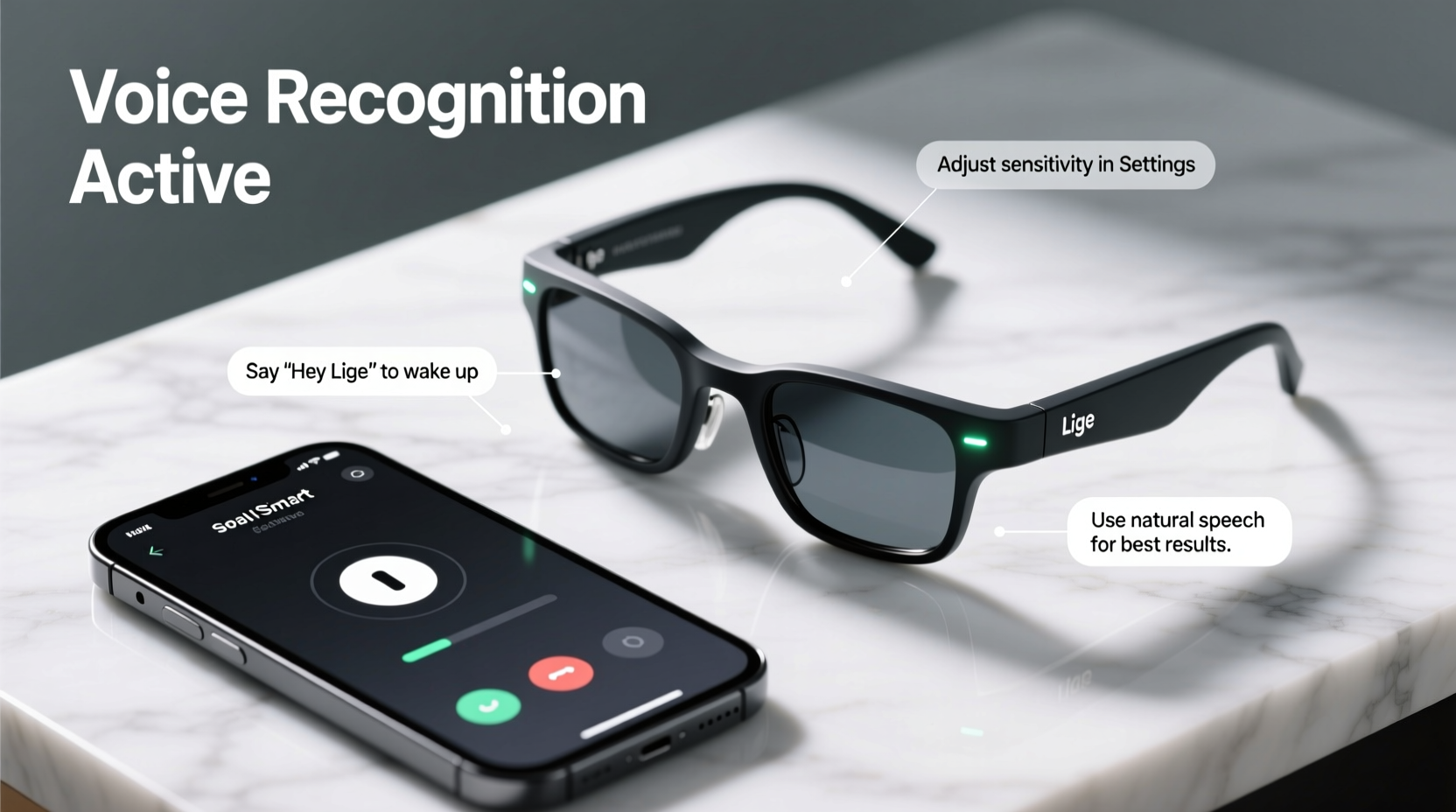
Lige smart glasses use embedded microphones and on-device AI processing to interpret spoken commands. The system is trained to recognize standard English phrases related to navigation, communication, media control, and productivity tools. Unlike cloud-dependent assistants that may lag or require constant internet access, Lige’s implementation prioritizes responsiveness and privacy by processing most inputs locally.
However, performance depends heavily on environmental conditions, speech clarity, and command structure. Background noise, rapid speech, or ambiguous phrasing can lead to misinterpretations. The key isn’t just knowing what the glasses can do—it’s learning how to speak *to* them effectively.
“Voice interfaces are only as smart as the way we communicate with them. Clarity, consistency, and context matter more than vocabulary.” — Dr. Lena Torres, Human-Computer Interaction Researcher at MIT Media Lab
Step-by-Step Guide to Optimizing Voice Input
To get reliable results from your Lige smart glasses, follow this structured approach to voice command optimization:
- Activate the Assistant Properly: Use the designated trigger phrase (“Hey Lige” or button press) in a quiet environment. Wait for the subtle audio cue before speaking.
- Speak Clearly and at Moderate Pace: Enunciate words without shouting. Rushing reduces accuracy; pausing slightly between phrases helps parsing.
- Use Standard Command Phrasing: Stick to supported syntax. For example, say “Call Sarah on mobile” instead of “Can you ring my friend Sarah?”
- Confirm Environmental Suitability: Avoid windy areas or loud public spaces unless necessary. If outdoors, position yourself with your back to the wind to reduce mic interference.
- Test and Refine: After issuing a command, verify execution. If misunderstood, rephrase using simpler terms and note what works best.
Do’s and Don’ts of Voice Command Usage
| Do’s | Don’ts |
|---|---|
| Use short, direct commands (e.g., “Send message: Running 10 minutes late”) | Avoid long sentences or conversational tone |
| Say contact names exactly as saved in your phone | Don’t assume nicknames will be recognized unless programmed |
| Update firmware regularly for improved voice models | Ignore software updates that enhance speech processing |
| Train the device in multiple environments over time | Expect perfect performance in extreme noise on first use |
| Use built-in feedback tones to confirm input capture | Repeat commands rapidly if unacknowledged—wait 3 seconds |
Real-World Example: Maximizing Productivity During Commute
Consider James, a project manager who commutes 45 minutes each way via train. Previously, he’d scroll through emails or draft texts on his phone, often missing stops due to distraction. After switching to Lige smart glasses, he redesigned his routine:
- As soon as he boards, he says, “Hey Lige, read new messages.”
- For urgent replies, he dictates concise responses: “Reply: I’ll review the proposal by noon.”
- He sets calendar reminders mid-journey: “Add meeting with design team tomorrow at 10 AM.”
- When inspiration strikes, he uses voice notes: “Save idea: Client onboarding checklist automation.”
Within two weeks, James reduced screen time by 70% during transit and reported fewer missed notifications. His success came not from owning the tech—but from structuring his language and habits around its strengths.
Advanced Tips for Seamless Integration
Beyond basic commands, power users can deepen integration through customization and awareness:
- Create Personal Shortcuts: If your model supports custom phrases, map “Morning update” to trigger weather, schedule, and unread email count.
- Leverage Contextual Timing: Pair voice commands with habitual moments—like starting your walk—to build automaticity.
- Mute Microphone When Needed: Use the physical toggle or gesture control (if available) in meetings or private conversations to prevent accidental activation.
- Review Voice History: Some Lige models log recent inputs in the companion app. Check these weekly to spot patterns of misrecognition and adjust phrasing accordingly.
Frequently Asked Questions
Why does my Lige smart glasses mishear certain words?
Voice misrecognition often stems from background noise, fast speech, or uncommon pronunciation. Try slowing down and isolating key terms. Also ensure your language settings match your accent (e.g., US vs. UK English).
Can I use voice commands while listening to music?
Yes, but lower the volume first. High audio output can interfere with microphone sensitivity. Most models automatically pause media briefly when detecting a wake word.
Are my voice recordings stored or shared?
Lige emphasizes local processing. Voice data used for real-time commands is typically not saved or transmitted unless explicitly enabled for improvement programs. Review privacy settings in the companion app to disable cloud logging if desired.
Checklist: Optimize Your Voice Experience in One Week
- Charge glasses fully and install latest firmware update.
- Practice 5 core commands until response is consistent.
- Test performance in 3 different environments (indoor, outdoor, moving vehicle).
- Customize one shortcut or phrase in the app.
- Review voice history and refine 2 commonly misheard phrases.
- Teach one colleague or family member how to use basic functions.
- Assess overall utility and plan next-level integrations (e.g., smart home control).
Conclusion
The true value of Lige smart glasses lies not in their hardware alone, but in how seamlessly they become an extension of your thoughts. Voice recognition, when used intentionally, transforms passive listening into active doing—letting you capture ideas, stay connected, and navigate tasks without breaking stride. It takes deliberate practice to align human speech with machine understanding, but once mastered, the experience feels almost telepathic. These aren’t just glasses; they’re a new interface for modern living.




 浙公网安备
33010002000092号
浙公网安备
33010002000092号 浙B2-20120091-4
Comments
No comments yet. Why don't you start the discussion?