
Punching isn't just about raw strength—it's a symphony of mechanics, timing, and neuromuscular efficiency. Whether you're a martial artist, boxer, or fitness enthusiast, the ability to deliver a powerful, precise strike can elevate your performance and confidence. But many train for years without unlocking their true punching potential. The difference between an average punch and a fight-ending one lies not in brute force alone, but in intelligent technique, proper conditioning, and mental focus. This guide reveals scientifically backed strategies to help you punch harder, faster, and with greater control.
Master the Mechanics of a Powerful Punch
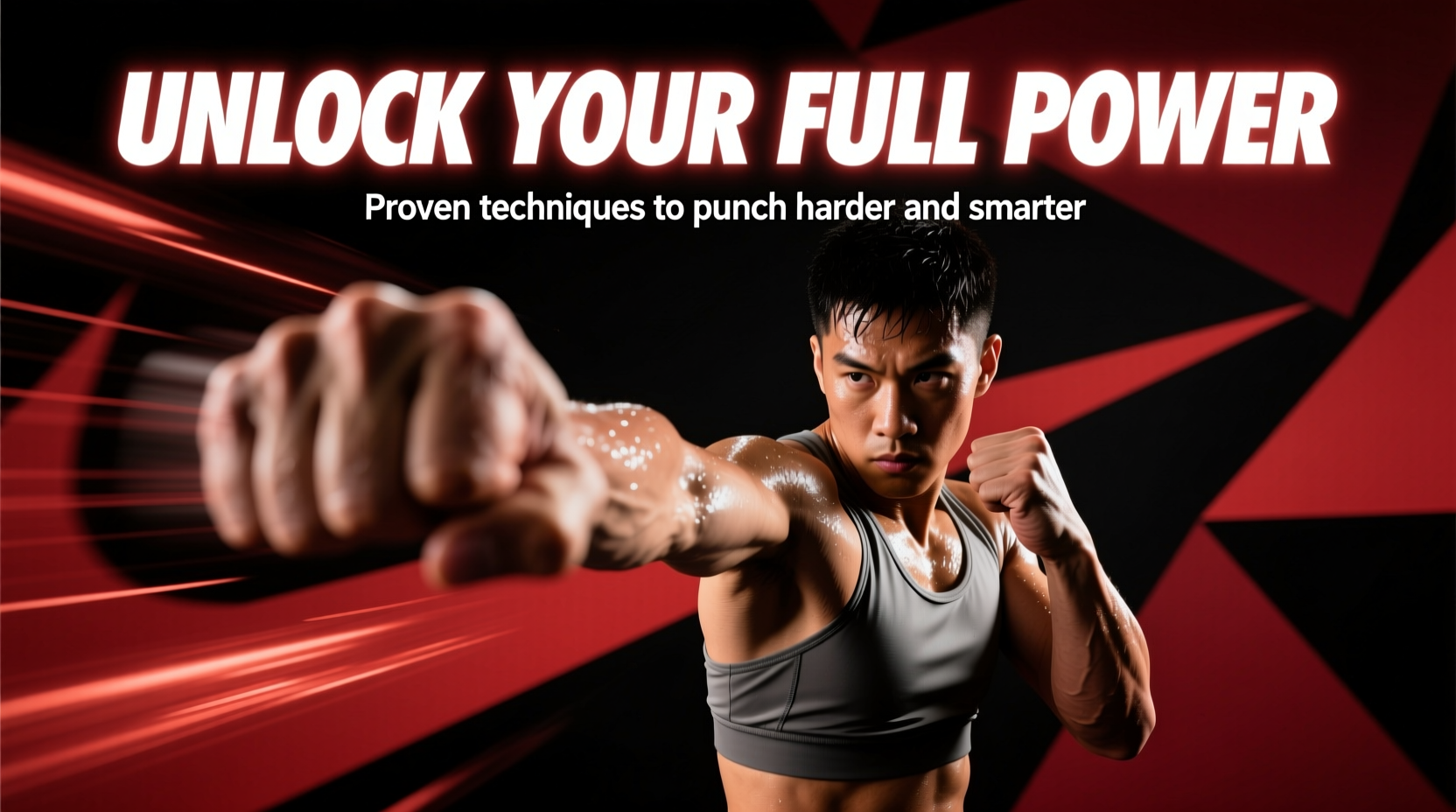
The foundation of a strong punch begins with biomechanics. A punch that generates maximum force uses the entire kinetic chain—from the ground up. Most people rely solely on arm strength, which limits power and increases fatigue. Instead, effective punching integrates the legs, hips, core, shoulders, and arms into a coordinated sequence.
Consider the cross punch: it starts with a push from the back foot, rotates the hips, engages the core, drives the shoulder forward, and finally extends the fist toward the target. Each segment builds upon the previous one, creating a whip-like effect. Misalignment at any point—such as lifting the heel too early or overextending the shoulder—dissipates energy.
Key Elements of Optimal Punching Form
- Stance stability: Feet shoulder-width apart, knees slightly bent, weight balanced.
- Hip rotation: Hips must rotate fully to transfer power from the lower body.
- Shoulder alignment: Keep the lead shoulder down to protect the chin and maintain structure.
- Fist alignment: Knuckles perpendicular to the floor; wrist straight on impact.
- Follow-through: Aim beyond the target, not at it, to maximize force delivery.
“Power comes from the ground, is amplified by the hips, and delivered through precision.” — Coach Freddie Roach, 8-time Trainer of the Year
Build Explosive Strength with Targeted Training
Raw muscle doesn’t automatically translate to harder punches. What matters is explosive power—the ability to generate force quickly. This requires training that emphasizes speed under resistance, known as plyometrics and ballistic training.
Traditional weightlifting builds foundational strength, but explosive movements like medicine ball throws, clap push-ups, and jump squats develop fast-twitch muscle fibers essential for rapid force production. These exercises mimic the short, intense bursts required in combat.
| Exercise | Primary Benefit | Recommended Sets/Reps |
|---|---|---|
| Medicine Ball Rotational Throws | Hip torque and core power | 3 sets × 8 reps per side |
| Clap Push-Ups | Upper body explosiveness | 3 sets × 6–10 reps |
| Box Jumps | Leg drive and coordination | 3 sets × 5 reps |
| Banded Punch Drills | Speed-strength integration | 4 sets × 20 sec (per hand) |
Integrate Resistance Bands for Dynamic Punch Training
Attach resistance bands to a fixed point and practice throwing punches against tension. This increases neuromuscular activation and teaches your body to accelerate through resistance. Perform 2–3 sessions per week, focusing on quality over quantity.
Enhance Speed and Precision Through Neuromuscular Conditioning
Power without accuracy is wasted energy. Smarter punching means hitting with intent, timing, and economy of motion. This requires refining your nervous system’s communication with your muscles—a process called neuromuscular efficiency.
Drills like double-end bag work, focus mitts, and reaction-based sparring improve hand-eye coordination, rhythm, and anticipation. The goal isn’t just to throw fast, but to throw correctly at high speed. Over time, these drills rewire motor patterns, making powerful, accurate punches second nature.
Step-by-Step: Develop Faster Neural Response
- Start slow: Practice perfect form at reduced speed to build correct muscle memory.
- Add feedback: Use a coach or mirror to correct errors immediately.
- Increase tempo: Gradually speed up while maintaining form.
- Introduce unpredictability: Train with moving targets or verbal cues to simulate real combat.
- Consolidate gains: Repeat under fatigue to ensure technique holds during real fights.
“The best punchers aren’t the strongest—they’re the ones who can fire the right muscles at the exact right time.” — Dr. Emily Tran, Sports Biomechanist
Real-World Example: From Average to Knockout Power
Jamal, a recreational boxer with two years of training, struggled to finish opponents despite good cardio and technique. His punches looked sharp but lacked impact. After a biomechanical assessment, his coach identified two issues: minimal hip rotation and premature arm extension.
Over eight weeks, Jamal focused on rotational medicine ball throws, banded punch drills, and daily shadowboxing with emphasis on hip engagement. He also incorporated video analysis to track progress. By week six, his punch force—measured via sensor-equipped pads—increased by 38%. In his next sparring session, a single counter-cross dropped an experienced partner. “I didn’t feel stronger,” he said. “But my punch finally felt connected.”
Avoid Common Punching Mistakes
Even dedicated practitioners fall into traps that limit their punching effectiveness. Recognizing and correcting these errors is critical.
| Mistake | Why It Hurts Performance | Solution |
|---|---|---|
| Arm-only punching | Limits power, increases shoulder strain | Train full-body coordination with slow-motion drills |
| Overcommitting | Leaves you off-balance and vulnerable | Focus on controlled follow-through, return to guard |
| Telegraphing | Gives opponent time to react | Minimize shoulder dips and unnecessary movement |
| Ignoring recovery | Reduces long-term gains and increases injury risk | Prioritize sleep, hydration, and active recovery |
Essential Checklist for Harder, Smarter Punches
- ✅ Analyze your punch form using video
- ✅ Incorporate 2–3 explosive strength sessions weekly
- ✅ Practice rotational power drills (e.g., med ball throws)
- ✅ Train with resistance bands for speed-strength adaptation
- ✅ Drill precision work (focus mitts, double-end bag)
- ✅ Strengthen core and rotator cuff for stability
- ✅ Recover properly: stretch, hydrate, sleep 7–9 hours
Frequently Asked Questions
Can I increase punching power without lifting weights?
Yes. While weight training accelerates development, bodyweight exercises, plyometrics, and technique refinement can significantly boost power. Focus on explosive movements like jump squats, medicine ball slams, and sprint intervals to build functional strength.
How long does it take to see improvements?
With consistent training (4–5 sessions per week), noticeable changes typically appear within 4–6 weeks. Major gains in power and coordination emerge after 8–12 weeks of structured programming.
Is it better to punch faster or harder?
Both matter, but timing and precision are paramount. A fast, weak punch may not deter an opponent, while a slow, hard punch is easy to avoid. The goal is to merge speed and power through efficient mechanics—this creates a smarter, more effective strike.
Unleash Your Potential Today
Unlocking your full punching power isn’t about shortcuts or gimmicks. It’s a commitment to intelligent training, relentless refinement, and respect for the craft. Every punch you throw is an opportunity to improve—whether you’re hitting a bag, shadowboxing, or sparring. The techniques outlined here are used by champions, but they’re accessible to anyone willing to put in the deliberate work.
You don’t need to be born with knockout power. You need to train with purpose, analyze your weaknesses, and embrace incremental progress. When your body moves as one unit, when your mind and muscles align, and when your technique becomes instinct—you’ll feel a new level of confidence. That’s the moment you’ve unlocked your full power.




 浙公网安备
33010002000092号
浙公网安备
33010002000092号 浙B2-20120091-4
Comments
No comments yet. Why don't you start the discussion?