
In an era where science, technology, engineering, and mathematics (STEM) skills are increasingly vital, educators and parents alike are searching for engaging, accessible tools to nurture young minds. Among the most versatile and enduring resources is a toy found in nearly every child’s playroom: LEGO building blocks. Far more than just plastic bricks, LEGO sets offer a tactile gateway into complex concepts, blending imaginative play with structured learning. When used intentionally, these colorful interlocking bricks can transform abstract STEM ideas into tangible experiences that spark curiosity, problem-solving, and innovation.
The Educational Power of Play
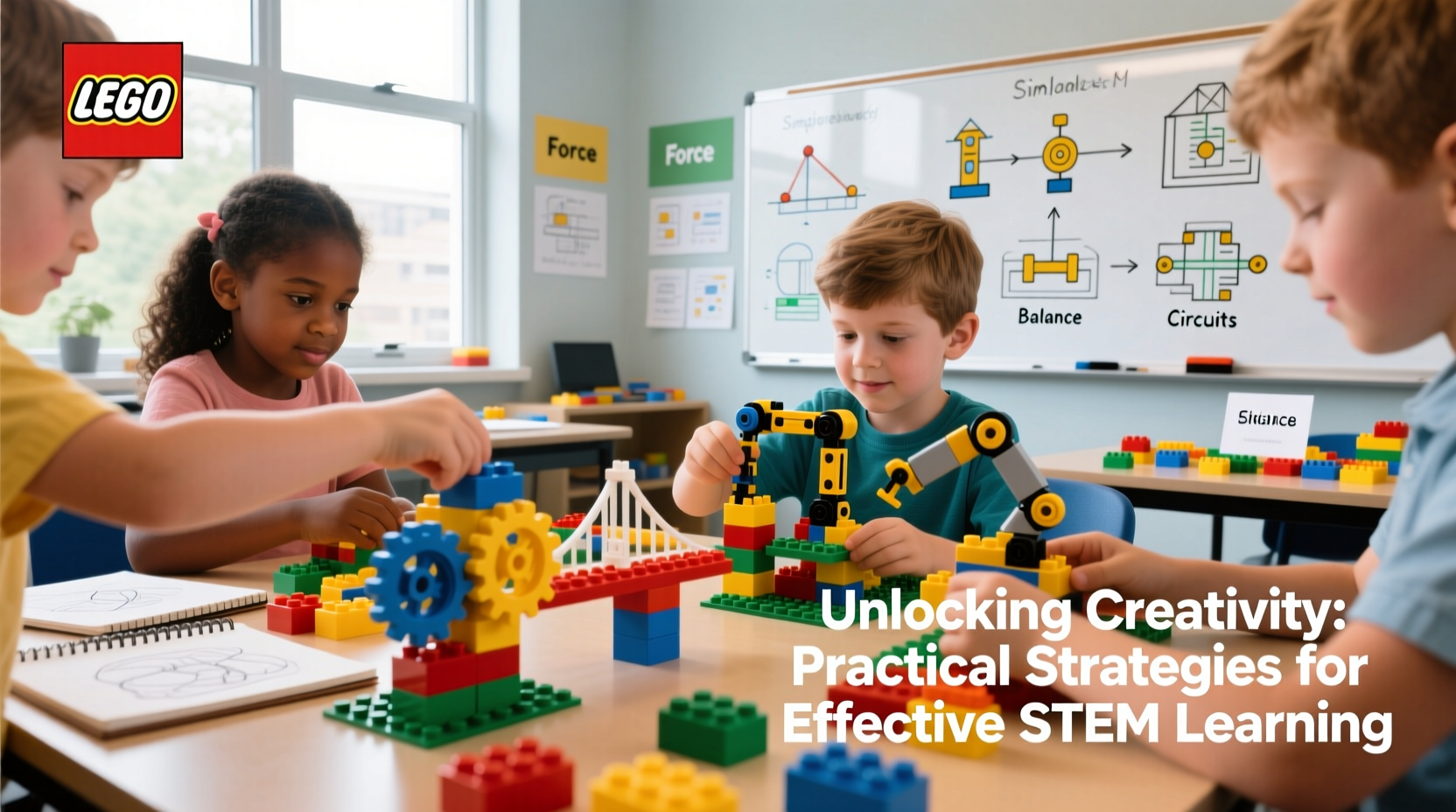
Play is not the opposite of learning—it is one of its most effective forms. Research consistently shows that hands-on, experiential activities enhance cognitive development, spatial reasoning, and executive function. LEGO bricks naturally align with this principle by encouraging open-ended construction, iterative design, and collaborative thinking. Unlike passive learning tools, LEGO requires active engagement: children must plan, build, test, fail, and rebuild—mirroring the real-world engineering cycle.
What makes LEGO particularly powerful in STEM education is its scalability. Simple builds teach symmetry and counting; advanced robotics kits introduce coding and mechanical engineering. This adaptability allows learners from kindergarten through high school to explore age-appropriate challenges while developing foundational skills like critical thinking, persistence, and systems analysis.
“LEGO isn’t just about stacking bricks—it’s about building confidence in problem-solving. Every failed structure teaches resilience, and every successful model reinforces logical thinking.” — Dr. Naomi Patel, Cognitive Development Specialist
Strategies for Integrating LEGO into STEM Learning
To maximize educational impact, LEGO use should go beyond freeform play. Intentional integration ensures that each session advances specific learning goals. Below are five proven strategies educators and caregivers can apply immediately.
1. Start with Design Challenges
Pose open-ended problems that require creative solutions. For example: “Build a bridge that can support 100 grams using only 50 bricks” or “Design a vehicle that moves without wheels.” These prompts encourage hypothesis testing, measurement, and structural evaluation—all core components of engineering.
2. Incorporate Math Through Measurement and Geometry
LEGO bricks are inherently mathematical. Their uniform size (a standard 1x1 brick is 7.8mm x 7.8mm) makes them ideal for teaching area, perimeter, fractions, and ratios. Assign tasks such as calculating how many bricks fit in a square decimeter or comparing the surface area of different structures.
For younger students, sorting bricks by color, shape, or size introduces classification and pattern recognition. Older learners can explore symmetry, tessellation, and even coordinate geometry by mapping builds on a grid baseplate.
3. Combine Storytelling with Science Concepts
Merge literacy and STEM by asking children to build models that illustrate scientific phenomena—such as a volcano eruption, water cycle, or solar system—and then narrate how their creation works. This interdisciplinary approach deepens understanding and improves communication skills.
4. Introduce Robotics with LEGO Education Sets
Kits like LEGO SPIKE Prime and LEGO Mindstorms EV3 allow students to construct robots and program them using block-based coding interfaces. These tools make abstract programming concepts visible and interactive. A student might code a robot to follow a line, avoid obstacles, or sort objects by color—each task reinforcing logic, sequencing, and sensor integration.
5. Facilitate Collaborative Builds
Group projects simulate real-world teamwork. Assign roles such as designer, builder, tester, and documenter. Rotate responsibilities so all participants experience different aspects of the engineering process. Collaboration fosters communication, negotiation, and shared accountability—skills essential in any STEM career.
Step-by-Step Guide: Launching a LEGO STEM Activity
Follow this timeline to implement an effective LEGO-based lesson or home activity:
- Define the Objective: Choose a concept (e.g., force and motion, simple machines, or data collection).
- Select Materials: Gather appropriate LEGO sets, baseplates, and supplementary tools (rulers, timers, sensors).
- Present the Challenge: Frame the task clearly with measurable success criteria.
- Allow Exploration: Give time for brainstorming and prototyping without interference.
- Test and Iterate: Encourage multiple trials, emphasizing that failure is part of discovery.
- Reflect and Discuss: Ask questions like, “What worked?” “Why did it fail?” “How could you improve it?”
- Document Learning: Have students sketch designs, write reflections, or present findings.
Checklist: Preparing a Successful LEGO STEM Session
- ✅ Align the activity with curriculum standards or learning goals
- ✅ Sort and organize LEGO pieces for easy access
- ✅ Prepare challenge cards or worksheets for guidance
- ✅ Ensure devices are charged if using robotics kits
- ✅ Set clear time limits and behavioral expectations
- ✅ Plan for clean-up procedures and storage solutions
- ✅ Include reflection prompts to reinforce key concepts
Do’s and Don’ts of Using LEGO in Education
| Do’s | Don’ts |
|---|---|
| Encourage trial and error to normalize failure as part of learning | Provide step-by-step instructions for every build—this limits creativity |
| Use guided questioning to prompt deeper thinking (“What happens if…?”) | Focus solely on aesthetics rather than function or process |
| Integrate cross-curricular links (science + art, math + storytelling) | Allow unstructured play without connecting it to learning objectives |
| Rotate themes weekly (e.g., bridges, renewable energy, space exploration) | Use damaged or incomplete sets that hinder completion |
Real Example: The Classroom Windmill Project
In a fifth-grade classroom in Portland, Oregon, students were tasked with designing wind-powered generators using LEGO Technic pieces and small motors. The teacher introduced the concept of renewable energy, then challenged groups to build turbines that could light an LED when spun by a fan.
One team discovered that flat blades didn’t catch enough air, so they curved them using flexible pieces. Another realized alignment affected efficiency and adjusted their axle positioning. After three class periods of testing and redesign, all groups achieved functional models. Students presented their work with diagrams and wrote reflections on what they learned about energy transfer and perseverance.
The project not only met Next Generation Science Standards but also boosted engagement—students asked to continue building during recess.
Frequently Asked Questions
Can LEGO really teach real engineering principles?
Yes. While simplified, LEGO models demonstrate fundamental concepts like torque, gear ratios, structural integrity, and circuitry. When paired with guided inquiry, these experiences lay the groundwork for advanced study in mechanical and electrical engineering.
Is LEGO suitable for older students or only young children?
Absolutely. Advanced sets like LEGO Mindstorms and SPIKE Prime are designed for middle and high schoolers. These kits integrate sensors, motors, and coding platforms such as Scratch and Python, making them appropriate for teaching robotics, automation, and computational thinking.
How can I manage LEGO storage and organization at home or in classrooms?
Use labeled bins sorted by brick type (e.g., plates, beams, gears). Clear containers help users see contents quickly. For larger collections, consider drawer units or shelving with compartment trays. Establish a clean-up routine where students categorize pieces before storing.
Conclusion: Building Minds One Brick at a Time
LEGO building blocks are more than childhood toys—they are dynamic instruments for intellectual growth. By embedding purposeful challenges, integrating academic content, and fostering a culture of experimentation, we turn playtime into powerful learning moments. Whether in a classroom, after-school program, or living room floor, LEGO offers a universal language of creativity and logic.




 浙公网安备
33010002000092号
浙公网安备
33010002000092号 浙B2-20120091-4
Comments
No comments yet. Why don't you start the discussion?