
Building block flower arrangements—where LEGO-style bricks meet floral design—are emerging as a playful yet sophisticated form of artistic expression. Whether used in children’s playrooms, modern event decor, or educational workshops, these hybrid creations bridge the gap between structural engineering and aesthetic beauty. But how do you move beyond basic shapes and repetitive designs? The answer lies in unlocking your imagination with intentional creativity, cross-disciplinary inspiration, and structured experimentation.
This guide explores practical methods to generate truly original building block flower concepts—ideas that surprise, delight, and inspire others. From tapping into nature’s patterns to borrowing techniques from architecture and storytelling, the process is less about following rules and more about cultivating curiosity.
Embrace Constraints as Creative Catalysts
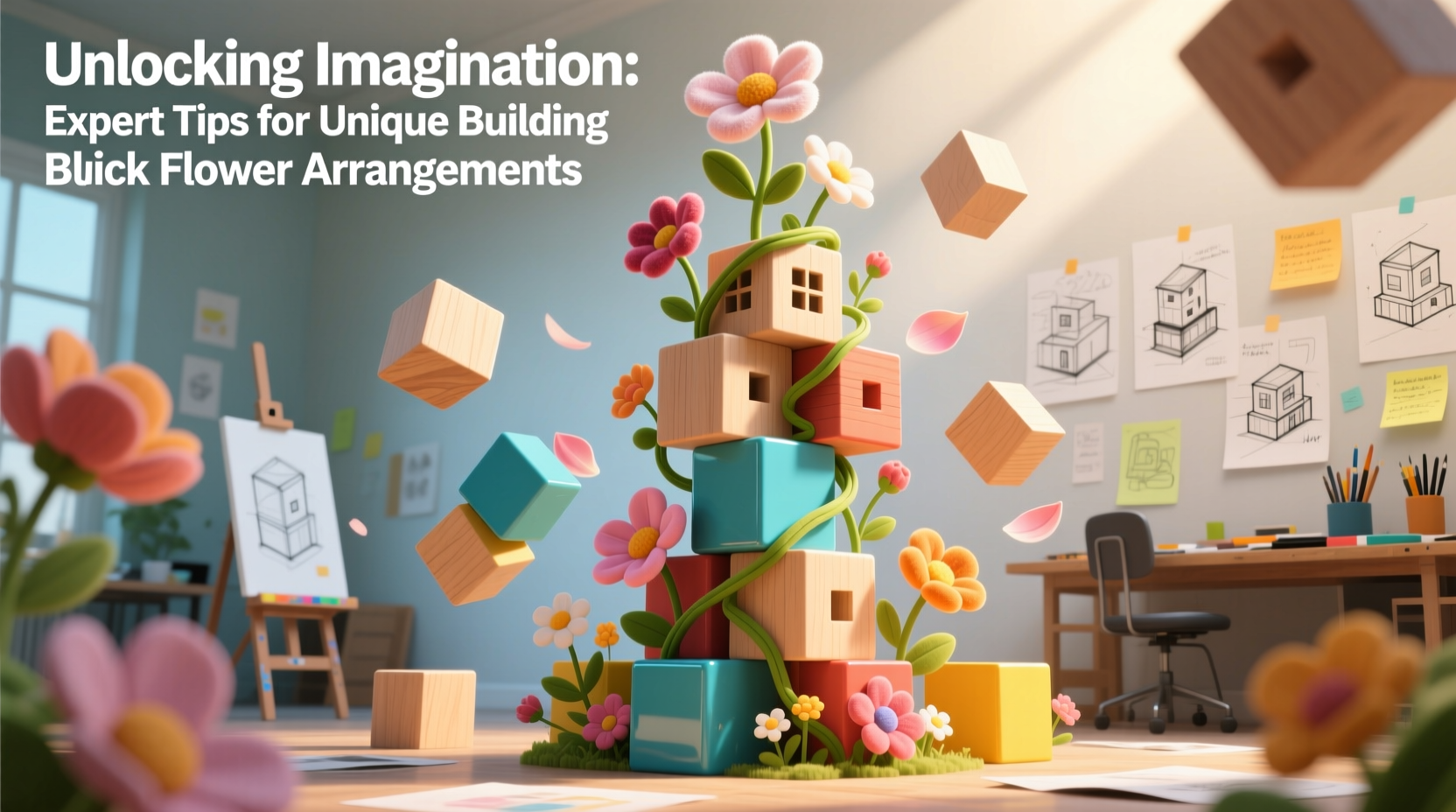
Paradoxically, limitations often spark innovation. When working with building blocks, you're inherently confined by color palettes, brick sizes, and interlocking mechanics. Instead of viewing these as barriers, treat them as parameters that focus your imagination.
For example, challenge yourself to create a blooming rose using only red, green, and white bricks—and no specialty pieces. This constraint forces you to rethink petal layering, stem flexibility, and symmetry. You might discover new ways to simulate organic curves using angular components.
Borrow Inspiration from Nature’s Blueprint
Nature doesn’t just offer visual inspiration—it provides functional design principles. Look closely at real flowers: observe how petals spiral in Fibonacci sequences, how stems twist toward light, and how roots anchor asymmetrical weight. These natural systems can inform your building block models.
Study time-lapse videos of blooming lilies or sunflowers tracking the sun. Translate those movements into kinetic block arrangements using hinges or rotating bases. A daisy that \"opens\" when lifted? A tulip that tilts on a flexible joint? These dynamic features elevate static builds into interactive art.
“Biomimicry isn’t just for engineers—it’s a goldmine for toy artists. The way a vine coils around a trellis can teach us about balance and tension in modular builds.” — Dr. Lena Torres, Design Educator & STEAM Researcher
Step-by-Step Guide to Developing Original Arrangements
Originality rarely strikes instantly. It emerges through deliberate iteration. Follow this five-phase process to develop ideas that stand out:
- Observe Real Flowers: Choose a specific bloom—orchid, poppy, lavender—and sketch its structure. Note petal count, stem texture, and growth pattern.
- Deconstruct into Modular Elements: Break down the flower into buildable parts: base, stem, calyx, layers of petals, stamen.
- Select Compatible Brick Types: Match each part to suitable pieces—use curved slopes for soft petals, rods for thin stems, transparent elements for dewdrops.
- Prototype Rapidly: Build three variations in under 20 minutes each. Don’t aim for perfection; aim for diversity.
- Evaluate and Refine: Which version feels most lifelike or imaginative? Combine the best elements into a final model.
Incorporate Storytelling into Your Designs
The most memorable arrangements don’t just look good—they tell a story. Imagine a sunflower built from golden-yellow bricks standing tall beside smaller, incomplete versions. Label it “Growth Series – Day 7” to suggest progression. Or craft a wilted rose made of faded pink and grey blocks titled “Memory of Summer.”
Thematic depth invites emotional connection. Consider creating seasonal sets: a cherry blossom tree in spring (light pink with fluttering “petals”), a fiery autumn mum (orange and brown gradient), or a frost-kissed winter rose (white and translucent blue).
Case Study: The Floating Garden Project
A community arts group in Portland challenged local builders to create a collaborative “floating garden” display using only standard LEGO bricks. Their goal was to design arrangements that appeared weightless, despite being anchored to a board.
One participant, Maya Chen, studied kelp forests and jellyfish movement. She used long, swaying green rods for stems and clustered small dome pieces to mimic floating blooms. By varying stem lengths and adding slight bends, she created the illusion of underwater drift. Her piece became the centerpiece of the exhibit.
The success wasn’t in technical complexity—it was in perspective. Maya didn’t just build a flower; she built an environment. Other contributors followed suit, incorporating “pond ripples” (circular brick patterns) and “dragonflies” (small winged minifig accessories) to enrich the scene.
Do’s and Don’ts: Building Block Floral Design
| Do | Don't |
|---|---|
| Use symmetry sparingly—real flowers are often slightly uneven | Overuse large flat plates for petals (they lack depth) |
| Mix textures (glossy, matte, transparent) for realism | Stick rigidly to instruction manuals or official sets |
| Test stability—especially for tall arrangements | Neglect scale consistency across a bouquet |
| Display with thematic context (e.g., mini vase, garden baseplate) | Assume only children will appreciate the work |
Expand Your Toolkit: Cross-Disciplinary Inspiration
To find ideas others haven’t explored, step outside the world of toys and floristry. Architects use cantilevers and counterweights—could a flower lean dramatically without falling? Fashion designers layer fabrics; can you layer petals in overlapping spirals for volume?
Explore origami for folding techniques translated into block angles. Study mosaic art for color gradients. Even dance choreography can inspire how a series of flowers might “flow” across a display board.
Visit museums, browse scientific diagrams, or flip through vintage botanical illustrations. A 19th-century engraving of a peony might reveal intricate stamen patterns you can replicate using tiny cone pieces.
Checklist: Spark Unique Ideas in 30 Minutes or Less
- ☐ Pick a non-floral source of inspiration (e.g., seashell, lightning bolt, musical note)
- ☐ Sketch a quick hybrid idea: How would a “storm-inspired iris” look?
- ☐ Gather only 3 types of bricks to work with
- ☐ Build a micro-arrangement (under 25 pieces) based on your sketch
- ☐ Name it and write one sentence about where it “grows”
- ☐ Photograph it from three angles
- ☐ Share it online with a creative hashtag like #BlockBloom or #BrickBotany
Frequently Asked Questions
Can building block flowers be used in real floral displays?
Absolutely—as accent pieces. Many event designers incorporate durable block centerpieces alongside fresh flowers for contrast. They’re especially popular in themed weddings, science fairs, and children’s parties where durability matters.
How do I make my arrangements look less “toy-like”?
Focus on proportion, texture, and presentation. Use neutral baseplates, mix in non-branded elements (like wire stems or ceramic mini-pots), and avoid bright primary colors exclusively. Subtle shading and layered details increase realism.
Are there eco-friendly building block options for sustainable art?
Yes. Some brands now produce plant-based or recycled plastic bricks. Additionally, secondhand markets offer retired sets, reducing waste. For temporary installations, consider digital modeling tools that simulate block builds without physical materials.
Conclusion: Let Imagination Take Root
Finding unique building block flower arrangement ideas isn’t about mastering every brick type or copying viral designs. It’s about nurturing a mindset of exploration—where biology meets design, where play meets precision, and where a simple idea can blossom into something extraordinary.
The most powerful tool you have isn’t in your collection; it’s in your perspective. Look closer. Think differently. Build fearlessly. The next iconic arrangement could begin with a single misplaced brick that sparked a new direction.




 浙公网安备
33010002000092号
浙公网安备
33010002000092号 浙B2-20120091-4
Comments
No comments yet. Why don't you start the discussion?