
In an increasingly interconnected world, language barriers remain one of the most persistent obstacles to meaningful global interaction. Whether navigating a foreign city, negotiating international contracts, or simply connecting with someone from another culture, misunderstandings can lead to missed opportunities. Enter Lige Smart Glasses — a wearable technology designed to break down linguistic walls through real-time audio and visual translation. More than just a gadget, these glasses represent a shift in how we experience cross-cultural communication.
Equipped with advanced AI-driven speech recognition, noise-canceling microphones, and augmented reality (AR) displays, Lige Smart Glasses offer near-instantaneous translation of spoken and written language directly into your field of vision. This guide explores how to use them effectively, their practical applications, and how they’re reshaping the future of multilingual engagement.
How Lige Smart Glasses Translate Language in Real Time
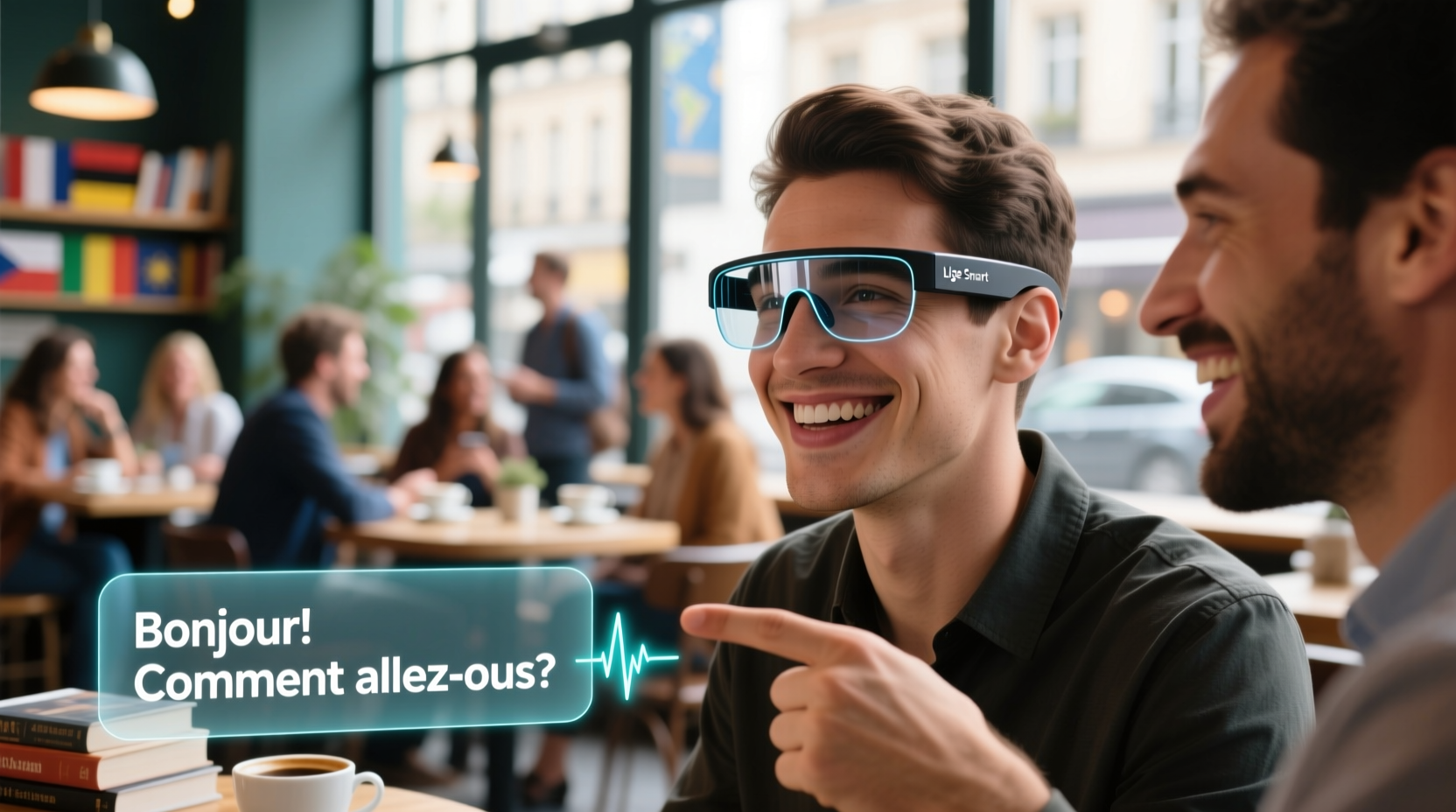
The core functionality of Lige Smart Glasses lies in their integration of artificial intelligence, natural language processing (NLP), and AR display technology. When two people speak different languages, the glasses capture the speaker’s voice via embedded microphones, process the audio using cloud-based translation models, and project subtitled text onto the lens in the wearer’s preferred language. The entire cycle takes less than a second under optimal conditions.
For written text—such as street signs, menus, or documents—the built-in camera scans the environment and overlays translated versions in real time. This is particularly useful for travelers who may not be familiar with local scripts or idiomatic expressions.
The device supports over 40 languages, including widely spoken ones like Mandarin, Spanish, Arabic, and French, as well as regionally important languages such as Thai, Turkish, and Hindi. Updates are delivered wirelessly, ensuring compatibility with evolving dialects and slang.
Step-by-Step Guide to Using Lige Smart Glasses for Translation
To get the most out of your Lige Smart Glasses, follow this structured setup and usage process:
- Pair with Your Smartphone: Download the official Lige Connect app (available on iOS and Android). Enable Bluetooth and follow the pairing instructions within the app.
- Select Your Preferred Language: In the app settings, designate your primary language and choose up to five secondary languages you frequently interact with.
- Calibrate the Display: Adjust the AR text position and size via the app so subtitles appear clearly in your line of sight without obstructing vision.
- Enable Translation Mode: Tap twice on the right temple to activate conversation mode. A soft chime confirms readiness.
- Engage in Dialogue: As the other person speaks, translated subtitles appear on the lens. To respond, speak naturally—the glasses pick up your voice and translate it aloud through connected earbuds or send text to your phone for manual delivery.
- Scan Text Manually: Hold the left button while looking at written text. After 2–3 seconds, the translation appears overlaid on the original.
- Review Conversation History: All translated exchanges are stored securely in the app for later reference, useful for learning or documentation.
Practical Applications Across Daily Life
Lige Smart Glasses aren’t limited to tourist scenarios. Their versatility makes them valuable across multiple domains:
- International Business: Conduct face-to-face meetings with overseas partners without relying on interpreters. Maintain eye contact while reading translations discreetly.
- Healthcare: Doctors can communicate more effectively with non-native-speaking patients, improving diagnosis accuracy and patient trust.
- Education: Language learners practice conversational skills with native speakers, receiving instant feedback and contextual understanding.
- Travel: Navigate airports, order food, ask for directions, and understand cultural signage—all without pulling out a phone.
- Social Integration: Immigrants and expatriates use the glasses to engage more confidently in community settings, reducing isolation.
“Wearable translation tech like Lige Smart Glasses is bridging empathy gaps by enabling authentic human connection beyond language.” — Dr. Lena Torres, Human-Computer Interaction Researcher, MIT Media Lab
Do’s and Don’ts When Using Lige Smart Glasses
| Do’s | Don’ts |
|---|---|
| Maintain eye contact during conversations to preserve social etiquette. | Don’t assume 100% translation accuracy—contextual nuances may require clarification. |
| Use noise-cancelling earbuds in loud environments for clearer audio input. | Avoid using in highly sensitive diplomatic or legal discussions without human verification. |
| Regularly update firmware for improved language models and bug fixes. | Don’t share unencrypted conversation logs over public networks. |
| Practice with native speakers to refine timing and comprehension. | Don’t wear them in private spaces where recording might be inappropriate. |
Real-World Example: A Business Meeting in Tokyo
Sophie, a product manager from Berlin, traveled to Tokyo to present her company’s software solution to a potential Japanese investor. Though she had studied basic Japanese, she lacked fluency for complex negotiations. Equipped with her Lige Smart Glasses, Sophie entered the meeting room confident.
As the investors spoke rapidly in Japanese, subtitles appeared on her lenses in German. She responded in English, which was translated and played through a small speaker linked to her glasses. The flow felt natural—no pauses for interpretation, no awkward silences. Midway, the lead investor handed her a technical document. With a glance, the glasses translated key figures and footnotes, allowing her to ask informed questions.
The deal closed within a week. “It wasn’t just about understanding words,” Sophie said later. “It was about feeling present, engaged, and respected—even across languages.”
Maximizing Accuracy and Performance
While Lige Smart Glasses deliver impressive results, performance depends on several factors. Consider the following checklist to optimize your experience:
- ✔ Charge the glasses fully before extended use (battery lasts ~6 hours).
- ✔ Connect to stable Wi-Fi or use a mobile hotspot; offline mode has limited language support.
- ✔ Speak clearly and at a moderate pace during two-way translation.
- ✔ Position yourself within 1.5 meters of the speaker for best audio capture.
- ✔ Clean the lens camera regularly to ensure clear text scanning.
- ✔ Customize translation preferences (formal vs. informal tone) in the app.
Additionally, users should be aware that idioms, sarcasm, and regional accents can challenge even the most advanced systems. In such cases, the glasses flag uncertain phrases with a dotted underline, prompting the user to request repetition or context.
Frequently Asked Questions
Can Lige Smart Glasses translate sign language?
Not currently. While the device excels at spoken and written language translation, it does not interpret sign language. Future firmware updates may include gesture recognition capabilities.
Are conversations recorded or stored on external servers?
Translation data is processed in encrypted form and deleted immediately after the session unless manually saved by the user. No personal data is retained on Lige’s servers without explicit consent.
Is the display visible to others around me?
No. The AR subtitles are only visible to the wearer through a micro-OLED projection system. Bystanders see only standard-looking eyewear.
Conclusion: Embracing a Language-Inclusive Future
Lige Smart Glasses are more than a technological novelty—they are a tool for inclusion, understanding, and deeper human connection. By removing the friction of language, they empower individuals to engage authentically across cultures, whether in boardrooms, clinics, classrooms, or city streets.
The future of communication isn’t about everyone speaking the same language. It’s about being able to understand each other regardless of the language spoken. With thoughtful use, continuous learning, and respect for cultural context, devices like Lige Smart Glasses are paving the way for a truly multilingual world.




 浙公网安备
33010002000092号
浙公网安备
33010002000092号 浙B2-20120091-4
Comments
No comments yet. Why don't you start the discussion?