
In an era where technology increasingly mirrors human perception, smart translator glasses are emerging as a groundbreaking tool that blends artificial intelligence, real-time language translation, and advanced object recognition. These wearable devices do more than translate spoken or written language—they interpret the visual world, turning everyday scenes into accessible, informative experiences. From navigating foreign cities to assisting individuals with visual impairments, these glasses are redefining how we interact with our surroundings.
The Science Behind Object Recognition in Smart Glasses
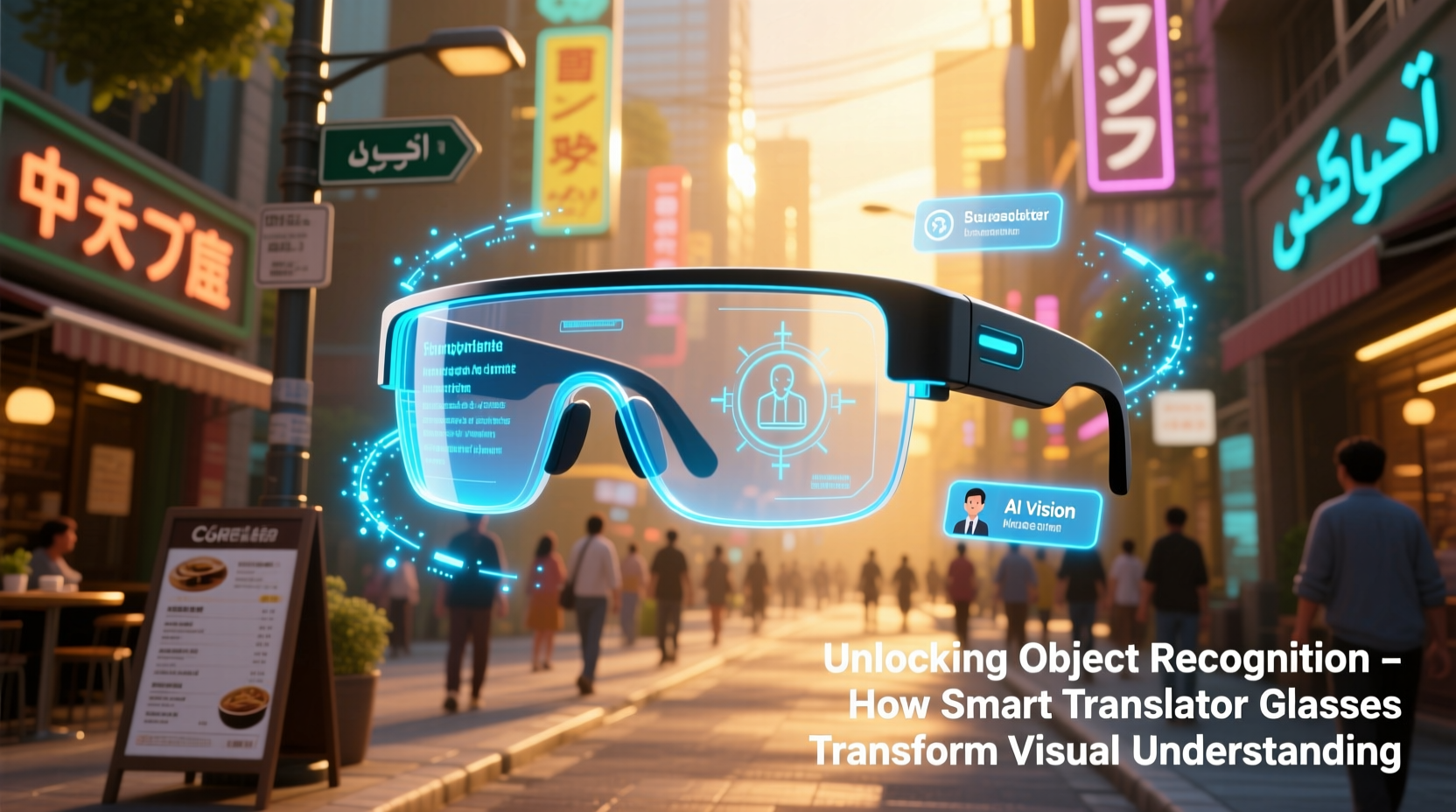
At the heart of smart translator glasses lies computer vision—a field of AI that enables machines to interpret and understand visual data. Object recognition, a core component of this technology, allows the glasses to detect, classify, and label items within the user’s field of view. This process involves several stages: image capture via built-in cameras, preprocessing to enhance clarity, feature extraction using deep learning models, and final classification based on trained datasets.
Modern smart glasses leverage convolutional neural networks (CNNs), a type of deep learning algorithm particularly effective at recognizing patterns in images. These models are trained on millions of labeled images, enabling them to identify everything from street signs and food labels to faces and currency. Once an object is recognized, the device overlays contextual information—such as translated text or audio descriptions—directly into the user’s experience through augmented reality (AR) displays or earpiece narration.
“Object recognition in wearables represents a shift from passive observation to active environmental engagement.” — Dr. Lena Torres, AI Researcher at MIT Media Lab
Real-World Applications Across Industries
The integration of object recognition into smart translator glasses has far-reaching implications across multiple domains:
- Travel & Tourism: Tourists can point their gaze at a restaurant menu or historical plaque and instantly receive a translation in their native language, complete with pronunciation guidance.
- Healthcare: Medical professionals use similar technology to identify medications, read patient charts aloud, or assist in surgical navigation without breaking sterility.
- Accessibility: For individuals with low vision or blindness, these glasses describe surroundings, recognize faces, and read printed text aloud, fostering greater independence.
- Retail & Logistics: Warehouse workers use AR glasses to locate inventory quickly, while shoppers receive product details and pricing simply by looking at items.
Step-by-Step: How Smart Translator Glasses Process Visual Information
Understanding the operational flow of these devices helps users maximize their utility. Here’s a breakdown of what happens in real time:
- Capture: A miniature camera embedded in the frame captures continuous video or still images of the environment.
- Detection: The onboard processor runs object detection algorithms to isolate regions of interest—such as text panels, products, or people.
- Recognition: Using pre-trained neural networks, the system identifies specific objects (e.g., “stop sign,” “coffee cup,” “person wearing red shirt”).
- Translation: If text is detected, natural language processing (NLP) translates it into the user’s preferred language.
- Output: Results are delivered via AR display, audio feedback, or haptic signals, depending on the user’s settings and needs.
- Feedback Loop: Some systems learn from user corrections over time, improving accuracy through adaptive machine learning.
Comparative Analysis: Leading Smart Translator Glasses Features
| Feature | Google Glass Enterprise Edition 2 | Envision Glasses | Waverly Labs’ Ambassador Pro |
|---|---|---|---|
| Object Recognition | Yes (industrial focus) | Yes (text & scene description) | Limited (text-only) |
| Real-Time Translation | No (API-dependent) | No | Yes (40+ languages) |
| Audio Output | Yes (bone conduction) | Yes | Yes (Bluetooth earbuds) |
| Offline Mode | Partial | Yes | No |
| Target Users | Field technicians | Visually impaired individuals | Travelers, business professionals |
Mini Case Study: Navigating Tokyo with Smart Translator Glasses
Marco, a Spanish-speaking engineer attending a tech conference in Tokyo, relied on his smart translator glasses during his first solo trip to Japan. Unable to read kanji and hesitant to carry a phrasebook, he used Waverly Labs’ device to scan train station signs, menus, and business cards. As he walked through Shinjuku Station, the glasses identified platform numbers and announced gate directions in Spanish via earpiece. At a convenience store, pointing at a snack package triggered instant voice feedback: “Chocolate-covered biscuit, ¥150.”
More importantly, when meeting colleagues, the glasses recognized name tags and whispered names and titles before handshakes. By the end of the week, Marco reported feeling significantly more confident and independent. His experience highlights how object recognition combined with translation creates a seamless bridge between language, culture, and cognition.
Best Practices for Maximizing Effectiveness
To get the most out of smart translator glasses, users should follow these actionable steps:
- Calibrate the camera angle to match your natural line of sight
- Update firmware regularly to benefit from improved AI models
- Use high-contrast modes in low-light environments
- Train the device with custom vocabulary (e.g., technical terms, names)
- Enable privacy filters to blur faces or sensitive text automatically
- Carry a portable charger—processing-intensive tasks drain battery quickly
Challenges and Ethical Considerations
Despite their promise, smart translator glasses face notable challenges. Accuracy remains inconsistent in complex or cluttered environments—such as crowded markets or poorly lit alleys. Misidentifications can lead to confusion or safety risks. Additionally, reliance on continuous data collection raises privacy concerns, especially when facial recognition or location tracking is involved.
There’s also the risk of over-dependence. Users may begin to trust the device more than their own judgment, potentially missing subtle social cues or environmental hazards not captured by the AI. Developers are addressing these issues through transparency controls, opt-in data policies, and context-aware filtering.
“We must design assistive technologies that augment human intelligence—not replace situational awareness.” — Dr. Arjun Patel, Ethics in AI Fellow, Stanford University
Frequently Asked Questions
Can smart translator glasses recognize handwritten text?
Some advanced models can interpret legible handwriting using optical character recognition (OCR), but accuracy varies significantly based on script style, lighting, and surface texture. Printed text remains far more reliably detected.
Are these glasses suitable for people with total blindness?
While they cannot restore vision, smart translator glasses provide auditory descriptions of surroundings, making them valuable tools for orientation and mobility. However, they work best in combination with traditional aids like white canes or guide dogs.
Do I need an internet connection for object recognition?
It depends on the model. High-end devices like Envision Glasses offer robust offline functionality, while others rely on cloud-based processing for complex tasks. Always check specifications if traveling in remote areas.
Conclusion: Embracing a Visually Intelligent Future
Smart translator glasses are no longer science fiction—they are practical tools transforming how we perceive and interact with the world. By unlocking object recognition, they empower users with instant knowledge, break down language barriers, and promote inclusivity. Whether you're exploring a new country, managing a busy work site, or living with a visual impairment, these devices offer a new layer of understanding that enhances autonomy and confidence.




 浙公网安备
33010002000092号
浙公网安备
33010002000092号 浙B2-20120091-4
Comments
No comments yet. Why don't you start the discussion?