
In today’s data-driven economy, information is not just power—it’s profit. Organizations across industries are sitting on vast reservoirs of unused or underutilized data. When harnessed strategically, this data can transform into sustainable revenue streams. From personalized marketing insights to licensing anonymized datasets, the opportunities are expansive. The key lies in identifying high-value data, ensuring compliance, and implementing scalable models that align with business goals.
Understanding Data Monetization: Direct vs. Indirect Models
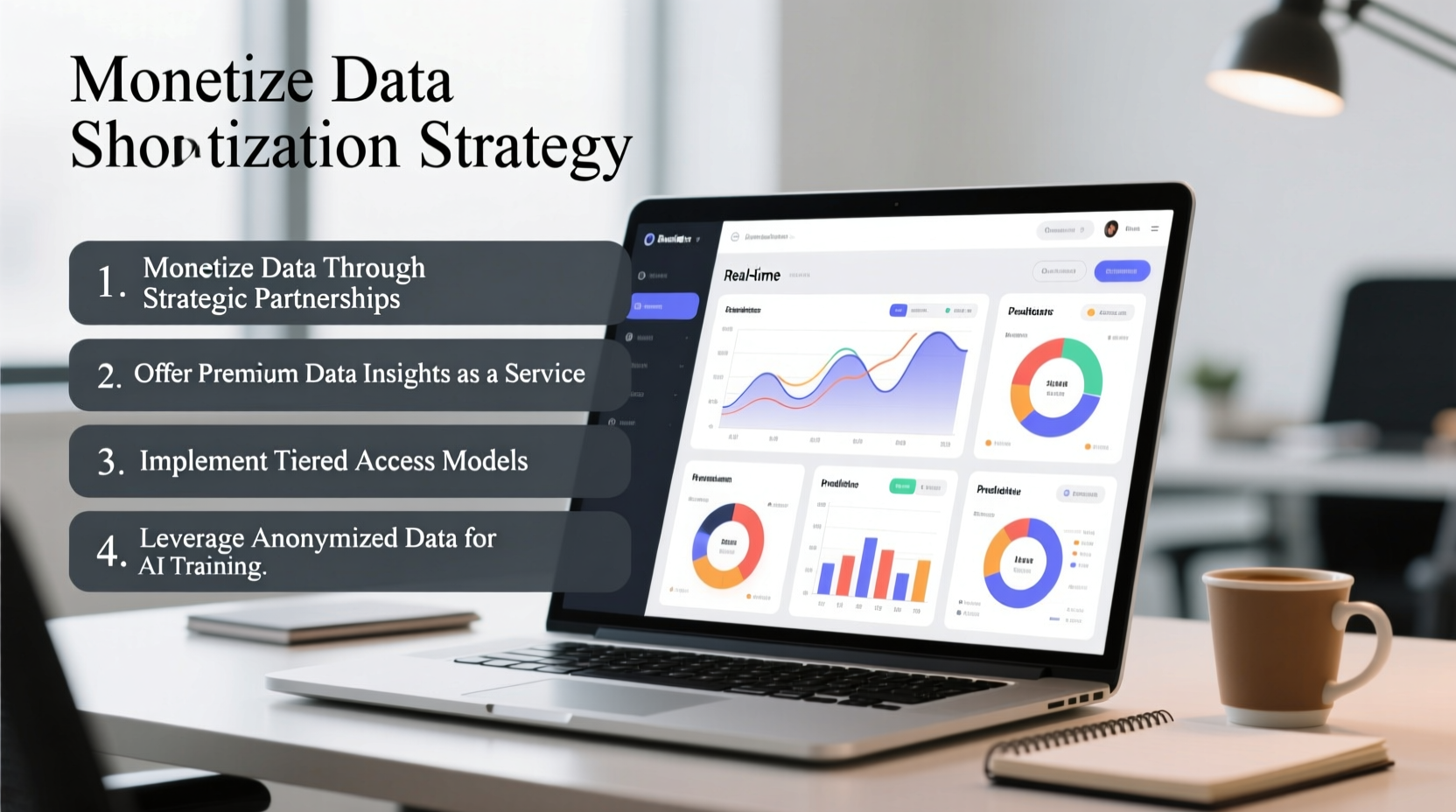
Data monetization refers to the process of generating economic value from data assets. It typically falls into two categories: direct and indirect monetization.
- Direct monetization involves selling data or data-derived products to external parties—such as selling customer behavior analytics to market research firms or offering real-time traffic data to logistics companies.
- Indirect monetization focuses on using internal data to improve operations, enhance customer experience, or drive innovation—like optimizing supply chains using predictive analytics or personalizing product recommendations to increase sales conversion.
While direct models generate immediate income, indirect approaches often yield longer-term competitive advantages. A balanced strategy leverages both to maximize ROI.
“Data is the new oil, but unlike oil, its value multiplies when refined and reused.” — Clive Humby, Mathematician and Creator of Tesco Clubcard
5 Practical Strategies to Monetize Data Effectively
1. Create Data-as-a-Service (DaaS) Offerings
One of the most scalable ways to monetize data is by packaging it into subscription-based services. DaaS allows businesses to deliver curated, real-time, or historical datasets via APIs to clients in finance, retail, or logistics.
For example, a weather company might license hyperlocal forecast data to agricultural firms, enabling them to optimize planting schedules. The service becomes a recurring revenue stream with low marginal cost per additional user.
2. Develop Predictive Analytics Products
Raw data has limited value; insight drives demand. By applying machine learning and statistical modeling, organizations can turn transactional records, user behavior logs, or IoT sensor feeds into predictive tools.
A retail chain could analyze foot traffic and purchase patterns to build a “store performance predictor” sold to franchisees. Similarly, healthcare providers might develop risk-scoring models for patient readmission and license them to insurers.
3. License Anonymized Consumer Insights
With proper privacy safeguards, aggregated consumer data is highly valuable. E-commerce platforms, telecom providers, and social media networks routinely license demographic and behavioral trends to advertisers and urban planners.
The critical factor here is compliance. Data must be de-identified and processed in accordance with GDPR, CCPA, or other relevant regulations. Use techniques like k-anonymity or differential privacy to ensure individual identities cannot be re-identified.
4. Enhance Internal Decision-Making to Drive Revenue
Not all monetization requires external sales. Internally, data can refine pricing strategies, reduce churn, or identify high-potential customer segments.
For instance, a SaaS company analyzing usage patterns might discover that customers who engage with a specific feature within the first week are 70% more likely to renew. Armed with this insight, they can adjust onboarding workflows and boost retention—directly increasing lifetime value without external transactions.
5. Partner in Data Cooperatives or Marketplaces
Joining a secure data-sharing ecosystem allows smaller organizations to pool anonymized data and gain collective bargaining power. These cooperatives enable members to access broader datasets while sharing revenue from joint offerings.
In agriculture, for example, multiple farms may contribute soil and yield data to a blockchain-secured marketplace. Aggregated insights help each participant improve crop output, while the platform sells trend reports to agribusinesses.
Step-by-Step Guide to Launching a Data Monetization Initiative
- Assess Data Assets: Inventory existing data sources—CRM logs, IoT devices, web analytics—and evaluate quality, volume, and uniqueness.
- Define Use Cases: Identify internal efficiencies or external products that align with market needs and regulatory constraints.
- Ensure Compliance: Consult legal experts to implement data governance policies, consent mechanisms, and anonymization protocols.
- Build Infrastructure: Deploy secure data pipelines, APIs, and dashboards to support reliable delivery and monitoring.
- Pilot and Iterate: Test your offering with a small client group, gather feedback, and refine based on performance metrics.
- Scale Commercially: Finalize pricing models (subscription, pay-per-use, tiered access) and launch go-to-market campaigns.
Common Pitfalls and How to Avoid Them
| Pitfall | Risk | Solution |
|---|---|---|
| Ignoring data privacy laws | Fines, reputational damage | Conduct regular compliance audits and appoint a Data Protection Officer |
| Poor data quality | Inaccurate insights, loss of trust | Implement data cleansing and validation processes |
| Overestimating market demand | Low adoption, wasted resources | Validate demand through surveys or pilot programs |
| Lack of internal alignment | Project delays, resistance | Engage stakeholders early and communicate benefits clearly |
Mini Case Study: How a Telecom Company Turned Mobility Data into Revenue
A major European telecom provider realized its network generated billions of anonymized location pings daily. Instead of archiving this data, the company partnered with city planners and transportation agencies.
After rigorous anonymization and ethical review, they launched a mobility insights dashboard showing real-time population movement across urban zones. Municipalities used the data to optimize public transit routes and manage congestion during events.
Within 18 months, the initiative generated €12 million in annual revenue and strengthened the company’s reputation as an innovation leader—all without compromising user privacy.
Checklist: Preparing Your Organization for Data Monetization
- ✅ Conduct a data audit to map available datasets and their potential value
- ✅ Establish clear data ownership and governance policies
- ✅ Ensure compliance with privacy regulations (GDPR, CCPA, etc.)
- ✅ Invest in data infrastructure: storage, processing, API management
- ✅ Define KPIs for success (revenue, usage, customer acquisition)
- ✅ Train teams on data ethics and commercialization best practices
- ✅ Identify pilot use cases with measurable outcomes
FAQ
Can small businesses monetize data too?
Absolutely. Even small firms collect valuable data—from customer preferences to inventory turnover. By focusing on niche markets and partnering with larger platforms, SMBs can offer specialized insights or join data-sharing alliances to scale impact.
Is selling raw data a good idea?
Rarely. Raw data lacks context and often requires significant cleaning. Buyers prefer structured, analyzed, or real-time data products. Focus on delivering actionable insights rather than unprocessed files.
How do I price my data product?
Consider factors like data freshness, volume, exclusivity, and integration complexity. Common models include subscription fees, tiered access, or pay-per-query. Start with competitive benchmarking and adjust based on demand elasticity.
Conclusion: Turning Data Into Sustainable Growth
Monetizing data isn’t about exploiting information—it’s about unlocking latent value responsibly. Whether through external sales, internal optimization, or strategic partnerships, every organization can find viable paths to revenue. Success depends on clarity of purpose, technical readiness, and unwavering commitment to ethics.




 浙公网安备
33010002000092号
浙公网安备
33010002000092号 浙B2-20120091-4
Comments
No comments yet. Why don't you start the discussion?