
Vintage style jewelry sets evoke timeless elegance, blending nostalgic charm with modern craftsmanship. Whether you’re drawn to Art Deco motifs, Victorian filigree, or mid-century designs, these pieces often carry more than aesthetic value—they tell stories, reflect eras, and can appreciate in worth over time. However, not all vintage-style jewelry is created equal. Many items labeled “vintage” are reproductions or mass-produced imitations with little intrinsic value. To truly unlock the worth of a vintage style set, you need a clear framework for evaluation that separates sentiment from substance.
This guide equips you with the tools to assess vintage style jewelry sets with confidence—understanding materials, identifying hallmarks, judging craftsmanship, and recognizing market value. Whether you're building a collection, shopping for gifts, or evaluating inherited pieces, these insights will help you make informed decisions.
Understanding Vintage Style vs. True Vintage
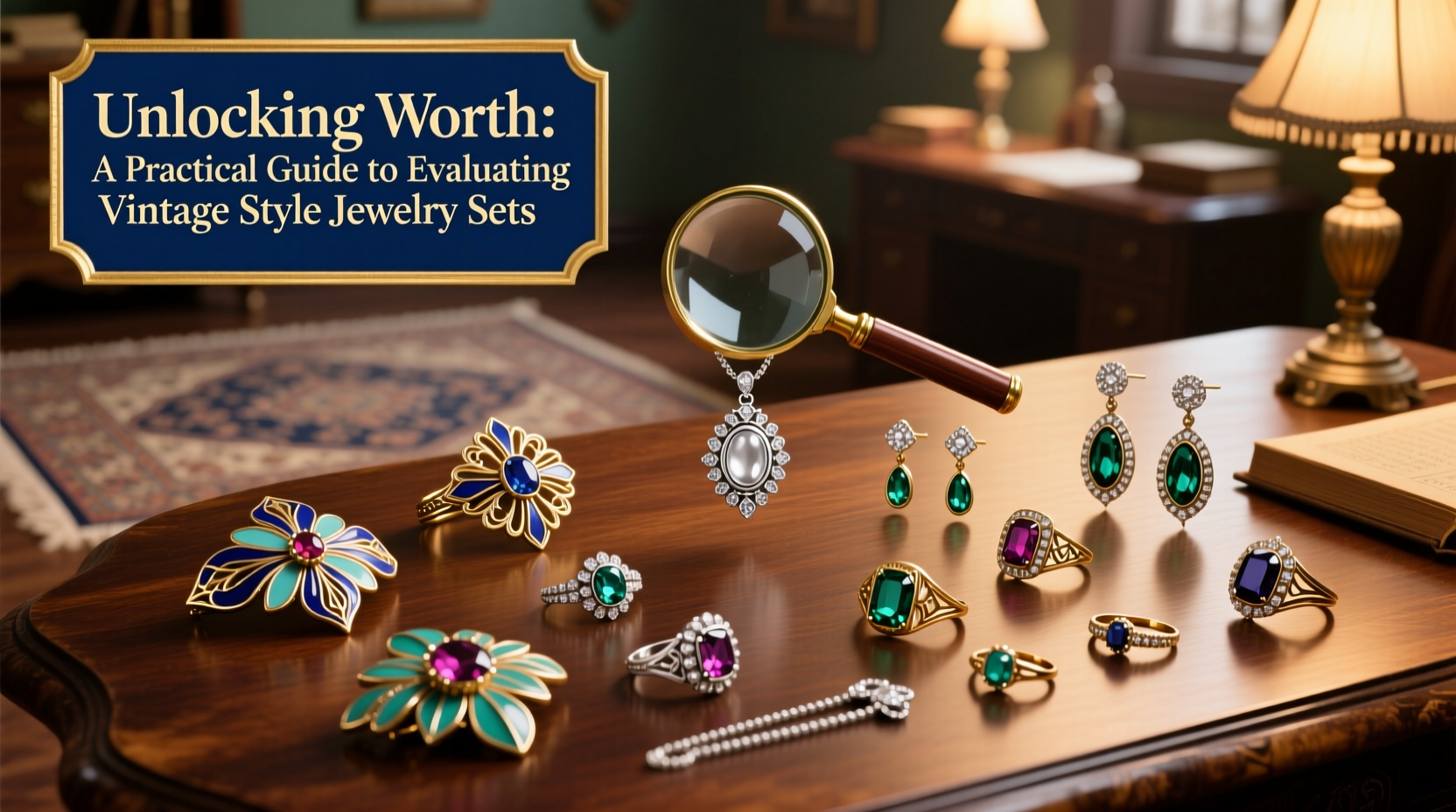
A critical first step is distinguishing between “vintage style” and “true vintage.” The former refers to new pieces designed to resemble older fashions, while the latter describes authentic jewelry made during a specific historical period—typically 20 to 100 years ago. True vintage jewelry may carry greater collectible value, especially if it’s rare or from a renowned designer. Vintage style pieces, though often beautiful, are usually more accessible and affordable but lack the same investment potential.
When evaluating a set, ask: Is this an original piece from the 1940s, or is it a modern reproduction inspired by that era? Labels like “vintage-inspired” or “retro style” indicate the latter. Authentic vintage jewelry often shows subtle wear consistent with age, such as softened edges or patina on metal surfaces. Mass-produced vintage style pieces tend to have uniform finishes and lack the nuanced imperfections that come with decades of careful handling.
Materials Matter: Identifying What Your Jewelry Is Made Of
The foundation of any jewelry’s value lies in its materials. Gold, silver, platinum, gemstones, and even base metals each contribute differently to worth. Start by inspecting hallmark stamps—small engravings on clasps, bands, or backsides that indicate metal purity.
- Gold: Look for stamps like “14K,” “18K,” or “750” (European standard for 18K). Avoid pieces marked “gold-plated” or “vermeil” unless you understand their limitations in longevity and resale.
- Silver: Genuine sterling silver is marked “925.” Tarnish is normal, but excessive pitting or black residue may suggest poor storage or low-quality plating.
- Stones: Natural pearls, cubic zirconia, rhinestones, and glass beads vary widely in value. Real gemstones (even small ones) often have precise cuts and natural inclusions visible under magnification.
Be cautious of magnetic metals—real gold and silver are non-magnetic. A simple magnet test can quickly reveal whether a piece is made of base metal with a surface finish.
“Material integrity is the first gatekeeper of value. If the metal isn’t genuine, the design—even if exquisite—won’t sustain long-term worth.” — Clara Nguyen, Antique Jewelry Appraiser
Step-by-Step Guide to Evaluating a Vintage Style Set
Follow this systematic process when assessing any vintage style jewelry set:
- Inspect the Condition: Check for broken links, loose stones, cracked enamel, or worn plating. Even minor damage can significantly reduce value.
- Examine Hallmarks and Signatures: Use a jeweler’s loupe to read stamps. Research unfamiliar maker’s marks online or through collector databases.
- Assess Craftsmanship: Are settings secure? Is engraving crisp? Hand-finished details suggest higher quality than machine-made uniformity.
- Compare Design to Historical Periods: Does the style match known trends from a particular decade? For example, bold geometric shapes point to Art Deco (1920s–30s), while floral motifs align with Victorian (1837–1901).
- Research Market Comparables: Search auction records, estate sales, and platforms like Etsy or Ruby Lane for similar sets to gauge fair pricing.
Do’s and Don’ts When Buying or Valuing Sets
| Do’s | Don’ts |
|---|---|
| Buy from reputable sellers with return policies | Assume “antique-looking” means valuable |
| Ask for certificates of authenticity if available | Ignore missing components (e.g., earring backs, necklace clasps) |
| Clean gently with soft cloth and mild soap | Use ultrasonic cleaners on unknown or fragile pieces |
| Store sets in separate pouches to prevent scratching | Expose costume jewelry to perfume, lotions, or water |
| Consult a professional appraiser for high-value items | Overestimate worth based on emotional attachment |
Real Example: Evaluating a 1980s-Inspired Rhinestone Set
Marissa inherited a rose-gold-tone necklace and matching earrings from her aunt, believed to be from the 1980s. The set featured large aurora borealis rhinestones and intricate scrollwork. Initially assuming it was valuable due to its sparkle and family history, she followed a structured approach:
First, she checked for hallmarks and found “RJ” stamped inside the clasp—later identified as a mark used by Renaissance Jewelers, a known producer of mid-tier costume jewelry in the 1970s–80s. Next, she examined the stones under magnification and noticed uniform prong settings and flawless facets—indicative of factory production rather than hand-setting. A magnet test revealed slight attraction, confirming base metal construction.
She searched completed listings on eBay and found comparable sets selling for $40–$75. While not a fortune, the piece held sentimental and stylistic value. Marissa decided to preserve it as part of a curated retro wardrobe rather than treat it as an investment. Her evaluation prevented overestimation and guided thoughtful stewardship.
Checklist: Essential Steps Before Purchasing or Appraising
- ☐ Verify metal type using hallmarks and magnet test
- ☐ Inspect every component for damage or wear
- ☐ Identify the era based on design elements
- ☐ Confirm whether it’s true vintage or vintage style
- ☐ Compare recent sale prices of similar items
- ☐ Consider professional appraisal for pieces valued over $300
- ☐ Document condition with photos and notes
Frequently Asked Questions
Can vintage style jewelry increase in value?
Some well-crafted vintage style pieces from respected designers or limited runs may appreciate, especially if they become culturally iconic. However, most do not appreciate like true antiques. Their primary value remains aesthetic and wearable.
How do I clean vintage style jewelry safely?
Use a soft microfiber cloth and warm water with mild dish soap. Avoid soaking unless you’re certain about material durability. Never use bleach, ammonia, or abrasive cleaners on plated or costume pieces.
Should I insure my vintage style jewelry?
If the set has significant monetary or emotional value, consider adding it to a personal property rider on your homeowner’s or renter’s insurance. Provide documentation such as receipts, appraisals, or photos.
Conclusion: Make Informed Choices with Confidence
Evaluating vintage style jewelry sets doesn’t require a degree in gemology—just attention to detail, a bit of research, and realistic expectations. By focusing on materials, craftsmanship, and context, you can distinguish between decorative accessories and pieces with lasting worth. Whether you're curating a personal collection or passing down heirlooms, understanding what gives jewelry its value empowers smarter choices and deeper appreciation.




 浙公网安备
33010002000092号
浙公网安备
33010002000092号 浙B2-20120091-4
Comments
No comments yet. Why don't you start the discussion?