
Many people live their lives following expectations—society’s, family’s, or even their own outdated beliefs—without ever asking if those paths truly belong to them. The journey to self-discovery isn’t about reinvention; it’s about excavation. Beneath layers of conditioning, fear, and habit lies the authentic self: the version of you that acts from clarity, purpose, and integrity. This guide offers practical tools and structured reflection to help you peel back the noise and reconnect with who you’ve always been beneath the surface.
Why Knowing Yourself Matters
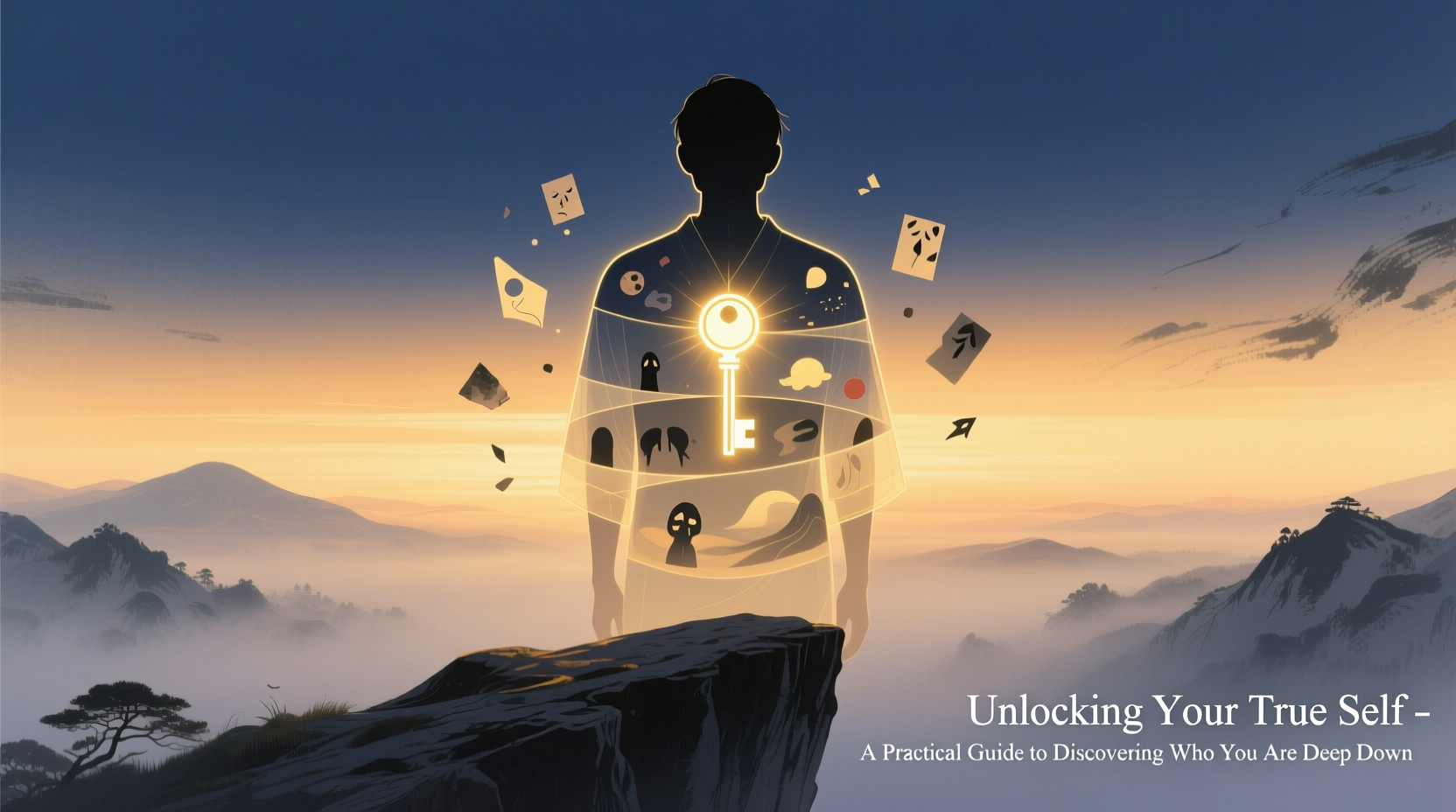
Self-awareness is the foundation of meaningful decisions. When you understand your values, emotional triggers, and natural inclinations, you make choices aligned with your essence—not convenience, pressure, or fleeting trends. Research from Harvard Business Review shows that individuals with high levels of self-awareness report greater life satisfaction, stronger relationships, and more effective leadership skills.
Living out of alignment creates internal friction. You might achieve external success—promotions, possessions, social approval—yet feel hollow. That dissonance is often a signal: a part of you knows you’re not being fully seen, even by yourself.
“Who looks outside, dreams; who looks inside, awakes.” — Carl Jung
The Four Pillars of Self-Discovery
True self-knowledge rests on four interlocking foundations. Exploring each provides a multidimensional view of your identity.
1. Core Values
Your values are the compass for your decisions. They define what matters most—integrity, freedom, connection, growth, service—and act as filters for how you spend your time and energy. When your actions contradict your values, stress and dissatisfaction follow.
2. Passions and Intrinsic Motivations
Passion isn’t just excitement—it’s sustained engagement without external reward. Ask: What activities make you lose track of time? What topics do you read about voluntarily? These clues point to intrinsic motivations, the engine of long-term fulfillment.
3. Strengths and Natural Talents
Strengths aren’t just skills—they’re ways of thinking, feeling, and acting that come effortlessly. A strength feels energizing, even when challenging. Recognizing them helps you design a life where you operate in your zone of genius rather than constantly compensating for weaknesses.
4. Emotional Patterns and Triggers
Recurring emotional reactions—especially strong ones—often trace back to early experiences or unmet needs. Mapping these patterns helps you respond consciously instead of reacting automatically, creating space between stimulus and response.
A Step-by-Step Journey to Authenticity
Self-discovery isn’t a single epiphany but a series of intentional practices. Follow this seven-step process over several weeks to build lasting self-knowledge.
- Pause and Create Space: Dedicate 20 minutes daily to solitude—no screens, no distractions. Use this time for journaling or silent reflection.
- Conduct a Life Audit: List major areas—career, relationships, health, finances, spirituality. Rate your satisfaction (1–10) in each. Note discrepancies between outward performance and inner peace.
- Map Your Peak Experiences: Recall 5–10 moments when you felt most alive, proud, or connected. Analyze common themes: Were you helping others? Creating? Leading? Solving problems?
- Identify Role Models and Resentments: Who do you admire deeply? List their qualities. Conversely, what behaviors in others trigger strong negative reactions? Both admiration and resentment highlight suppressed aspects of yourself.
- Practice Value Alignment Checks: Before making decisions, ask: “Does this reflect my core values?” If not, explore alternatives—even small adjustments create momentum.
- Test Assumptions Through Experiments: Try low-risk explorations—a volunteer role, a creative class, a solo trip. Observe what energizes or drains you without judgment.
- Seek Feedback from Trusted Others: Ask three people who know you well: “What do you think I’m best at?” and “When do you see me most engaged?” Their insights often reveal blind spots.
Common Barriers and How to Move Through Them
The path to self-knowledge is rarely smooth. Internal and external resistance is normal.
| Barrier | Root Cause | Practical Response |
|---|---|---|
| Fear of Judgment | Need for acceptance | Start small: keep discoveries private until confidence grows. |
| Overwhelm | Too much introspection too fast | Limits reflection to 30 minutes/day; focus on one area at a time. |
| Nostalgia for Identity | Attachment to old roles (e.g., provider, achiever) | Reframe change as evolution, not loss. |
| Doubt (“Is this really me?”) | Misinterpreting discomfort as invalidity | Remember: growth requires discomfort. Test ideas through action. |
“Integrity is telling myself the truth. And honesty is telling the truth to other people.” — Spencer Johnson
Real Example: From Executive to Educator
Mark, 42, held a senior position at a tech firm. Outwardly successful, he felt increasingly detached. After scoring his life areas, he realized his 9/10 career satisfaction masked a 3/10 in personal fulfillment. His peak experiences all involved mentoring interns or teaching workshops. He admired educators for their patience and impact. Yet he dismissed teaching as “impractical.”
He began volunteering at a local community college. Within months, he noticed increased energy and deeper conversations with students. He took a sabbatical, earned a certification, and transitioned into adult education. Today, he says, “I earn less, but I’m finally honest with myself every day.”
Self-Discovery Checklist
- ✅ Scheduled regular reflection time this week
- ✅ Listed my top five core values
- ✅ Wrote about three peak life experiences and their common threads
- ✅ Identified one behavior in others that triggers me—and what it reveals about my values
- ✅ Shared one insight with a trusted friend for feedback
- ✅ Planned one small experiment to test a new interest
Frequently Asked Questions
Isn’t self-discovery just navel-gazing?
No. While reflection is part of it, true self-discovery leads to action. It’s about gathering data to make better choices—where to work, who to spend time with, how to contribute. It’s practical psychology, not passive rumination.
What if I discover something uncomfortable about myself?
That’s often the most valuable insight. Acknowledging a flaw, hidden desire, or unresolved wound doesn’t make you broken—it makes you aware. Awareness precedes change. Handle difficult truths with compassion, not judgment.
Can you ever fully know yourself?
Self-knowledge is ongoing. People evolve. New experiences reshape priorities. The goal isn’t a final answer but a relationship—with yourself—that grows richer over time. Think of it as tuning an instrument, not hitting a single perfect note.
Living Your Truth Starts Now
Authenticity isn’t a destination. It’s a practice of choosing alignment over ease, courage over comfort. You don’t need to quit your job or move across the world to begin. Start with one honest conversation—with yourself. Reconnect with a forgotten passion. Say no to something that drains you. Each small act of integrity builds the muscle of self-trust.
The world doesn’t need more polished personas. It needs your real voice, your unique perspective, your unfiltered presence. Unlocking your true self isn’t selfish—it’s necessary. Not just for your happiness, but for the contribution only you can make.




 浙公网安备
33010002000092号
浙公网安备
33010002000092号 浙B2-20120091-4
Comments
No comments yet. Why don't you start the discussion?