
The iPhone 7 Plus, released in 2016, was a flagship device that set a high bar for performance, dual-camera systems, and build quality at the time. Fast forward to today, and Apple’s ecosystem has evolved significantly. The iPhone 11 Pro Max, launched in 2019, represented a major leap in processing power, camera capabilities, and display technology. For users still relying on the iPhone 7 Plus, the question isn’t just about nostalgia—it’s practical: Is making the jump to the iPhone 11 Pro Max in 2024 (or beyond) actually worthwhile?
This article breaks down the upgrade path with a focus on real-world usability, longevity, cost-benefit analysis, and future-proofing—not just specs on paper.
Performance and Longevity: Bridging the Generational Gap
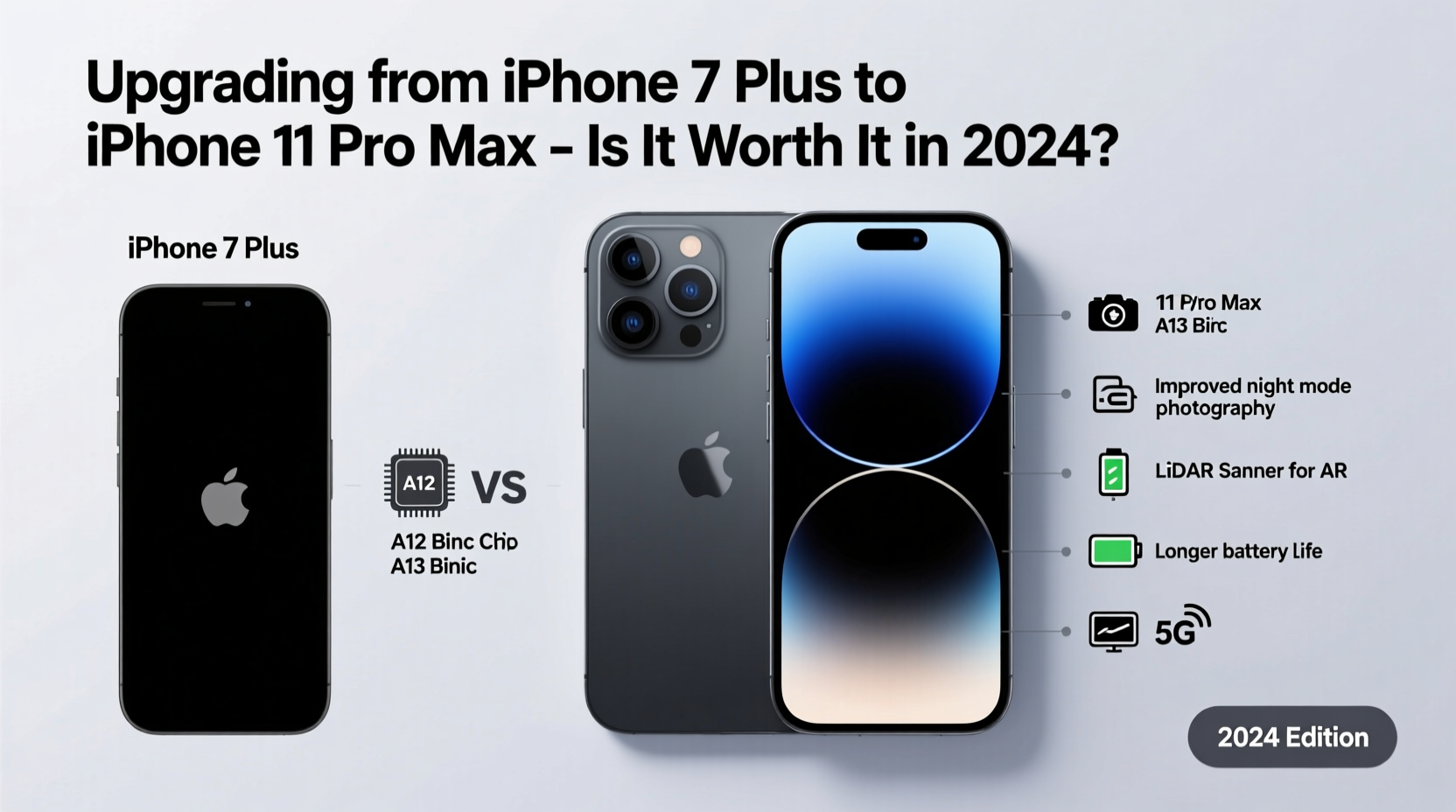
The most immediate difference between the iPhone 7 Plus and the iPhone 11 Pro Max lies in processing power. The 7 Plus runs on the A10 Fusion chip, which was groundbreaking in 2016 but now struggles with heavier multitasking, modern app demands, and iOS updates. In contrast, the iPhone 11 Pro Max features the A13 Bionic chip—still remarkably capable even in 2024.
Apple's software support typically spans five to six years. As of 2024, the iPhone 7 Plus is no longer receiving iOS updates, leaving it vulnerable to security risks and incompatible with newer apps. The iPhone 11 Pro Max, however, supports up to iOS 17 and will likely receive iOS 18, extending its usable lifespan into 2025 or later.
In daily use, the A13 Bionic handles 4K video editing, AR applications, and intensive gaming with ease. Apps launch faster, background processes are smoother, and overall responsiveness feels like stepping into a new era of mobile computing. For anyone using their phone for productivity, photography, or content creation, this performance uplift is transformative.
Camera Evolution: From Good to Professional-Grade
The iPhone 7 Plus introduced Apple’s first dual-camera system—wide and telephoto lenses—enabling 2x optical zoom and portrait mode. It was impressive for its time, but by today’s standards, its low-light performance, dynamic range, and video capabilities are limited.
The iPhone 11 Pro Max brought a triple-camera setup: ultra-wide, wide, and telephoto. This opens creative possibilities the 7 Plus simply can’t match. You can capture expansive landscapes, get closer without losing quality, and switch seamlessly between lenses with intelligent software blending.
| Feature | iPhone 7 Plus | iPhone 11 Pro Max |
|---|---|---|
| Cameras | Dual: 12MP Wide + 12MP Telephoto | Triple: 12MP Ultra-Wide + 12MP Wide + 12MP Telephoto |
| Night Mode | No | Yes (on all rear cameras) |
| Video Recording | 4K at 30fps | 4K at 60fps, extended dynamic range, cinematic stabilization |
| Front Camera | 7MP | 12MP with Night Mode and 4K video |
| Slofies | No | Yes (1080p slow-motion selfies) |
Night mode alone is a game-changer. Photos taken in dim lighting on the 11 Pro Max retain detail, color accuracy, and clarity—something the 7 Plus struggles with, often producing grainy, underexposed images.
“Smartphone photography isn’t just about megapixels anymore—it’s computational. The A13 Bionic enables advanced image stacking, HDR, and machine learning that redefine what ‘good’ looks like.” — David Lin, Mobile Photography Analyst
Battery Life and Charging: Real-World Impact
The iPhone 7 Plus offered decent battery life in 2016, but today’s usage patterns demand more. Streaming, navigation, social media, and constant notifications drain older batteries quickly. Many 7 Plus units now have degraded batteries, resulting in poor all-day performance.
The iPhone 11 Pro Max delivers up to 20 hours of video playback—nearly double the endurance of the 7 Plus under similar conditions. This means fewer midday charges, greater reliability during travel, and confidence during long workdays.
Additionally, the 11 Pro Max supports fast charging (50% in 30 minutes with an 18W adapter or higher) and wireless charging—features absent on the 7 Plus. While the 7 Plus can be upgraded with a Lightning-to-USB-C cable for slightly better efficiency, it lacks the internal circuitry for true fast charging.
Display and Build: A Sensory Upgrade
The iPhone 7 Plus featured a 5.5-inch Retina HD LCD display with a resolution of 1920×1080. While sharp for its time, it lacks the vibrancy, contrast, and brightness of modern OLED panels.
The 11 Pro Max introduced Apple’s Super Retina XDR OLED display—a 6.5-inch screen with deeper blacks, higher peak brightness (up to 1200 nits), and improved color accuracy. HDR video content on platforms like Netflix or YouTube looks dramatically better, and outdoor visibility is vastly superior.
Build-wise, both devices feature glass backs and aluminum/stainless steel frames, but the 11 Pro Max uses a more durable textured matte glass and surgical-grade stainless steel. It also has improved water resistance (IP68 vs IP67), meaning it can survive submersion up to 4 meters for 30 minutes—double the 7 Plus’s depth rating.
Real-World Example: Sarah’s Upgrade Journey
Sarah, a freelance photographer based in Portland, used her iPhone 7 Plus for over five years. By 2023, she noticed her phone struggled to keep up with Lightroom edits, often freezing when switching between apps. Her battery died by noon, and low-light shots lacked the clarity clients expected.
She purchased a used iPhone 11 Pro Max for $320 through a certified reseller. Within days, her workflow transformed. She could shoot in Night Mode, edit RAW files smoothly, and deliver previews directly from her phone. “It felt like I’d been working with one hand tied behind my back,” she said. “The upgrade wasn’t luxurious—it was necessary for my business.”
Step-by-Step Guide: How to Decide If the Upgrade Makes Sense
- Assess Your Current Phone’s Health: Check battery health in Settings > Battery. If maximum capacity is below 80%, consider a battery replacement—or accept that runtime will disappoint.
- Test App Performance: Open your most-used apps. Do they crash, lag, or fail to load features? This indicates hardware limitations.
- Evaluate Your Needs: Are you using your phone for work, content creation, or heavy media consumption? If yes, modern hardware offers tangible benefits.
- Research Secondhand Pricing: The iPhone 11 Pro Max can be found for $250–$400 depending on condition. Compare that to newer models (e.g., iPhone 14 or 15), which may cost 2–3x more.
- Consider Future Use: Will you keep the phone for 2+ years? If so, choose a model with ongoing iOS support. The 11 Pro Max fits this criteria; the 7 Plus does not.
Frequently Asked Questions
Can the iPhone 11 Pro Max still run the latest apps smoothly?
Yes. Even in 2024, the A13 Bionic handles most apps—including demanding ones like Adobe Premiere Rush, Procreate, and augmented reality tools—without issue. Only the most cutting-edge games or AI-powered apps may begin to push its limits.
Is the iPhone 11 Pro Max too big compared to the 7 Plus?
This depends on personal preference. The 11 Pro Max is larger and heavier (226g vs 188g), which some find less pocketable. However, many users adapt quickly, especially if they value screen real estate for media or multitasking.
Should I wait for a newer model instead?
If budget allows, the iPhone 14 or 15 series offer USB-C, better cameras, and longer software support. But if you're seeking value and a significant leap from the 7 Plus, the 11 Pro Max remains a smart, cost-effective upgrade.
Final Verdict: Yes, It’s Worth It—With Caveats
Upgrading from the iPhone 7 Plus to the iPhone 11 Pro Max in the current year is absolutely worth it—if you’re still relying on the 7 Plus as your primary device. The improvements in performance, camera quality, battery life, display, and software support are not incremental; they’re transformative.
However, this upgrade makes the most sense when approached pragmatically:
- Purchase a used or refurbished unit to maximize value.
- Ensure the device comes with a healthy battery and clean iCloud status.
- Use it as a bridge to future upgrades, not a permanent solution.
The iPhone 11 Pro Max isn’t the newest phone on the market, but for someone stepping up from a 2016 device, it delivers a near-complete overhaul of the smartphone experience. It brings modern iOS functionality, professional-grade photography, and reliable all-day performance—all at a fraction of the cost of current flagships.




 浙公网安备
33010002000092号
浙公网安备
33010002000092号 浙B2-20120091-4
Comments
No comments yet. Why don't you start the discussion?