
The Samsung Galaxy Note series has long been a favorite among power users who value productivity, stylus functionality, and high-end photography. If you're still using a Galaxy Note 8—released in 2017—you might be wondering whether upgrading to the Note 10 is justified, especially when it comes to camera performance. While both phones were flagship devices in their time, nearly two years of technological advancement separate them. The question isn’t just about megapixels; it’s about real-world usability, image quality, low-light performance, and software enhancements that affect how you capture and share moments.
This article examines the camera evolution between the Note 8 and Note 10, compares key specifications and real-life photo results, and helps you decide if the upgrade delivers meaningful benefits or if your current device still holds its ground.
Camera Specifications: A Clear Leap Forward
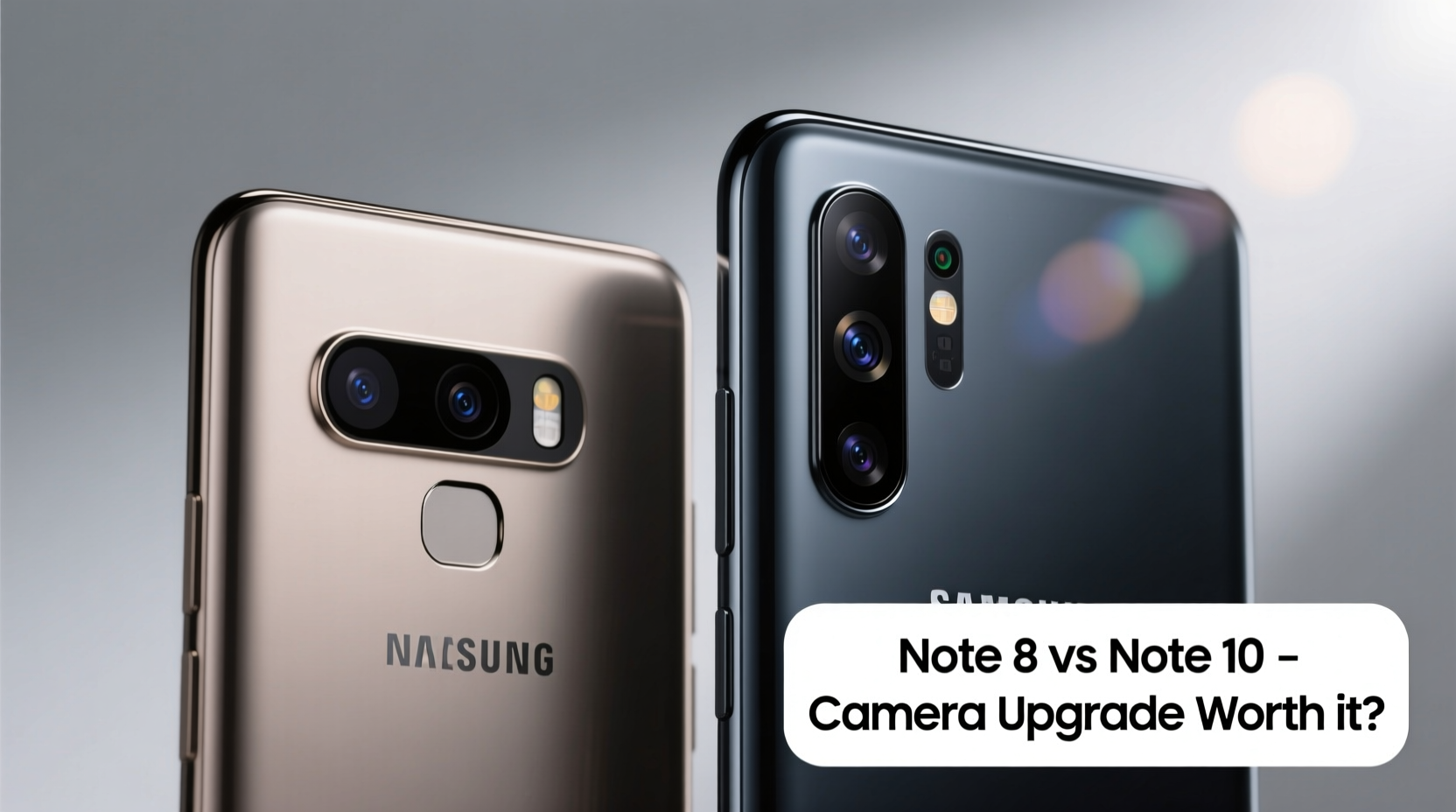
The most immediate difference lies in the hardware. The Galaxy Note 8 featured a dual rear camera setup—a 12MP wide-angle lens and a 12MP telephoto lens—both with optical image stabilization (OIS). It was excellent for its time, offering reliable zoom and solid dynamic range. However, the Galaxy Note 10, released in 2019, introduced a more versatile imaging system depending on the model (Note 10 vs. Note 10+), but even the base version represents a significant upgrade.
| Feature | Galaxy Note 8 | Galaxy Note 10 |
|---|---|---|
| Rear Cameras | Dual: 12MP Wide + 12MP Telephoto | Triple: 12MP Wide (f/1.5–2.4) + 12MP Telephoto + 16MP Ultra-Wide |
| Front Camera | 8MP f/1.7 | 10MP f/2.2 with autofocus |
| Video Recording | 4K at 30fps | 4K at 60fps, HDR10+ |
| Stabilization | OIS on both rear lenses | OIS + Super Steady Mode (software-based) |
| AI Features | Limited scene optimizer | Advanced Scene Optimizer, Live Focus Video |
The addition of an ultra-wide lens on the Note 10 fundamentally changes what you can shoot. Landscapes, architecture, and group photos benefit dramatically from the 123-degree field of view. This isn't just a minor tweak—it's a new creative tool that wasn't available before.
Image Quality and Low-Light Performance
One of the most noticeable upgrades is in low-light photography. The Note 10’s main sensor features variable aperture (f/1.5–f/2.4), allowing it to adapt to lighting conditions dynamically. In dim environments, it opens to f/1.5 to let in more light—something the Note 8’s fixed f/1.7 aperture can't match.
In practical terms, night shots taken on the Note 10 show better detail retention, reduced noise, and more natural color balance. Samsung’s Night Mode, introduced after the Note 8 era, further enhances this capability by capturing multiple frames and merging them into a brighter, clearer final image.
“Smartphone photography isn’t just about sensors anymore—it’s about computational photography. The Note 10 processes light smarter, not just captures more of it.” — David Kim, Mobile Imaging Analyst at TechLens Review
While the Note 8 handles moderate lighting well, shadows often appear muddy, and highlights tend to blow out. The Note 10 improves dynamic range through better HDR processing and AI-driven tone mapping, resulting in images that look closer to what your eyes see.
Real-World Example: Travel Photography Upgrade
Consider Sarah, a frequent traveler who used her Note 8 for three years to document trips across Europe and Southeast Asia. She loved the S Pen for journaling but grew frustrated with her inability to capture expansive temple interiors or city skylines without stitching multiple photos together. After upgrading to the Note 10+, she immediately noticed two things: first, the ultra-wide lens made architectural shots effortless; second, indoor museum photos—previously grainy and dark—now retained texture and color.
She also began recording vlogs using the front camera, which now supports autofocus and 4K video. On the Note 8, selfies were sharp only at close range, and videos lacked stabilization. With the Note 10, her social media content improved so much that a local tourism board reached out to collaborate.
This isn’t just anecdotal—it reflects a broader shift in mobile content creation. The camera isn’t just for memories; it’s part of personal branding and digital storytelling.
Software Enhancements That Make a Difference
Beyond hardware, software plays a crucial role. The Note 10 runs on a newer version of Samsung’s One UI with advanced camera AI. Features like Scene Optimizer automatically detect subjects (food, pets, greenery) and adjust saturation, contrast, and focus accordingly. Live Focus now works in video mode, letting you apply bokeh effects while recording—something unimaginable on the Note 8.
Additionally, the Note 10 supports gesture controls via the ultrasonic fingerprint sensor and improved AR Emoji creation, leveraging the front camera’s depth sensing. These may seem like extras, but they contribute to a more engaging and modern user experience centered around visual expression.
Checklist: Is Your Note 8 Holding You Back?
- Are you unable to capture wide-angle scenes without panoramas?
- Do your night photos come out blurry or overly noisy?
- Is 4K video limited to 30fps with no advanced stabilization?
- Do you wish your front camera had better focus and lighting adjustment?
- Are you missing AI-assisted editing or real-time filters?
If you answered yes to two or more, the camera upgrade alone could justify moving to the Note 10.
Frequently Asked Questions
Can the Note 8 still take good photos today?
Absolutely. Under ideal lighting, the Note 8 produces sharp, well-balanced images. Its portrait mode remains functional, and the telephoto lens offers true 2x optical zoom. However, it lacks modern conveniences like ultra-wide framing, advanced night modes, and consistent HDR performance.
Is the front camera really better on the Note 10?
Yes. The jump from an 8MP fixed-focus front camera to a 10MP autofocus unit with support for 4K video and facial recognition is substantial. Selfies are sharper, especially at varying distances, and video calls are noticeably smoother thanks to better processing.
Will I notice a difference if I mostly share photos on social media?
You will. Social platforms compress images, but higher input quality means better output. The Note 10’s superior dynamic range and color accuracy result in thumbnails that stand out in feeds. Plus, vertical videos shot in 4K look crisper when viewed on larger screens.
Step-by-Step: How to Test Whether You Need the Upgrade
- Take a side-by-side photo in low light (e.g., indoors at dusk) using both devices. Compare brightness, noise, and edge clarity.
- Capture a landscape with one device using panorama mode (Note 8) and the other using ultra-wide (Note 10).
- Record a short 4K video while walking. Play back and check for shake reduction and audio sync.
- Shoot a selfie from arm’s length and then from two feet away. See which maintains focus.
- Evaluate post-processing: Try applying Live Focus or AI filters on each. Note how intuitive and effective they are.
This hands-on test reveals more than specs ever could.
Final Verdict: Is It Worth It?
For casual users who rarely push their phone’s camera limits, the Note 8 may still suffice. But for anyone serious about mobile photography—whether capturing family moments, creating content, or simply wanting fewer missed shots—the upgrade to the Note 10 is absolutely worthwhile.
The combination of the ultra-wide lens, variable aperture, enhanced low-light performance, 4K60 video, and intelligent software transforms the way you interact with your environment visually. It’s not merely incremental progress; it’s a redefinition of what a smartphone camera can do.
Moreover, the Note 10’s camera system laid the foundation for future Galaxy models. If you plan to stay within the ecosystem, making the leap now ensures compatibility with current apps, editing tools, and sharing platforms optimized for modern sensor data.




 浙公网安备
33010002000092号
浙公网安备
33010002000092号 浙B2-20120091-4
Comments
No comments yet. Why don't you start the discussion?