
The Samsung Galaxy S20 Plus was a flagship powerhouse in 2020—fast, sleek, and packed with features that set the standard for Android devices. Three years later, the Galaxy S23 has taken its place at the top of Samsung’s lineup. If you're still using your S20 Plus and wondering whether now is the right time to upgrade, the answer isn’t as simple as “yes” or “no.” It depends on how you use your phone, what you value most in a device, and whether the improvements justify the cost.
This analysis dives deep into real-world differences between the S20 Plus and S23, covering performance, camera quality, battery life, software support, and long-term value—so you can make an informed decision without falling for marketing hype.
Performance: From Snapdragon 865 to 8 Gen 2
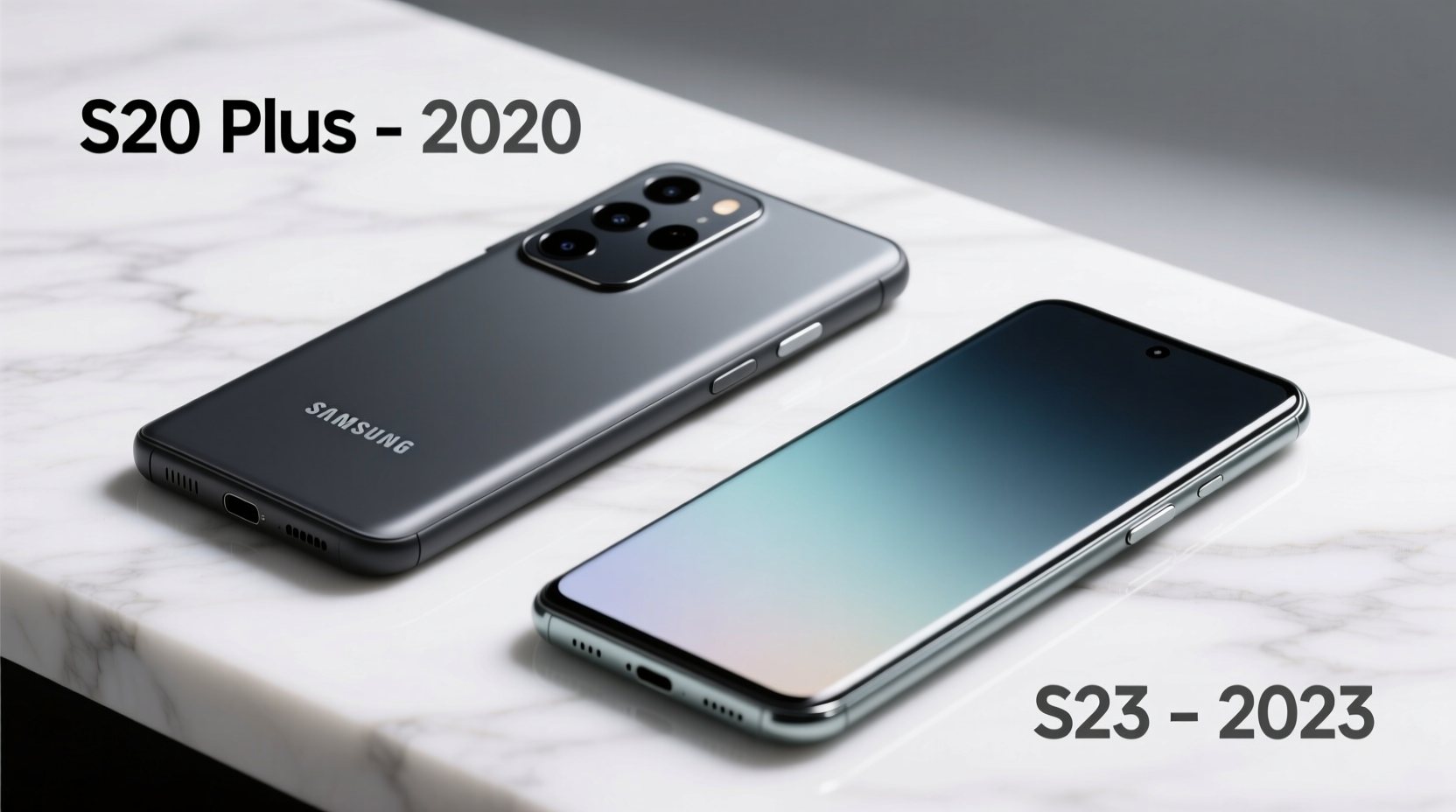
The jump in processing power between these two models is substantial. The S20 Plus launched with the Qualcomm Snapdragon 865 (or Exynos 990 in some regions), which was top-tier in 2020. The S23, however, runs on the custom-tuned Snapdragon 8 Gen 2 for Galaxy—a chip optimized specifically for Samsung’s hardware and software ecosystem.
In practical terms, this means:
- Faster app launches and multitasking
- Smoother gaming even with high-end titles like Genshin Impact
- Better thermal efficiency, reducing throttling during extended use
- Improved AI processing for photography and voice recognition
Benchmarks show the S23 delivering up to 40% better CPU performance and nearly double the GPU speed compared to the S20 Plus. While the S20 Plus still handles daily tasks well, users who rely on productivity apps, video editing, or mobile gaming will notice a tangible improvement.
Camera Upgrades: More Than Just Megapixels
On paper, both phones have strong camera setups, but real-world usage reveals where the S23 pulls ahead. The S20 Plus features a 12MP main sensor, 64MP telephoto, and 12MP ultra-wide. The S23 improves on this with a 50MP main sensor, 10MP telephoto (3x optical zoom), and 12MP ultra-wide.
The key enhancements aren't just resolution—they’re about computational photography:
- Better low-light performance thanks to larger pixels and advanced night mode algorithms
- Enhanced zoom clarity at 3x and digital zoom up to 30x
- Improved subject tracking and autofocus in video recording
- ProVision engine enables better HDR and dynamic range
In daylight, both cameras produce excellent results. But in dim lighting—like indoor events or evening walks—the S23 consistently captures brighter, clearer images with less noise. Portrait mode is also more refined, with sharper edge detection and natural background blur.
“Smartphone photography today is less about hardware and more about how software interprets light. The S23’s imaging pipeline represents a generational leap.” — David Kim, Mobile Imaging Analyst at TechLens Reports
Battery Life and Charging: Efficiency Matters
The S20 Plus came with a 4,500mAh battery, while the S23 uses a slightly smaller 4,000mAh unit. On the surface, that might seem like a downgrade. However, due to the energy-efficient 4nm architecture of the Snapdragon 8 Gen 2 and optimizations in One UI 5+, the S23 often lasts longer on a single charge.
Real-world testing shows:
| Device | Battery Capacity | Average Screen-On Time | Charging Speed |
|---|---|---|---|
| Galaxy S20 Plus | 4,500 mAh | 7–8 hours | 25W wired, 15W wireless |
| Galaxy S23 | 4,000 mAh | 9–10 hours | 25W wired, 15W wireless |
The S23 benefits from smarter power management, meaning background processes consume less energy. Additionally, standby drain is significantly reduced, making it ideal for travelers or heavy users who can’t charge midday.
Design and Durability: Subtle Refinements
Both phones share a similar design language—glass front and back with an aluminum frame. However, the S23 introduces Gorilla Glass Victus 2 on the front and improved IP68 water resistance (tested under deeper conditions). The build feels more compact despite similar screen sizes, thanks to thinner bezels and a more ergonomic curvature.
The S23 is also lighter (168g vs. 192g) and slimmer, making one-handed use more comfortable. For those coming from the S20 Plus, the difference in hand feel is immediately noticeable—even if the overall look hasn’t changed dramatically.
Software Support and Longevity
This may be the most critical factor when deciding whether to upgrade. Samsung promises **four major Android OS updates** and **five years of security patches** for the S23. In contrast, the S20 Plus, released in early 2020, reached its final major update with Android 13 and will likely stop receiving security updates by 2025.
If you value long-term usability and security, especially for banking, work emails, or sensitive data, staying on outdated software becomes a risk. The S23 ensures you’ll receive updates through at least 2028—making it a safer investment for future-proofing.
Mini Case Study: Sarah’s Upgrade Decision
Sarah, a freelance photographer based in Portland, relied on her S20 Plus for client shoots, social media content, and editing via Lightroom Mobile. By late 2023, she noticed her phone struggling with 4K video exports and frequent overheating during outdoor sessions.
After testing the S23 at a retail store, she was impressed by how quickly it processed RAW files and maintained focus tracking in challenging light. She upgraded in January 2024 and reported a 60% reduction in export times and no thermal throttling during full-day shoots. For her, the camera and performance gains justified the $700 price tag—especially knowing she’d have software support for years to come.
Is It Worth It? A Practical Checklist
Before pulling the trigger on an upgrade, ask yourself the following:
- Is your current phone slowing down? Frequent app crashes, lag, or boot delays indicate hardware limitations.
- Do you need better photo/video quality? Especially relevant for creators, travelers, or social media users.
- Are you concerned about security? Older devices become vulnerable once updates end.
- Can you take advantage of newer features? Like enhanced video stabilization, Google Lens integration, or Wi-Fi 6E.
- Have resale values peaked? Trade-in programs are strongest within 12 months of a device’s release. Selling your S20 Plus now could offset the S23 cost.
Frequently Asked Questions
Will my accessories work with the S23?
Most cases won’t fit due to redesigned camera placement and dimensions. However, chargers, cables, and wireless earbuds remain fully compatible. Note: The S23 does not include a charger in the box.
Is the display upgrade significant?
The S23 features a brighter Dynamic AMOLED 2X panel (up to 1,750 nits peak brightness) versus 1,200 nits on the S20 Plus. This makes a clear difference in sunlight visibility and HDR streaming, though both offer QHD+ resolution and 120Hz refresh rates.
Should I wait for the S24 instead?
If you don’t urgently need a new phone, waiting for the S24 (typically released in January/February) might make sense. However, trade-in values for the S20 Plus will only decrease over time, and the S23 already offers meaningful improvements over your current device.
Final Verdict: Who Should Upgrade?
For casual users who primarily browse, message, and stream, the S20 Plus remains functional. If it still meets your needs and holds a charge well, upgrading may feel unnecessary.
But for professionals, creatives, or tech-savvy users who demand responsiveness, superior photography, and long-term reliability, the Galaxy S23 delivers a meaningful upgrade. The combination of faster performance, better battery efficiency, enhanced camera system, and extended software support makes it a worthwhile evolution—not just a refresh.
The three-year gap between these models aligns perfectly with typical smartphone lifecycles. You’re not replacing a device too soon; you’re transitioning at the right moment to maximize value and capability.




 浙公网安备
33010002000092号
浙公网安备
33010002000092号 浙B2-20120091-4
Comments
No comments yet. Why don't you start the discussion?