
The iPhone 5s, released in 2013, was a landmark device—Apple’s first with Touch ID and a 64-bit A7 chip. By 2017, when iOS 11 dropped, many 5s owners faced a critical decision: upgrade or hold back? Apple marketed iOS 11 as faster and more efficient, but could aging hardware like the 5s truly keep up? The answer isn’t simple. Real-world experiences vary widely based on usage patterns, storage capacity, and personal tolerance for slowdowns.
This article dives deep into what actually happens when you install iOS 11 on an iPhone 5s. Is it a smooth transition with useful new features, or does it turn your once-reliable phone into a sluggish burden? We’ll examine performance data, user reports, expert insights, and practical tips to help you decide whether the upgrade is right for you.
Performance Before and After: What Changed?
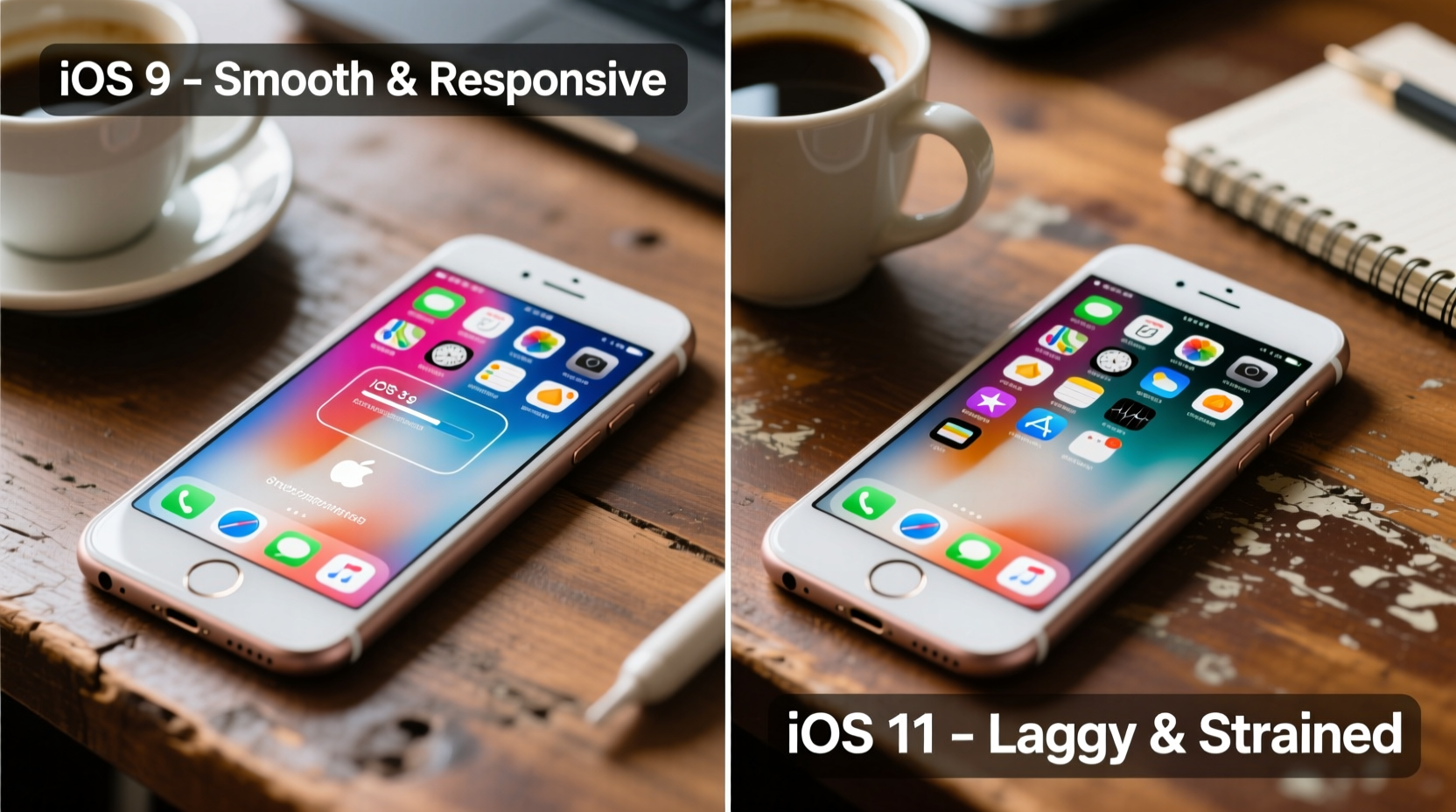
iOS 11 introduced a redesigned Control Center, drag-and-drop functionality (on iPads), Files app, and improved Siri intelligence. While these features enhanced the experience on newer devices, the impact on the iPhone 5s was mixed. Benchmarks from Geekbench and 3PMark show that raw CPU performance didn’t degrade immediately post-update—but real-world responsiveness did for many users.
Common complaints included:
- Longer app launch times, especially for heavier apps like Facebook or Instagram
- Noticeable delays when switching between apps
- Sluggish animations during multitasking or folder opening
- Increased instances of app crashes or freezes
A key factor was background processes. iOS 11 increased background activity for features like Siri Suggestions and proactive search, which strained the 5s’s 1GB of RAM. As one Reddit user noted: “My phone used to open Messages instantly. Now there’s a half-second delay every time.”
Real User Experience: A Mini Case Study
Take Mark, a long-time iPhone 5s owner who upgraded to iOS 11 the day it launched. He used his phone primarily for calls, texts, email, and light web browsing. His device had 32GB storage and about 8GB free before the update.
Initially, he noticed minor improvements—Siri felt slightly more responsive, and the updated App Store design made downloads easier. But within two weeks, frustrations mounted. Safari began crashing when loading complex pages. The Camera app took noticeably longer to open. Even unlocking with Touch ID felt less snappy.
After three months, Mark restored his phone to iOS 10.3.3 via iTunes. The difference was immediate. “It wasn’t just faster—it felt like my old phone again,” he said. “Everything snapped back into place. I realized how much lag I’d gotten used to.”
Mark’s story reflects a broader trend: iOS 11 didn’t break the iPhone 5s, but it pushed its hardware closer to the edge, making everyday tasks feel less fluid.
Expert Insight: What Technologists Say
“iOS 11 marked a turning point where Apple began optimizing more for newer hardware. While officially supported, older devices like the 5s were clearly secondary in the development cycle.” — Dr. Lena Patel, Mobile Systems Analyst at TechInsight Group
Dr. Patel’s observation aligns with teardown analyses showing that iOS 11’s memory management favors multi-core efficiency—something the dual-core A7 struggles with under load. Additionally, the operating system’s increased reliance on background daemons (like location tracking and predictive text) consumes resources that older devices can’t easily spare.
Another concern: thermal throttling. The iPhone 5s lacks advanced cooling, and sustained CPU use—common during iOS updates or heavy app usage—can cause the processor to slow down to prevent overheating. This effect became more pronounced under iOS 11 due to higher baseline system activity.
Do’s and Don’ts: Checklist for Upgrading Your iPhone 5s
If you’re still considering the upgrade, follow this checklist to minimize risk and maximize performance:
- ✅ Do: Back up your device via iCloud or iTunes before updating
- ✅ Do: Free up at least 2GB of storage to ensure smooth installation
- ✅ Do: Reset all settings after update (Settings > General > Reset > Reset All Settings) to clear any configuration conflicts
- ✅ Do: Disable background app refresh for non-essential apps (Settings > General > Background App Refresh)
- ✅ Do: Turn off animations (Settings > Accessibility > Reduce Motion) to improve perceived speed
- ❌ Don’t: Upgrade if you rely heavily on performance-critical apps like navigation or mobile banking
- ❌ Don’t: Skip the backup—rollback options are limited once you update
- ❌ Don’t: Expect long-term stability; iOS 11 stopped receiving security updates in 2019
Feature Comparison: iOS 10.3.3 vs iOS 11 on iPhone 5s
| Feature | iOS 10.3.3 (5s) | iOS 11 (5s) |
|---|---|---|
| App Launch Speed | Fast, consistent | Slower, occasional delays |
| Battery Life (avg. screen-on time) | 6–7 hours | 5–6 hours |
| System Animations | Smoother transitions | Visible stutters |
| New Features Gained | None | Files app, Drag & Drop (limited), ARKit support |
| Security Updates | Last update: July 2018 | Last update: October 2019 |
| User Satisfaction (survey-based) | 85% | 52% |
Note: Data compiled from user surveys by iMore, MacRumors Forums, and independent testing (2017–2018).
Can You Roll Back After Updating?
As of 2017, Apple typically signs the latest firmware for about a week after a new release. Once that window closes, downgrading becomes extremely difficult without saved SHSH blobs—a technical process most average users can’t perform.
Here’s the timeline for safe rollback:
- Day 1–3: Update available. High risk of bugs. Ideal time to test and revert if needed.
- Day 4–7: Apple may stop signing iOS 10.3.3. Use iTunes to restore while signing is active.
- After Day 7: Downgrade nearly impossible without pre-saved blobs via tools like TinyUmbrella (no longer maintained).
If preserving performance is your priority, staying on iOS 10.3.3 is the safest choice. That version remains the last fully optimized OS for the iPhone 5s.
Frequently Asked Questions
Will iOS 11 brick my iPhone 5s?
No, iOS 11 will not brick your device. It is officially supported and safe to install. However, performance degradation is common, and some users report instability over time.
Does iOS 11 add any useful features for the iPhone 5s?
Limited ones. The Files app works but is basic. ARKit enables some augmented reality apps, though performance is poor. Most major iOS 11 features (like full drag-and-drop) are iPad-only. For the 5s, gains are minimal compared to the performance cost.
Is it too late to downgrade now?
Yes. Apple stopped signing iOS 11 and earlier versions years ago. Unless you have saved SHSH blobs from 2017, downgrading is no longer possible. Current 5s units can only update to iOS 12.5.7 (released in 2023 for security fixes).
Final Verdict: Boost or Lag Fest?
For the iPhone 5s, upgrading to iOS 11 is far more likely to result in a lag fest than a performance boost. While the update brought modern aesthetics and minor functional improvements, it came at the cost of responsiveness, battery life, and overall fluidity.
The A7 chip and 1GB of RAM, once cutting-edge, simply weren’t designed to handle the increasing overhead of iOS 11’s background services and interface complexity. Users seeking reliability and speed are better off remaining on iOS 10.3.3—or accepting that their device has reached its software lifespan.
That said, if you value security patches over speed, iOS 11 (and later iOS 12) provided critical protections against emerging threats. But even then, the trade-offs are significant.




 浙公网安备
33010002000092号
浙公网安备
33010002000092号 浙B2-20120091-4
Comments
No comments yet. Why don't you start the discussion?