
In an age where charging cables are replaced more often than socks, manufacturers have turned to design solutions to extend lifespan—and one of the most visible is braided cabling. Walk into any electronics store or browse online, and you’ll see USB-C cables wrapped in sleek nylon, polyester, or even Kevlar fibers. They’re marketed as tougher, longer-lasting alternatives to rubber-coated cords. But is the braid truly functional, or is it just a cosmetic upgrade designed to justify a higher price tag?
The answer isn’t as simple as “yes” or “no.” Braiding can enhance durability under certain conditions, but it’s not a magic fix. Understanding how braiding works, its limitations, and how it interacts with other cable components reveals a more nuanced picture—one that helps consumers make smarter choices.
How Cable Braiding Works: Structure and Function
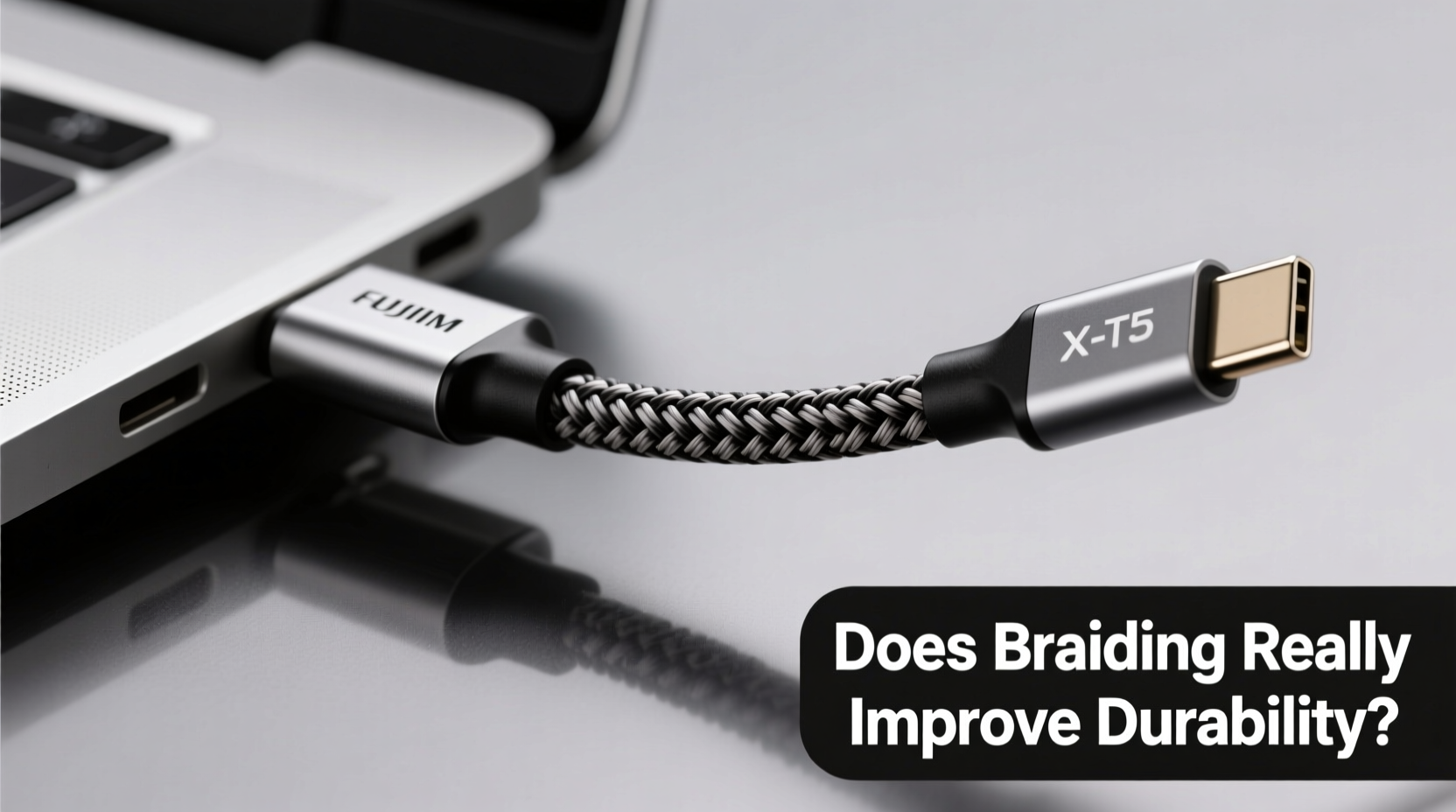
A typical USB-C cable consists of internal conductors (wires), insulation, shielding, and an outer jacket. In standard cables, this outer layer is usually thermoplastic elastomer (TPE) or PVC—a flexible rubber-like material. While these materials offer decent flexibility and cost-efficiency, they’re prone to cracking, fraying, and abrasion over time, especially at stress points like the connectors.
Braided cables replace the rubber jacket with a tightly woven mesh—usually nylon or polyester—wrapped around the inner layers. This braid acts as a mechanical reinforcement. Think of it like chainmail: instead of relying on a single soft layer, the cable uses interlaced fibers to resist cuts, bending fatigue, and surface wear.
The braid doesn’t eliminate the inner jacket; it sits atop it. So beneath the weave, there’s still a plastic or rubber core protecting the wires. The braid simply adds a second line of defense against physical damage.
Durability: Where Braiding Helps (and Where It Doesn’t)
Braiding improves durability in specific scenarios:
- Abrasion resistance: Nylon braids are highly resistant to surface scuffing. If you regularly toss your cable into a bag with keys or tools, a braided cable will fare better than a rubber-coated one.
- Cut resistance: A sharp edge might slice through TPE quickly, but a tight braid can deflect or absorb minor impacts.
- Kink resistance: Braided cables tend to hold their shape better and resist sharp bends that lead to internal wire breaks.
However, braiding has notable limitations:
- No protection against overbending: If you fold the cable sharply near the plug repeatedly, the internal wires can still snap regardless of the outer braid.
- Moisture vulnerability: Most braided cables aren’t waterproof. The weave can absorb liquids, leading to corrosion or mold if not dried properly.
- Stiffness trade-off: Braided cables are less flexible than their rubber counterparts, which can make them harder to coil tightly or fit into compact spaces.
“Braiding is a meaningful upgrade for mechanical protection, but it’s only one part of a durable cable. The quality of the internal wiring, solder joints, and connector housing matters just as much.” — Dr. Lena Park, Materials Engineer at CircuitLife Labs
Real-World Testing: A Mini Case Study
To evaluate the real-world impact of braiding, a tech reviewer conducted a six-month stress test comparing three types of USB-C cables:
- Standard TPE cable: $8, 3-foot length, no braid
- Nylon-braided cable: $18, 6-foot length, mid-tier brand
- Hybrid armored cable: $35, 3-foot, spring-wrapped + partial braid
All cables were subjected to daily use: plugged/unplugged 15 times per day, coiled loosely, carried in a backpack with keys and pens, and occasionally stepped on.
Results after 180 days:
| Cable Type | Visible Wear | Performance Drop | Failure Point |
|---|---|---|---|
| Standard TPE | Fraying at both ends, cracked sheath | Intermittent charging after Day 112 | Wire break near plug |
| Nylon-Braided | Minor discoloration, no fraying | No data/charging issues | Still functional |
| Hybrid Armored | Scratches on metal sleeve, no fiber damage | No issues | Still functional |
The braided cable outperformed the standard one significantly, lasting the full term without failure. However, the hybrid armored model—with a combination of spring guards and localized braiding—showed the best resilience, particularly at stress points. This suggests that while braiding helps, targeted reinforcement at high-risk zones may be even more effective.
What Else Matters More Than the Braid?
While braiding gets the spotlight, several other factors play a larger role in overall cable longevity:
1. Strain Relief Design
The transition between the rigid connector head and the flexible cable body is the most vulnerable spot. High-quality cables use molded rubber or thermoplastic shoulders that distribute bending forces. Without this, even a braided cable will fail early.
2. Internal Wire Gauge and Quality
Thinner wires (e.g., 30 AWG) break faster under repeated flexing. Cables using 24–26 AWG wires last longer. Additionally, oxygen-free copper (OFC) resists fatigue better than lower-grade conductors.
3. Connector Housing Material
Many cheap cables use brittle plastic housings that crack after months of plugging. Reinforced aluminum or polycarbonate connectors withstand far more abuse.
4. Shielding and Insulation Layers
Multiple layers of foil and braided shielding inside the cable reduce electromagnetic interference and protect wires from micro-abrasions during movement.
Do All Braided Cables Perform the Same?
No. Not all braids are created equal. Differences in weave tightness, fiber type, and manufacturing quality drastically affect performance.
For example:
- Tight vs. loose weave: A densely woven braid offers better cut resistance. Loose weaves may look good but provide minimal added strength.
- Nylon vs. polyester: Nylon is generally stronger and more abrasion-resistant, though both are common. Some premium cables use recycled nylon for sustainability without sacrificing strength.
- Single-layer vs. dual-layer braid: Higher-end models use two overlapping braids for extra toughness. These are heavier and stiffer but last longer under harsh conditions.
Additionally, some brands apply a clear polymer coating over the braid to reduce fuzzing and improve water resistance. This adds another protective layer but can make the cable feel less tactile.
When Braiding Is Mostly Cosmetic
In many cases, braiding serves primarily aesthetic purposes. Consider these red flags:
- The cable is labeled “braided” but feels flimsy or overly stretchy.
- It lacks strain relief at the connectors.
- Internal specs (like wire gauge or power delivery rating) are missing or vague.
Some budget “braided” cables use a thin decorative sleeve over a low-quality core. These may resist light scratches but offer little real durability gain. In blind tests, users often can’t tell the difference in lifespan between a poorly made braided cable and a decent rubber one.
“Marketing has turned ‘braided’ into a buzzword. Consumers assume it means ‘durable,’ but without engineering behind it, it’s just fabric over fragile parts.” — Marcus Tran, Lead Tester at WireLife Reviews
Step-by-Step Guide: Choosing a Truly Durable USB-C Cable
Follow this checklist when selecting a long-lasting USB-C cable:
- Check the wire gauge: Look for 24–26 AWG for better durability and efficient power delivery.
- Inspect the connector ends: Ensure there’s a smooth, flexible strain relief boot (rubber or thermoplastic) seamlessly connecting to the plug.
- Verify power and data specs: For fast charging or data transfer, confirm support for USB PD 3.0 and USB 3.1/3.2 (if needed).
- Evaluate the braid quality: Run your fingers along the cable. It should feel firm, not spongy. No loose threads or uneven weaving.
- Read teardowns or user reviews: Look for long-term feedback or videos showing internal construction.
- Consider length: Longer cables experience more stress. For heavy use, 3–6 feet is ideal. Avoid ultra-long braided cables unless reinforced.
FAQ: Common Questions About Braided USB-C Cables
Do braided cables charge faster?
No. Braiding affects physical durability, not electrical performance. Charging speed depends on wire gauge, power delivery support, and source device capabilities.
Can I wash a braided cable?
You can gently clean it with a damp cloth and mild soap. Avoid soaking, as moisture trapped in the braid can corrode internal wires. Never put it in a washing machine.
Why do some braided cables fray over time?
Poorly constructed braids or exposure to sharp edges can cause individual fibers to break. High-quality cables use tighter weaves and sometimes add a protective topcoat to prevent this.
Conclusion: Braiding Has Real Benefits—But With Caveats
Braiding isn’t just a gimmick. When done well, it significantly improves a USB-C cable’s resistance to abrasion, fraying, and everyday wear. It’s especially valuable for users who carry cables in bags, use them frequently, or work in rugged environments.
However, the braid alone doesn’t guarantee longevity. A poorly built braided cable with weak connectors or thin internal wires will still fail prematurely. True durability comes from a holistic design: strong internal conductors, proper strain relief, quality materials, and yes—thoughtful braiding.
So, does USB-C cable braiding improve durability? Yes—but only when it’s part of a well-engineered whole. Don’t pay a premium for looks alone. Look beyond the surface, check the specs, and invest in a cable that’s built to last from the inside out.




 浙公网安备
33010002000092号
浙公网安备
33010002000092号 浙B2-20120091-4
Comments
No comments yet. Why don't you start the discussion?