
The practice of placing a raw onion on the sole of the foot may sound unusual, even eccentric, to modern ears. Yet this folk remedy has persisted across cultures for generations, often touted as a natural cure for colds, flu, detoxification, or improved sleep. While it originates more in traditional healing than in mainstream culinary use, the onion’s biochemical properties lend some plausibility to its external applications. As both a food scientist and a culinary educator, I examine this practice not just through anecdotal tradition but through the lens of chemistry, absorption science, and historical usage. This article explores whether there is any validity behind the claim, how it might function if at all, and what role the humble onion—typically reserved for the skillet or salad—might play in holistic wellness.
Definition & Overview
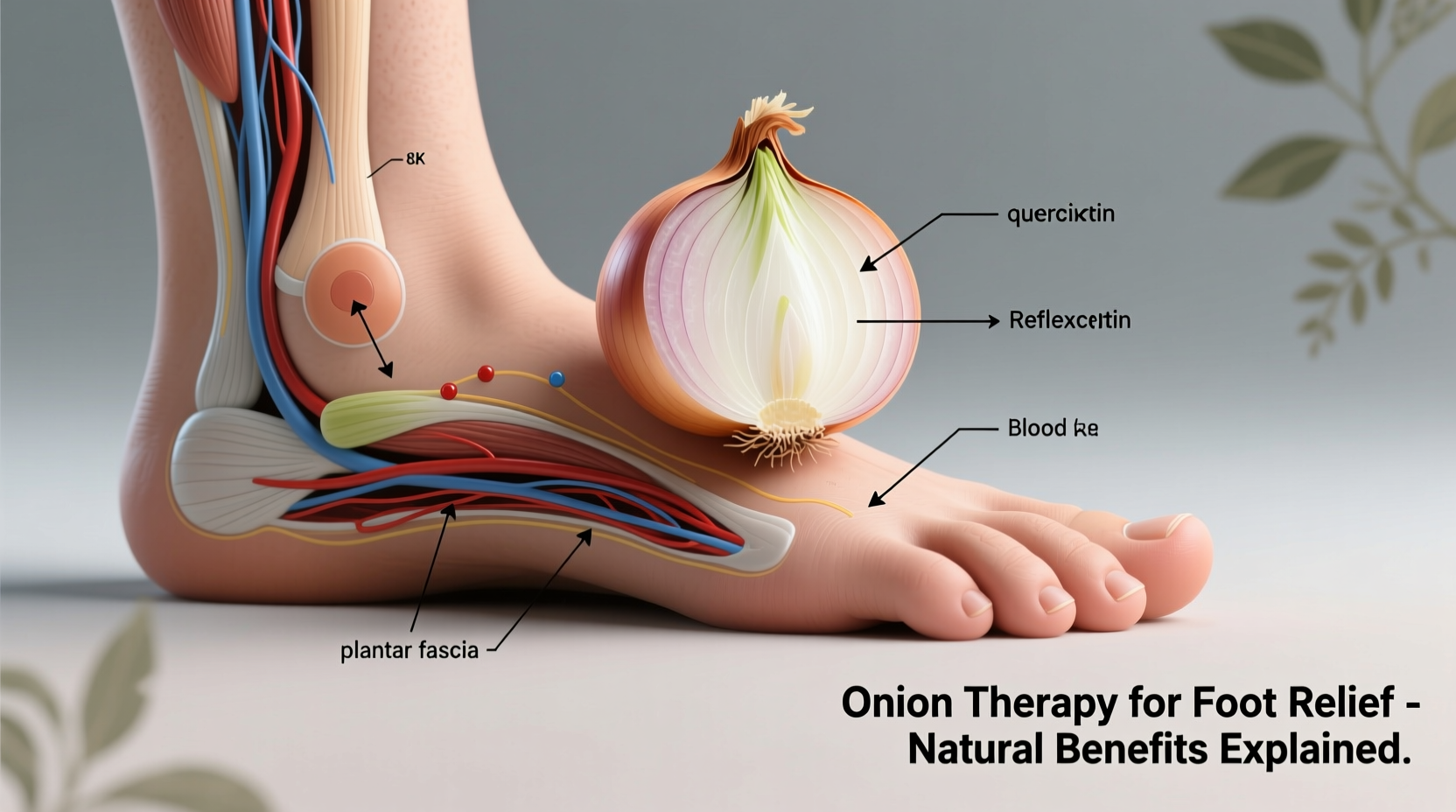
The concept of “using an onion on the foot” refers to a home-based, non-ingestive folk remedy where a slice of raw onion is placed directly on the bottom of one or both feet, typically secured with a sock or cloth and left overnight. Advocates believe that the onion’s compounds are absorbed through the skin, particularly via reflexology points on the soles, and exert systemic effects such as reducing fever, clearing congestion, or boosting immunity.
While onions (*Allium cepa*) are universally recognized as a kitchen staple—adding depth, sweetness, and pungency to dishes worldwide—they also have a long history in herbal medicine. Ancient civilizations including the Egyptians, Greeks, and Chinese used onions for respiratory ailments, wound healing, and circulatory support. The foot application method, however, is less documented in formal medical texts and appears primarily in oral traditions, particularly within European, Slavic, and Ayurvedic-influenced households.
It's important to distinguish this practice from dietary consumption. Here, the onion is not eaten but used topically, relying on transdermal absorption or energetic principles (as in reflexology) rather than digestive metabolism.
Key Characteristics of Onions Relevant to Topical Use
Onions contain a complex array of bioactive compounds that contribute to their potential therapeutic effects, whether ingested or applied externally. These include:
| Compound | Function / Benefit | Relevance to Foot Application |
|---|---|---|
| Allicin (and thiosulfinates) | Antimicrobial, antifungal, anti-inflammatory | Potential pathogen inhibition; released when cells are damaged (e.g., sliced) |
| Quercetin | Antioxidant, antihistamine, immune-modulating | May reduce inflammation; stable compound with moderate skin permeability |
| Sulfur compounds | Detoxification support, cellular protection | Believed to stimulate liver enzymes; odor suggests volatility |
| Fructans (prebiotic fibers) | Gut microbiome support | Not relevant topically; only beneficial when consumed |
| Phytoncides | Natural antimicrobial agents produced by plants | May inhibit bacteria near skin surface |
When an onion is cut, enzymes convert sulfoxides into sulfenic acid, which then forms allicin-like compounds responsible for its sharp aroma and biological activity. These volatile substances can evaporate into the air or interact with the skin’s surface, potentially triggering localized responses.
Practical Usage: How to Apply an Onion to the Foot
Though not standardized, the typical protocol follows a consistent pattern rooted in household tradition:
- Select a fresh, organic onion: Yellow or red onions are preferred due to higher quercetin and sulfur content. Avoid sprouted or soft onions.
- Cut a thick slice (¼ to ½ inch): Expose maximum surface area to release active compounds.
- Place on the sole of the foot: Commonly centered under the ball of the foot or heel—areas associated with lung and immune reflexology zones.
- Secure with cotton sock or gauze: Prevent slipping and contain odor.
- Leave overnight (6–8 hours): Most users apply before bed and remove in the morning.
- Discard after use: Do not reuse; compost or dispose safely.
Some variations include combining the onion with honey, vinegar, or essential oils to enhance penetration or antimicrobial action. For example, a mixture of crushed onion and raw honey wrapped in cheesecloth is sometimes used for persistent coughs.
Pro Tip: If trying this for the first time, perform a patch test on a small area of skin to rule out irritation. While rare, some individuals may experience redness or contact dermatitis due to the onion’s acidic nature or sulfur compounds.
When Is This Remedy Typically Used?
- At the first sign of a cold or sore throat
- During low-grade fevers in children (as a gentler alternative to medication)
- To promote relaxation and deeper sleep
- In detox regimens, especially in spring cleansing traditions
- As part of holistic care during recovery from illness
Anecdotal reports suggest improvements in nasal congestion, reduced night-time coughing, and quicker recovery times. However, these claims remain largely subjective and unverified by clinical trials.
Variants & Types of Onion Applications
While the raw slice method is most common, several variants exist depending on cultural context and intended outcome:
1. Cooked Onion Poultice
Onion halves are gently sautéed or baked until soft and warm (not hot), then wrapped in muslin and applied to the chest or feet. Heat increases the release of volatile oils and enhances local circulation. This version is often used for bronchitis or earaches.
2. Onion Socks (Continuous Wear)
Finely chopped onions are placed inside clean cotton socks and worn throughout the day. Proponents claim continuous exposure amplifies systemic effects. Not recommended for sensitive skin or prolonged use beyond 24 hours.
3. Dried Onion Powder Compress
A lesser-known method involves mixing food-grade onion powder with water to form a paste, then applying it to the soles. Less messy than raw onion but potentially less potent due to lower enzymatic activity.
4. Onion-Honey Infusion (Foot Soak Additive)
Though not direct placement, a foot soak made with boiled onion peels and honey is used in Eastern European traditions to draw out \"illness.\" The dark-colored liquid, rich in flavonoids from the outer layers, is believed to pull toxins via osmosis.
| Method | Best For | Duration | Evidence Level |
|---|---|---|---|
| Raw Slice on Foot | Cold prevention, sleep aid | Overnight | Anecdotal |
| Cooked Poultice | Chest congestion, ear pain | 20–60 min | Moderate traditional support |
| Onion Socks | Immune stimulation | Up to 24 hrs | Limited |
| Dried Powder Paste | Convenience, mild effect | 1–2 hrs | Low |
Comparison with Similar Ingredients and Practices
The onion-on-foot remedy is often grouped with other topical plant-based treatments. Understanding how it differs helps clarify its unique role:
| Remedy | Active Ingredient | Application Site | Primary Claim | Scientific Support |
|---|---|---|---|---|
| Onion on foot | Quercetin, allicin, sulfur compounds | Sole of foot | Systemic immunity boost, detox | Minimal; indirect biochemical plausibility |
| Garlic on foot | Allicin, ajoene | Sole of foot | Fever reduction, antiviral action | Slightly stronger evidence for allicin absorption |
| Mustard foot pack | Glucosinolates, allyl isothiocyanate | Feet | Stimulate circulation, warm extremities | Moderate; known vasodilatory effects |
| Epsom salt foot soak | Magnesium sulfate | Feet | Muscle relaxation, magnesium absorption | Debated; limited transdermal uptake proven |
Unlike Epsom salts or mustard packs, which rely on mineral diffusion or thermal stimulation, the onion method hinges on phytochemical delivery and reflexology theory. Garlic shares many compounds with onion but is generally considered more potent—and more irritating—when applied to skin.
“Plants like onions and garlic evolved sulfur compounds as defense mechanisms. When applied to the body, even externally, they can trigger subtle physiological responses—not necessarily curing disease, but possibly modulating immune activity.” — Dr. Elena Torres, Phytochemistry Research Fellow, University of Vermont
Scientific Basis: Can Compounds Be Absorbed Through the Foot?
This is the central question: Can beneficial molecules from an onion penetrate the skin and enter the bloodstream in meaningful quantities?
The skin acts as a selective barrier. While it allows passive diffusion of small, lipophilic (fat-soluble) molecules, larger or water-soluble compounds face resistance. Quercetin, for instance, has moderate transdermal potential when formulated with enhancers like ethanol or oils—but a raw onion slice lacks such carriers.
However, two mechanisms could explain perceived effects:
- Volatile Inhalation: As the onion breaks down, sulfur compounds evaporate. Breathing them in—even subtly during sleep—could deliver antimicrobial agents to the respiratory tract, potentially alleviating congestion.
- Reflexology Stimulation: Though scientifically controversial, reflexology posits that pressure or chemical stimuli on foot zones correspond to internal organs. There’s no proof of molecular transfer, but neural signaling via the vagus nerve or autonomic system might influence immune response indirectly.
A 2019 review in *Complementary Therapies in Medicine* noted that while no studies confirm onion-specific transdermal efficacy, aromatic alliums show measurable airborne antibacterial effects in enclosed spaces—a possible explanation for reduced infection spread in homes using such remedies.
Practical Tips & FAQs
Can you really absorb nutrients or medicine through your feet?
Limited evidence supports transdermal absorption of certain drugs (e.g., nicotine, hormones), but whole-food compounds like those in onions are far less likely to penetrate effectively. Any benefit is more likely due to inhalation or placebo effect.
Is it safe to put onion on a child’s foot?
Generally yes, provided the child has no allergy to alliums. Monitor for skin redness or discomfort. Many parents report using this method for toddlers with colds as a non-pharmaceutical option.
Why do some people say the onion turns black overnight?
This is likely oxidation and moisture absorption, not “drawing out toxins.” Onions darken when exposed to air and humidity—especially when in contact with sweat. No scientific analysis confirms toxin removal.
Does the type of onion matter?
Yes. Red onions contain up to 30% more quercetin than yellow, and shallots even more. For maximum antioxidant exposure, choose deeply pigmented varieties. White onions are milder but less bioactive.
Can I eat the onion afterward?
No. Once placed on the foot, the onion has been exposed to bacteria, dead skin cells, and environmental contaminants. Discard it safely.
How often should I repeat the treatment?
Once daily for up to three nights during acute symptoms. Chronic use is unnecessary and may disrupt skin pH.
Are there risks?
Risks are minimal but include:
- Skin irritation or rash (especially in those with sensitive skin)
- Unpleasant odor
- False sense of security delaying proper medical care
Storage Tip: Keep unused onions in a cool, dry, well-ventilated space. Avoid plastic bags—use mesh or wicker baskets. Properly stored, whole onions last 2–3 months.
Summary & Key Takeaways
Placing an onion on the foot is a time-honored folk practice rooted in the medicinal reputation of *Allium cepa*. While compelling stories abound, scientific validation remains sparse. The onion’s bioactive compounds—quercetin, allicin, and sulfur derivatives—have documented health benefits when consumed, but their transdermal effectiveness is questionable.
Perceived benefits may stem from:
- Inhalation of volatile antimicrobial compounds during sleep
- Psychological comfort and ritual (placebo effect)
- Indirect immune modulation via olfactory or neurological pathways
The method is low-risk, inexpensive, and accessible, making it a reasonable complementary approach—especially for mild, early-stage illnesses. However, it should never replace evidence-based medicine.
From a culinary perspective, this practice underscores a broader truth: food is not only fuel but also culture, memory, and healing symbolism. The onion, so fundamental in flavoring broths and sauces, carries equal weight in the realm of home remedies. Whether slicing it for a stew or laying it on a child’s foot, we engage with its essence—one of nature’s simplest yet most versatile gifts.
Have you tried using an onion on the foot? Share your experience in a kitchen journal or with your family. You might be continuing a tradition older than you realize. And next time you caramelize onions on the stove, remember—you're not just cooking. You're harnessing centuries of flavor and folklore.




 浙公网安备
33010002000092号
浙公网安备
33010002000092号 浙B2-20120091-4
Comments
No comments yet. Why don't you start the discussion?