
In extreme survival scenarios or off-grid emergencies, conventional materials for sealing leaks—such as caulk, epoxy putty, or pipe repair tape—may be unavailable. In such cases, unconventional solutions become necessary. One historically documented and surprisingly effective method involves using sausage as a temporary caulking agent. While this may sound implausible, the physical and chemical properties of certain types of sausage make them viable for short-term sealing of small gaps, cracks, or breaches in non-critical systems. This article explores the science, practical application, limitations, and historical context behind using sausage as an emergency sealant, providing clear guidance for those preparing for off-grid contingencies or studying improvisational survival techniques.
Definition & Overview
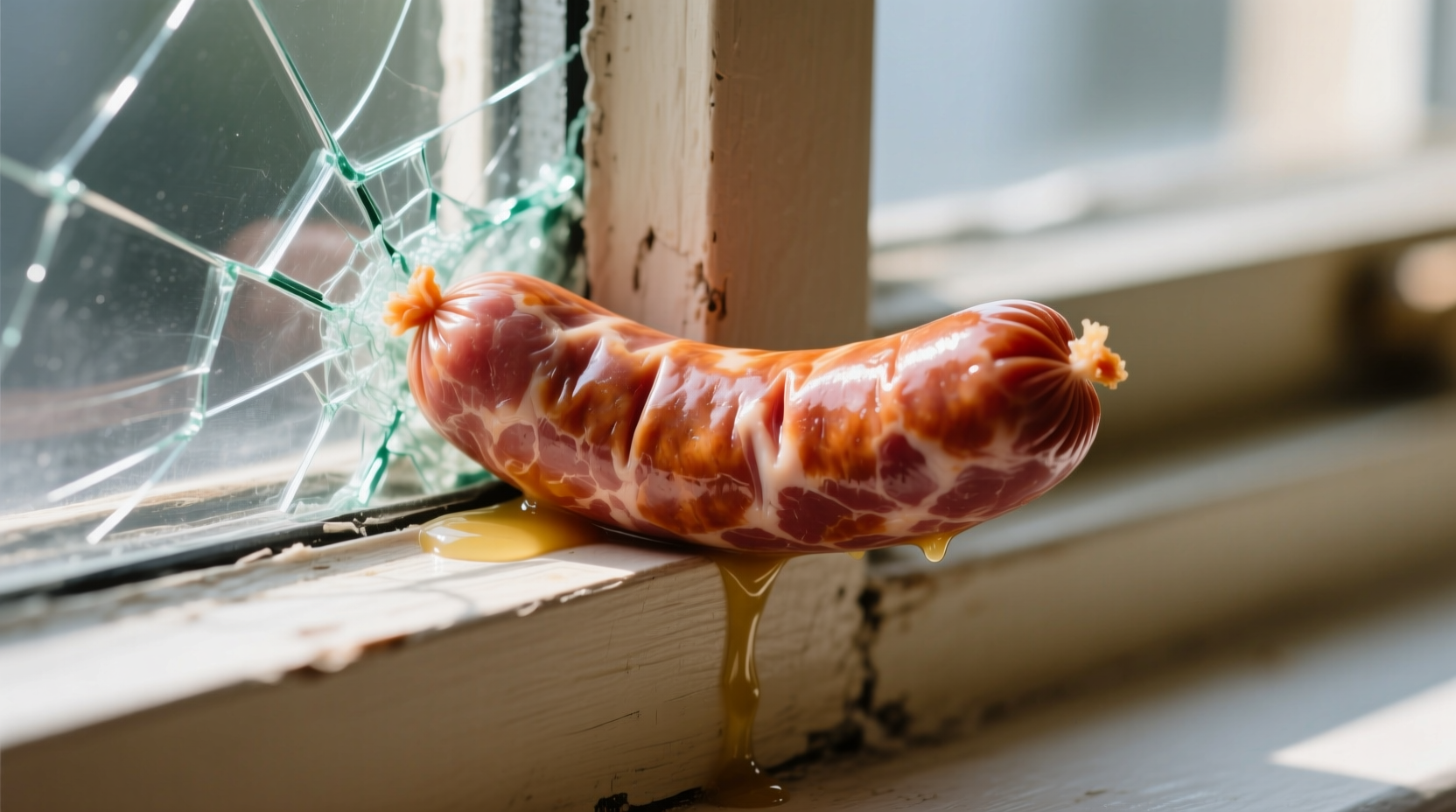
The concept of “using sausage as a temporary caulking solution” does not refer to a culinary practice but rather an improvised survival technique. In this context, \"sausage\" refers to dense, cured, fatty meat products—typically smoked sausages such as kielbasa, andouille, or salami—that possess pliable yet cohesive textures when manipulated. The term \"caulking\" here means filling a gap or crack to prevent the passage of air, water, or gas under low pressure.
This method is not intended as a permanent fix nor suitable for high-pressure or high-temperature environments. Instead, it functions as a stopgap measure in emergency situations where no proper sealing materials are available. Historical accounts from military engineers, maritime crews, and survivalists have occasionally referenced the use of foodstuffs—including fats, doughs, and meats—for temporary repairs. Among these, sausage stands out due to its structural integrity, malleability, and fat content, which can swell and conform to irregular surfaces when compressed.
Key Characteristics of Sausage Relevant to Caulking
The effectiveness of sausage in a sealing role depends on several inherent physical and chemical traits:
| Characteristic | Description |
|---|---|
| Fat Content | Sausages contain animal fat (typically pork or beef), which softens at moderate temperatures and can fill micro-gaps by flowing slightly under pressure. |
| Cohesiveness | Properly made sausages maintain structural integrity when compressed, resisting disintegration better than loose ground meat. |
| Plasticity | Smoked or semi-dry sausages can be molded by hand into shapes that conform to uneven surfaces. |
| Swelling Capacity | When exposed to moisture, some components in sausage (proteins and connective tissues) may absorb water and expand slightly, enhancing the seal. |
| Adhesion | Fatty, slightly sticky surfaces allow the sausage to adhere moderately well to metal, wood, or plastic. |
| Biodegradability | A major limitation: sausage will degrade over time, especially in warm or humid conditions, attracting pests and developing odor. |
Practical Usage: How to Use Sausage as a Temporary Sealant
The application of sausage as a caulking substitute requires careful preparation and realistic expectations. It should only be considered when standard materials are inaccessible and the leak poses an immediate risk—such as a slow water drip in a remote cabin, a minor air leak in a makeshift shelter, or a cracked fuel line in a vintage vehicle during a backcountry recovery operation.
Step-by-Step Application Guide
- Assess the Leak: Confirm the leak is low-pressure and non-toxic. Never use this method on potable water lines, gas lines under pressure, or electrical conduits.
- Select the Right Sausage: Choose a firm, dry-cured or smoked sausage with visible marbling (fat distribution). Avoid fresh bratwurst or highly spiced varieties with loose binders.
- Prepare the Surface: Clean the area around the crack. Remove debris, grease, and moisture if possible. Dry surfaces yield better initial adhesion.
- Shape the Sausage: Cut a piece slightly larger than the gap. Roll or press it between clean hands to form a rope or plug shape that matches the breach.
- Insert and Compress: Press the sausage firmly into the crack. Use a flat tool (e.g., a knife handle or spoon) to tamp it down and ensure full contact.
- Reinforce (Optional): Wrap the sealed area with duct tape, twine, or cloth to prevent displacement, especially if vibration or movement is expected.
- Monitor Regularly: Check every few hours. Look for signs of leakage, shrinking, or spoilage. Replace within 24–48 hours.
Expert Tip: In cold environments, refrigerated sausage becomes firmer and easier to shape. In warmer settings, work quickly before the fat begins to soften excessively. For best results, combine with a layer of beeswax or chewing gum to extend durability.
Variants & Types of Sausage Suitable for Sealing
Not all sausages are equally effective for this purpose. Success depends on texture, fat ratio, and curing method. Below is a breakdown of common types and their suitability:
- Dry-Cured Salami: High density and low moisture make it ideal for compression. Fat pockets provide sealing capability. Best for narrow cracks.
- Smoked Kielbasa: Moderately firm with good fat content. Easily moldable and widely available. Recommended for general-purpose use.
- Andouille: Coarse grind and smoky casing add grip. Performs well in damp conditions due to preservatives.
- Pepperoni: Too brittle when dried; tends to crumble. Not recommended unless softened first.
- Fresh Sausage (e.g., Italian or Breakfast): High moisture and lack of structural binding cause rapid failure. Avoid entirely.
- Vegetarian Sausage: Typically too soft, watery, and lacking in fat. Will not hold shape or seal effectively.
| Type | Sealing Suitability | Recommended Use Case |
|---|---|---|
| Dry-Cured Salami | ★★★★☆ | Narrow cracks in wooden or metal surfaces |
| Smoked Kielbasa | ★★★★★ | General-purpose emergency sealing |
| Andouille | ★★★★☆ | Damp environments, outdoor repairs |
| Pepperoni | ★☆☆☆☆ | Not recommended |
| Fresh Pork Sausage | ☆☆☆☆☆ | Unsuitable |
Comparison with Similar Improvised Sealants
Sausage is not the only food-based material used in emergency repairs. However, its unique composition gives it advantages and disadvantages compared to other household items.
| Material | Advantages | Disadvantages | Compared to Sausage |
|---|---|---|---|
| Chewing Gum | Sticky, readily available, moldable | Hardens over time, poor heat resistance | Less durable; sausage has better cohesion |
| Bread Dough | Expands when wet, fills gaps well | Rotates quickly, attracts rodents | Worse longevity; sausage resists breakdown longer |
| Butter or Lard | Excellent fat-based sealing, waterproof | Liquefies easily, slippery | Better water resistance but harder to contain |
| Peanut Butter | Sticky, high oil content | Attracts insects, spoils fast | Similar stickiness but less structural support |
| Silicone Caulk (Standard) | Durable, waterproof, long-lasting | Requires tools, not always available | Sausage is inferior but accessible in emergencies |
Sausage strikes a balance between structural integrity and sealing ability, making it one of the more reliable food-based options when engineered materials are absent.
Historical and Practical Context
The use of organic materials for emergency sealing dates back centuries. Sailors in the Age of Exploration often used tallow, oakum (tarred fiber), and even animal entrails to patch hull leaks. During World War II, field mechanics sometimes resorted to greasy rags, rubber from tires, or preserved meats to keep vehicles running. There are anecdotal reports from Arctic explorers who used frozen meat strips to plug ventilation gaps in sledges.
In modern survival training, instructors occasionally demonstrate the principle using sausage to illustrate the broader concept of resourcefulness. While not taught as standard protocol, it exemplifies how understanding material properties—such as viscosity, compressibility, and adhesion—can lead to innovative fixes.
\"In a true survival situation, the difference between success and failure isn't always gear—it's the ability to see potential in what others discard. A salami isn't just food; it's fat, protein, and structure in one package.\" — Dr. Elena Torres, Wilderness Survival Instructor, National Outdoor Leadership School (NOLS)
Practical Tips & FAQs
Can any type of sausage work?
No. Only firm, fatty, cured sausages with low moisture content are suitable. Fresh or raw sausages will disintegrate immediately under pressure or when exposed to moisture.
How long will a sausage seal last?
Typically 12 to 48 hours, depending on temperature, humidity, and mechanical stress. In cool, dry conditions, it may hold for up to two days. In hot or wet environments, failure can occur within hours.
Is this safe for drinking water systems?
No. Even if the leak is temporarily stopped, sausage introduces biological contaminants and will decompose, creating health hazards. This method must never be used on potable water lines.
Can I cook with the sausage afterward?
Absolutely not. Once used as a sealant, the sausage is contaminated with dirt, microbes, and potentially toxic substances from the surface it was applied to. Dispose of it safely after use.
What are better alternatives if I don’t have sausage?
If sausage is unavailable, consider:
- Beeswax mixed with cotton fibers
- Duct tape layered over a fabric patch
- Epoxy putty (if stored in survival kit)
- Chewing gum combined with foil
Does temperature affect performance?
Yes. Cold temperatures improve sausage’s rigidity, making it easier to shape and insert. Heat causes fat to melt, reducing effectiveness. Ideal operating range: 40°F to 70°F (4°C to 21°C).
Will animals be attracted to the repair?
Yes. The scent of meat will attract rodents, insects, and wildlife. If the repair is outdoors or in a storage area, monitor for interference and reinforce with physical barriers like wire mesh or metal cladding.
Checklist: When Considering Sausage as Caulk
- ☑ Leak is low-pressure (water drip, air draft)
- ☑ No safer materials available
- ☑ Surface is accessible and cleanable
- ☑ Environment is cool and dry
- ☑ Repair is temporary (under 48 hours)
- ☑ Not near food, water, or electrical sources
Summary & Key Takeaways
Using sausage as a temporary caulking solution is an unconventional but technically plausible method in emergency scenarios. Its effectiveness stems from the combination of fat content, structural cohesiveness, and malleability found in cured, smoked sausages like kielbasa or salami. While not a substitute for proper repair materials, it can serve as a functional stopgap for minor leaks in non-critical systems.
Key points to remember:
- Sausage works best in low-pressure, low-moisture environments.
- Only cured, fatty sausages should be used—never fresh or raw varieties.
- The seal is temporary and degrades within 1–2 days.
- It is unsafe for potable water, gas lines, or electrical applications.
- Always follow up with a permanent repair as soon as possible.
This technique underscores a fundamental principle in survival and improvisation: understanding the physical properties of everyday objects expands your problem-solving capacity. While sausage is primarily a food, its secondary utility in crisis situations highlights the value of creative thinking in extreme conditions.
Final Note: Keep this method in your mental toolkit, not your pantry. Store proper sealing materials—such as marine-grade epoxy, silicone caulk, or multi-use putty—for reliable, safe repairs. Reserve sausage for meals, not maintenance—unless absolutely necessary.




 浙公网安备
33010002000092号
浙公网安备
33010002000092号 浙B2-20120091-4
Comments
No comments yet. Why don't you start the discussion?