
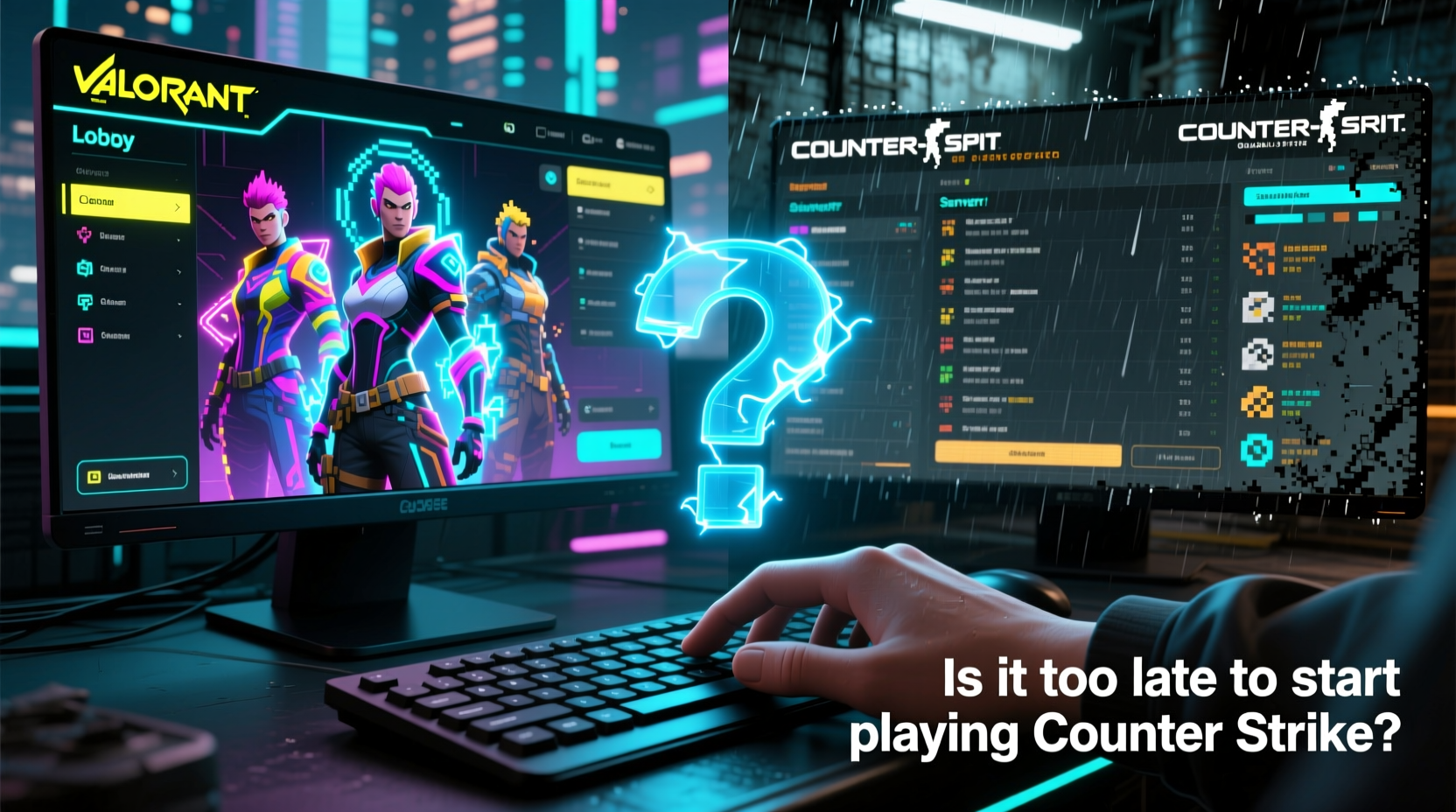
For years, Counter-Strike: Global Offensive (CS:GO) has stood as one of the most influential first-person shooters in gaming history. With its tactical depth, competitive integrity, and dedicated global community, CS:GO shaped the modern esports landscape. But in recent years, Riot Games’ Valorant has surged in popularity—blending precise gunplay with agent-based abilities and a sleek, accessible design. As new players weigh their options, a common question arises: Is it too late to start playing Counter-Strike?
The answer isn’t just about timing—it’s about understanding what each game offers, how they differ, and whether CS:GO still provides a meaningful experience for newcomers in 2024 and beyond.
Gameplay Philosophy: Tactics vs. Abilities
At its core, CS:GO emphasizes realism, economy management, and mechanical precision. Every round matters. A single misstep—poor positioning, incorrect utility usage, or a missed clutch—can cost your team the match. The game rewards patience, map knowledge, and disciplined teamwork over flashy plays or individual heroics.
In contrast, Valorant introduces a layer of character-driven strategy. Each agent brings unique abilities—smokes, flashes, healing, recon—that influence engagements before shots are even fired. This shifts the dynamic from pure gun skill to coordinated ability execution. While aim remains critical, success often hinges on synergy between agents and creative use of tools.
This fundamental difference shapes player progression. In CS:GO, mastery comes from repetition: learning spray patterns, mastering recoil control, memorizing callouts, and internalizing bombsite rotations. In Valorant, you’re also learning cooldowns, ability synergies, and when to sacrifice utility for information.
Community and Accessibility: Who’s Still Playing CS:GO?
Despite the rise of Valorant, CS:GO—now rebranded as Counter-Strike 2—still commands a massive player base. As of mid-2024, Steam charts show an average of over 800,000 concurrent players daily, with peak times exceeding 1.2 million. That’s not decline—it’s sustained dominance.
The community remains active across all skill tiers. From casual Wingman matches to high-elo Premier mode, there’s room for everyone. Major tournaments like BLAST Premier, ESL Pro League, and regional leagues continue to draw millions in viewership, proving that competitive interest hasn’t waned.
Meanwhile, Valorant thrives on accessibility. Its matchmaking system prioritizes balanced teams, and the agent-based design lowers the entry barrier for less mechanically gifted players. Riot’s ranked system is forgiving, and the overall tone is more inclusive, especially for younger audiences.
But here’s the truth: CS:GO’s community isn’t shrinking—it’s maturing. Veterans who’ve played for a decade still log in daily. Newcomers are welcomed, though the learning curve can feel steep. Toxicity exists, as in any competitive online game, but finding a consistent team or joining a training server can dramatically improve the experience.
“CS:GO doesn’t care how old you are or when you started. It only cares if you’re willing to learn.” — Henrik \"FNS\" Rosen, former professional player and analyst
Learning Curve Comparison: How Long to Get Good?
Let’s be honest: CS:GO has one of the steepest learning curves in gaming. Unlike Valorant, where agents can carry rounds with well-timed abilities, CS:GO demands consistency in mechanics and decision-making. There’s no respawning, no second chances. One life per round means every mistake is permanent.
New players often struggle with:
- Understanding economy management (when to save, when to force buy)
- Mastering recoil patterns across different weapons
- Navigating complex map geometries and callout systems
- Reacting to smokes, flashes, and molotovs under pressure
Valorant, by comparison, structures progression more clearly. Agents have defined roles—Initiator, Duelist, Controller, Sentinel—and tutorials walk players through basic ability usage. The game teaches you step-by-step, whereas CS:GO expects you to figure things out through trial and error.
That said, CS:GO’s difficulty is also its strength. The sense of accomplishment from landing your first AWP flick, executing a perfect execute strategy, or winning a 1v3 clutch is unparalleled. The grind builds resilience and deep tactical understanding.
Timeline to Competency in CS:GO
- Week 1–2: Learn map layouts, basic weapon handling, and grenade lineups.
- Month 1: Play Deathmatch and Aim Botz servers to improve tracking and flicking.
- Month 2–3: Join Casual or Wingman games; focus on positioning and communication.
- Month 4–6: Enter Competitive mode; study pro demos and practice utility usage.
- 6+ months: Develop consistent performance, join a team, or participate in scrims.
Side-by-Side: Valorant vs CS:GO Key Differences
| Feature | CS:GO / CS2 | Valorant |
|---|---|---|
| Core Gameplay | Tactical realism, minimal abilities | Ability-driven, character-focused |
| Learning Curve | Very steep | Moderate, guided progression |
| Player Base (Avg. Concurrent) | 800,000+ | 600,000+ |
| Match Length | 40–60 minutes (30-round max) | 35–50 minutes (best-of-25) |
| Economy System | Complex (saves, eco rounds, full buys) | Simplified (credits reset weekly) |
| Esports Scene | Mature, major tournaments ($1M+ prizes) | Growing rapidly (VCT global reach) |
| Entry Cost | $15 (one-time) | Free-to-play |
| Updates & Support | Ongoing via CS2 engine overhaul | Frequent patches, new agents/maps |
The table shows that while Valorant wins on accessibility and freshness, CS:GO retains advantages in depth, longevity, and competitive rigor. Neither is objectively better—it depends on what you value in a shooter.
Real Example: Starting CS:GO at 28
Meet Jordan, a software developer from Toronto who started playing CS:GO in early 2023 after years of watching Valorant streams. At 28, he worried he was “too old” to compete and assumed the community would reject a beginner.
He began with Deathmatch, spending two weeks just practicing crosshair placement. He joined public Discord servers to find teammates and used YouTube to learn basic smoke lineups for Dust II and Mirage. After a month, he entered his first Competitive match—losing 16–3. Embarrassed, he considered quitting.
Instead, he committed to a routine: 30 minutes of aim training daily, one demo review per week, and playing Wingman with the same duo whenever possible. By month four, he hit Silver IV. Six months in, he cracked Gold Nova I and joined a small semi-pro scrim group.
“I’ll never go pro,” Jordan says, “but I love the challenge. Every round feels like a puzzle. And honestly, people are way friendlier once you show up consistently.”
His story proves that age and experience aren’t barriers. Dedication is.
Is It Too Late to Start CS:GO? The Truth
No. It is not too late to start playing Counter-Strike.
CS:GO—now CS2—has evolved, not faded. Valve’s shift to the Source 2 engine brought improved visuals, physics, and netcode. Maps are being remastered. Matchmaking remains robust. The game is actively maintained, and its legacy ensures ongoing relevance.
More importantly, games aren’t deadlines. You don’t “miss” the window to enjoy something meaningful. Whether you’re 16 or 35, starting CS:GO today means joining a living ecosystem with decades of collective knowledge, vibrant tournaments, and a culture built on respect for skill.
If anything, starting now gives you advantages. You’re not burdened by outdated strategies. You can learn from years of pro footage, optimized training methods, and community guides that didn’t exist in 2012. Modern tools like Aim Lab, Kovaak’s, and in-game coaching bots make progression faster than ever.
Checklist: How to Start Strong in CS:GO
- ✅ Install CS2 and complete the interactive training modes
- ✅ Set sensitivity between 400–800 DPI and adjust in-game eDPI for control
- ✅ Memorize callouts for top maps: Mirage, Inferno, Dust II, Nuke, Anubis
- ✅ Practice spray patterns using Aim Botz or Flick Aim Training
- ✅ Learn one smoke/flash lineup per map to support your team
- ✅ Play Deathmatch daily for 15–30 minutes to sharpen reflexes
- ✅ Watch pro demos (e.g., from NAVI, FaZe, G2) to understand rotations
- ✅ Join a public Discord to find regular teammates
Frequently Asked Questions
Can I switch from Valorant to CS:GO easily?
Some skills transfer—crosshair placement, map awareness, and general FPS instincts—but expect a steep adjustment period. CS:GO’s lack of abilities means you must rely entirely on gun skill and utility. Your first 50 hours may feel frustrating, but persistence pays off.
Will I be toxic in CS:GO lobbies?
Toxicity exists, but it’s not universal. Lower ranks see more frustration, but many players are supportive. Muting negative teammates and focusing on self-improvement reduces stress. Consider playing Wingman or community servers for a friendlier vibe.
Is CS:GO dying because of Valorant?
No. While Valorant captured media attention and attracted younger players, CS:GO maintains a larger concurrent player base and deeper esports infrastructure. The release of CS2 reaffirmed Valve’s commitment. Both games coexist—they serve different preferences.
Final Thoughts: Your Journey Starts Now
The idea that it’s “too late” to start a game reflects a misconception about hobbies and personal growth. Mastery isn’t bound by calendar years. Thousands of players begin CS:GO every month—some teenagers, some in their thirties, even forties. What unites them is a desire to challenge themselves in one of the most demanding, rewarding shooters ever made.
Yes, Valorant is popular. Yes, it’s polished and welcoming. But CS:GO offers something rarer: a test of discipline, precision, and mental endurance. It’s not just a game—it’s a craft.
If you’ve ever watched a pro player defuse a bomb under fire, snipe from long range, or execute a flawless site take, you’ve seen artistry born from thousands of hours. That path is still open. The servers are live. The community is waiting.




 浙公网安备
33010002000092号
浙公网安备
33010002000092号 浙B2-20120091-4
Comments
No comments yet. Why don't you start the discussion?