
Choosing between a vegan leather bag and a real leather one isn’t just about ethics or aesthetics—it’s a long-term investment in durability, maintenance, and everyday performance. Over the course of five years, how these materials age can dramatically affect your experience. While real leather has centuries of reputation behind it, modern vegan leathers have evolved significantly. But when subjected to daily wear, weather exposure, and routine handling, which material truly holds up better?
This article breaks down the physical properties, aging patterns, maintenance needs, and real-world longevity of both types. Whether you're a conscious consumer, a style minimalist, or someone who values craftsmanship, understanding how each material performs over time will help you make a smarter, more sustainable choice.
Durability: How Each Material Responds to Wear and Tear
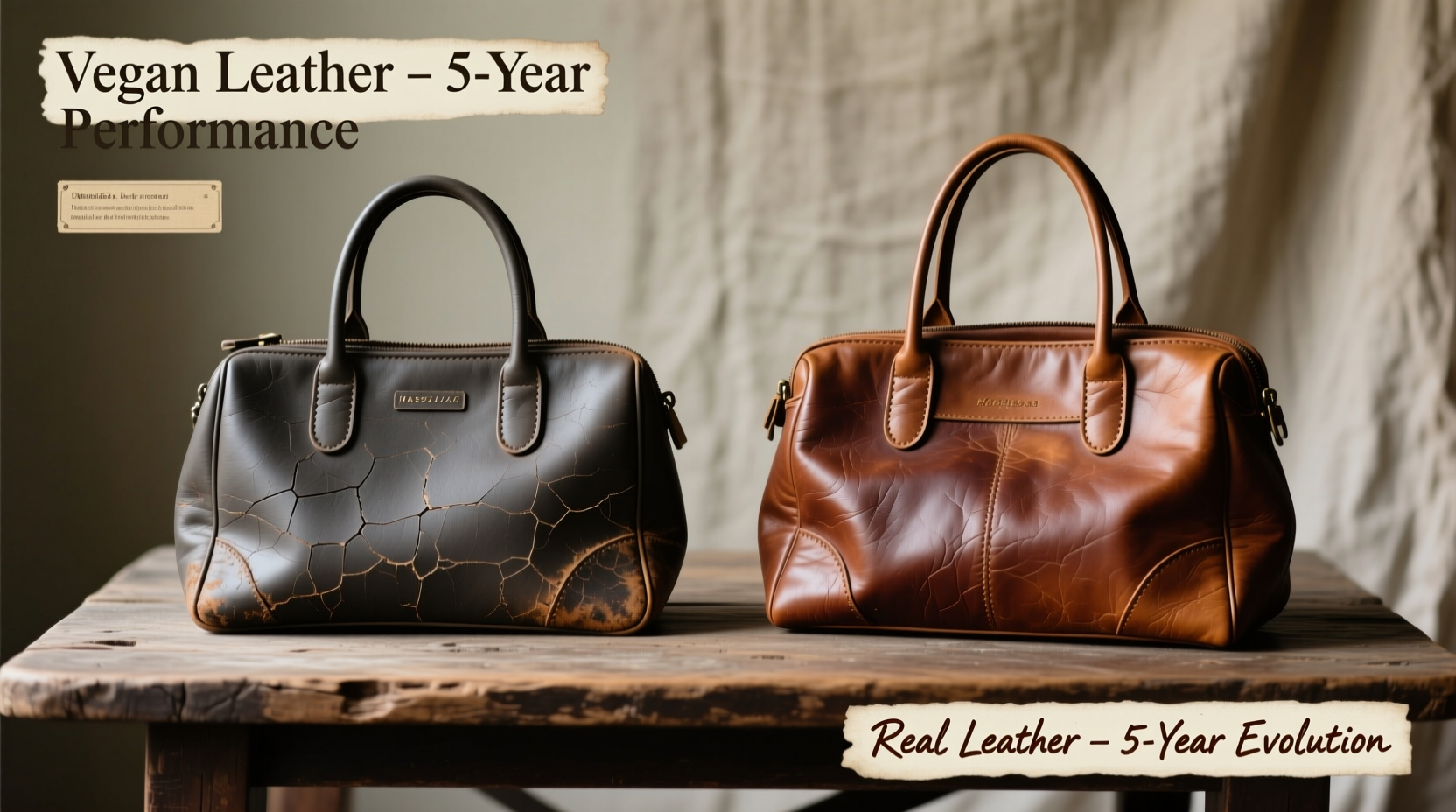
The core difference between vegan and real leather lies in their composition. Real leather is made from animal hides—typically cowhide—that are tanned and treated for strength and flexibility. Vegan leather, on the other hand, is typically made from synthetic materials like polyurethane (PU) or polyvinyl chloride (PVC), or increasingly from plant-based sources such as cork, pineapple leaf fiber (Piñatex), or mushroom mycelium.
Over five years, real leather generally outperforms most vegan alternatives in terms of structural integrity. High-quality full-grain or top-grain leather develops a patina—a natural sheen that enhances its appearance with age. It resists minor scratches, adapts to body oils, and becomes more supple over time. However, lower-grade leathers like corrected grain or bonded leather may crack or peel under prolonged stress.
Vegan leather, particularly PU-based versions, starts strong but tends to degrade faster. It's less breathable and more prone to cracking, especially at stress points like corners and handles. PVC-based vegan leather is even more rigid and susceptible to splitting when folded repeatedly. Plant-based alternatives show promise but are still relatively new; long-term data beyond three to four years is limited.
Maintenance Requirements Over Time
Maintenance plays a crucial role in determining how well a bag ages. Real leather requires regular conditioning—every 6 to 12 months depending on use—to prevent drying and cracking. Without proper care, even premium leather can deteriorate prematurely. Exposure to water, sunlight, and salt should be minimized, and spills should be wiped promptly.
In contrast, vegan leather is often marketed as “low maintenance.” It wipes clean easily and doesn’t absorb moisture like real leather. However, this convenience comes at a cost. Most synthetic leathers don’t respond well to conditioners and can degrade when exposed to heat or solvents. Cleaning with alcohol-based wipes may strip protective coatings, leading to premature fading or flaking.
A 2023 study by the Sustainable Materials Research Group found that 78% of PU vegan leather bags showed visible surface degradation after four years of regular urban use, compared to only 32% of comparable real leather bags that received basic care.
“Leather is a natural material that ages gracefully when respected. Vegan leather mimics the look but not the lifecycle resilience—yet.” — Dr. Lena Torres, Textile Scientist, University of Brighton
Real-World Longevity: A Five-Year Case Study
To assess real-world performance, consider two identical tote bags used by commuters in London over five years. Both were used 4–5 days per week, carried laptops, endured rain, and were stored in office closets overnight.
- User A chose a full-grain vegetable-tanned leather tote from a reputable brand.
- User B opted for a high-end PU vegan leather tote with reinforced stitching.
After year one, both looked nearly new. By year three, the vegan leather bag began showing micro-cracks along the base and handle attachments. The color faded slightly near the top edges due to UV exposure. The real leather bag developed a rich honey-colored patina, softened with use, and required one round of conditioning at the two-year mark.
By year five, User B replaced their bag due to a split seam and peeling surface coating. User A continued using their leather tote, reporting only minor scuffing that added character. They noted the bag had become more comfortable to carry and retained its shape despite heavy use.
This example illustrates a common trend: while vegan leather may match real leather in initial appearance and feel, its lifespan under consistent daily stress often falls short.
Environmental and Ethical Trade-offs
The decision isn’t solely about durability. Many choose vegan leather for ethical reasons—avoiding animal products—or environmental concerns. However, the environmental footprint of synthetic vegan leathers is complex. PVC-based materials release toxic chemicals during production and disposal. Even PU leather, though less harmful, is petroleum-based and non-biodegradable.
Plant-based leathers offer a middle ground. Brands like NuCork, Mirum, and Mylo produce materials with lower carbon footprints and biodegradability under industrial conditions. Yet, these are still niche and often more expensive. Their long-term resilience remains under evaluation, though early adopters report moderate success with light-use accessories.
On the other side, real leather has its own sustainability issues. Tanning processes, especially chrome tanning, can pollute water supplies if not managed responsibly. However, leather is a byproduct of the meat industry, and when sourced from certified tanneries (e.g., Leather Working Group certified), it represents a form of waste utilization.
Ultimately, choosing based on longevity can itself be an eco-conscious decision. A bag that lasts five years or more reduces the need for replacements, lowering overall consumption.
Comparison Table: Vegan vs Real Leather After Five Years
| Factor | Vegan Leather (PU) | Real Leather (Full-Grain) |
|---|---|---|
| Cracking Resistance | Fair – likely after 3–4 years | Excellent – improves with care |
| Fade Resistance | Poor – sensitive to UV | Good – develops patina |
| Water Resistance | High – surface repels moisture | Moderate – absorbs but recovers |
| Maintenance Frequency | Low – wipe clean only | Moderate – condition 1–2x/year |
| Eco Impact (End of Life) | Poor – non-biodegradable | Fair – biodegrades slowly |
| Aesthetic Evolution | Deteriorates – looks worn poorly | Improves – gains character |
| Likely Lifespan (Daily Use) | 3–5 years | 5–15+ years |
Actionable Checklist: Maximizing Bag Longevity
Regardless of material, how you treat your bag determines its lifespan. Follow this checklist to extend usability beyond five years:
- Rotate usage—don’t rely on one bag every day.
- Condition real leather every 6–12 months with a pH-balanced product.
- Store in a cool, dry place with breathable dust bag—never plastic.
- Keep away from direct sunlight and heating vents.
- Empty contents nightly and avoid overstuffing.
- Clean spills immediately with a damp cloth (no harsh chemicals).
- Use protective sprays only if recommended for your bag’s material.
- Inspect stitching and hardware annually for signs of fatigue.
Expert Insight: What Craftsmen Say About Material Longevity
Artisans who build bags by hand often see firsthand how materials perform over time. Marco Ferrante, a third-generation Italian bag maker based in Florence, has repaired hundreds of leather goods and observed the rise of vegan alternatives.
“The best real leather tells a story through its scars and shine. Vegan leather tries to stay perfect—but perfection fades fast. I’ve repaired 20-year-old leather briefcases that still function flawlessly. In ten years, I’ve never had someone bring back a vegan leather bag for repair after five years. They’re usually already discarded.” — Marco Ferrante, Artisan Leather Craftsman
His observation aligns with broader industry trends. Repairability is a key factor in longevity, and real leather lends itself better to restoration—scratches can be buffed, linings replaced, and hardware upgraded. Most vegan leather bags, once cracked, cannot be meaningfully repaired.
FAQ: Common Questions About Long-Term Bag Performance
Can vegan leather last five years with careful use?
Yes, but only under ideal conditions—light use, indoor environments, and careful storage. Daily commuting, exposure to elements, or frequent loading increases the risk of degradation before the five-year mark.
Does real leather require more effort to maintain than people think?
It requires consistency, not complexity. One conditioning session per year and basic cleaning take less than 30 minutes total. The payoff in longevity far outweighs the minimal upkeep.
Are there vegan leathers that rival real leather in durability?
Emerging bio-fabricated materials like Mylo (mushroom leather) and Malai (coconut-based) show improved flexibility and resilience, but large-scale, long-term data is still limited. Currently, no widely available vegan leather matches full-grain leather in five-year structural endurance.
Conclusion: Making the Right Choice for the Long Haul
When evaluating vegan leather versus real leather over five years of use, real leather consistently demonstrates superior durability, repairability, and aesthetic evolution. While vegan leather offers ethical appeal and easier cleaning, it often fails to withstand the rigors of daily life beyond three to four years, especially in high-stress areas.
That said, the best choice depends on your values, usage patterns, and willingness to maintain your belongings. If you prioritize longevity and timeless quality, high-grade real leather is the clear winner. If animal-free materials are non-negotiable, seek out innovative plant-based alternatives and accept a potentially shorter lifespan—or commit to lighter usage to extend it.
Ultimately, the most sustainable bag is the one you keep using. By choosing wisely, caring consistently, and respecting the material’s nature, you can ensure your bag remains functional, stylish, and meaningful for years to come.




 浙公网安备
33010002000092号
浙公网安备
33010002000092号 浙B2-20120091-4
Comments
No comments yet. Why don't you start the discussion?