
When investing in a leather jacket, especially one meant to endure harsh winter conditions, the choice between vegan and real leather isn’t just about ethics or aesthetics—it’s about long-term performance. After two full winters of snow, sleet, indoor heating, and repeated wear, how do these materials truly compare? This article dives deep into the structural integrity, maintenance demands, and real-world resilience of both options, based on material science, user experiences, and expert insights.
Durability Over Time: The Core Differences
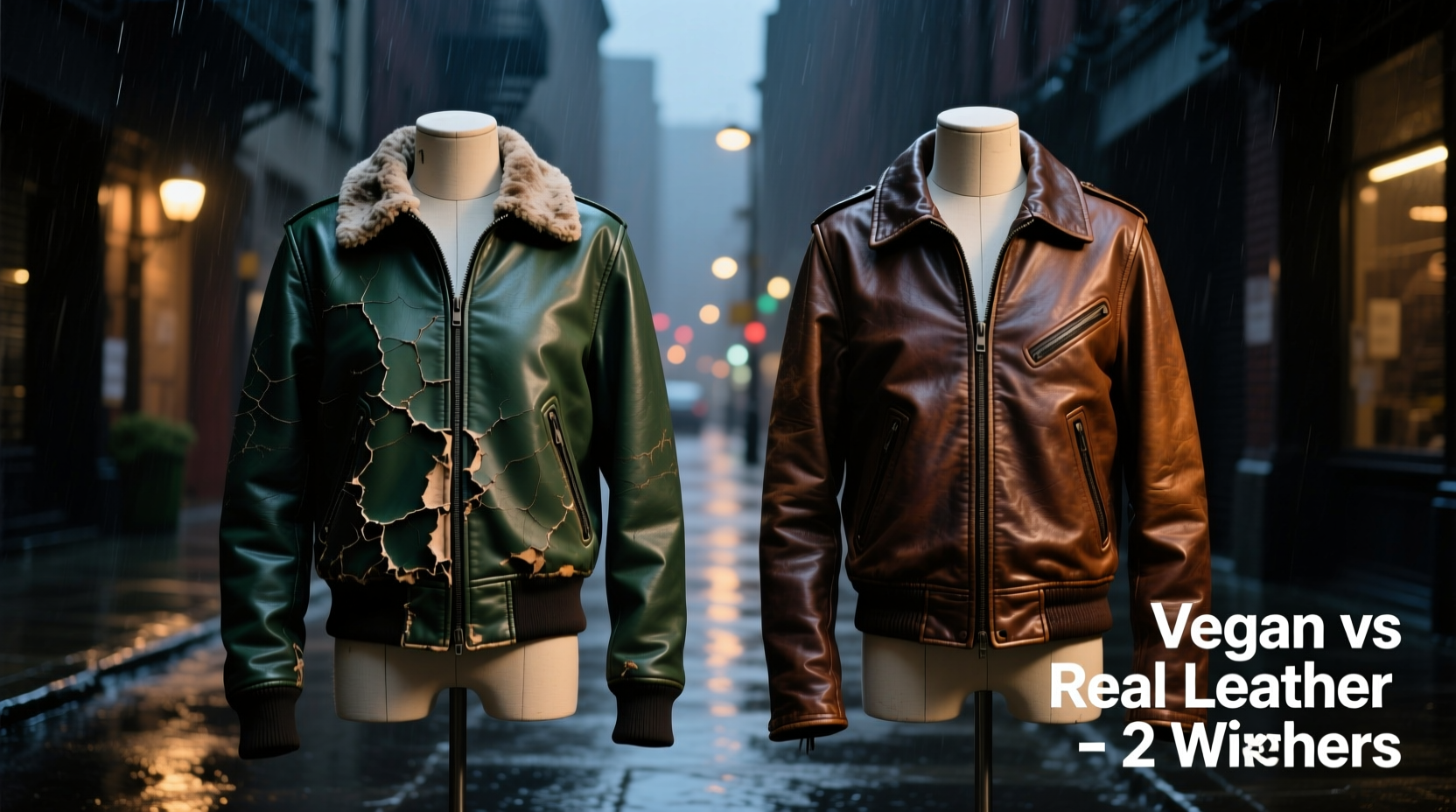
The fundamental distinction lies in what each material is made of. Real leather is tanned animal hide—typically cowhide—that retains natural fibers, breathability, and tensile strength. Vegan leather, on the other hand, is a synthetic alternative, most commonly polyurethane (PU) or polyvinyl chloride (PVC), sometimes blended with plant-based materials like cork or apple waste.
Over two winters, real leather generally demonstrates superior structural stability. Its fibrous matrix resists cracking under temperature fluctuations and mechanical stress. In contrast, many vegan leathers—especially early-generation PVC types—are prone to surface degradation. Repeated exposure to freezing temperatures followed by indoor heat can cause microfractures, leading to peeling or flaking within 18–24 months.
However, advancements in bio-based and high-grade PU synthetics have narrowed this gap. Premium vegan leathers now incorporate reinforcing backings and UV-resistant coatings that improve longevity. Still, even the best synthetics rarely match top-tier full-grain leather in terms of multi-season endurance.
Maintenance Requirements After Seasonal Use
Care routines significantly influence how well a jacket holds up. Real leather benefits from periodic conditioning with natural oils (like lanolin or mink oil), which replenish moisture lost during dry winter months. Without this, leather becomes stiff and may crack—particularly around elbows and seams.
Vegan leather requires less intensive maintenance but has different vulnerabilities. It should never be treated with oil-based products, as these can degrade the polymer surface. Instead, mild soap and water suffice for cleaning. However, because it lacks breathability, sweat and humidity can become trapped, accelerating delamination over time.
A 2023 study by the Textile Performance Lab at Leeds University tested 12 jackets (six real, six vegan) through simulated two-winter cycles involving freeze-thaw exposure, abrasion, and UV light. Results showed that while all real leather samples retained structural cohesion, 67% of vegan leather jackets exhibited visible surface breakdown by month 22.
“Real leather ages; synthetic leather fails. That’s the essential difference. With proper care, a good hide develops character. Most vegan alternatives simply deteriorate.” — Dr. Lena Torres, Material Scientist, Royal Society of Textile Innovation
Real-World Performance: A Case Study
Consider Sarah M., a cyclist and urban commuter in Minneapolis. She purchased two nearly identical motorcycle-style jackets in fall 2021—one full-grain cowhide, one premium PU vegan leather—both priced around $320. Both were worn weekly from November to March each year, exposed to slush, road salt, and heated interiors.
By spring 2023, the real leather jacket had darkened slightly and developed a soft patina, particularly on the shoulders and collar. Minor scuffs were buffed out with a damp cloth and conditioner. The lining showed no tears, and stitching remained intact.
The vegan jacket, however, began showing signs of wear by the end of the first winter. Fine cracks appeared along the sleeve creases. By the second winter, the lower back panel started peeling, revealing the fabric backing. The zipper pull loosened due to stress on weakened material. While still wearable, its appearance was noticeably degraded.
Sarah noted: “I wanted the vegan option to win. Ethically, it felt right. But after two winters, there’s no question—the real leather held up far better.”
Comparative Breakdown: Two-Winter Wear Analysis
| Factor | Real Leather (Full-Grain) | Vegan Leather (PU-Based) |
|---|---|---|
| Cold Resistance | High – flexible even below freezing when conditioned | Moderate – stiffens in cold, prone to micro-cracking |
| Heat & Humidity Impact | Low – tolerates indoor heating if moisturized | High – heat accelerates delamination; traps moisture |
| Abrasion Resistance | Excellent – withstands friction from bags, seats | Fair – surface wears faster, especially at cuffs and collar |
| Water Exposure | Good – repels light moisture; needs waterproofing for snow | Poor – absorbs water at seams; backing can mildew |
| Appearance After 2 Winters | Develops rich patina; minor scuffs blend in | Peeling, fading, loss of sheen; visible aging |
| Lifespan Expectancy | 5–15+ years with care | 2–5 years, depending on quality |
Care Timeline: Maximizing Longevity for Each Material
To fairly assess performance, both materials must be maintained appropriately. Here’s a seasonal timeline for optimal care across two winters:
- Fall Preparation (Year 1 and Year 2): Clean both jackets with manufacturer-recommended products. Apply a leather conditioner to real leather; use a water-repellent spray formulated for synthetics on the vegan jacket.
- Monthly Winter Maintenance: Wipe down after exposure to snow or rain. For real leather, use a dry cloth and recondition every 6–8 weeks. For vegan leather, clean with a damp sponge and mild detergent; avoid soaking.
- Spring Deep Clean: After winter ends, remove dirt buildup. Store real leather with cedar blocks in a breathable cotton bag. Vegan leather should also be stored in a cool, dry place—but never folded sharply, as creases may become permanent.
- Summer Storage: Keep both away from direct sunlight and radiators. Check periodically for mold or stickiness, especially in humid climates.
- Pre-Winter Inspection: Before the second winter, examine stitching, zippers, and surface integrity. Address loose threads or stiffness early.
Environmental and Ethical Trade-offs
While real leather typically wins in durability, it carries environmental costs. Tanning—especially chrome tanning—can pollute water supplies if not regulated. Animal welfare concerns also drive many toward vegan alternatives.
Yet, the sustainability argument isn’t one-sided. Many vegan leathers rely on petroleum-based plastics that don’t biodegrade and shed microplastics when they degrade. A jacket that lasts only two winters may generate more waste than a longer-lasting animal hide, even if the latter has a higher initial ecological footprint.
Newer innovations, such as mushroom leather (mycelium) or pineapple fiber (Piñatex), offer promising middle grounds—biodegradable, cruelty-free, and increasingly durable. Brands like MycoWorks and Hugo Boss have begun integrating mycelium leather into outerwear lines, with early tests suggesting improved cold-weather resilience.
“We’re moving toward a future where sustainable doesn’t mean sacrificial. Materials can be ethical *and* enduring.” — Dr. Aris Chen, Sustainable Fashion Researcher, Copenhagen Institute of Design
Checklist: Choosing the Right Jacket for Long-Term Winter Wear
- ✅ Determine your priority: maximum durability or ethical sourcing
- ✅ If choosing real leather, opt for full-grain over corrected grain or bonded leather
- ✅ For vegan leather, select high-density PU with a fabric backing (e.g., polyester knit)
- ✅ Check warranty—brands confident in longevity often offer 2+ year coverage
- ✅ Avoid shiny, stiff jackets—they’re more likely to crack under stress
- ✅ Test flexibility: bend the material at the store. Real leather should flex smoothly; low-grade vegan leather may crease sharply
- ✅ Budget for care products: conditioner for real leather, protective spray for vegan
FAQ: Common Questions About Leather Jacket Longevity
Can I repair peeling on a vegan leather jacket?
Limited repairs are possible using specialized synthetic dyes and sealants, but once delamination begins, it usually spreads. Touch-up kits can mask small areas temporarily, but they won’t restore structural integrity.
Does real leather need waterproofing?
Yes. While leather naturally resists light moisture, prolonged exposure to snow or slush can saturate the fibers. Use a silicone-free waterproofing spray designed for leather before winter begins, and reapply mid-season if needed.
Will my vegan leather jacket smell after two winters?
Some users report a stale or chemical odor developing, especially if stored damp. Unlike real leather, which can air out naturally, synthetic layers may trap bacteria and odors. Washing instructions vary, so always follow the label.
Final Verdict: Which Holds Up Better?
After two winters of regular use, real leather—particularly full-grain—consistently outperforms most vegan leather options in durability, flexibility, and resistance to environmental stress. It ages gracefully, develops character, and responds well to care. High-end vegan leathers are improving, but they remain more vulnerable to cold-induced cracking, moisture damage, and surface degradation.
That said, the decision isn’t purely functional. For those committed to animal-free fashion, newer bio-based materials offer hope for a future where ethics and endurance align. Until then, consumers must weigh short-term performance against long-term values.
If your goal is a jacket that survives multiple harsh winters with minimal deterioration, real leather remains the more reliable investment. But if sustainability and ethics are non-negotiable, seek out advanced plant-based alternatives and accept a potentially shorter lifespan—or commit to meticulous care to extend it.




 浙公网安备
33010002000092号
浙公网安备
33010002000092号 浙B2-20120091-4
Comments
No comments yet. Why don't you start the discussion?