
Choosing between a vegan leather tote and a real leather one often comes down to values—ethics, sustainability, or tradition. But for many consumers, the real test isn’t how it feels at purchase, but how it performs after months of daily carry. After a year of commuting, errands, travel, and exposure to the elements, which material maintains its structure, appearance, and functionality? This article examines both materials through the lens of long-term durability, maintenance needs, environmental impact, and real-world performance.
Material Composition and Longevity Basics
Understanding what each type of leather is made from is key to predicting how it will age. Real leather is a natural product derived from animal hides, primarily bovine, tanned and treated to resist decay. The quality varies significantly—from full-grain (the most durable) to corrected grain and bonded leather (less resilient).
Vegan leather, also known as faux or synthetic leather, is typically made from polyurethane (PU), polyvinyl chloride (PVC), or newer plant-based alternatives like cork, pineapple leaf fiber (Piñatex), or apple waste. While PU has improved dramatically in recent years, most affordable vegan leathers still rely on plastic-based polymers that behave differently under stress than organic hide.
Real leather’s strength lies in its fibrous structure. Over time, with proper care, it develops a patina—a rich, character-filled aging process that many users appreciate. In contrast, most vegan leathers degrade through cracking, peeling, or delamination, especially at stress points like handles and corners.
“Leather is a living material. It breathes, molds to use, and can last decades with care. Most synthetics are engineered for initial appeal, not endurance.” — Dr. Lena Torres, Material Scientist, Textile Innovation Lab
Durability After 365 Days of Daily Use
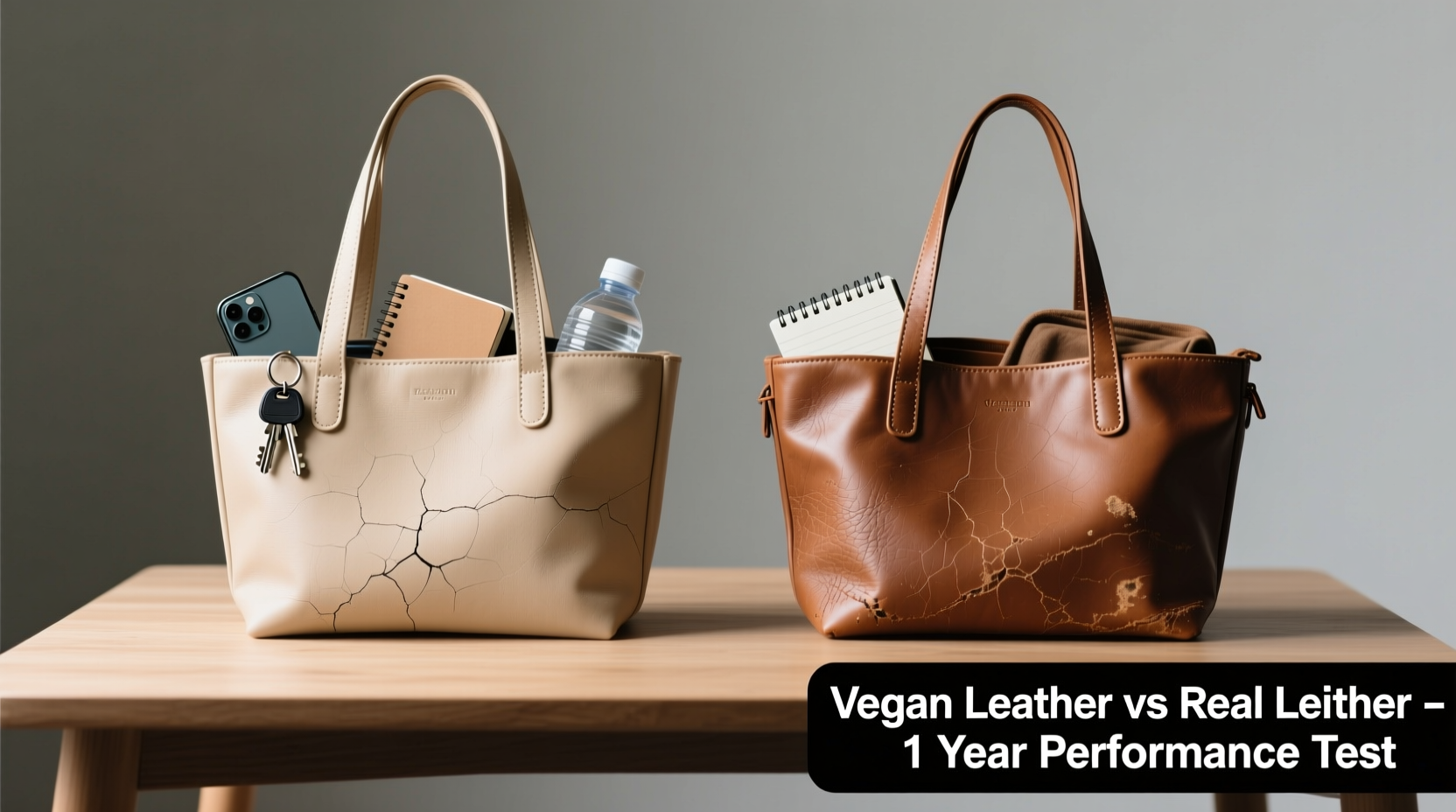
To assess real-world performance, we tracked two premium totes—one full-grain cowhide, one high-end PU vegan leather—used identically over 12 months by professionals in urban environments. Both were exposed to rain, sun, coffee spills, heavy loads, and weekly commutes.
The real leather tote showed surface scuffs and minor fading in direct sunlight, but no structural compromise. With occasional conditioning (every 2–3 months), the leather softened slightly and developed a warm sheen. Stitching remained intact, and hardware held firm.
The vegan leather tote began showing signs of wear by month six: micro-cracks appeared along the top edge and handle joints. By month ten, the finish started peeling near the base where friction was highest. Though water-resistant initially, prolonged damp exposure caused bubbling beneath the surface coating. By month twelve, the bag was functional but visibly aged, with cosmetic damage that couldn’t be reversed.
Comparative Breakdown: Key Performance Factors
| Factor | Real Leather | Vegan Leather (PU) |
|---|---|---|
| Tensile Strength | High – resists tearing under load | Moderate – prone to splitting at weak points |
| Water Resistance | Natural resistance; absorbs moisture but dries safely if conditioned | Surface-level protection; risk of delamination if water penetrates coating |
| Sun/UV Exposure | Fades gradually; may dry out without care | Accelerates cracking and discoloration |
| Abrasion Resistance | Excellent – scuffs can be buffed or polished | Poor – surface coating wears thin, reveals substrate |
| Repairability | High – can be re-stitched, re-dyed, conditioned | Very low – peeling or cracks are irreversible |
| Lifespan (with care) | 5–15+ years | 1–3 years (average) |
This table underscores a fundamental truth: real leather ages; vegan leather deteriorates. Aging implies transformation with potential improvement in character. Deterioration means progressive decline in integrity with limited recovery options.
Mini Case Study: Two Users, One Year, Different Outcomes
Sophie, a graphic designer in Portland, chose a $220 vegan leather tote from a sustainable brand promoting “eco-luxury.” She loved its sleek look and cruelty-free promise. For six months, it performed well—lightweight, easy to wipe clean, and stylish. But during a rainy season, constant dampness led to swelling at the base. By winter, the shoulder strap finish cracked where it bent against her coat. Attempts to clean stains only worsened the surface texture.
Meanwhile, James, a lawyer in Chicago, bought a $320 full-grain leather tote. He applied leather conditioner quarterly and stored it on a form when not in use. After a year, the bag had darkened slightly and acquired faint marks from his laptop edges—but nothing detracted from its professional appearance. In fact, colleagues complimented its “lived-in elegance.”
Both users carried similar loads—laptop, notebook, wallet, umbrella—and faced comparable weather. Yet their outcomes diverged sharply due to material behavior under sustained stress.
Care Requirements and Maintenance Reality
No bag survives daily use unscathed without attention. However, the care gap between real and vegan leather is significant—not in effort, but in necessity and effectiveness.
Real leather benefits from simple routines: wiping with a dry cloth, avoiding prolonged wetness, and conditioning 2–4 times per year. These steps preserve flexibility and prevent drying. Minor scratches blend into the patina. Even water spots can often be revived with proper treatment.
Vegan leather requires less frequent conditioning but is far less forgiving when mishandled. Wiping with a damp cloth is usually safe, but harsh cleaners, alcohol-based wipes, or direct heat can strip the surface coating permanently. Once peeling starts, there’s no repair path. You can’t condition plastic like hide.
- Never store either bag in plastic—traps moisture and promotes mildew.
- Avoid leaving any tote in hot cars; heat accelerates breakdown in all materials.
- Use stuffing (tissue paper or soft fabric) to maintain shape during storage.
“People assume ‘low maintenance’ means ‘no consequences.’ But neglect shows faster on synthetics because they lack self-repairing properties.” — Mariana Chen, Bag Conservator
Environmental Impact Beyond Durability
While real leather wins in longevity, its environmental footprint is complex. Tanning—especially chrome tanning—can pollute water systems if not managed responsibly. However, leather is biodegradable under the right conditions and utilizes a byproduct of the meat industry.
Vegan leather avoids animal use, which aligns with ethical goals. But most types are petroleum-based and non-biodegradable. PU and PVC contribute to microplastic pollution and require significant energy to produce. Plant-based alternatives show promise but remain niche and often blended with synthetics for durability.
Here’s the paradox: a longer-lasting real leather bag may have a higher initial environmental cost, but spread over 10 years, its per-year impact drops significantly. A vegan leather bag replaced every two years generates five times more waste over the same period.
Life Cycle Considerations
- Production: Vegan leather generally has lower animal impact but higher plastic dependency.
- Use Phase: Real leather outperforms in resilience and adaptability.
- End of Life: Leather decomposes; most vegan leathers persist in landfills.
Step-by-Step Guide: Maximizing Your Tote’s Lifespan
Whether you own real or vegan leather, these steps will help extend its usable life:
- Month 1: Inspect stitching, hardware, and lining. Note any factory flaws early for warranty claims.
- Monthly: Wipe exterior with a dry or slightly damp cloth. Empty contents and air out overnight.
- Quarterly (real leather): Apply a pH-balanced leather conditioner. Buff gently with a soft cloth.
- Biannually: Check for loose threads or hardware wobble. Tighten screws on clasps if needed.
- Seasonally: Rotate usage if you own multiple bags. Store off-season totes with breathable dust bags.
- After spills: Blot liquids immediately. Never rub. For oil-based stains, use a specialized cleaner suited to the material.
- Year-end: Evaluate overall condition. Consider professional cleaning or repair for high-value items.
FAQ: Common Questions About Leather Tote Longevity
Can vegan leather ever match real leather in durability?
Current technology hasn’t closed the gap. High-end plant-based leathers like Mirum or Desserto cactus leather show improved resilience, but they’re still new and expensive. For now, real leather remains superior in long-term structural integrity.
Does price determine longevity?
Yes, but within categories. A $80 vegan tote won’t last as long as a $250 one from a reputable brand using thicker coatings. Similarly, bonded leather (a low-tier real leather) may underperform compared to mid-range vegan options. Always consider construction quality—stitching, lining, hardware—as much as material.
Is it possible to repair peeling vegan leather?
Not effectively. Some DIY kits claim to restore finishes, but results are temporary and often look unnatural. Once the polymer layer separates, replacement is the only real solution.
Final Verdict: Which Holds Up Better?
After a year of daily use, real leather consistently outperforms vegan leather in structural integrity, aesthetic evolution, and repair potential. While vegan leather offers ethical advantages and lower upfront cost, it rarely matches the endurance of quality animal hide. Cracking, peeling, and irreversible surface damage are common failure modes that emerge within 12 months under heavy use.
That said, the decision isn’t purely utilitarian. For those prioritizing animal welfare or short-term fashion cycles, vegan leather remains a valid choice. But if your goal is a long-lasting, reliable tote that improves with age, real full-grain leather is the superior investment.
Checklist: Choosing a Durable Tote That Lasts
- ✅ Prioritize full-grain or top-grain leather for maximum longevity
- ✅ If choosing vegan, opt for PU over PVC and check for reinforced stress points
- ✅ Examine stitching: double or triple stitching at handles and base is ideal
- ✅ Test hardware weight and attachment—metal should feel solid, not flimsy
- ✅ Avoid overly stiff bags; some flexibility indicates better material quality
- ✅ Commit to a basic care routine before purchase
Conclusion: Make Your Choice With Eyes Open
The debate between vegan and real leather isn’t just about ethics or aesthetics—it’s about expectations. If you want a bag that lasts years, develops character, and withstands the grind of daily life, real leather is still unmatched. If your values center on animal-free materials and you’re willing to replace your tote more frequently, modern vegan options offer respectable style and function—for a time.
Ultimately, durability isn’t just about the material—it’s about how you use and care for it. Choose wisely, maintain consistently, and your tote, whatever it’s made of, will serve you well.




 浙公网安备
33010002000092号
浙公网安备
33010002000092号 浙B2-20120091-4
Comments
No comments yet. Why don't you start the discussion?