
Determining the authenticity of a designer handbag can be a high-stakes task. With counterfeiters producing increasingly convincing fakes, even seasoned fashion enthusiasts can be misled. One of the most reliable, underutilized methods for spotting a fake is examining the stitch count—the number of stitches per inch along seams, handles, and hardware attachments. Luxury brands maintain strict standards for construction, and deviations in stitching are often the first red flag. Unlike logos or serial numbers, which can be replicated with alarming accuracy, consistent, precise stitching is difficult to reproduce at scale. This guide breaks down how to use stitch count as a diagnostic tool, what to look for across major brands, and how to interpret subtle details that separate genuine craftsmanship from mass-produced imitation.
Why Stitch Count Matters in Authenticity Verification
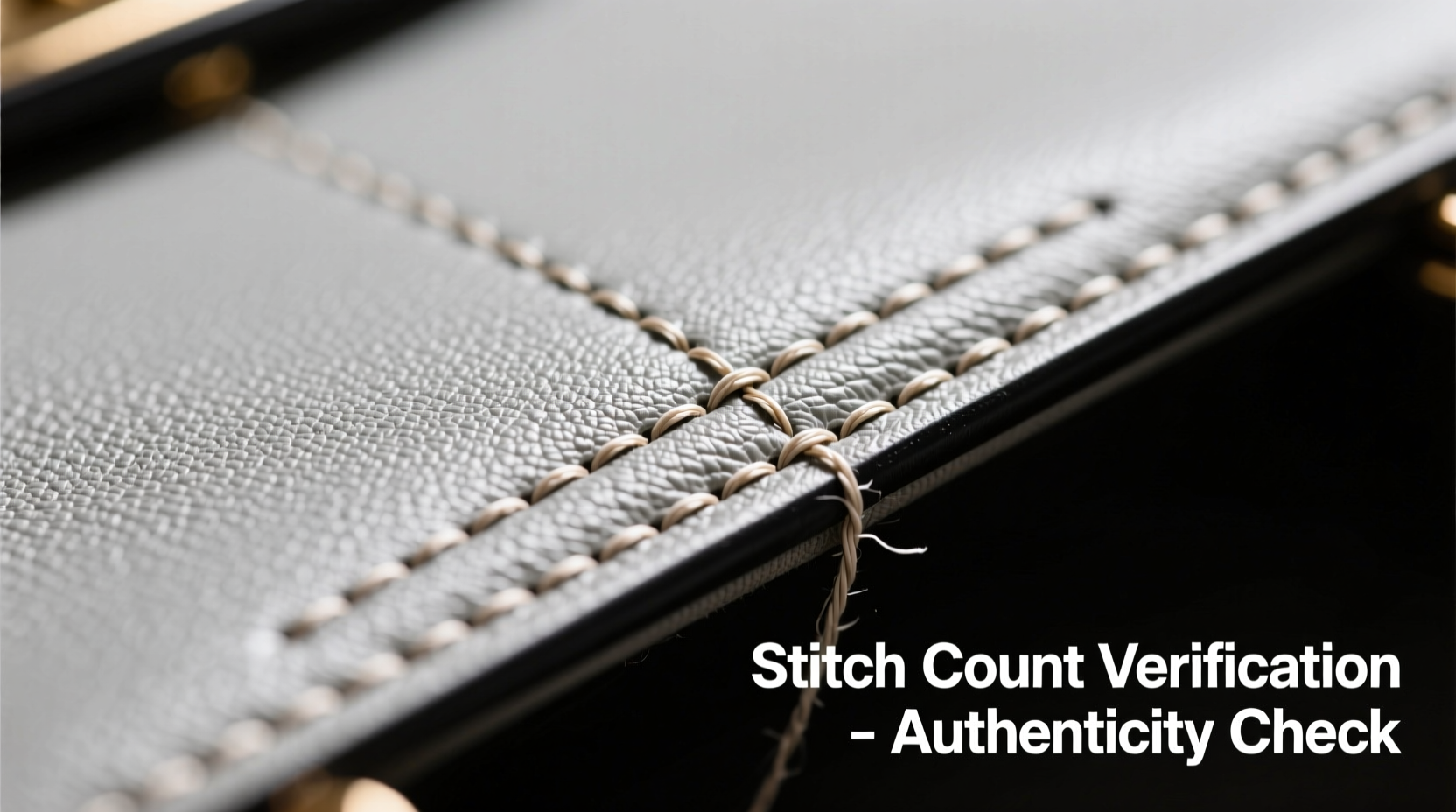
Stitching is more than just functional—it's a hallmark of quality control. High-end designers like Chanel, Hermès, Gucci, and Louis Vuitton invest heavily in skilled artisans and exacting production standards. Each bag undergoes multiple quality checks, including seam integrity, thread tension, and stitch uniformity. The number of stitches per linear inch (SPI) is tightly regulated across collections. Too few stitches indicate rushed work; too many may suggest machine overcompensation or inconsistent tension. Both extremes point to poor craftsmanship or forgery.
Authentic bags typically feature between 6 and 12 stitches per inch, depending on the brand and model. For example, Hermès Birkin bags average 9–10 SPI, while vintage Chanel flap bags consistently show 7–8 SPI. These figures aren’t arbitrary—they reflect structural durability and aesthetic balance. A lower stitch count risks fraying and seam separation; a higher count can make leather stiff and unnatural. Counterfeiters often miss these nuances, either using automated machines that produce erratic patterns or undertrained workers who lack precision.
“Stitching is the skeleton of a bag. If it’s flawed, everything else—hardware, lining, shape—is suspect.” — Isabelle Moreau, Former Quality Inspector at Parisian Atelier
How to Measure Stitch Count: A Step-by-Step Guide
Verifying stitch count doesn’t require specialized tools—just a ruler, magnifying glass, and patience. Follow this process to assess any bag accurately:
- Select a test area: Focus on high-tension zones like handle attachments, side panels, or closure seams. Avoid decorative topstitching unless comparing directly to known authentic models.
- Use a ruler: Align a clear ruler (preferably metric) parallel to the seam. Measure exactly one inch along the stitching line.
- Count visible stitches: Use a magnifying glass to identify each individual stitch. Count only full, complete loops where the needle pierced the material. Do not include partial or overlapping stitches at corners.
- Check consistency: Repeat the measurement at three different points along the same seam. Authentic bags will show minimal variation—no more than ±0.5 stitches per inch.
- Compare thread thickness: Genuine bags use waxed, tightly twisted cotton or polyester thread. It should feel firm and resist snapping when gently pulled. Fake bags often use thinner, glossy thread that unravels easily.
Brand-Specific Stitch Count Standards
Each luxury house adheres to its own internal specifications. Familiarizing yourself with expected ranges helps spot inconsistencies quickly. Below is a comparison of common designer brands and their typical stitch counts:
| Brand | Model Example | Avg. Stitches Per Inch | Thread Type | Common Red Flags |
|---|---|---|---|---|
| Hermès | Birkin 30 | 9–10 | Waxed cotton, hand-pulled | Fewer than 8 SPI; machine stitching visible |
| Chanel | Classic Flap Medium | 7–8 | Double-waxed polyester | More than 9 SPI; irregular spacing |
| Louis Vuitton | Neverfull GM | 8–9 | Poly-cotton blend, UV-resistant | Less than 7 SPI; thread color mismatch |
| Gucci | Jackie 1961 | 10–11 | Synthetic fiber, matte finish | Over 12 SPI; zigzag pattern instead of straight |
| Prada | Re-Edition Nylon | 11–12 | High-tensile nylon | Below 10 SPI; loose tension on corners |
Note that variations exist between vintage and modern pieces. For instance, older Chanel bags (pre-2000) often had slightly looser stitching due to different manufacturing techniques. However, consistency within a single bag remains non-negotiable—even vintage authentic pieces maintain even spacing and clean knots.
What Stitch Quality Reveals Beyond Count
While the number of stitches is critical, the overall quality provides deeper insight. Examine the following characteristics:
- Spacing Uniformity: Gaps between stitches should be identical. Use a magnifier to detect slight elongations or bunching—common in fakes produced by inconsistent machine speed.
- Thread Tension: Pull the fabric gently near the seam. On authentic bags, the leather or canvas should remain flat without puckering. Uneven tension causes warping, indicating poor craftsmanship.
- Alignment: Seams must follow precise angles, especially at corners. Misaligned stitching—where the line veers off course—is a hallmark of counterfeit assembly.
- Backstitching: Reputable brands reinforce stress points with hidden backstitches. These are tight, short loops at the beginning and end of a seam. Fakes often skip this step or leave long thread tails.
- Color Matching: Thread should match the material exactly. Off-color threads (e.g., black thread on dark brown leather) suggest cost-cutting measures typical of replicas.
In one documented case, a buyer purchased a “Goyard St. Louis” tote online for $1,200—half the retail price. Upon inspection, the stitch count measured 13 SPI, far exceeding Goyard’s standard of 9–10. Closer examination revealed synthetic thread with a plastic sheen and uneven tension causing panel distortion. The seller claimed it was a “custom order,” but authentication experts confirmed it was a high-tier replica. The excess stitching was an attempt to mimic handcrafted density, but the lack of finesse betrayed its origin.
Mini Case Study: Spotting a Fake Chanel Bag via Stitch Analysis
Sophie, a vintage reseller based in London, received a consignment Chanel Medium Classic Flap bag stamped 2015. The hardware looked correct, and the quilting appeared symmetrical. However, when measuring the shoulder strap attachment, she counted 10 stitches per inch—two above the acceptable range. Using a jeweler’s loupe, she noticed the thread was thinner than standard and showed signs of fraying after light rubbing. She compared it to her reference archive photo of an authenticated 2015 batch, which displayed consistent 8 SPI with robust, waxy thread. Sophie flagged the bag for third-party verification, which confirmed it was a reproduction. The excessive stitching was likely intended to convey meticulousness but failed due to incorrect materials and tension. This incident reinforced her policy of mandatory stitch audits for all incoming inventory.
Common Mistakes When Using the Stitch Count Method
Even experienced buyers can misinterpret stitching data. Avoid these pitfalls:
- Misreading stitch boundaries: Some fakes use double rows or decorative cross-stitching to confuse counters. Focus only on primary structural seams.
- Ignoring context: Stitch count varies slightly by material thickness. A crocodile skin Birkin may have fewer stitches than an Epsom leather version due to rigidity.
- Over-relying on averages: A bag falling within the “normal” range isn’t automatically authentic. Combine stitch analysis with other checks—hardware engraving, date codes, interior stamping.
- Using low-resolution photos: Online listings rarely capture fine stitching detail. Zoom functions often blur texture. Request macro shots from sellers before purchasing.
Expert Checklist: Verify a Designer Bag Using Stitch Count
Follow this checklist whenever evaluating a bag:
- Measure stitch count in at least three locations on main seams.
- Confirm the count falls within the brand’s accepted range.
- Inspect thread for waxing, thickness, and color accuracy.
- Check for consistent spacing and alignment.
- Examine backstitching at seam ends for tight, hidden reinforcement.
- Assess tension by gently stretching adjacent material.
- Cross-reference findings with known authentic examples or databases.
Frequently Asked Questions
Can stitch count alone prove a bag is fake?
No single factor confirms authenticity, but abnormal stitch count is a strong indicator. Combine it with logo placement, material grain, hardware weight, and authentication papers for a comprehensive assessment.
Do all authentic bags have hand-stitched seams?
Not all, but many do. Hermès and limited-edition pieces are fully hand-stitched. Chanel uses a mix of hand and machine, with hand-finishing touches. Full machine stitching on a supposedly artisanal bag raises suspicion.
Are there apps or tools that automate stitch counting?
Currently, no reliable consumer app exists. AI image analysis struggles with texture distortion and lighting variance. Manual counting with a physical ruler remains the gold standard.
Final Thoughts: Trust Precision Over Presentation
The allure of a designer bag lies not just in its label but in the thousands of deliberate decisions behind its creation. Stitch count is a silent witness to that process—a numeric fingerprint of authenticity. While flashy logos and polished hardware grab attention, it’s the quiet precision of evenly spaced, tightly wound seams that speaks to true luxury. In a market flooded with near-perfect replicas, mastering this method empowers buyers to see beyond surface appeal. Whether you’re investing in a timeless heirloom or expanding your collection, take the time to examine the stitches. Ask questions. Demand consistency. Because in the world of high fashion, the truth is often stitched in plain sight.




 浙公网安备
33010002000092号
浙公网安备
33010002000092号 浙B2-20120091-4
Comments
No comments yet. Why don't you start the discussion?