
Choosing the right phone holder for your bedside table isn’t just about convenience—it’s about how it supports your daily habits, charging routine, and even sleep hygiene. With both vertical and horizontal models widely available, the decision often comes down to personal preference. But when you break down functionality, ergonomics, space efficiency, and usage patterns, one style may clearly outperform the other in specific contexts. Understanding these differences helps you make an informed choice that aligns with how you actually use your phone at night.
Ergonomic Considerations: How You Interact with Your Phone in Bed
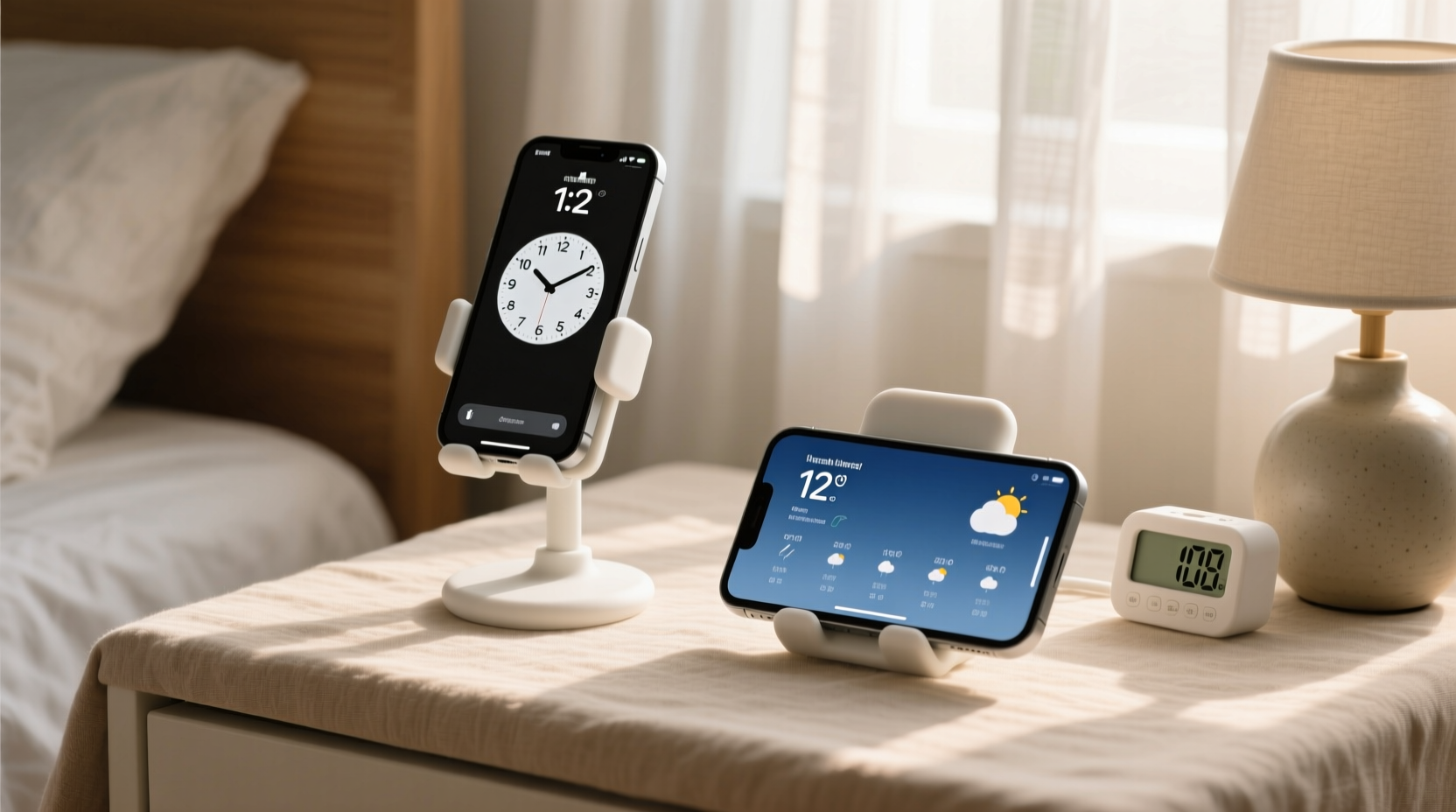
The way you hold and view your phone before sleeping significantly influences which orientation works best. Many people scroll through social media, read articles, or watch videos while lying down. In this position, a vertical phone holder mimics the natural grip of holding a device upright, reducing neck strain from looking down too sharply. It keeps the screen aligned closer to eye level when propped against a wall or angled stand.
In contrast, horizontal holders are designed more like mini-docks. They’re ideal if you frequently watch videos or follow recipes in bed—orientations where landscape mode is standard. However, using a horizontally mounted phone while lying on your side can force awkward wrist angles and require constant repositioning to maintain visibility.
Neck and Eye Strain: A Hidden Cost of Poor Placement
Prolonged use of improperly positioned devices contributes to what medical professionals call “text neck”—a repetitive stress injury caused by tilting the head forward for extended periods. According to Dr. Rachel Nguyen, a physical therapist specializing in digital ergonomics:
“Even slight adjustments in screen height and angle can reduce cervical load by up to 40%. A vertically oriented holder placed slightly above chest level encourages better posture than a flat, horizontal setup.” — Dr. Rachel Nguyen, DPT
This insight favors vertical stands when reading or browsing in bed, especially for users who spend more than 15–20 minutes on their phones before sleep.
Space Efficiency and Nightstand Compatibility
Bedside tables come in all shapes and sizes—from compact floating shelves to wide dressers. The footprint of your phone holder matters, particularly in smaller bedrooms where every inch counts.
Vertical holders typically occupy less surface area because they rise upward rather than spreading outward. This makes them excellent choices for narrow nightstands or shared surfaces where lamps, books, or water glasses already compete for space.
Horizontal models, on the other hand, need enough width to accommodate the full length of the phone plus any additional features like built-in wireless chargers or cable management arms. While some foldable designs exist, most remain wider than their vertical counterparts.
| Feature | Vertical Holder | Horizontal Holder |
|---|---|---|
| Average Surface Footprint | 2.5 x 3 inches | 3 x 6 inches |
| Ideal for Narrow Surfaces? | Yes | No |
| Stability When Bumped | Moderate (taller = top-heavy) | High (low center of gravity) |
| Wireless Charging Integration | Common | Very Common |
| Suitable for Large Phones? | Limited by height clearance | Better support across width |
Charging Behavior and Cable Management
How you charge your phone affects which holder type integrates more smoothly into your nightly ritual. Most modern bedside setups include either a wired connection or wireless charging pad. Vertical holders often double as wireless charging stations, combining function with sleek design. Their upright nature allows easy plug-in access without blocking ports—especially useful for hybrid cables that connect both power and audio simultaneously.
However, gravity plays a role here. In a vertical dock, dangling cables can pull the phone downward over time unless secured properly. Some users report waking up to find their phone halfway off the stand due to cable tension. Horizontal docks tend to cradle the device more securely, distributing weight evenly and minimizing slippage.
Real Example: Sarah’s Transition from Horizontal to Vertical
Sarah, a freelance writer based in Portland, used a horizontal charging dock for two years. She liked its stability and large base but found herself constantly adjusting her phone when checking notifications at night. After developing mild shoulder discomfort, she consulted a posture coach who suggested switching to a vertical stand. Within a week, Sarah noticed reduced strain during late-night emails and easier visibility when propped against her headboard. “It felt like switching from reading a book flat on my lap to holding it up naturally,” she said. “The difference was subtle but meaningful.”
Dual-Purpose Use: Alarm Clocks, Video Calls, and Smart Home Control
Many people rely on their phones as alarm clocks, smart home hubs, or communication tools during overnight hours. Here, orientation impacts usability beyond mere viewing comfort.
- Alarm Visibility: Vertical holders display time and notifications in a taller format, making it easier to glance at multiple alerts without unlocking the phone.
- Video Calls: Receiving a FaceTime or Zoom call while in bed benefits from horizontal orientation, which matches standard camera framing. However, most front-facing cameras are optimized for portrait mode, so auto-framing may cut off parts of your face in landscape.
- Smart Assistant Interaction: Devices like Google Assistant or Siri respond better when the microphone is unobstructed. Both orientations work, but vertical stands often leave speaker grills more exposed.
Case Study: Hotel Room Design Trends
Leading hotel chains have begun standardizing bedside tech integration. Marriott International's recent room redesign includes embedded vertical charging nooks beside each bed. Their rationale? Guests prefer discreet, upright docks that don’t interfere with luggage placement or reading lamps. Hilton properties, meanwhile, still favor horizontal docks in executive suites where business travelers often join video conferences from bed. These divergent strategies reflect real-world trade-offs: vertical for minimalism and ease of access, horizontal for multifunctional utility.
Step-by-Step Guide to Choosing the Right Holder for Your Needs
Selecting between vertical and horizontal isn’t about which is universally better—it’s about matching form to function. Follow this process to determine the optimal fit for your lifestyle:
- Assess Your Pre-Sleep Phone Habits: Do you mostly check messages, browse feeds, or read? These activities favor vertical viewing. Watching videos or working in bed leans toward horizontal.
- Measure Your Nightstand Space: Use a ruler or tape measure to calculate available width and depth. If under 6 inches deep, prioritize vertical options.
- Evaluate Charging Setup: Are you using wireless charging? Look for Qi-certified models. Using cables? Ensure the holder has cutouts or flexible arms to prevent strain.
- Test Ergonomic Comfort: Lie in your usual sleeping position and simulate looking at a phone in both orientations. Note any neck twisting or arm fatigue.
- Consider Long-Term Durability: Metal or weighted bases provide stability. Avoid flimsy plastic clips that degrade over time.
- Check Device Compatibility: Confirm the holder fits your phone size, including cases. Larger phones (e.g., iPhone 15 Pro Max) may not sit securely in compact vertical stands.
Expert Insight: Why Orientation Affects Sleep Hygiene
Dr. Alan Torres, a sleep researcher at the National Institute of Circadian Health, emphasizes that phone placement indirectly influences sleep quality:
“The visibility and accessibility of your phone affect temptation to engage late at night. A vertical holder facing away from the bed can act as a visual barrier, reducing mindless scrolling. Conversely, a horizontal dock with bright notifications in direct line of sight increases arousal and delays sleep onset.” — Dr. Alan Torres, PhD
This behavioral nudge suggests that even small design choices—like rotating your phone sideways or upright—can shape digital discipline at bedtime.
FAQ: Common Questions About Bedside Phone Holders
Can I switch between vertical and horizontal positions?
Some adjustable holders allow rotation via swivel joints or magnetic mounts. Look for 360-degree articulating arms or stands labeled “multi-angle.” Be cautious with heavy phones, as pivot points may loosen over time.
Do vertical holders work well with pop sockets or grips?
Generally no. Pop-out accessories interfere with back-to-base contact needed for stability and wireless charging. Remove such attachments before docking.
Is one orientation safer for battery health?
Neither orientation directly affects battery longevity. However, overheating risks increase when phones are enclosed or poorly ventilated. Both types should allow airflow around the device, especially during fast charging.
Final Recommendation: Match Holder Type to Lifestyle
There is no single “best” option between vertical and horizontal phone holders for bedside use. Instead, the ideal choice depends on individual behavior, room layout, and technological needs.
Choose a **vertical holder** if you:
- Primarily use apps in portrait mode
- Have limited nightstand space
- Prioritize ergonomic alignment
- Want a minimalist, clutter-free look
Opt for a **horizontal holder** if you:
- Regularly watch videos or take video calls in bed
- Use larger smartphones that benefit from full-width support
- Need maximum stability on shared surfaces
- Prefer traditional docking aesthetics
Conclusion: Make a Conscious Choice for Better Nights
Your bedside phone holder does more than keep your device charged—it shapes how you interact with technology during one of the most vulnerable times of day. Whether you lean toward vertical simplicity or horizontal versatility, the key is intentionality. By evaluating your actual usage patterns, spatial constraints, and wellness goals, you can select a solution that enhances convenience without compromising comfort or sleep quality. Don’t settle for whatever’s on sale. Choose a holder that truly supports the way you live—and rest—every night.




 浙公网安备
33010002000092号
浙公网安备
33010002000092号 浙B2-20120091-4
Comments
No comments yet. Why don't you start the discussion?