
When you install a modpack like \"Vibrant Visuals\" to enhance the visual experience in Minecraft, the last thing you want is for it to fail silently—leaving you with missing textures, crashes, or no change at all. Many players encounter issues where the resource pack either doesn’t load properly, causes graphical glitches, or conflicts with other mods. These problems can stem from hardware limitations, incorrect configuration, outdated software, or incompatible dependencies. Understanding how to methodically diagnose and resolve these issues ensures you get the immersive, high-fidelity gameplay you intended.
Understanding Vibrant Visuals and Common Failure Points
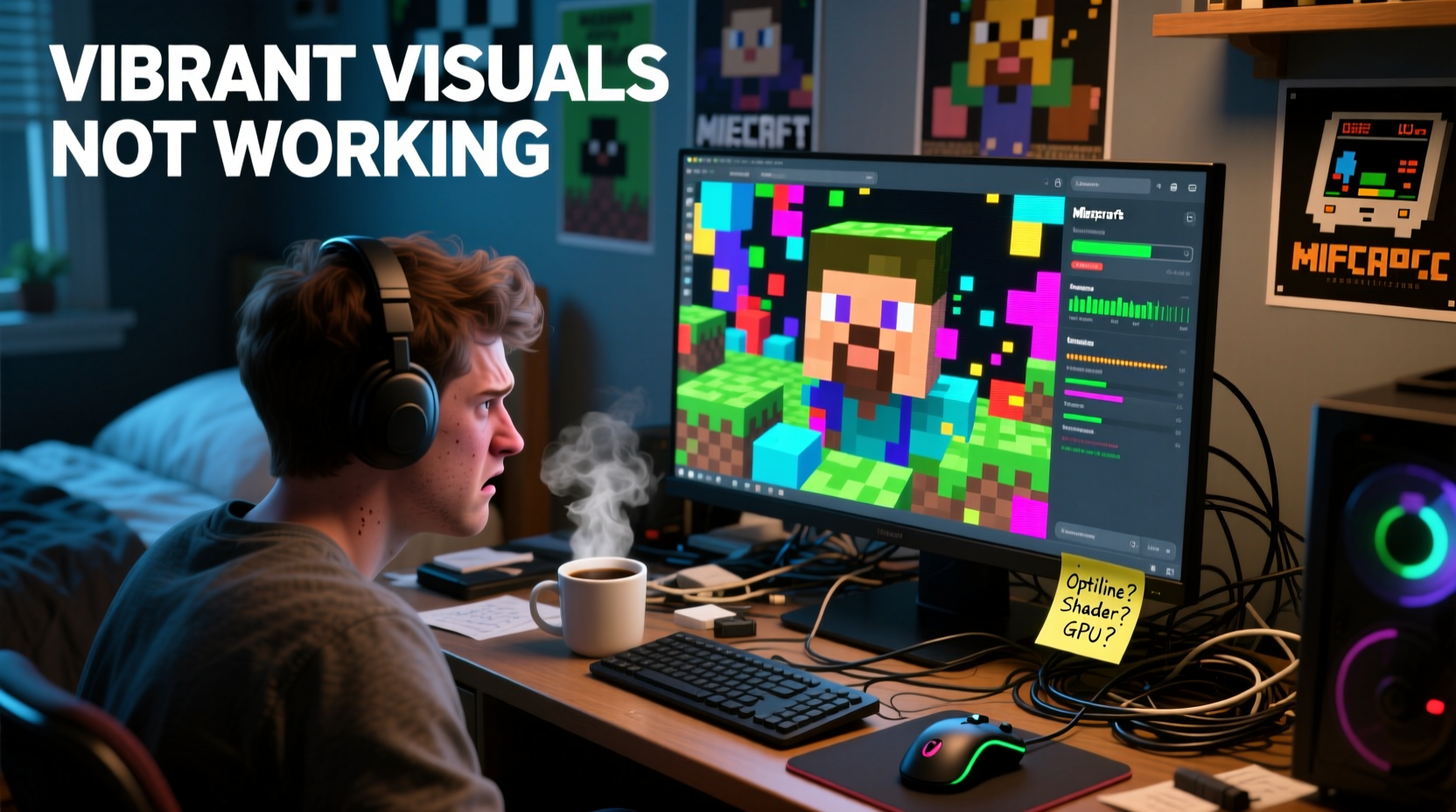
Vibrant Visuals is a popular texture and shader-enhancing modpack designed to elevate Minecraft’s aesthetic with richer colors, dynamic lighting, and realistic environmental effects. It often bundles resource packs, shader configurations, and optional mods like OptiFine or Sodium. However, because it relies on multiple layers of rendering technology, it's particularly sensitive to system specifications and setup accuracy.
Common symptoms include:
- Textures appearing as purple-and-black checkerboards (missing assets)
- Game crashes during startup or world loading
- Shaders not applying despite being enabled
- Severe performance drops or stuttering after activation
- No visible changes even after installation
These are rarely due to a single cause. Instead, they result from misaligned components across your Minecraft environment—from Java settings to GPU drivers.
Step-by-Step Guide to Restore Functionality
Follow this structured approach to isolate and fix the root cause of Vibrant Visuals not working:
- Verify Installation Method: Confirm whether Vibrant Visuals was installed via a mod launcher (e.g., CurseForge, MultiMC) or manually. If manual, ensure the resource pack is placed in the correct folder:
minecraft/resourcepacks/. - Check Dependencies: Some versions require OptiFine, Forge, or Fabric. Visit the official download page and confirm which mods are prerequisites. Install them in the correct order—usually Forge/Fabric first, then OptiFine, then the pack.
- Enable the Pack In-Game: Open Minecraft, go to Options → Resource Packs → Open Pack Folder. Ensure the .zip file is present. Then return and select it from the list on the left and move it to the right pane. <4> Activate Shaders (if applicable): If Vibrant Visuals includes shaders, navigate to Video Settings → Shaders. Click “Shader Packs” folder and place the associated .zip there. Select it from the menu.
- Adjust Graphics Settings: Disable conflicting options such as “Fast Render,” “VBOs Off,” or “Mipmaps” if set too low. Set “Graphics” to Fancy and “Smooth Lighting” to Maximum.
- Test with Minimal Setup: Remove all other mods temporarily. Launch the game with only Forge and Vibrant Visuals. If it works, reintroduce mods one by one to identify conflicts.
- Update Java and Allocate RAM: Use 64-bit Java and allocate at least 4–6 GB of RAM through your launcher settings. Insufficient memory prevents large texture packs from loading fully.
Hardware and Software Compatibility Checklist
Even flawless installation won’t help if your system can't support the demands of enhanced visuals. Use this checklist to verify compatibility:
| Component | Minimum Requirement | Recommended | Status Check |
|---|---|---|---|
| GPU | Integrated Intel HD 4000 or equivalent | Dedicated GPU (NVIDIA GTX 950 / AMD RX 470 or better) | Ensure OpenGL 4.5+ support; update drivers |
| RAM | 4 GB allocated | 6–8 GB allocated | Set in launcher under JVM arguments |
| Java Version | Java 8 (for older versions) | Java 17 (for Minecraft 1.18+) | Match version to your Minecraft release |
| Minecraft Version | 1.12.2 or higher | 1.16.5 or newer for best results | Confirm pack version matches game version |
| Operating System | Windows 7 / macOS 10.13 / Linux kernel 4.15+ | Windows 10+, macOS 11+, modern Linux distro | Older OS may lack Vulkan/DX12 support |
Real Example: Fixing a Persistent Crash Loop
A player named Jordan downloaded Vibrant Visuals through CurseForge but encountered a crash every time the world began generating. The log showed an error referencing “glCreateProgram” — a clue pointing to OpenGL incompatibility.
After reviewing the crash report, Jordan discovered that their laptop was using integrated Intel graphics instead of the NVIDIA GPU. They accessed the NVIDIA Control Panel, set Minecraft’s executable to use the dedicated GPU, updated the driver, and relaunched. The pack loaded successfully, and frame rates improved dramatically.
This case underscores the importance of checking hardware utilization—not just specs on paper, but actual runtime behavior.
“Over 60% of ‘mod not working’ reports in forums stem from unmet dependencies or improper GPU assignment.” — Lin Zhao, Minecraft Optimization Specialist
Common Mistakes That Break Vibrant Visuals
Even experienced players make simple errors that prevent visual enhancements from functioning:
- Using the wrong Minecraft version: A 1.16 pack won’t work on 1.20 without adaptation.
- Placing files in the wrong directory: Mod JARs go in
mods/, resource packs inresourcepacks/, shader packs inshaderpacks/. - Ignoring log files: The
latest.logorcrash-reports/folder contains exact error messages that pinpoint failures. - Running outdated drivers: GPU vendors regularly optimize OpenGL and Vulkan performance for games like Minecraft.
- Over-allocating RAM: Giving Minecraft 10+ GB can hurt performance due to garbage collection overhead. Stick to 6 GB unless running massive modpacks.
Frequently Asked Questions
Why does Vibrant Visuals look blurry or pixelated?
This usually means the resolution setting is too low. Vibrant Visuals typically comes in 32x, 64x, or higher resolutions. Ensure you’ve selected the appropriate size for your monitor and that mipmaps are enabled under Video Settings.
Can I use Vibrant Visuals on servers?
Yes, but only clientside. Other players won’t see the enhanced visuals unless they also have the pack installed. Server admins cannot enforce its use, but they may provide a link for consistency.
Does Vibrant Visuals work with Sodium or Iris Shader?
Yes—but only if explicitly supported. Vanilla-compatible shader packs can run via Iris, while performance mods like Sodium improve frame rates. However, avoid mixing OptiFine and Sodium, as they conflict at the code level.
Final Steps and Proactive Maintenance
Once Vibrant Visuals is working, maintain stability by keeping everything updated: the modpack, mods, drivers, and launcher. Subscribe to update notifications on platforms like CurseForge or PlanetMinecraft. Regularly clear the saves/*/region cache if terrain rendering glitches occur.
If you switch computers or reinstall the operating system, document your working configuration—launcher settings, Java path, allocated RAM, and GPU preferences—to replicate it quickly.
Conclusion
Resolving graphics issues with Vibrant Visuals isn’t about guesswork—it’s about systematic verification of dependencies, settings, and hardware capabilities. By following precise installation steps, consulting logs, and understanding how each component interacts, you regain control over your visual experience. Don’t settle for broken textures or subpar performance. Take the time to configure your setup correctly, and enjoy the vivid, immersive world Minecraft was meant to be.




 浙公网安备
33010002000092号
浙公网安备
33010002000092号 浙B2-20120091-4
Comments
No comments yet. Why don't you start the discussion?