
As the holiday season approaches, homes across the country begin to glow with festive light. Among the most debated choices in seasonal décor is the type of string lighting that adorns Christmas trees and mantles. On one side are vintage bubble lights—iconic, wavy tubes filled with colored fluid that dance hypnotically when heated. On the other, modern LED strings offer crisp illumination, energy efficiency, and a rainbow of programmable effects. But when it comes to evoking memory, emotion, and genuine nostalgic charm, which truly wins?
The answer isn’t simply about brightness or bulb life. It’s about sensory experience, generational connection, and the subtle cues that transport us back to childhood Christmases. To understand where true nostalgia lies, we must explore not only how these lights function but also how they make us feel.
The Allure of Vintage Bubble Lights
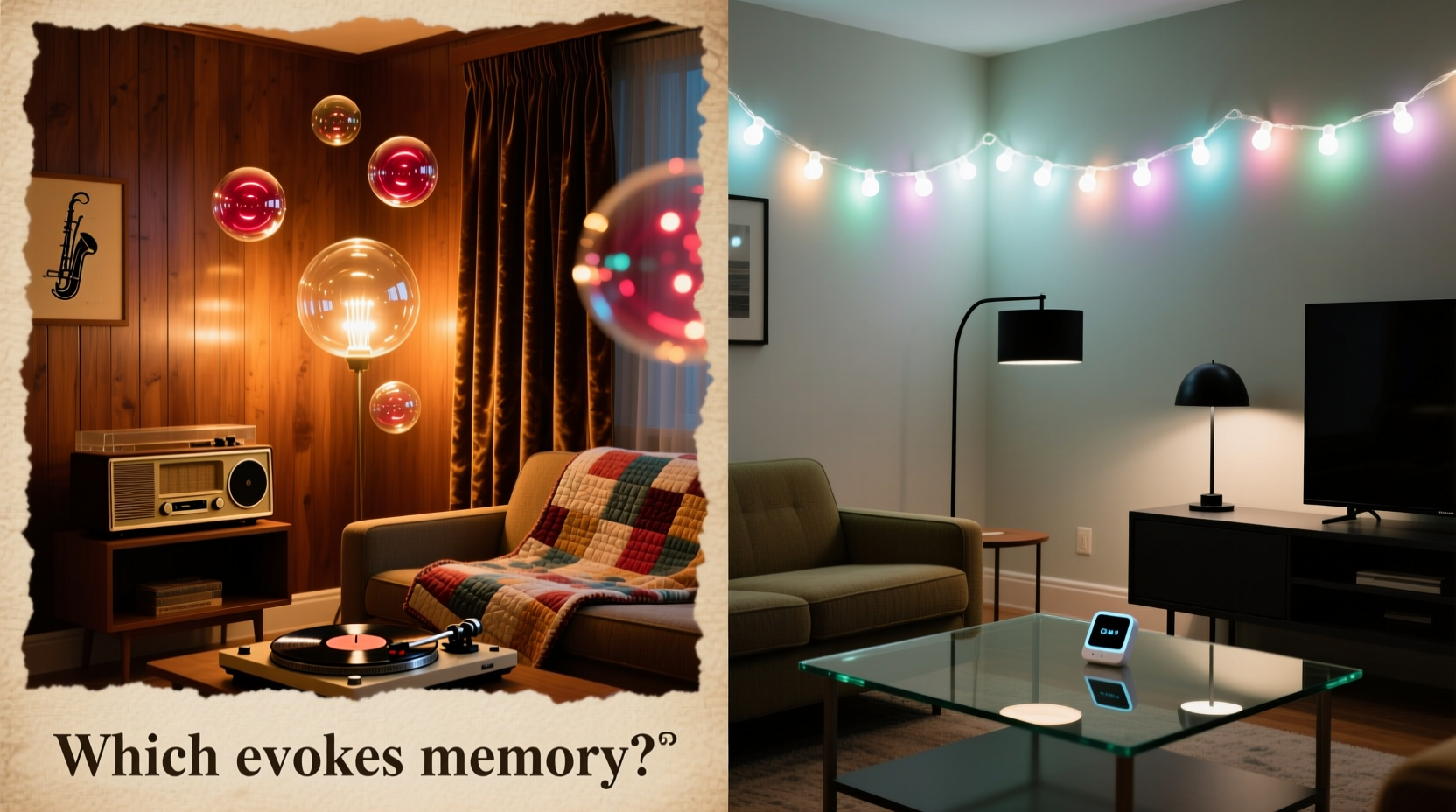
Born in the 1940s and peaking in popularity during the 1950s and 60s, vintage bubble lights were among the first mass-produced decorative electric lights designed specifically for home use. Each unit consists of a glass tube filled with a low-boiling-point liquid—typically methylene chloride—capped at the top by a light bulb. As the bulb heats the base, bubbles rise rhythmically through the fluid, creating a mesmerizing effect reminiscent of lava lamps.
What makes them so emotionally resonant? For many, the gentle flicker and uneven motion mimic candlelight—the original symbol of holiday warmth. Unlike today’s uniform LEDs, bubble lights have imperfections: slight variations in bubble speed, subtle color shifts, and a warm, dim glow that doesn’t dominate a room. These quirks are precisely what people remember from their grandparents’ homes, old family photos, or department store windows of decades past.
Collectors prize original sets made by companies like Union Electric, NOMA, and Ben Franklin. Some still work after 70 years, a testament to simple yet effective design. The sound—or lack thereof—is also part of the charm: no hum, no digital pulsing, just silence punctuated by the faint crackle of warming glass.
Modern LED Strings: Efficiency Meets Innovation
LED (light-emitting diode) technology revolutionized holiday lighting in the early 2000s. With up to 90% greater energy efficiency than incandescent bulbs, longer lifespans (often 25,000–50,000 hours), and minimal heat output, LED strings quickly became the practical choice for homeowners.
Today’s versions come in endless configurations: warm white, cool white, multicolor, addressable RGB strips, Wi-Fi-controlled strands, and even Bluetooth-synced music-reactive lights. They can simulate flickering flames, twinkling stars, or smooth fades—all customizable via smartphone apps. Their precision appeals to tech-savvy decorators and those aiming for Instagram-worthy displays.
But despite their versatility, many find LEDs too perfect. The uniformity of brightness, the absence of warmth in both temperature and texture, and the sometimes overly bright output can feel clinical rather than cozy. While LEDs can imitate retro styles—like Edison-style filament bulbs or “vintage” C7 shapes—they rarely replicate the organic unpredictability of older technologies.
“Nostalgia isn’t about accuracy—it’s about emotional resonance. A slightly flickering, imperfect light often feels more real than a perfectly programmed simulation.” — Dr. Laura Simmons, Cultural Historian, University of Michigan
Comparative Breakdown: Emotional Impact vs Practical Performance
| Feature | Vintage Bubble Lights | Modern LED Strings |
|---|---|---|
| Nostalgic Charm | High – deeply tied to mid-century memories, tactile movement, soft glow | Moderate – can evoke nostalgia if styled intentionally, but often feels contemporary |
| Safety | Lower – bulbs get hot; risk of breakage and chemical exposure if damaged | High – cool to touch, shatter-resistant, safe for children and pets |
| Lifespan | Variable – original units may last decades but are fragile and non-replaceable | Very High – long-lasting with replaceable sections in some models |
| Energy Use | High – uses incandescent bulbs (4–7 watts per unit) | Very Low – typically under 1 watt per bulb |
| Maintenance | High – requires careful storage, cleaning, and monitoring for leaks | Low – minimal upkeep, often weatherproof and plug-and-play |
| Authentic Movement | Yes – natural convection-driven bubbles create organic rhythm | No – any \"motion\" is simulated digitally, lacks physical depth |
A Real Example: The Johnson Family Tree Tradition
The Johnsons of Toledo, Ohio, have used the same set of red and green bubble lights on their artificial tree since 1963. Passed down from Margaret Johnson’s mother, the set originally came from a Sears catalog. Though two bulbs have been replaced over the years (using NOS—new old stock—parts sourced online), the rest remain original.
“When we plug them in,” says Margaret’s grandson Daniel, now 38, “it’s like time stops. The way the bubbles move, the soft hum of the transformer, even the smell of warm plastic—it’s exactly how I remember Christmas as a kid. We tried switching to LEDs one year to save on the electric bill. My grandmother cried. Not because of cost—but because it didn’t *feel* like Christmas anymore.”
They now use a hybrid approach: bubble lights on the main tree, supplemented by discreet LED strands on wreaths and outdoor displays. This blend honors tradition while acknowledging modern needs.
Can Modern Tech Replicate True Nostalgia?
Some manufacturers have attempted to bridge the gap. Companies like Kurt S. Adler and Gemmy produce “bubble-effect” LED lights—plastic tubes with motorized bubbles inside powered by small motors and LEDs. While visually similar, they lack authenticity. The bubbles move too uniformly, the bases emit a faint mechanical buzz, and the overall weight and material feel cheap compared to hand-blown glass.
Moreover, nostalgia isn’t purely visual. It’s multisensory: the warmth radiating from a cluster of bubbling units, the faint scent of heated glass and dust, the anticipation of watching the first bubble rise after flipping the switch. No current LED simulation captures all these elements simultaneously.
That said, younger generations who grew up with digital aesthetics may associate nostalgia with different cues. For someone whose childhood memories include synchronized light shows synced to Mariah Carey’s “All I Want for Christmas Is You,” the rhythmic pulse of RGB LEDs might be just as emotionally powerful as bubbling tubes are to others.
Step-by-Step Guide: Creating a Nostalgic Lighting Display
Whether you lean toward vintage or modern, you can craft a display rich in nostalgic charm. Follow this timeline to balance authenticity with safety and sustainability:
- Week 1: Audit Your Current Collection
Inventory existing lights. Test each strand. Set aside working vintage pieces for special use. - Week 2: Define Your Theme
Choose an era or mood—e.g., 1950s kitchen, rustic cabin, Victorian parlor. Let this guide your lighting choices. - Week 3: Source Authentic or Themed Pieces
Search antique stores, Etsy, or collector forums for vintage bubble lights. For LEDs, choose warm-white or amber-tinted options to reduce harshness. - Week 4: Prioritize Safety
Use bubble lights only on artificial trees or in supervised areas. Install LED backups for high-traffic zones. - Week 5: Layer Lighting Strategically
Place bubble lights at eye level or on central focal points (e.g., fireplace mantle). Use LEDs for outlining, background washes, or outdoor accents. - Week 6: Add Sensory Elements
Pair lights with nostalgic scents (pine, cinnamon), vinyl records, or heirloom ornaments to deepen emotional impact.
Checklist: Choosing the Right Lights for Nostalgic Appeal
- ☐ Decide whether emotional authenticity or practical convenience is your priority
- ☐ Identify key memories associated with past holidays—what specific details stand out?
- ☐ Assess safety needs—do you have young children or pets?
- ☐ Budget for potential repairs or replacements (especially for vintage items)
- ☐ Consider hybrid setups—combine old and new for balance
- ☐ Store vintage lights in custom dividers to prevent breakage
- ☐ Test all strands before decorating to avoid last-minute failures
Frequently Asked Questions
Are vintage bubble lights dangerous?
They can be if mishandled. The bulbs generate significant heat, posing fire risks near flammable materials. The liquid inside (methylene chloride) is toxic if leaked and ingested, though sealed units are generally safe during normal use. Always supervise operation and never leave them on unattended.
Can I mix vintage bubble lights with LED strings?
Yes—and many decorators do so successfully. Use bubble lights as centerpieces and LEDs for supplementary illumination. Ensure voltage compatibility and avoid daisy-chaining different types unless specified by the manufacturer.
Why do bubble lights stop bubbling?
This usually happens when the seal breaks and the liquid evaporates or leaks. Overheating, physical shock, or age can cause failure. Once the fluid is gone, the unit cannot be repaired safely and should be retired.
Conclusion: Nostalgia Lives in Imperfection
In a world increasingly dominated by flawless digital experiences, the enduring appeal of vintage bubble lights speaks to a deeper human need: connection to the past through tangible, imperfect objects. While modern LED strings excel in performance, customization, and safety, they often fall short in delivering the soulful warmth that defines true nostalgic charm.
The best approach may not be choosing one over the other—but understanding what each represents. Vintage bubble lights are artifacts of memory, each flicker and bubble a silent story from Christmases gone by. LEDs are tools of expression, ideal for innovation and inclusivity in modern celebrations.
If your goal is emotional resonance—if you want guests to pause, smile, and say, “This feels like how Christmas used to be”—then nothing beats the gentle dance of a well-loved bubble light. But if sustainability, safety, and scalability matter most, LEDs are the responsible choice.
Perhaps the heart of nostalgia isn’t found in the bulb itself, but in the intention behind the light. Whether you’re rewarming a 1950s relic or programming a pixel-perfect display, what matters is that the glow reflects something personal, meaningful, and passed forward.




 浙公网安备
33010002000092号
浙公网安备
33010002000092号 浙B2-20120091-4
Comments
No comments yet. Why don't you start the discussion?