
In a world where smartphones are as much fashion accessories as communication tools, the case you choose speaks volumes. The debate between vintage patterned cases and sleek modern designs isn’t just about taste—it’s about identity, longevity, and how design trends influence everyday choices. While some users gravitate toward retro florals, Art Deco motifs, or 70s-inspired geometrics, others prefer minimalist silhouettes, matte finishes, and monochrome palettes. But which style actually looks better—and more importantly, which one holds up over time?
The answer isn’t universal. It depends on context: personal style, device model, usage habits, and even cultural environment. However, by examining design principles, material quality, and psychological appeal, we can determine when and why one style outshines the other.
Defining the Styles: What Makes a Case \"Vintage\" or \"Modern\"?
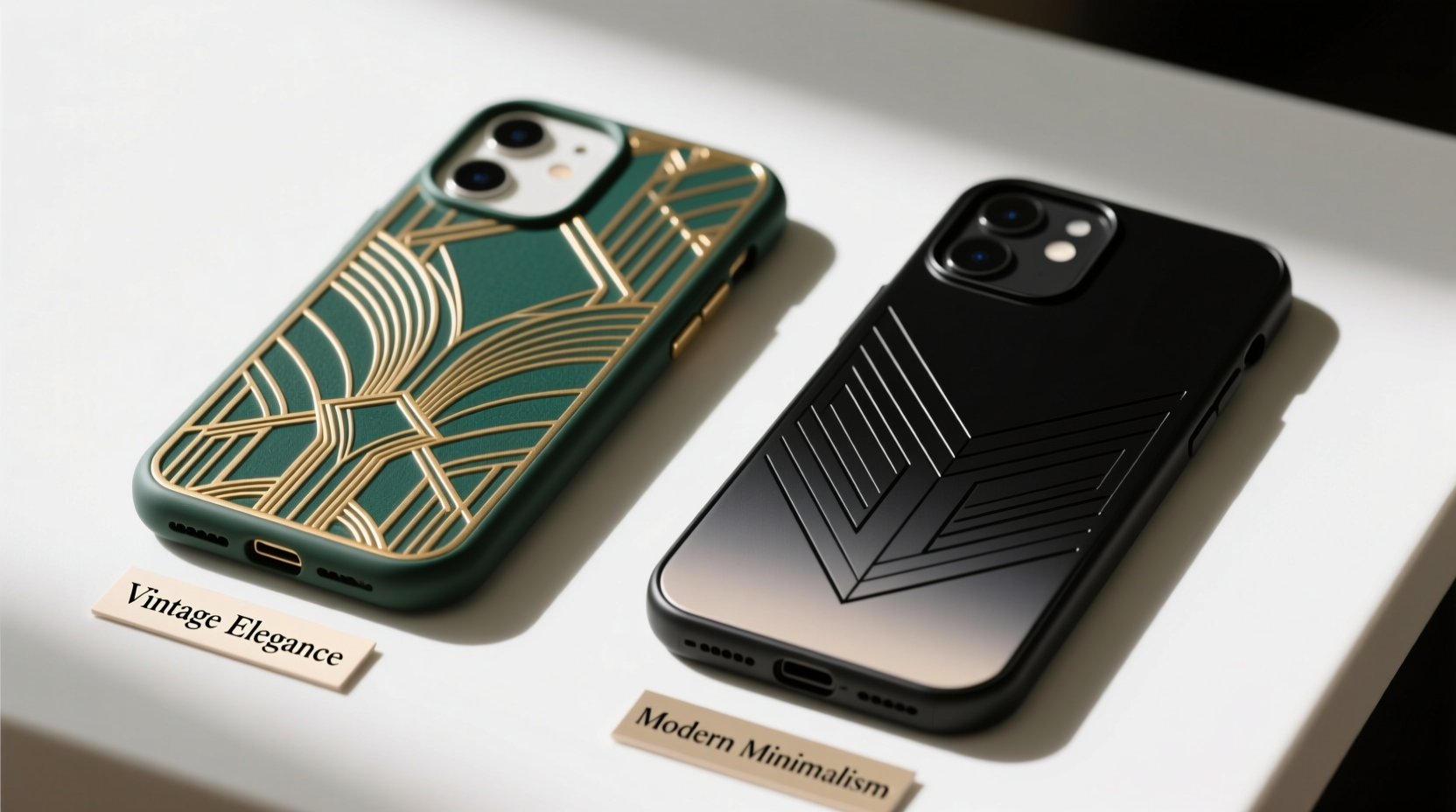
Vintage-style phone cases draw inspiration from past decades—typically the 1940s through the 1980s. They often feature ornate patterns such as paisley, damask, floral prints, typography from old advertisements, or faded film camera aesthetics. These designs evoke nostalgia, craftsmanship, and a sense of individuality in an age of mass production.
Modern phone cases, on the other hand, prioritize simplicity and functionality. Think clean lines, neutral tones (black, white, gray, beige), transparent backs, or subtle textures like brushed metal or soft-touch polymers. Many modern cases are designed to be invisible—letting the phone itself take center stage.
While both styles serve aesthetic purposes, their underlying philosophies differ. Vintage cases celebrate bold self-expression; modern ones embrace restraint and integration with contemporary lifestyles.
Design Philosophy: Emotion vs. Efficiency
Vintage patterns tap into emotional resonance. A case with a 1950s diner print might remind someone of childhood summers or classic films. According to Dr. Lena Torres, a design psychologist at the Royal College of Art, “Nostalgic visuals trigger positive memories and increase attachment to objects.” This emotional bond often makes users less likely to replace vintage-styled cases—even if they show wear.
“People don’t just buy a retro case—they buy a story. That narrative value enhances perceived beauty.” — Dr. Lena Torres, Design Psychologist
Modern cases follow a different logic. Their appeal lies in versatility and timelessness. A black silicone case doesn’t clash with any outfit or setting. It works equally well in a boardroom or a coffee shop. As industrial designer Marcus Bell notes, “Good modern design disappears. You notice the phone, not the case.”
Visual Impact: When Boldness Wins (and When It Doesn’t)
Vintage cases stand out. In a crowd of identical smartphones, a case with a Victorian-era botanical illustration immediately draws attention. This can be a strength for creatives, artists, or anyone wanting to project personality.
However, visual impact comes with trade-offs. Overly busy patterns can make a phone look cluttered, especially on smaller devices. Additionally, vintage prints may not age gracefully if the ink fades or the material yellows—a common issue with cheaper PVC-based cases.
Modern cases excel in subtlety. A clear case with anti-yellowing coating maintains the phone’s original look while offering protection. Matte black options resist fingerprints better than glossy counterparts and suit professional environments. But their minimalism can also come across as impersonal or generic—especially when everyone around has the same “invisible” case.
Material Quality Across Styles
It's important to separate style from substance. Not all vintage cases are poorly made, nor are all modern ones durable. However, trends in manufacturing favor modern designs when it comes to materials.
| Style | Common Materials | Durability Rating (1–5) | Common Issues |
|---|---|---|---|
| Vintage Pattern | PVC, polyester wrap, printed TPU | 3 | Fading, peeling, yellowing, scratch-prone surfaces |
| Modern Design | Silicone, polycarbonate, eco-resin, biodegradable TPU | 4.5 | Limited customization, static buildup (on some plastics) |
High-end modern cases increasingly use sustainable materials and reinforced corners for drop protection. Meanwhile, many vintage-printed cases rely on adhesive wraps that degrade under sunlight or frequent handling.
Real-World Example: Sarah’s Switch from Retro to Minimalist
Sarah Kim, a graphic designer in Portland, used vintage-themed cases exclusively for years. Her collection included a 1960s psychedelic swirl, a vintage map of Paris, and a typewriter-keyboard print. “I loved how each one felt like a tiny art piece,” she said.
But after two years, she noticed most had begun to peel at the edges. One faded dramatically after being left on her dashboard. She switched to a matte charcoal case with magnetic compatibility for her new iPhone. “At first, it felt boring. But now I appreciate how it matches everything—from my work bag to my winter coat.”
Her experience reflects a broader trend: initial excitement with vintage aesthetics often gives way to appreciation for long-term reliability and adaptability.
Choosing Based on Lifestyle: A Practical Checklist
Selecting the right case isn’t just about preference—it’s about alignment with your daily routine. Use this checklist to guide your decision:
- Do you change outfits frequently? → Modern neutral cases pair better with diverse wardrobes.
- Do you value uniqueness? → Vintage patterns offer distinctiveness in saturated markets.
- Are you outdoors often? → Avoid vintage prints with non-UV-protected coatings.
- Do you upgrade phones every 1–2 years? → Vintage cases may not justify investment if replaced soon.
- Is your phone often on a desk or table? → A visually rich vintage case becomes part of your space’s decor.
When Vintage Looks Better: Three Key Scenarios
- Creative Professions: Artists, writers, and designers often benefit from expressive accessories. A vintage case can spark conversation or reflect brand identity.
- Gifting: A retro floral case for a mother who loves gardening, or a jazz-age motif for a music lover—personalized vintage designs make thoughtful presents.
- Statement Pieces: For events, photo shoots, or social media content, bold cases enhance visual storytelling.
In contrast, modern cases dominate in corporate settings, travel-heavy routines, or minimalist lifestyle communities. Their advantage lies in consistency rather than flair.
Frequently Asked Questions
Can I find high-quality vintage-style cases that won’t fade?
Yes—but they’re rare. Look for brands using dye-sublimation printing on rigid polycarbonate shells. These embed the image into the material rather than applying it as a surface layer, significantly improving longevity.
Are transparent modern cases still considered “modern” design?
Absolutely. Clear cases are a hallmark of contemporary minimalism. Newer versions include anti-scratch coatings and anti-yellowing formulas, making them both functional and stylistically current.
Does case style affect resale value of the phone?
Indirectly. A well-protected phone retains higher resale value. Modern cases often provide better edge-to-edge coverage and shock absorption, reducing cosmetic damage that lowers resale price.
Final Verdict: Beauty Is Contextual—But Longevity Matters
So, which style actually looks better? The truth is, neither universally wins. A vintage pattern can look stunning on a weekend outing, evoking charm and character. A modern case may appear more refined during a business meeting, projecting professionalism and control.
Yet when evaluating over time—across seasons, outfits, and device upgrades—modern cases tend to offer greater versatility and durability. They adapt instead of demand attention. That doesn’t make them inherently superior, but it does make them more practical for most users.
Vintage cases shine brightest when chosen intentionally: as extensions of passion, memory, or artistic identity. But unless crafted with premium materials, their visual appeal diminishes faster than their modern counterparts.




 浙公网安备
33010002000092号
浙公网安备
33010002000092号 浙B2-20120091-4
Comments
No comments yet. Why don't you start the discussion?