
In an era where high-resolution audio streams effortlessly through wireless earbuds, many music lovers still gather around turntables, lowering needles onto spinning black discs with reverence. The resurgence of vinyl records isn’t just a retro trend—it’s part of a deeper conversation about how we experience music. Advocates praise the “analog warmth” of vinyl, describing it as richer, fuller, and more emotionally resonant than even the most pristine digital file. But is this warmth rooted in measurable audio fidelity, or is it the product of nostalgia, ritual, and psychological bias?
This question sits at the intersection of technology, perception, and culture. To answer it, we need to examine how both formats capture and reproduce sound, how human hearing interprets subtle differences, and why emotional context shapes our listening experience.
The Science of Sound: How Vinyl and Digital Capture Music
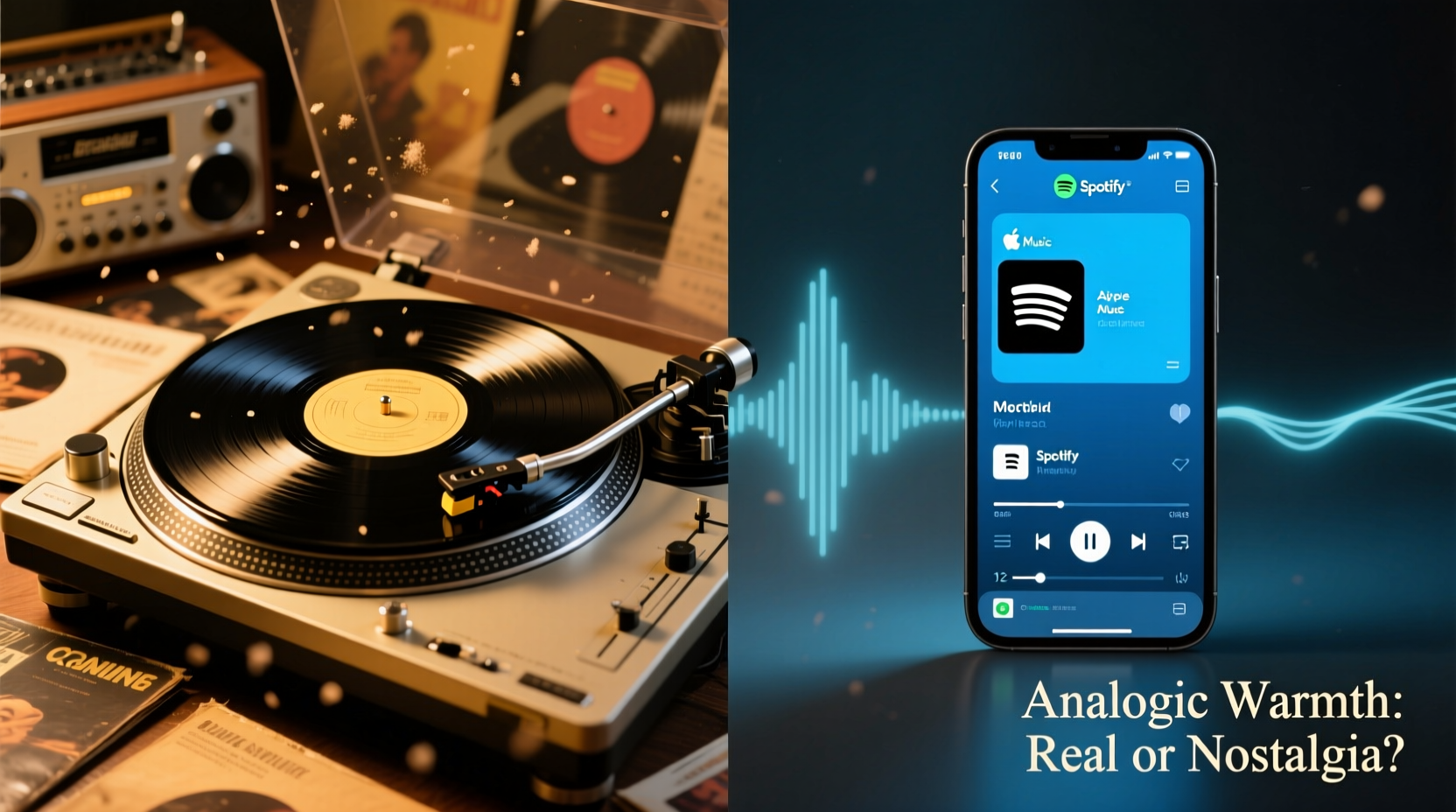
Vinyl records store audio as physical grooves etched into a disc. As the stylus traces these undulations, mechanical vibrations are converted into electrical signals, amplified, and sent to speakers. This analog process captures continuous waveforms—mirroring the original sound waves as they occurred in the studio or live performance.
Digital music, by contrast, samples the waveform at regular intervals (typically 44,100 times per second for CD-quality audio) and converts each sample into binary data. When played back, these discrete points are reconstructed into a close approximation of the original signal. High-resolution digital formats go further, using higher sampling rates (96kHz or 192kHz) and greater bit depth (24-bit) to capture more detail.
From a technical standpoint, modern digital recordings can achieve near-perfect accuracy. They’re immune to the surface noise, wow and flutter, and frequency roll-offs inherent in vinyl playback. Yet despite this precision, many listeners insist that digital sounds “cold,” “sterile,” or “lifeless” compared to vinyl’s “warmth.”
What Is \"Analog Warmth\"? Defining the Myth and the Reality
The term “analog warmth” is often used to describe a pleasing sonic character associated with tape machines, tube amplifiers, and vinyl records. It typically refers to a slight emphasis in the lower midrange frequencies (around 200–500 Hz), gentle harmonic distortion, and a smoother high-end roll-off.
These characteristics aren't flaws—they’re artifacts of the medium. For example:
- Harmonic Distortion: Vinyl playback introduces low-order harmonic distortion, which the human ear often perceives as “richness” or “fullness.”
- Frequency Response Limitations: Most turntables struggle to reproduce extreme highs (above 16 kHz) and deep bass (below 30 Hz), resulting in a naturally rolled-off response that some find less fatiguing.
- Dynamic Compression: Physical limitations of groove spacing mean dynamic range is constrained, especially on louder records—this can make music feel more cohesive.
Ironically, many of the traits considered “warm” are technically imperfections. In a lab setting, engineers would classify them as deviations from the original signal. But in practice, these imperfections can enhance musicality.
“Perfection is not always pleasurable. Sometimes, the very things that make a recording inaccurate also make it more engaging.” — Dr. Sean Olive, former Director of Acoustic Research, Harman International
A Comparison of Key Audio Characteristics
| Characteristic | Vinyl Records | Digital Music (CD/FLAC) |
|---|---|---|
| Dynamic Range | 60–70 dB (varies with pressing quality) | 96 dB (16-bit) up to 144 dB (24-bit) |
| Frequency Response | 20 Hz – 16 kHz (typical) | 20 Hz – 20 kHz (CD standard) |
| Total Harmonic Distortion | 0.5% – 1.5% (often musically colored) | 0.001% or less (near-transparent) |
| Noise Floor | Hiss, pops, clicks present | Negligible (theoretical -96 dB for 16-bit) |
| Channel Separation | 20–30 dB (crosstalk common) | 90+ dB (perfect isolation) |
The table shows that digital outperforms vinyl in nearly every objective metric. However, superior specs don’t always translate to superior listening experiences. Human perception is influenced by context, expectation, and emotional engagement—factors that specs alone can’t quantify.
The Role of Nostalgia and Ritual in Listening
Listening to vinyl is inherently tactile. You select an album from a shelf, remove it from its sleeve, place it on the platter, cue the tonearm, and wait for the first notes to emerge. This ritual slows down the experience, creating space for focus and anticipation. By contrast, digital music often arrives instantly—tapped from a playlist, shuffled, or algorithmically suggested.
Psychologists refer to this as “effort justification”: when people invest time and effort into an activity, they tend to value the outcome more highly. The ceremony of playing a record enhances perceived enjoyment, regardless of actual sound quality.
Nostalgia also plays a powerful role. For many, vinyl recalls childhood memories—flipping through parent’s collections, discovering albums in record stores, or sharing music in a social setting. Even younger listeners drawn to vinyl may be romanticizing a pre-digital era they never experienced, attracted by its authenticity and tangibility.
“We don’t just hear music—we embody it. The act of handling a record, reading liner notes, and focusing on one album at a time changes how we connect with sound.” — Dr. Alexandra Henniges, Music Psychologist, University of Sussex
A Real-World Listening Test: Does the Difference Hold Up?
In 2018, audio engineer Tyll Hertsens conducted a blind ABX test with experienced listeners comparing vinyl and high-resolution digital versions of the same jazz recordings. Participants were asked to identify which version was playing and rate their preference.
The results were telling: only 38% could reliably distinguish between the two formats, and among those who could, preferences were split. Some preferred the clarity of digital; others favored the softened edges of vinyl. Notably, when told which format they were hearing, listener confidence increased—even though their answers didn’t become more accurate.
This suggests that belief and expectation heavily influence perception. Knowing you’re listening to vinyl primes your brain to hear “warmth,” even if the difference is minimal or imagined.
Practical Guide: Building a Balanced Listening Approach
Rather than treating vinyl and digital as opponents, consider integrating both into your music life based on their strengths. Here’s a step-by-step approach:
- Use digital for discovery and convenience: Streaming platforms offer vast libraries, high-resolution options, and portability. Ideal for exploring new artists or listening on the go.
- Choose vinyl for immersion: Reserve record listening for focused sessions at home, where you can appreciate the artwork, read credits, and engage fully.
- Invest in quality playback: A good turntable, cartridge, and phono preamp matter more than rare pressings. Similarly, use high-quality DACs (digital-to-analog converters) for digital files.
- Match format to genre: Some music benefits more from vinyl’s character—classic rock, soul, and acoustic jazz often shine. Highly compressed modern pop or electronic music may lose impact due to vinyl’s dynamic limits.
- Preserve your collection: Store records vertically in a cool, dry place. Use anti-static inner sleeves and clean them regularly to minimize noise.
Checklist: Optimizing Your Vinyl Experience
- ✅ Clean records before first play using a carbon fiber brush or wet cleaning system
- ✅ Calibrate turntable tracking force and anti-skate settings
- ✅ Upgrade to a high-compliance cartridge for better groove tracking
- ✅ Use a dedicated phono preamp (not just receiver-based)
- ✅ Keep styli clean with a soft brush after each use
- ✅ Avoid direct sunlight and heat sources near your setup
- ✅ Label your collection for easy retrieval
Frequently Asked Questions
Can you hear the difference between vinyl and lossless digital?
Under controlled conditions, trained listeners may detect subtle differences—such as high-frequency roll-off or background noise on vinyl—but these are often masked by room acoustics and speaker quality. For most people, the emotional and contextual aspects of listening outweigh minor technical distinctions.
Is vinyl really higher quality than Spotify or Apple Music?
No. Standard streaming services use lossy compression (e.g., 256 kbps AAC or Ogg Vorbis), which removes audio data to save bandwidth. Even so, modern codecs are highly efficient. High-resolution streaming (like Tidal Masters or Qobuz Studio) can surpass vinyl in clarity and detail. However, vinyl offers a different kind of quality—one shaped by texture and imperfection.
Why do some new albums sound worse on vinyl?
Many modern recordings are mastered at high volumes (“loudness war”), leaving little dynamic range. When cut to vinyl, this forces narrower grooves, increasing surface noise and reducing fidelity. Additionally, some labels prioritize speed over quality in pressing, leading to warped discs or off-center holes.
Conclusion: Embracing Both Worlds Without Dogma
The debate between vinyl and digital music isn’t truly about which format is “better.” It’s about what we seek from music. If you value absolute fidelity, convenience, and access, digital is unmatched. If you crave connection, ritual, and a sense of ownership, vinyl offers something irreplaceable.
And yes, analog warmth is real—not in the sense of technical superiority, but as a perceptual and emotional phenomenon. It emerges from the interplay of subtle distortions, limited frequency response, and the intimate relationship between listener and medium. Whether that warmth comes from the groove or the mind doesn’t diminish its effect.
Ultimately, music exists to move us. Whether it arrives via laser-etched pits on a plastic disc or magnetic fluctuations on a copper wire, what matters is the resonance it creates within. So play your records, stream your playlists, and let go of format wars. The best sound is the one that makes you pause, listen deeply, and remember why you fell in love with music in the first place.




 浙公网安备
33010002000092号
浙公网安备
33010002000092号 浙B2-20120091-4
Comments
No comments yet. Why don't you start the discussion?