
Virtual backgrounds have become a staple of remote work, offering privacy and professionalism during video calls. But when they glitch—flickering, distorting, or cutting off parts of your body—they do more harm than good. Whether you're presenting to clients on Zoom or joining a team meeting on Microsoft Teams, a malfunctioning virtual background undermines credibility. The good news: most issues are fixable with the right approach. This guide delivers clear, actionable solutions to eliminate virtual background problems quickly and efficiently.
Why Virtual Backgrounds Glitch: Understanding the Core Causes
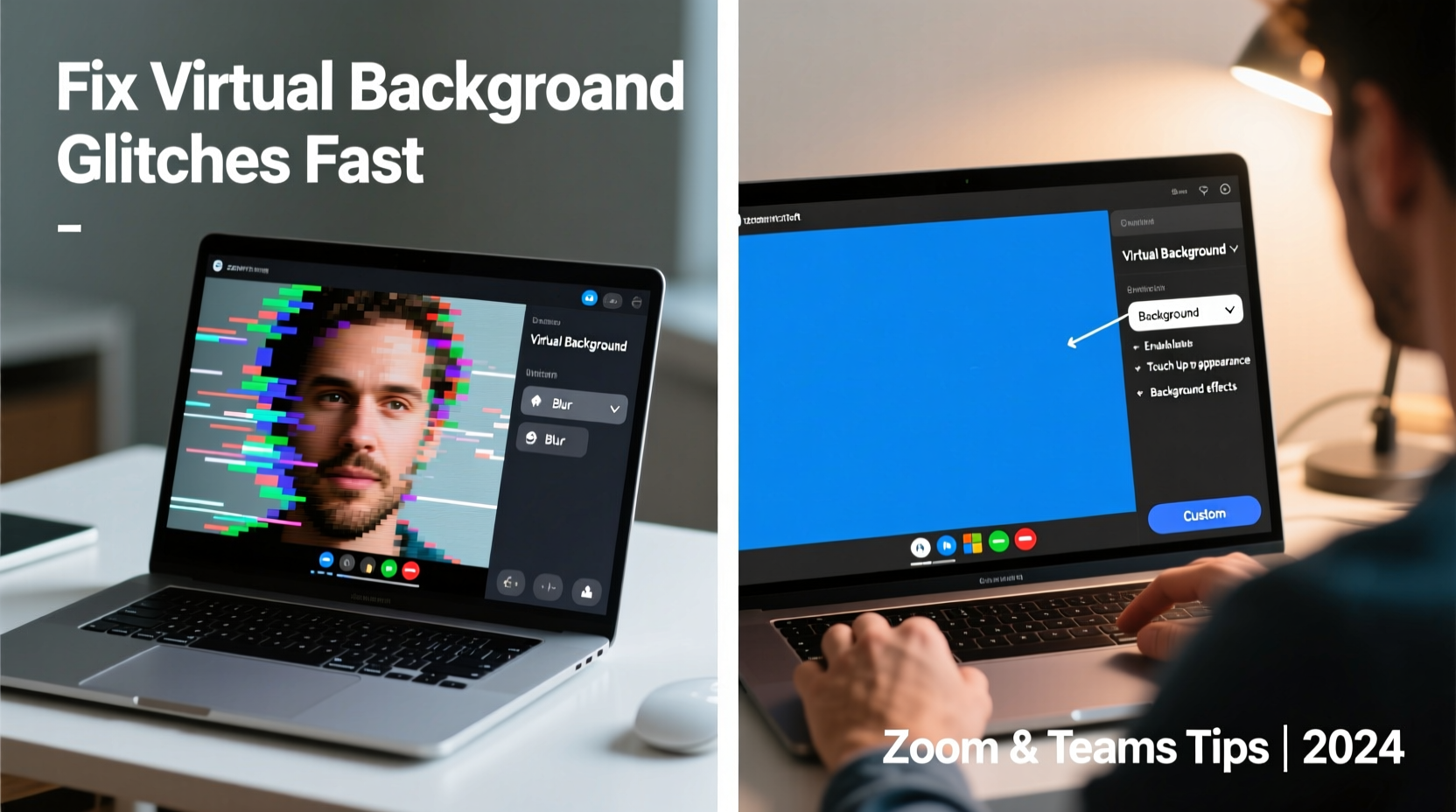
Before jumping into fixes, it's essential to understand what causes virtual backgrounds to fail. These effects rely heavily on real-time AI processing to separate the user from the background using depth detection or edge recognition. When system resources are strained or conditions aren’t ideal, the software struggles to maintain accuracy.
Common root causes include:
- Inadequate hardware: Older CPUs or integrated graphics can't handle the processing load.
- Poor lighting: Harsh shadows or backlighting confuse the AI’s ability to detect edges.
- Low-resolution webcams: Blurry or compressed video input reduces accuracy.
- Busy or patterned clothing: Stripes, busy prints, or colors similar to your background interfere with edge detection.
- Insufficient bandwidth: While less common for local processing, poor internet can affect app performance.
“Virtual backgrounds require significant computational power. If your device is more than five years old, expect limitations.” — Dr. Lena Torres, UX Researcher at RemoteTech Insights
Step-by-Step Guide to Fix Glitches in Zoom
Zoom was one of the first platforms to popularize virtual backgrounds, and its implementation remains robust—if properly configured. Follow these steps to resolve common glitches:
- Update Zoom to the latest version. Outdated apps often lack optimized background rendering. Open Zoom, click your profile icon, and select “Check for Updates.”
- Enable Hardware Acceleration. Go to Settings > Video > uncheck “Use Original Sound” (if enabled), then navigate to Advanced > Video Processing and ensure “Enable GPU acceleration” is turned on.
- Improve your lighting setup. Position a soft light source in front of you. Avoid windows behind you, as backlighting creates silhouettes that break background separation.
- Choose a high-contrast outfit. Wear solid-colored clothing that contrasts with your chosen background. Avoid green if not using a green screen.
- Use a green screen (optional but effective). A physical green backdrop eliminates guesswork for Zoom’s AI. If unavailable, hang a solid-colored sheet behind you.
- Re-calibrate the background effect. After selecting a virtual background, click “Touch Up My Appearance” under Video settings to help Zoom refine skin tones and edges.
- Test in a dry run. Schedule a test meeting with yourself or a colleague to observe how the background behaves in motion.
Troubleshooting Microsoft Teams Background Effects
Microsoft Teams uses similar AI-driven technology, but its interface and optimization differ slightly. Glitches like pixelation, delayed updates, or partial rendering are common, especially on lower-end machines.
To stabilize virtual backgrounds in Teams:
- Ensure you’re using the desktop app—not the browser version. The web client lacks full background processing capabilities.
- Go to Settings > Devices > Apply background effects. Choose either blur or an image. Avoid animated backgrounds unless your system is high-end.
- Under “Background effects,” click “Calibrate” to optimize detection based on current lighting.
- Disable accessibility features like “Reduce motion” in Windows Settings, as they can interfere with real-time rendering.
- Clear the Teams cache. Navigate to
%appdata%\\Microsoft\\Teamsand delete the contents of the folder. Restart Teams afterward.
If the background still flickers, try disabling and re-enabling your camera in the meeting controls. This forces a reset of the video pipeline.
Real Example: Marketing Manager Resolves Daily Glitch Issue
Sarah Kim, a marketing manager at a mid-sized tech firm, experienced recurring background glitches every time she joined her daily stand-up on Teams. Her floral blouse blended with a nature-themed virtual backdrop, causing her head to intermittently disappear. After consulting IT, she switched to a plain navy sweater and upgraded her desk lamp to a ring light. She also installed a $20 green fabric backdrop from an online retailer. Within two days, the glitches stopped completely. “It wasn’t the software—it was the environment,” she said. “Once I treated my home office like a studio, everything stabilized.”
Do’s and Don’ts: Quick Reference Table
| Do’s | Don’ts |
|---|---|
| Use soft, front-facing lighting | Stand in front of bright windows |
| Wear solid, contrasting clothing | Wear patterns or colors matching your background |
| Update your video conferencing app regularly | Use outdated versions of Zoom or Teams |
| Close unused apps to free up RAM and CPU | Run multiple video streams in the background |
| Use a dedicated USB webcam (1080p recommended) | Rely on low-quality laptop cameras |
| Test your setup before important meetings | Assume settings saved from last time still apply |
Hardware and Software Optimization Checklist
Performance issues often stem from underlying system constraints. Use this checklist to audit your setup:
- ✅ CPU: Intel i5/i7 (8th gen or newer) or AMD Ryzen 5/7 equivalent
- ✅ RAM: At least 8GB (16GB recommended for multitasking)
- ✅ Graphics: Dedicated GPU preferred; Intel Iris Xe or better for integrated
- ✅ Operating System: Windows 10/11 (latest updates) or macOS Monterey+
- ✅ Webcam: 1080p resolution with built-in autofocus and low-light correction
- ✅ Internet Speed: Minimum 5 Mbps upload speed (test via speedtest.net)
- ✅ App Version: Zoom 5.12+ or Teams 2.20+
- ✅ Background Image Size: Under 5MB, JPEG or PNG format, 1920x1080 resolution
Frequently Asked Questions
Why does my head get cut off when I move in Zoom?
This occurs when the AI fails to track rapid movement due to low frame rate or insufficient processing power. Slow down your movements and ensure your camera supports at least 30fps. Also, check that Zoom has permission to access your camera fully and isn’t throttled by privacy settings.
Can I use virtual backgrounds without a green screen?
Yes, but results vary. Modern platforms use AI to detect edges, but lighting and clothing play a critical role. For best results without a green screen, sit against a plain wall, wear contrasting clothes, and use strong front lighting. Even a bedsheet can act as a makeshift backdrop.
Why does my Teams background look blurry or laggy?
Blurry or delayed backgrounds usually indicate CPU overload. Teams may downgrade video quality to maintain connection stability. Close other applications, disable HD video if not needed, and restart the app. If using Windows, set Teams to “High performance” in Graphics Settings.
Advanced Fixes for Persistent Issues
If basic troubleshooting doesn’t resolve the problem, consider deeper system-level adjustments:
- Adjust power settings: On Windows, go to Control Panel > Power Options and select “High Performance.” On Mac, disable automatic graphics switching in Battery settings.
- Update graphics drivers: Visit Intel, NVIDIA, or AMD’s website to download the latest driver for your GPU. Outdated drivers hinder video processing.
- Use OBS Virtual Camera with filters: For ultimate control, use Open Broadcaster Software (OBS) to create a flawless virtual background and stream it as a virtual camera to Zoom or Teams. This method allows chroma keying, noise suppression, and scene transitions.
- Disable conflicting software: Antivirus tools, screen recorders, or privacy apps (like Camo or ManyCam) can interfere with camera access. Temporarily disable them to test.
Note: If you're on a company-managed device, some settings may be locked. Contact your IT department to request permissions for camera and GPU access.
Conclusion: Take Control of Your Professional Image
Virtual background glitches don’t have to disrupt your workflow or damage your professional presence. With the right combination of lighting, clothing, hardware, and software settings, you can achieve a clean, stable effect on both Zoom and Microsoft Teams. Start with the basics—update your apps, improve lighting, and simplify your attire—then progress to advanced optimizations if needed. Remember, consistency matters more than perfection. A well-maintained setup saves time, reduces stress, and keeps you focused on what really counts: the conversation.




 浙公网安备
33010002000092号
浙公网安备
33010002000092号 浙B2-20120091-4
Comments
No comments yet. Why don't you start the discussion?