
When shooting vlogs outdoors under bright sunlight, image quality becomes a defining factor in viewer engagement. The debate between using a dedicated vlogging camera and relying on a modern smartphone has intensified as both technologies have advanced rapidly. While smartphones now feature computational photography and high-resolution sensors, vlogging cameras are engineered specifically for consistent video performance. In daylight conditions—where lighting is abundant but contrast can be extreme—the differences in dynamic range, color accuracy, autofocus behavior, and lens control become more apparent. Understanding these nuances helps creators make informed decisions based on their content goals, workflow preferences, and budget constraints.
Sensor Size and Light Handling
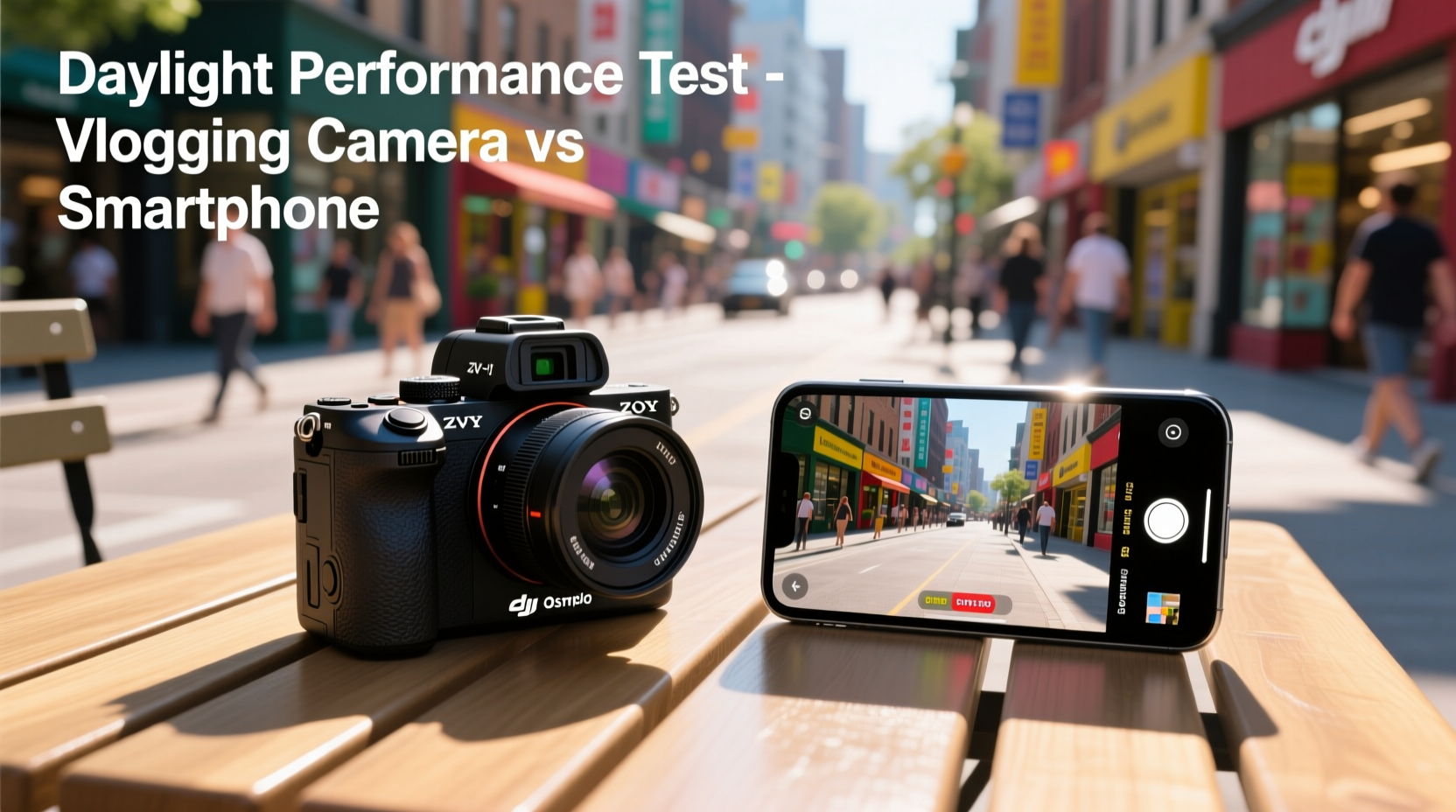
The foundation of image quality lies in the sensor. Larger sensors generally perform better in varied lighting because they capture more light and offer greater dynamic range. Most vlogging cameras—such as the Sony ZV-1, Canon G7 X series, or DJI Pocket 3—feature 1-inch sensors or larger, significantly outperforming the smaller sensors found in even flagship smartphones. Although smartphones compensate with multi-frame processing and HDR stacking, this approach can introduce artifacts like ghosting or unnatural tone mapping when subjects move.
In direct daylight, where highlights from the sky or reflective surfaces can easily blow out, vlogging cameras with larger sensors manage overexposure more gracefully. They preserve detail in bright areas while maintaining shadow definition without aggressive software intervention. Smartphones, by contrast, often rely on automatic HDR to balance exposure, sometimes resulting in flattened contrast or overly sharpened textures.
Lens Quality and Aperture Control
Vlogging cameras typically come equipped with fixed lenses designed for video use, offering wider apertures (e.g., f/1.8–f/2.8) and optical zoom capabilities. These features allow for shallow depth of field and smooth background blur, enhancing subject separation—a key aesthetic in professional-looking vlogs. More importantly, physical aperture rings give manual control over exposure, enabling consistent settings across changing light conditions.
Smartphones, despite having multiple rear cameras, depend heavily on digital cropping and software-based bokeh simulation. Their small physical apertures limit true low-light performance and depth control. Even with portrait mode, edge detection errors are common, especially around hair or moving objects. In daylight, where precise exposure matters, the inability to manually adjust aperture on most smartphones forces reliance on electronic ND filters (if available) or third-party apps, which may not integrate seamlessly with native recording tools.
“While smartphones have made incredible strides, nothing replaces optical precision and mechanical control when capturing natural-looking footage in variable daylight.” — Lena Tran, Professional Videographer & Content Creator
Dynamic Range and Color Science
Daylight scenes often contain extreme contrasts—bright skies paired with shaded foregrounds. This is where dynamic range—the camera’s ability to retain detail in both shadows and highlights—plays a critical role. Vlogging cameras frequently support log profiles (like S-Log2/3 or C-Log), which maximize dynamic range for post-production grading. These profiles capture flatter images with more information, allowing editors to recover blown highlights or lift dark areas without introducing noise.
Smartphones process images aggressively in real time, applying contrast, saturation, and sharpening to make photos look “pop” instantly. While pleasing for social media thumbnails, this limits flexibility in editing. Once highlight detail is clipped in a JPEG-like pipeline, it cannot be recovered. Additionally, color science varies widely between brands: iPhones tend toward natural skin tones, Samsung devices favor vibrancy, and Google Pixels apply subtle tonal smoothing. For creators aiming for brand consistency across platforms, this inconsistency poses challenges.
Comparison Table: Key Features in Daylight Performance
| Feature | Vlogging Camera | Smartphone |
|---|---|---|
| Sensor Size | 1-inch or larger (e.g., Sony ZV-1) | Smaller (typically 1/1.5\"–1/2.3\") |
| Dynamic Range | Up to 13+ stops (with log profiles) | ~10 stops (limited by processing) |
| Aperture Control | Manual adjustment available | Largely automatic or simulated |
| Zoom Type | Optical zoom (lossless) | Digital zoom (quality loss) |
| Stabilization | Hybrid OIS + electronic (optimized for video) | Advanced EIS, but crops frame significantly |
| Bitrate & Codec | High bitrate (e.g., 100–200 Mbps), All-I or Long GOP | Lower bitrate, HEVC/H.264 with compression |
| External Mic Support | Dedicated 3.5mm jack or USB-C | Requires adapter; audio quality varies |
Autofocus and Subject Tracking
Reliable autofocus is essential for solo vloggers who can’t rely on a camera operator. Modern vlogging cameras excel here with AI-powered face and eye tracking that maintains focus even during movement or partial obstruction. The Sony ZV-1, for example, uses Real-time Tracking AF that locks onto subjects and follows them smoothly through complex environments.
Smartphones also offer strong autofocus systems, particularly recent models with LiDAR (iPhone Pro) or dual-pixel sensors. However, they often prioritize still photography algorithms over sustained video focus. Users may notice brief hunting or sudden shifts in focal plane when transitioning between subjects or walking toward the camera. Additionally, smartphone autofocus tends to react too quickly, creating an unstable “snap” effect rather than the cinematic rack focus preferred in professional content.
Real-World Example: Travel Vlogger in Coastal Greece
A travel vlogger documenting a day in Santorini faced intense midday sun reflecting off whitewashed buildings and the Aegean Sea. Using an iPhone 15 Pro Max, she noticed frequent overexposure in window backgrounds and inconsistent skin tones due to aggressive HDR blending. Switching to a Canon G7 X Mark III with a neutral density filter, she achieved balanced exposures, retained cloud detail in the sky, and maintained accurate color throughout the clip. Though bulkier, the vlogging camera provided predictable results without needing extensive post-correction.
This scenario illustrates how controlled optics and professional-grade encoding outperform computational enhancements when environmental lighting pushes hardware limits.
Practical Tips for Maximizing Daylight Footage
- Use a polarizing filter to reduce glare on water or glass surfaces.
- Shoot during golden hour if possible, but midday light can work with proper exposure management.
- Avoid backlighting unless using a reflector or fill light.
- Enable zebras or histograms (on supported devices) to monitor exposure levels.
- Record in the highest bit-depth and chroma subsampling available (e.g., 10-bit 4:2:2).
Step-by-Step Guide: Choosing the Right Tool for Daylight Vlogging
- Evaluate Your Environment: If you primarily shoot outdoors in bright, variable light, a vlogging camera offers superior exposure control.
- Assess Post-Production Needs: Do you plan to color grade footage? Log profiles from vlogging cameras provide much-needed headroom.
- Test Autofocus Behavior: Try both devices in motion—walking, turning, entering shade—to see which maintains focus more reliably.
- Check Audio Integration: Clean audio is half the battle. Vlogging cameras usually support better mic inputs and wind reduction.
- Weigh Portability vs. Performance: Smartphones win in convenience, but if quality is non-negotiable, accept the slight increase in gear size.
FAQ
Can a smartphone rival a vlogging camera in full sunlight?
Modern smartphones can produce impressive results in daylight, especially with HDR and computational imaging. However, they lack the optical and dynamic range advantages of dedicated vlogging cameras. In scenes with high contrast—such as open shade next to bright skies—smartphones often struggle to retain detail without over-processing.
Do I need a vlogging camera if I edit on my phone?
If your entire workflow happens on mobile devices and you publish directly to Instagram or TikTok, a smartphone might suffice. But if you aim for YouTube uploads, client work, or long-form storytelling, investing in a vlogging camera ensures higher-quality source material that scales well across formats.
Why does my smartphone footage look washed out in daylight?
This usually occurs when the auto-exposure system misjudges the scene, especially with large bright areas. Unlike vlogging cameras, smartphones don’t always allow manual ISO/shutter speed control without third-party apps. Overreliance on automatic settings leads to blown highlights and flat colors.
Checklist: Before You Choose Your Daylight Vlogging Setup
- ✅ Test both devices in actual shooting conditions
- ✅ Compare exported files side by side on a calibrated screen
- ✅ Check for moiré, banding, or rolling shutter in fast pans
- ✅ Verify microphone compatibility and wind noise handling
- ✅ Ensure battery life supports extended outdoor sessions
- ✅ Confirm file format compatibility with your editing software
Conclusion: Balancing Quality, Convenience, and Intent
The choice between a vlogging camera and a smartphone ultimately depends on creative intent and output standards. For casual creators sharing quick updates, smartphones offer unmatched convenience and increasingly capable cameras. But for those producing polished, visually consistent content—especially under challenging daylight conditions—a dedicated vlogging camera delivers superior image fidelity, exposure control, and professional flexibility.
Technology continues to narrow the gap, yet fundamental limitations in sensor size, lens design, and processing pipelines mean that optical excellence still outweighs algorithmic enhancement in demanding scenarios. Whether you're documenting adventures, building a personal brand, or creating educational content, prioritizing image quality today pays dividends in audience retention tomorrow.




 浙公网安备
33010002000092号
浙公网安备
33010002000092号 浙B2-20120091-4
Comments
No comments yet. Why don't you start the discussion?