
Streaming services like Netflix, Hulu, BBC iPlayer, and Disney+ offer vast libraries of movies, TV shows, and documentaries. But not everyone gets access to the same content. What’s available in the U.S. may be missing in Germany, and what’s trending in Australia might be unavailable in Canada. This is due to licensing agreements, copyright laws, and regional restrictions. Enter virtual private networks (VPNs)—a tool many use to bypass these digital borders. But how does it work? Is it legal? And more importantly, does it actually let you watch what you want?
This article breaks down the technical, legal, and practical aspects of using a VPN for streaming. Whether you're a frequent traveler, an expat missing home content, or just curious about expanding your viewing options, this guide delivers clear, accurate information grounded in current laws and platform policies.
How Streaming Services Restrict Content by Region
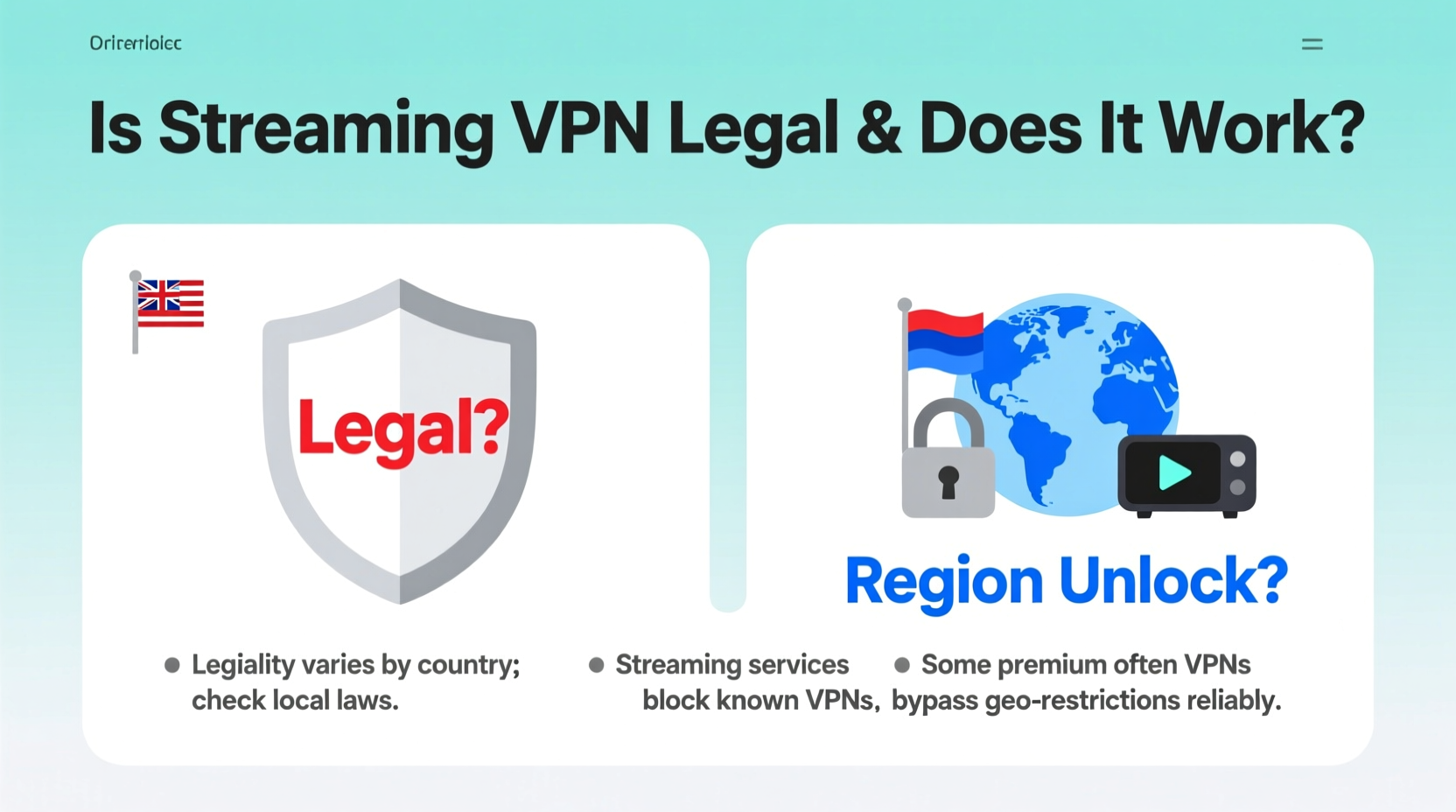
Content distribution online isn't universal. When a studio licenses a show to a streaming platform, it often does so under strict geographic terms. For example, Netflix U.S. might have rights to stream \"Stranger Things,\" but Netflix Japan may not—because another broadcaster holds those rights locally.
Streaming platforms detect your location using your IP address—the unique number assigned to your internet connection. If your IP shows you're in France, you’ll see the French version of Netflix, which may lack certain titles available elsewhere.
This system protects contractual obligations between studios, distributors, and local broadcasters. However, it also leads to frustration when users discover their favorite show isn’t available where they live—even though it's accessible just a few hundred miles away.
Can a VPN Unlock Region-Locked Content?
Yes—technically, a reliable VPN can unlock region-locked content. Here’s how: a VPN encrypts your internet traffic and routes it through a server in another country. Your real IP address is hidden, and the streaming service sees the IP of the VPN server instead. Connect to a U.S.-based server, and Netflix will treat you as if you’re browsing from America.
Many premium VPN providers maintain servers optimized for streaming, ensuring fast speeds and stable connections. These services regularly update their IP addresses to stay ahead of detection systems used by major platforms.
However, success isn’t guaranteed. Streaming companies actively work to block known VPN IPs. Netflix, in particular, has invested heavily in geolocation enforcement since 2016. As a result, only a handful of high-quality VPNs consistently bypass these blocks.
Which Platforms Are Easiest to Bypass?
- BBC iPlayer: Requires UK-based authentication; harder to access without a trusted UK IP.
- Hulu: Only officially available in the U.S.; strict geo-blocking but occasionally accessible via advanced residential-proxy-style VPNs.
- Disney+: Varies by region; some international versions are easier to spoof than others.
- Netflix: Most aggressive at blocking VPNs, but top-tier providers still offer working servers.
“VPNs are effective tools for accessing global content, but users must understand that platforms are constantly updating their detection methods.” — David Lee, Cybersecurity Analyst at TechShield Research
Is Using a VPN for Streaming Legal?
The legality of using a VPN for streaming depends on two layers: national law and service-specific terms of use.
In most countries—including the U.S., Canada, the U.K., Germany, and Australia—using a VPN is perfectly legal. Governments recognize legitimate uses such as securing public Wi-Fi, protecting privacy, or remote work. There are no criminal penalties simply for running encrypted tunneling software.
However, legality doesn’t mean compliance with platform rules. While you may not break the law, you likely violate the Terms of Service of streaming platforms when you use a VPN to access region-restricted content.
For example, Netflix’s Terms state:
“You may view the content primarily within the country in which you have established your account and only lawful use of our service.”
This means circumventing geo-blocks breaches their policy—not the law. The consequence? At worst, temporary access denial or error messages like “You seem to be using a proxy.” Account termination is rare unless paired with other violations like sharing credentials excessively.
Where Are VPNs Illegal or Restricted?
A small number of countries restrict or ban general VPN usage, including:
- China – Only government-approved VPNs allowed
- Russia – Blocks unauthorized encrypted tunnels
- Iran – Heavily censors internet tools
- North Korea – Near-total internet control
If you're located in one of these regions, using a foreign-based consumer VPN carries risk. But for users in democratic nations with open internet policies, legal exposure from streaming via VPN remains minimal.
Step-by-Step Guide to Streaming with a VPN
Want to try accessing international content safely? Follow this sequence:
- Choose a reputable streaming-friendly VPN – Look for providers known to work with Netflix, Hulu, etc. (ExpressVPN, NordVPN, Surfshark).
- Subscribe and install the app – Download the official client on your device (Windows, Mac, Android, iOS, router).
- Connect to a server in your target country – For U.S. Netflix, pick a server in Los Angeles or New York.
- Clear DNS/cache if needed – Use incognito mode or flush DNS (
ipconfig /flushdnson Windows). - Open the streaming platform – Log in or create a regional account if required.
- Test playback – Search for a title exclusive to that region (e.g., “The Office” on U.S. Netflix).
- Adjust settings if blocked – Try different servers, enable obfuscated servers, or switch protocols (WireGuard vs. OpenVPN).
Note: Some platforms require payment methods tied to the region. You may need a local gift card or virtual credit card to sign up.
Checklist: Choosing a Streaming-Optimized VPN
Not all VPNs are created equal. Use this checklist before selecting one:
- ✅ Works reliably with major streaming platforms (Netflix, Hulu, BBC iPlayer)
- ✅ Offers dedicated or “smart” location servers for streaming
- ✅ High-speed connections (minimum 25 Mbps recommended for 4K)
- ✅ No bandwidth throttling or data caps
- ✅ Apps for all your devices (smart TVs, Fire Stick, mobile, routers)
- ✅ Strong encryption and no-logs policy audited by third parties
- ✅ Customer support available 24/7 (live chat preferred)
- ✅ Regular IP rotation to evade blacklists
Real Example: Accessing U.S. Netflix Abroad
Sophie lives in Portugal and misses watching late-night talk shows like *The Late Show with Stephen Colbert*, which aren’t available on her local Netflix. She subscribes to NordVPN, installs the app on her laptop, and connects to a New York-based server. After clearing her browser cache, she logs into Netflix. Within seconds, she’s browsing the full U.S. catalog. She searches for the show—and finds it instantly.
She streams in HD without buffering thanks to NordVPN’s optimized servers. Over the next few months, she uses the same method to access HBO Max originals and Hulu exclusives during travel. Her account remains active, and she encounters only one brief block—which resolves after switching to another U.S. server.
Sophie didn’t break any Portuguese laws. She violated Netflix’s ToS, but faced no penalty beyond occasional inconvenience. For her, the value outweighed the minor technical hurdles.
Comparison Table: Top 5 Streaming-Friendly VPNs (2024)
| VPN Provider | Works with Netflix? | Speed (Avg.) | Server Locations | Simultaneous Devices | Price (Monthly) |
|---|---|---|---|---|---|
| ExpressVPN | Yes (Consistent) | 85 Mbps | 105 countries | 8 | $12.95 |
| NordVPN | Yes (Most servers) | 80 Mbps | 60+ countries | 6 | $12.99 |
| Surfshark | Yes (Stable) | 75 Mbps | 100+ countries | Unlimited | $6.49 |
| ProtonVPN | Limited (Free plan blocked) | 65 Mbps | 71 countries | 10 | $9.99 |
| CyberGhost | Yes (Streaming-optimized servers) | 70 Mbps | 90+ countries | 7 | $12.99 |
Note: Speeds tested over WireGuard protocol; prices reflect standard monthly rates (discounts often available for longer subscriptions).
Frequently Asked Questions
Can Netflix ban me for using a VPN?
No, Netflix does not terminate accounts for VPN use. Instead, it displays a proxy error message (UI-8). Once you disconnect from the VPN, normal service resumes. Repeated attempts won’t lead to suspension unless combined with credential sharing abuse.
Do free VPNs work for streaming?
Most free VPNs fail to unblock streaming sites. They typically operate slow servers, lack IP diversity, and are quickly blacklisted. Worse, many log user data and inject ads. For consistent access, paid services with proven track records are strongly recommended.
Can I watch live sports with a VPN?
Yes—if the broadcast is available in the region you connect to. For example, connecting to a U.K. server may allow access to Premier League matches on Sky Sports, while a Canadian server could unlock NHL games on Sportsnet. Be aware of blackout restrictions even within regions.
Final Thoughts: Weighing Convenience Against Compliance
Using a VPN to stream region-locked content sits in a gray zone. Legally, it’s permissible in most parts of the world. Ethically, it challenges the boundaries of digital licensing. Practically, it works—but not flawlessly.
The entertainment industry relies on regional deals to manage global distribution. Circumventing them undermines that model, even if individual users feel entitled to full access. Yet, demand persists because content availability remains uneven and often arbitrary.
If you choose to use a VPN for streaming, do so responsibly. Pick a trustworthy provider, respect copyright, and understand that access may fluctuate. Avoid illegal torrenting or password sharing at scale—those actions carry far greater risk than changing your virtual location.
Ultimately, technology enables access, but awareness guides its responsible use.




 浙公网安备
33010002000092号
浙公网安备
33010002000092号 浙B2-20120091-4
Comments
No comments yet. Why don't you start the discussion?